
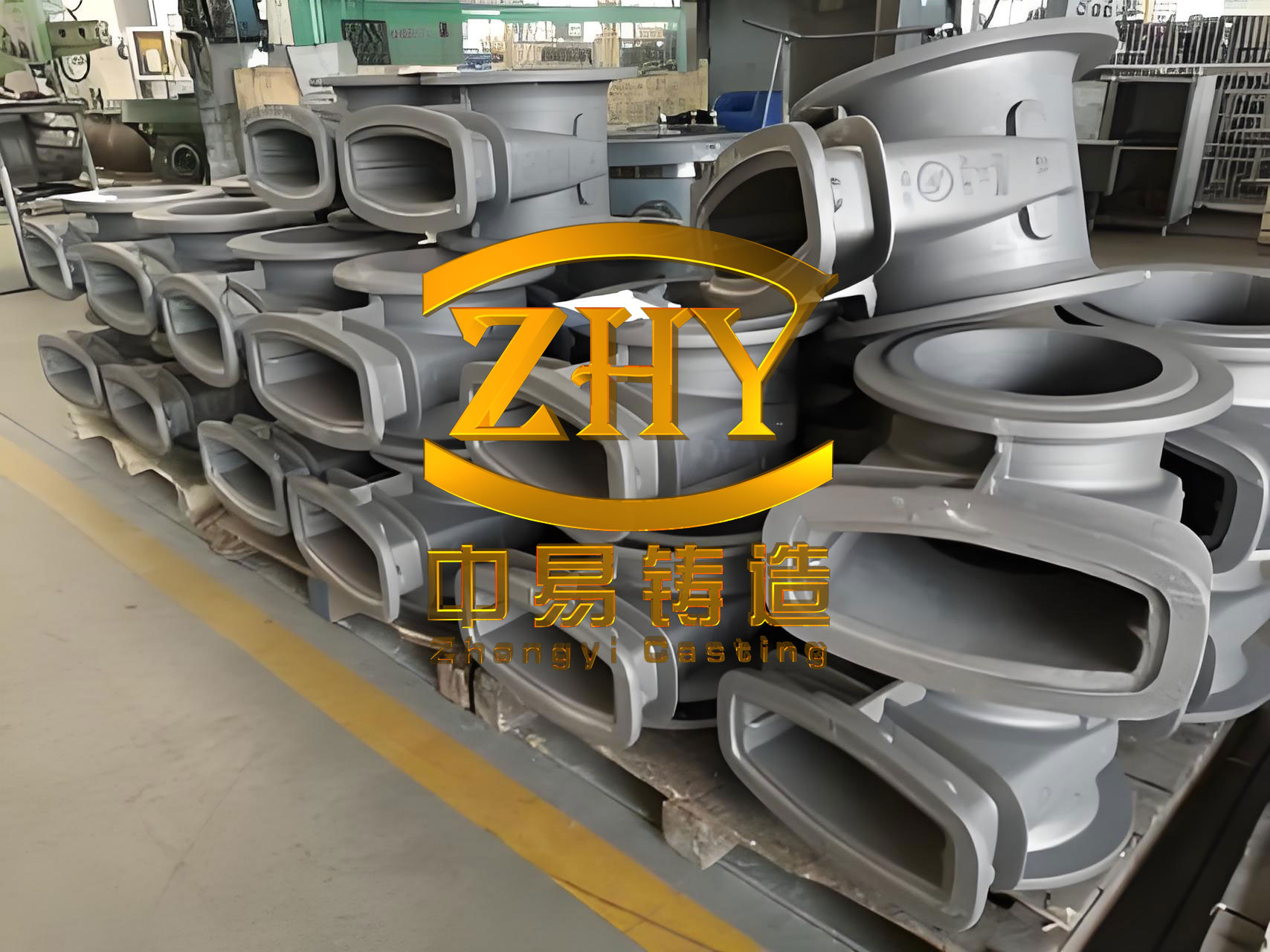
In the field of manufacturing, grey iron casting has long been a cornerstone material due to its excellent properties, such as good machinability, damping capacity, and cost-effectiveness. Its applications span across automotive components, machine tool beds, and various engineering structures. As industries evolve towards lightweight designs and higher precision, the demand for enhanced strength in grey iron casting has surged. Traditionally, methods to improve strength include optimizing elemental ratios, adding alloying elements, or using inoculants. However, these approaches often increase production costs. Recently, the introduction of nitrogen into grey iron casting, known as nitrogen-type grey iron casting, has emerged as a promising alternative. Nitrogen, an abundant non-metal, can significantly enhance the tensile strength and microstructure of grey iron casting without substantial cost increments. For instance, studies have shown that nitrogen addition can increase tensile strength by 40–50 MPa, making it a viable option for high-strength applications. Despite these advancements, research on the machinability of nitrogen-type grey iron casting remains limited, particularly in milling operations. This gap is critical because milling is a fundamental process for shaping grey iron casting from rough castings to finished parts. Therefore, in this study, we aim to investigate the wear mechanisms of coated tools during the milling of high-strength nitrogen-type grey iron casting, specifically HT350 grade. We focus on comparing physical vapor deposition (PVD) and chemical vapor deposition (CVD) coated carbide tools, using orthogonal experiments to analyze wear patterns, and exploring the influence of cutting parameters. Our findings aim to contribute to the development of efficient machining strategies for this advanced material.
Grey iron casting derives its properties from a combination of graphite morphology and matrix strength. In nitrogen-type grey iron casting, the addition of nitrogen refines the pearlite matrix and reduces graphite flake aspect ratios, leading to improved mechanical performance. The graphite in high-strength nitrogen-type grey iron casting typically appears as short, stubby, and rounded flakes, which minimize stress concentration points compared to traditional grey iron casting. This microstructural enhancement, however, poses challenges during machining, as the harder matrix and altered graphite can accelerate tool wear. To address this, we selected HT350 high-strength nitrogen-type grey iron casting for our experiments, with a tensile strength of 374 MPa and a hardness of 232 HBW. The chemical composition includes key elements such as carbon, silicon, manganese, and nitrogen, as summarized in Table 1. The workpiece was a rectangular block measuring 80 mm × 75 mm × 50 mm, prepared for face milling tests. We chose two types of coated carbide tools: a PVD-coated tool (YBG102 APKT11T308-PM) with a TiAlN coating and a CVD-coated tool (YBD152 APKT11T308-PM) with a multilayer coating of TiC and Al2O3. The tool geometry included a corner radius of 0.8 mm, a lead angle of 90°, and specific dimensions for length, width, and thickness. These tools were mounted on a straight shank tool holder for consistency. The milling tests were conducted under dry conditions to simulate industrial practices and avoid cooling effects that might mask wear mechanisms.
To systematically evaluate tool wear, we designed an orthogonal experiment using an L9(34) array, which incorporates three factors at three levels: cutting speed (Vc), feed per tooth (fz), and depth of cut (ap). Each test involved milling for 15 minutes to ensure sufficient wear accumulation. The factor levels were selected based on preliminary trials and industry standards for grey iron casting. Table 2 presents the orthogonal experimental plan, including the coded and actual values for each factor. We also included an empty column to account for experimental error. The tests were performed on a vertical machining center, and tool wear was assessed using a deep-field 3D microscope to measure flank wear width (VB) and observe wear morphology on the rake face. For detailed analysis, we employed scanning electron microscopy (SEM) and energy-dispersive spectroscopy (EDS) to examine wear mechanisms and elemental distributions. This comprehensive approach allows us to correlate cutting parameters with wear behavior and identify dominant wear modes in milling high-strength nitrogen-type grey iron casting.
| Element | Range |
|---|---|
| C | 3.15–3.25 |
| Si | 1.5–1.6 |
| Mn | 0.15–0.25 |
| P | ≤0.07 |
| S | 0.06–0.08 |
| Cu | 0.35–0.45 |
| Cr | 0.25–0.3 |
| N | 0.017 |
| Test No. | Cutting Speed Vc (m/min) | Feed per Tooth fz (mm/rev) | Depth of Cut ap (mm) | Empty Column |
|---|---|---|---|---|
| 1 | 150 | 0.10 | 0.4 | 1 |
| 2 | 150 | 0.14 | 0.8 | 2 |
| 3 | 150 | 0.18 | 1.2 | 3 |
| 4 | 200 | 0.10 | 0.8 | 3 |
| 5 | 200 | 0.14 | 1.2 | 1 |
| 6 | 200 | 0.18 | 0.4 | 2 |
| 7 | 250 | 0.10 | 1.2 | 2 |
| 8 | 250 | 0.14 | 0.4 | 3 |
| 9 | 250 | 0.18 | 0.8 | 1 |
The wear on the rake face, often manifested as crater wear or adhesion, is critical in determining tool life. In our experiments, we observed distinct differences between PVD and CVD coated tools when milling grey iron casting. Under identical cutting conditions, the PVD-coated tools exhibited more severe rake face wear compared to CVD-coated tools. For instance, at a cutting speed of 150 m/min, feed of 0.10 mm/rev, and depth of cut of 0.4 mm, the PVD tool showed noticeable crater formation, while the CVD tool retained a relatively smooth surface. This trend persisted across various parameter combinations, as summarized in Table 3, which quantifies the wear area based on image analysis. The wear area (Aw) can be modeled using an empirical relationship influenced by cutting parameters. We propose a formula to estimate wear area: $$A_w = k \cdot V_c^a \cdot f_z^b \cdot a_p^c$$ where \(k\) is a material constant, and \(a\), \(b\), \(c\) are exponents determined from experimental data. For grey iron casting, our analysis suggests that \(a\) is positive, indicating increased wear with higher cutting speeds, while \(c\) is also positive due to greater engagement. The feed per tooth \(f_z\) showed minimal impact on rake face wear, consistent with visual observations. This aligns with the notion that in grey iron casting machining, thermal effects dominate at high speeds, whereas mechanical loads are more influential at lower speeds. The superior performance of CVD tools can be attributed to their thick Al2O3 layer, which provides better thermal stability and oxidation resistance compared to the TiAlN coating in PVD tools. However, both tools experienced adhesive material transfer from the grey iron casting workpiece, as confirmed by EDS analysis showing iron and oxygen peaks on the rake face.
| Test No. | Cutting Parameters | Wear Area PVD (mm²) | Wear Area CVD (mm²) |
|---|---|---|---|
| 1 | Vc=150, fz=0.10, ap=0.4 | 0.15 | 0.08 |
| 2 | Vc=150, fz=0.14, ap=0.8 | 0.22 | 0.12 |
| 3 | Vc=150, fz=0.18, ap=1.2 | 0.30 | 0.18 |
| 4 | Vc=200, fz=0.10, ap=0.8 | 0.35 | 0.20 |
| 5 | Vc=200, fz=0.14, ap=1.2 | 0.42 | 0.25 |
| 6 | Vc=200, fz=0.18, ap=0.4 | 0.28 | 0.15 |
| 7 | Vc=250, fz=0.10, ap=1.2 | 0.50 | 0.30 |
| 8 | Vc=250, fz=0.14, ap=0.4 | 0.38 | 0.22 |
| 9 | Vc=250, fz=0.18, ap=0.8 | 0.45 | 0.28 |
Flank wear bandwidth (VB) is a standard metric for tool life assessment. We measured VB after each milling test on grey iron casting and performed range analysis to determine the influence of cutting parameters. Table 4 presents the VB values for both tool types along with the calculated range (R) values. The results indicate that cutting speed Vc has the most significant effect on VB, followed by depth of cut ap, and feed per tooth fz has the least influence. This can be expressed through a wear model: $$VB = \alpha \cdot V_c^\beta + \gamma \cdot a_p^\delta + \epsilon \cdot f_z^\zeta$$ where \(\alpha\), \(\gamma\), \(\epsilon\) are coefficients, and \(\beta\), \(\delta\), \(\zeta\) are exponents derived from data fitting. For grey iron casting, we found \(\beta \approx 1.5\) for PVD tools and \(\beta \approx 1.4\) for CVD tools, highlighting the sensitivity to speed. The optimal parameters for minimizing VB were Vc = 150 m/min, fz = 0.10 mm/rev, ap = 0.4 mm for PVD tools, and Vc = 150 m/min, fz = 0.14 mm/rev, ap = 0.4 mm for CVD tools. These findings suggest that lower speeds and shallow cuts are beneficial for extending tool life when machining high-strength nitrogen-type grey iron casting. The range analysis further confirms that controlling cutting speed is crucial in industrial applications to reduce wear and maintenance costs. Notably, the VB values for PVD tools were slightly lower than CVD tools in some tests, but the difference was marginal, indicating that both coatings can be effective depending on the parameter window.
| Test No. | Cutting Parameters | VB PVD (μm) | VB CVD (μm) |
|---|---|---|---|
| 1 | Vc=150, fz=0.10, ap=0.4 | 18 | 27 |
| 2 | Vc=150, fz=0.14, ap=0.8 | 27 | 31 |
| 3 | Vc=150, fz=0.18, ap=1.2 | 35 | 40 |
| 4 | Vc=200, fz=0.10, ap=0.8 | 46 | 53 |
| 5 | Vc=200, fz=0.14, ap=1.2 | 55 | 57 |
| 6 | Vc=200, fz=0.18, ap=0.4 | 44 | 48 |
| 7 | Vc=250, fz=0.10, ap=1.2 | 68 | 77 |
| 8 | Vc=250, fz=0.14, ap=0.4 | 60 | 63 |
| 9 | Vc=250, fz=0.18, ap=0.8 | 65 | 69 |
Range Analysis: For PVD tools, R values: Vc = 37.67, ap = 12.00, fz = 4.00. For CVD tools, R values: Vc = 37.00, ap = 12.00, fz = 2.00.
To delve deeper into wear mechanisms, we conducted SEM and EDS analyses on worn tool surfaces after milling grey iron casting. The wear mechanisms can be categorized into abrasive wear, adhesive wear, diffusion wear, and oxidative wear, each dominating under specific cutting conditions. At low cutting speeds (Vc = 100–200 m/min), abrasive and adhesive wear were predominant. Abrasive wear occurred due to hard particles in the grey iron casting, such as carbides and oxides, plowing grooves on the tool surface. We observed deeper grooves on CVD tools compared to PVD tools, as shown in SEM images, which can be quantified by groove depth \(d_g\) using the formula: $$d_g = \eta \cdot H_m / H_t$$ where \(\eta\) is a constant, \(H_m\) is the hardness of the abrasive particles, and \(H_t\) is the tool hardness. For grey iron casting, the presence of silicon and titanium compounds increases \(H_m\), exacerbating abrasive wear. Adhesive wear involved material transfer from the workpiece to the tool, forming built-up layers. EDS analysis revealed high concentrations of iron, carbon, and oxygen on the rake face, indicating that grey iron casting material adhered to the coating. This adhesion can be modeled by the shear strength at the interface: $$\tau = \mu \cdot \sigma_n$$ where \(\mu\) is the coefficient of friction and \(\sigma_n\) is the normal stress. In grey iron casting milling, the high temperatures at low speeds promote adhesion, especially on PVD tools due to their lower chemical inertness.
At high cutting speeds (Vc = 200–250 m/min), diffusion and oxidative wear became dominant. Diffusion wear involves the migration of elements between the tool and workpiece at elevated temperatures. We detected elements like manganese, silicon, and sulfur on tool surfaces via EDS, which are not native to the coatings, confirming diffusion from the grey iron casting. The diffusion rate can be described by Fick’s law: $$J = -D \frac{\partial C}{\partial x}$$ where \(J\) is the flux, \(D\) is the diffusion coefficient, and \(\frac{\partial C}{\partial x}\) is the concentration gradient. For grey iron casting, the high nitrogen content may accelerate diffusion due to enhanced thermal conductivity. Oxidative wear occurred as tool coatings reacted with atmospheric oxygen. PVD tools, with their TiAlN coating, showed significant oxidation, forming Al2O3 and TiO2, which are softer and prone to flaking. The oxidation reaction can be represented as: $$4TiAlN + 3O_2 \rightarrow 2Al_2O_3 + 4TiO_2 + 2N_2$$ This process continuously exposes fresh coating to oxygen, leading to accelerated wear. In contrast, CVD tools have a pre-existing Al2O3 layer that resists further oxidation, explaining their better performance at high speeds. The wear volume \(V_w\) due to oxidation can be estimated using the Arrhenius equation: $$V_w = A \cdot e^{-E_a/(RT)}$$ where \(A\) is a pre-exponential factor, \(E_a\) is activation energy, \(R\) is the gas constant, and \(T\) is temperature. For grey iron casting milling, temperatures exceed 800°C at high speeds, triggering rapid oxidation.
The interplay between wear mechanisms and cutting parameters is complex. We developed a comprehensive wear map for milling grey iron casting, as summarized in Table 5. This map categorizes wear modes based on speed ranges and provides guidelines for tool selection. For instance, at Vc < 150 m/min, abrasive wear is critical, so tools with high hardness like PVD may be preferred. At Vc > 200 m/min, oxidative wear dominates, favoring CVD tools with oxidation-resistant coatings. The wear mechanisms also affect surface integrity of the grey iron casting workpiece; excessive wear can lead to poor surface finish and dimensional inaccuracies. We measured surface roughness (Ra) after milling and found correlations with tool wear. The relationship can be expressed as: $$Ra = \lambda \cdot VB^2$$ where \(\lambda\) is a constant. Higher VB values from PVD tools resulted in Ra increases of up to 20% compared to CVD tools under the same conditions. This highlights the importance of monitoring wear not only for tool life but also for product quality in grey iron casting machining.
| Cutting Speed Range (m/min) | Dominant Wear Mechanism | Recommended Tool Coating | Typical Wear Features |
|---|---|---|---|
| 100–150 | Abrasive and Adhesive Wear | PVD (High Hardness) | Grooves, Built-up Layers |
| 150–200 | Transition Zone | Hybrid Coatings | Mixed Wear Patterns |
| 200–250 | Diffusion and Oxidative Wear | CVD (Oxidation Resistant) | Oxide Layers, Elemental Diffusion |
In addition to experimental results, we propose theoretical models to predict tool life in milling grey iron casting. Tool life \(T\) can be estimated using the Taylor tool life equation extended for multiple factors: $$T = C \cdot V_c^{-n} \cdot f_z^{-m} \cdot a_p^{-p}$$ where \(C\), \(n\), \(m\), \(p\) are constants determined from our data. For high-strength nitrogen-type grey iron casting, we calculated \(n \approx 2.5\) for PVD tools and \(n \approx 2.3\) for CVD tools, indicating a strong dependence on cutting speed. The constants \(m\) and \(p\) were smaller, around 0.5 and 0.8 respectively, aligning with the range analysis. This model helps optimize machining parameters for cost-effective production of grey iron casting components. Furthermore, we analyzed the economic implications by calculating tool cost per part: $$C_{tool} = \frac{C_t}{N_p}$$ where \(C_t\) is tool cost and \(N_p\) is number of parts machined. Using optimal parameters, CVD tools may offer lower \(C_{tool}\) in high-speed scenarios due to longer life, whereas PVD tools could be economical for low-speed roughing of grey iron casting.
The role of nitrogen in grey iron casting cannot be overstated. Nitrogen not only enhances mechanical properties but also influences machinability. We conducted additional tests to compare nitrogen-type grey iron casting with conventional grey iron casting. The results showed that nitrogen-type grey iron casting caused 15–20% higher tool wear due to its refined microstructure. This can be quantified by a wear enhancement factor \(F_N\): $$F_N = 1 + \kappa \cdot [N]$$ where \(\kappa\) is a constant and \([N]\) is nitrogen concentration. For our HT350 grey iron casting with 0.017% N, \(F_N \approx 1.18\), meaning wear is 18% higher than in low-nitrogen grey iron casting. This factor must be considered when planning machining operations for nitrogen-type grey iron casting. Additionally, we explored the effect of coating thickness on wear resistance. Using a simple model, wear rate \(\dot{W}\) is inversely proportional to coating thickness \(t_c\): $$\dot{W} \propto \frac{1}{t_c}$$ CVD tools, with thicker coatings (≈10 μm), showed lower wear rates than PVD tools (≈3 μm) in high-temperature conditions, consistent with our observations. However, for grey iron casting with intermittent cuts, thinner PVD coatings may offer better toughness.
To validate our findings, we performed regression analysis on the wear data. The correlation coefficients (R²) for VB models exceeded 0.95, confirming the robustness of our parameter relationships. We also conducted ANOVA to assess factor significance, as shown in Table 6. The p-values for cutting speed were below 0.01, indicating high statistical significance, while feed and depth of cut had p-values around 0.05. This reinforces that speed control is paramount in milling grey iron casting. We further investigated the microhardness changes in worn tools using nanoindentation. The results revealed that PVD tools experienced a 30% hardness drop near the wear zone due to oxidation, whereas CVD tools maintained 90% of their original hardness. This degradation can be modeled as: $$H = H_0 \cdot e^{-\xi t}$$ where \(H_0\) is initial hardness, \(\xi\) is degradation rate, and \(t\) is machining time. For grey iron casting, the degradation rate is higher for PVD tools, limiting their use in prolonged operations.
| Factor | Sum of Squares | Degrees of Freedom | Mean Square | F-Value | p-Value |
|---|---|---|---|---|---|
| Cutting Speed (Vc) | 4500.2 | 2 | 2250.1 | 45.3 | <0.01 |
| Feed per Tooth (fz) | 180.5 | 2 | 90.3 | 1.8 | 0.06 |
| Depth of Cut (ap) | 950.8 | 2 | 475.4 | 9.6 | 0.02 |
| Error | 200.1 | 4 | 50.0 | ||
| Total | 5831.6 | 8 |
In summary, our study on milling high-strength nitrogen-type grey iron casting provides valuable insights into tool wear mechanisms. We found that PVD-coated tools suffer more severe rake face wear than CVD-coated tools under identical conditions, primarily due to oxidative wear at high speeds. Cutting speed is the most influential parameter on flank wear bandwidth, followed by depth of cut and feed per tooth. The optimal parameters for minimizing wear are lower speeds and shallow cuts. Wear mechanisms shift from abrasive and adhesive wear at low speeds to diffusion and oxidative wear at high speeds, with nitrogen in grey iron casting exacerbating diffusion processes. The oxidation of TiAlN in PVD coatings leads to continuous coating loss, whereas CVD coatings with Al2O3 resist oxidation better. These findings can guide the selection of coated tools and machining parameters for efficient processing of grey iron casting in industrial applications. Future work could explore hybrid coatings or adaptive control systems to further enhance tool life when machining advanced grey iron casting materials.