
In the field of metal casting, the pursuit of efficient, precise, and cost-effective manufacturing methods for complex components is continuous. Among various alloy families, high manganese steel casting stands out for its unparalleled combination of toughness and wear resistance under high-impact, high-stress conditions, making it indispensable for critical wear parts in mining, quarrying, and material handling industries. However, the very properties that make it desirable also present significant challenges during traditional casting processes, often leading to issues with dimensional accuracy, surface finish, and internal soundness. This document summarizes our comprehensive research and development experience in applying Vacuum-Assisted Lost Foam Casting (VALFC) specifically to the production of high manganese steel castings, presenting it as a robust and advantageous alternative.
The Vacuum-Assisted Lost Foam Casting process represents a significant evolution in foundry technology. It utilizes an expendable pattern made of expanded polystyrene (EPS) foam, which is coated with a refractory coating and embedded in unbonded, dry sand within a sealed flask. During pouring and solidification, a controlled vacuum is applied to the flask. This vacuum serves multiple critical functions: it stabilizes the mold by compacting the sand, extracts the gaseous decomposition products of the vaporizing foam pattern, and enhances metal feeding. The result is a casting methodology capable of producing components with excellent surface finish, high dimensional fidelity, and dense, sound internal metallurgy. For demanding applications like high manganese steel casting, these attributes are of paramount importance.
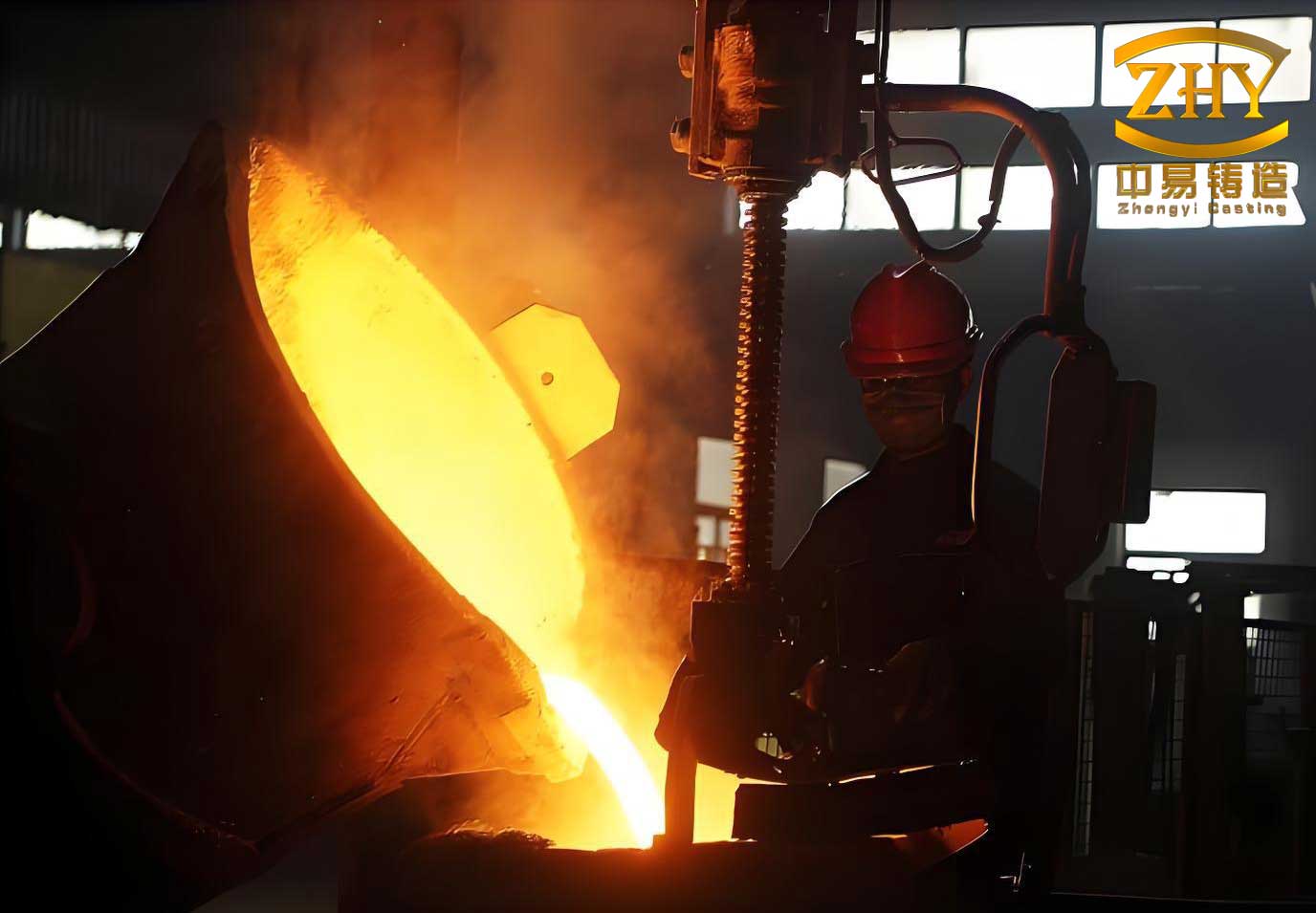
The motivation for this work stemmed from the limitations of conventional sand casting for high manganese steel components. Issues such as mold-wall movement, veining, and difficulties in achieving complex, net-shape geometries for parts like crusher jaws, liners, and hammers necessitated exploration of a superior process. Our investigation focused on adapting and optimizing the VALFC process chain—from pattern making to heat treatment—for the unique requirements of high manganese steel, particularly the standard ASTM A128 Grade B3/B4 type alloys (e.g., Mn ~12%, C ~1.2%).
Process Development and Optimization for High Manganese Steel
The successful implementation of VALFC for high manganese steel casting hinges on the meticulous control of each step in the process sequence, as outlined in the flowchart below. Each stage presents specific considerations when dealing with this alloy.
1. Pattern Manufacturing and Quality
The dimensional accuracy and surface finish of the final casting are directly inherited from the quality of the EPS foam pattern. For high manganese steel casting applications, we selected closed-cell EPS beads with a controlled density. The pattern density is a critical parameter, influencing both pattern strength and the volume of gaseous decomposition products. An excessively low density can lead to pattern distortion during handling or coating, while a very high density increases gas evolution during pour, potentially causing defects. Our optimal range was established empirically:
| Pattern Property | Target Value / Range | Rationale |
|---|---|---|
| EPS Density | 0.018 – 0.024 g/cm³ | Balances adequate strength for handling with manageable gas generation. |
| Bead Structure | Fine, uniform closed-cell | Provides a smoother pattern surface, translating to better casting finish. |
| Pattern Assembly | Hot-melt glue for gating system | Ensures a gas-tight bond between pattern sections and the runner/riser system. |
For simple or prototype geometries, patterns were crafted via CNC hot-wire cutting from block foam. For high-volume production of parts like hammer heads, aluminum tooling for steam-chest molding was developed to ensure consistency and efficiency. A critical calculation in pattern design is accounting for the total linear shrinkage of the high manganese steel, which encompasses both liquid contraction, solidification shrinkage, and solid-state contraction. The pattern oversize factor (K) can be expressed as:
$$ K = 1 + \alpha_{total} $$
where $\alpha_{total}$ is the total linear shrinkage coefficient. For the studied high manganese steel grades, $\alpha_{total}$ was found to be in the range of 2.2% to 2.6%, leading to a pattern oversize factor K of approximately 1.023 to 1.026.
2. Refractory Coating Formulation and Application
The coating performs the essential functions of creating a barrier between the metal and the sand, providing a smooth surface for the metal front, and allowing the escape of foam pyrolysis gases. Developing a coating that adheres well to the hydrophobic EPS surface was a key challenge. A water-based coating system was formulated, incorporating surfactants to ensure proper wettability. The composition was optimized for high temperature stability and permeability relevant to high manganese steel casting temperatures (~1500°C).
| Component | Function | Weight (%) |
|---|---|---|
| Brown Fused Alumina (Grit) | Refractory filler, provides high-temperature stability and erosion resistance. | 45-50 |
| Colloidal Silica Binder | Inorganic binder, provides green and fired strength, environmentally friendly. | 10-15 |
| Premium Bentonite | Suspension aid and secondary binder. | 3-5 |
| Cellulosic Thickener | Controls viscosity and prevents sagging. | |
| Surfactants & Defoamers | Ensures coating wettability on EPS and eliminates air bubbles. | < 1 (total) |
| Water | Carrier medium. | Balance |
The coating was applied via dipping for smaller patterns and brushing/spraying for larger ones. Coating thickness (δ) is a controlled variable dependent on section thickness. A general rule developed was:
$$ \delta (mm) \approx 0.5 + 0.05 \cdot t_{section}(mm) $$
where $t_{section}$ is the nominal wall thickness of the casting. Typically, 2-3 coating layers were applied to achieve a final thickness between 0.8 mm and 1.5 mm. The coated patterns were then dried in a controlled oven at 40-50°C to remove moisture without distorting the foam.
3. Molding and Vacuum System Parameters
Dry, unbonded silica sand is used for molding. The key requirements are good flowability to fill complex pattern contours and consistent, high permeability to allow rapid evacuation of gases. The sand grain size was selected to provide an optimal balance:
| Parameter | Specification |
|---|---|
| Sand Type | Dry, rounded silica sand |
| AFS Grain Fineness Number (GFN) | 45-55 |
| Sand Temperature during filling | < 50°C |
The sand is filled around the coated cluster while applying mild vibration to ensure uniform packing without pattern deformation. Vacuum lines are strategically embedded within the sand mass to ensure even pressure distribution. The vacuum system is the cornerstone of the process. The applied vacuum pressure (P_vac) and its duration are the most critical operating parameters. The relationship between vacuum pressure and mold strength can be conceptualized. The effective stress (σ) holding the sand grains together is proportional to the applied vacuum pressure differential:
$$ \sigma \propto \Delta P = P_{atm} – P_{vac} $$
Where $P_{atm}$ is atmospheric pressure. A minimum vacuum level is required to maintain mold integrity. Our operational parameters were established as follows:
| Process Phase | Vacuum Pressure (Absolute) | Objective |
|---|---|---|
| Pre-pour & During Pouring | 0.04 – 0.06 MPa | Stabilize mold, begin evacuating foam gases. |
| Solidification Phase | 0.05 – 0.07 MPa (maintained) | Prevent mold wall movement, enhance feeding via pressure differential on the solidifying metal. |
| Post-solidification Hold | Maintained for a calculated time (t_hold) | Ensure complete solidification under pressure, prevent expansion defects. |
The hold time, t_hold, is empirically determined based on the modulus (Volume/Surface Area) of the casting. For medium-section castings (~30-50 mm modulus), a hold time of 3-5 minutes after pouring was typical.
4. Pouring and Direct Water Quenching (DWO) Innovation
High manganese steel casting requires a solution heat treatment, known as water quenching, to dissolve carbides and obtain a fully austenitic microstructure. A significant advantage of the VALFC process is the ability to control the cooling curve precisely. We developed and validated a Direct Water Quenching process from the mold. The sequence is:
- Pour the alloy at a temperature of ~1470-1500°C.
- Allow the casting to cool in the vacuum-sealed mold for a predetermined time (t_cool). This time is calculated to let the casting cool from the pouring temperature to a target “quench start” temperature above the carbide precipitation range (typically > 950°C).
- Release the vacuum, allowing the dry sand to become free-flowing.
- Extract the still-hot casting from the loose sand and immediately immerse it in a water tank.
The key to success is controlling t_cool to ensure the casting enters the water at the correct temperature window (T_quench_start). This can be estimated using a simplified cooling model based on Newton’s law of cooling and the casting’s geometry. The cooling time to reach a specific temperature can be related to the casting’s modulus (M):
$$ t_{cool} \propto M^n \cdot \ln\left(\frac{T_{pour} – T_{mold}}{T_{quench\_start} – T_{mold}}\right) $$
where $T_{mold}$ is the initial sand temperature, and $n$ is an exponent close to 2 for chunky geometries. This method eliminates a separate reheating furnace cycle, offering substantial energy and time savings for high manganese steel casting production.
Results, Defect Analysis, and Typical Process Recipes
The transition to VALFC for high manganese steel casting yielded markedly superior results compared to conventional green sand methods. Castings exhibited a surface roughness comparable to investment casting (Ra 6.3-12.5 μm), dimensional tolerances within ±2 mm for major lengths, and excellent reproduction of fine details like bolt holes and intricate contours. Metallographic examination revealed a denser microstructure with reduced micro-porosity, directly contributing to enhanced impact toughness and wear life in field tests.
The most common defects encountered during process development were carbonaceous folds (lustrous carbon), slag inclusions, and gas porosity. Their root causes and mitigation strategies are summarized below:
| Defect Type | Primary Cause | Corrective Action |
|---|---|---|
| Carbonaceous Folds (Wrinkles) | Incomplete pyrolysis of foam, leading to carbon deposition at the advancing metal front. | Increase pouring temperature; Optimize gating for turbulent-free fill; Ensure adequate coating permeability; Use lower-density foam patterns. |
| Slag Inclusions | Entrapment of coating debris or foam decomposition residues. | Improve coating adhesion and sintering strength; Design gating to skim metal; Use pouring basins/filters; Maintain sufficient vacuum to draw gases away from the metal front. |
| Gas Porosity | Entrapment of foam pyrolysis gases within the solidifying metal. | Ensure high and consistent coating & mold permeability; Optimize vacuum level and line placement; Moderate pouring speed to allow gas evacuation. |
Case Studies: Process Recipes for Specific Castings
The following table encapsulates the optimized VALFC parameters for three typical high manganese steel wear parts:
| Casting Type | Crusher Jaw Plate | Blow Bar / Hammer | Crusher Mantle Liner |
|---|---|---|---|
| Alloy Grade | ASTM A128 Gr. B3 | ASTM A128 Gr. B3 | ASTM A128 Gr. B4 |
| Weight (kg) | ~80 | ~25 / ~110 | ~1800 |
| Pattern Making | CNC-cut from EPS block | Aluminum tool, steam-chest molded | Multi-section CNC-cut, assembled |
| Pattern Shrink Allowance | 2.4% | 2.0% | 2.6% |
| Coating Thickness (mm) | 1.2-1.5 (teeth), 0.8-1.2 (body) | 1.0-1.2 | 1.5-2.0 |
| Gating/Riser Design | Bottom gating, top spherical risers, chill plates at bottom. | Cluster casting (4-6 pieces), top risers, side chills. | Multiple bottom ingates, large top risers, extensive external chills. |
| Pouring Temperature (°C) | 1480-1500 | 1490-1510 | 1470-1490 |
| Vacuum Pressure (MPa abs.) | 0.05-0.06 | 0.05-0.06 | 0.04-0.055 |
| DWQ Parameters | Cool in mold for ~18 min, quench from ~1000°C. | Cool in mold for ~8 min (small), ~25 min (large), quench. | Cool in mold for ~90 min, quench from ~980°C. |
Technical and Economic Advantages
The adoption of VALFC for high manganese steel casting delivers a compelling value proposition across technical and economic dimensions.
Technical Superiority:
- Design Freedom: No draft angles or parting lines are needed, allowing for true net-shape casting of complex geometries, including undercuts and internal passages that are impossible or very costly with traditional methods.
- Enhanced Metallurgical Quality: The negative pressure during solidification promotes better feeding, significantly reducing shrinkage porosity and creating a denser matrix. The controlled, rapid cooling from the mold to the quench tank also favors a finer as-cast structure.
- Process Stability: The dry sand mold is insensitive to moisture-related defects (e.g., blows, pinholes), common in green sand casting of steels.
Economic Benefits: A quantitative analysis reveals substantial cost savings. The primary cost drivers in VALFC are the foam pattern and the coating. However, these are offset by the elimination of core making, binder systems, and complex mold assembly. Furthermore, the Direct Water Quench process removes the need for a separate austenitizing furnace cycle. The following simplified model illustrates the potential saving per ton of saleable castings:
Let $C_{total}$ be the total cost. For conventional sand casting (SC):
$$ C_{total, SC} = C_{mat} + C_{labour} + C_{mold/core} + C_{heat-treat} + C_{fettling} $$
For VALFC with DWQ:
$$ C_{total, VALFC} = C_{mat} + C’_{labour} + C_{pattern} + C_{coating/sand} + C’_{fettling} $$
Our production data indicated:
- Labor costs ($C’_{labour}$) reduced by ~30-40% due to simplified molding and coreless operation.
- Fettling/cleaning costs ($C’_{fettling}$) reduced by 50-70% due to absence of fins and parting line flashes.
- Heat treatment energy cost ($C_{heat-treat}$) saved entirely with DWQ.
- Yield improvement of 5-10% due to reduced scrap from shrinkage and molding defects.
A conservative estimate suggests an overall production cost reduction of 15-20% for typical high manganese steel casting components, alongside the significant improvement in product performance and lifespan.
Conclusion
Our extensive research and production trials conclusively demonstrate that Vacuum-Assisted Lost Foam Casting is not merely a viable alternative but a technologically and economically superior process for manufacturing high-performance high manganese steel casting components. The integration of precise pattern making, tailored refractory coatings, controlled vacuum, and the innovative Direct Water Quenching protocol addresses the core challenges associated with this tough alloy. The process delivers castings with exceptional dimensional accuracy, superior surface finish, and dense, sound internal quality directly translating to enhanced wear resistance and service life in demanding applications. The significant reduction in processing steps, labor, energy consumption, and material waste establishes VALFC as a highly competitive and forward-looking manufacturing route for the production of critical wear parts, offering foundries a clear path to higher quality and profitability in the domain of high manganese steel casting.