
The lost foam casting process represents a significant advancement in metal casting technology, offering advantages such as excellent dimensional accuracy, reduced machining allowances, and design flexibility. At the heart of this process lies the coating applied to the expendable foam pattern. Unlike traditional sand casting coatings, the coating in lost foam casting must perform a dual critical function: it must provide a robust refractory barrier between the molten metal and the unbonded sand mold, and it must possess exceptionally high permeability to facilitate the rapid escape of gaseous decomposition products from the vaporizing foam. The performance, quality, and ultimately the economic viability of the lost foam casting process are therefore directly contingent upon the properties of this coating.
Refractory aggregates form the skeletal structure of the coating. While materials like zircon flour, bauxite, and brown fused alumina offer excellent performance, their high cost can be prohibitive for many applications, particularly for iron castings. Consequently, there is considerable interest in developing cost-effective coatings based on silica flour (quartz powder). This article delves into the formulation and properties of a water-based coating for iron castings in lost foam casting, with a particular focus on how the particle size distribution of the silica flour aggregate fundamentally influences key coating properties, especially permeability and viscosity.
Fundamental Principles and Coating Requirements
In lost foam casting, the coating is not merely a surface layer; it is a functional interface. Upon pouring, the molten metal causes the foam pattern to thermally decompose into gaseous and liquid residues. The coating must allow these gases to pass through it rapidly into the surrounding sand to prevent defects like gas holes, fills, or pattern collapse. This property is characterized as the coating’s permeability. Permeability ($K$) can be described by Darcy’s law for flow through a porous medium:
$$K = \frac{Q \cdot \mu \cdot L}{A \cdot \Delta P}$$
where $Q$ is the volumetric flow rate, $\mu$ is the gas viscosity, $L$ is the coating thickness, $A$ is the cross-sectional area, and $\Delta P$ is the pressure differential across the coating.
Simultaneously, the coating must exhibit suitable rheological behavior. It should have good suspension stability to prevent settling of heavy aggregates, appropriate viscosity for application (dipping, spraying), and sufficient thixotropy—a time-dependent shear thinning property. A thixotropic coating flows easily under shear during application but quickly regains a gel-like structure upon resting, preventing sagging or running on vertical surfaces. The shear stress ($\tau$) and shear rate ($\dot{\gamma}$) relationship for such coatings often follows a Herschel-Bulkley model:
$$\tau = \tau_0 + K \cdot \dot{\gamma}^n$$
where $\tau_0$ is the yield stress, $K$ is the consistency index, and $n$ is the flow index (n < 1 for pseudoplastic fluids).
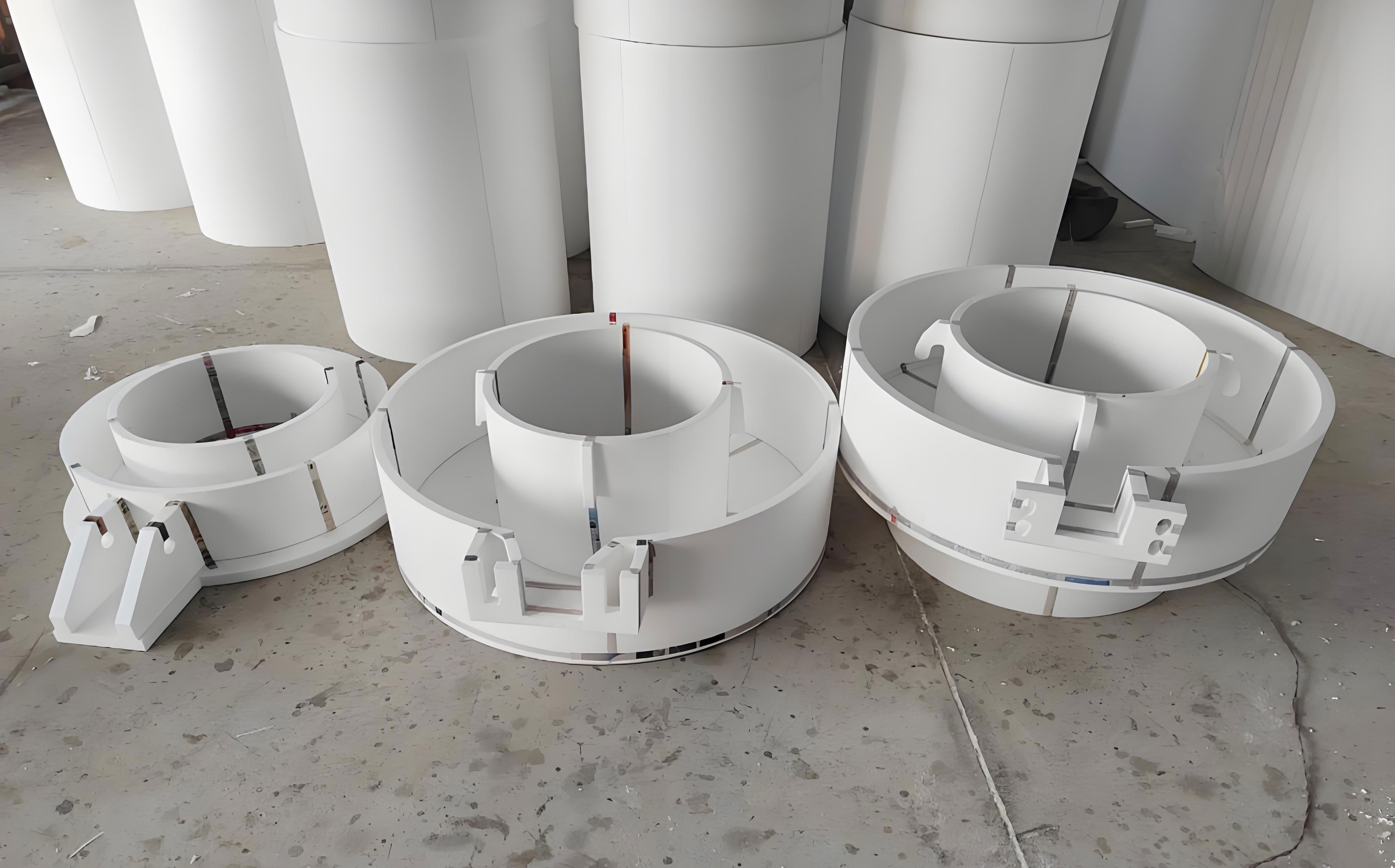
The process of lost foam casting is visually summarized above, highlighting the critical stage where molten metal replaces the foam pattern, a moment entirely dependent on the coating’s integrity and permeability.
Experimental Methodology for Coating Development
Based on preliminary optimization studies, a baseline coating formulation was established for铸铁件 (iron castings). The composition is presented in Table 1.
| Component | Function | Weight Percentage (%) |
|---|---|---|
| Silica Flour | Refractory Aggregate | 100 (Base) |
| Sodium Bentonite | Suspension Agent / Binder | 2 |
| Silica Sol | Inorganic Binder | 2 |
| Carboxymethyl Cellulose (CMC) | Suspension Agent / Thickener | 1 (as 5% solution) |
| Polyvinyl Alcohol (PVA) | Organic Binder | 4 |
| Water + OP-10 Emulsifier | Carrier / Dispersant | To achieve working density |
The central investigation involved three distinct coatings (C1, C2, C3) identical in composition but differing solely in the particle size distribution (PSD) of the silica flour aggregate. Their PSDs, as determined by sieve analysis, are detailed in Table 2.
| Sieve Aperture (mm) | Cumulative Mass Retained (%) – C1 | Cumulative Mass Retained (%) – C2 | Cumulative Mass Retained (%) – C3 |
|---|---|---|---|
| > 0.210 | 2.95 | 0.52 | 0.00 |
| 0.148 – 0.210 | 7.30 | 7.20 | 0.00 |
| 0.102 – 0.148 | 16.40 | 23.35 | 23.85 |
| 0.073 – 0.102 | 22.01 | 26.45 | 49.50 |
| 0.051 – 0.073 | 26.52 | 17.92 | 14.95 |
| 0.040 – 0.051 | 11.54 | 7.40 | 7.52 |
| < 0.040 (Pan) | 13.28 | 17.16 | 4.18 |
| Key Characteristic | Broad, bimodal distribution | Broad distribution, high fines content | Narrow distribution (centered on 0.073-0.102 mm), low fines content |
The coating preparation followed a standardized procedure:
1. Water, the emulsifier (OP-10), sodium bentonite, and CMC were combined and subjected to high-speed mechanical dispersion for 30 minutes to form a primary slurry and hydrate the clay and polymer.
2. The binders (silica sol, PVA) were added sequentially under continuous agitation.
3. The silica flour was gradually incorporated, followed by an antifoaming agent.
4. The mixture was stirred at high speed for 2 hours to ensure homogeneity and de-aeration.
5. Finally, the coating was processed through a colloid mill for 2 hours to achieve final particle dispersion and coating smoothness.
Characterization of Coating Properties
The performance of the three coatings was evaluated using the following standard tests for lost foam casting coatings:
1. Suspension Stability: Measured by the static settling method. 100 mL of coating was placed in a graduated cylinder and allowed to stand for 24 hours. The suspension ratio was calculated as the volume percentage of the supernatant relative to the total initial volume. A high ratio indicates good stability, governed by Stokes’ law and the effectiveness of the bentonite-CMC network in creating a yield stress ($\tau_0$) sufficient to oppose gravitational settling.
2. Rheology & Thixotropy: Apparent viscosity and flow curves were obtained using a rotary viscometer (e.g., NDJ-1 type) at a fixed shear rate (e.g., 30 rpm). The reduction in viscosity under shear and its recovery upon cessation were monitored to assess thixotropy.
3. Coating (Green) Strength: A simple sand abrasion test was employed. A coated glass plate was subjected to falling sand (20-40 mesh) from a standard height until the coating was worn through. The total mass of sand required ($M_s$) serves as a quantitative measure of surface cohesion and handling strength, related to binder efficiency.
4. Permeability: This is the most critical property for lost foam casting. Permeability was measured at both room temperature and elevated temperatures (400°C, 700°C, 1000°C) using a dedicated permeability tester (e.g., STZ type). The instrument measures the volume of air passing through a standardized coating sample under a fixed pressure over time, providing a permeability number ($PN$).
Results and In-Depth Analysis
Permeability: The Dominant Influence of Particle Packing
The permeability results for the three coatings across a temperature range are graphically summarized in Figure 1 (data derived from testing).
Observation: All coatings exhibit a similar non-monotonic trend: permeability decreases from room temperature to a minimum in the range of 400-700°C, then increases significantly at 1000°C.
Mechanistic Explanation:
- Initial Decrease (RT to ~700°C): Silica flour undergoes a reversible α-β phase transformation at approximately 573°C, accompanied by a volume expansion of about 1-2%. This expansion causes the aggregate particles to pack more tightly within the coating matrix, reducing the interconnected pore volume and thus lowering permeability. This effect dominates in the mid-temperature range.
- Subsequent Increase (~700°C to 1000°C): At higher temperatures, the organic components (PVA, CMC) within the coating begin to pyrolyze and burn out. The decomposition and escape of these volatiles create additional micro-channels and pores within the coating structure, thereby increasing its overall permeability.
Critical Finding – PSD Impact: Despite sharing the same trend, the absolute permeability values differ dramatically. Coating C3 consistently demonstrates the highest permeability at all temperatures, while C1 and C2 show lower and similar values. This is a direct consequence of the particle packing density, which is governed by the PSD.
For a random packing of spheres (a reasonable first approximation for irregular particles), the packing density ($\phi$) is influenced by the size ratio of fine to coarse particles. A broad PSD (like C1 and C2) allows smaller particles to fit into the interstices between larger ones, leading to a dense, low-porosity structure as described by a binary packing model:
$$\phi_{mix} = \phi_c \cdot f_c + \phi_f \cdot f_f – \Delta \phi$$
where $\phi_c, \phi_f$ are the packing densities of coarse and fine fractions alone, $f_c, f_f$ their volume fractions, and $\Delta \phi$ accounts for interference. A broad mix maximizes $\phi_{mix}$, minimizing void space and permeability.
Conversely, a narrow PSD (like C3, centered on 0.073-0.102 mm) results in a looser packing with larger, more connected inter-particle voids. This inherently higher initial porosity translates to superior gas transmission capability, which is paramount for successful lost foam casting.
Rheological Behavior: Viscosity and Thixotropy
The flow curves for the coatings are conceptually shown in Figure 2. All coatings exhibited pseudoplastic (shear-thinning) behavior with a measurable yield stress, characteristic of a flocculated network structure provided by the bentonite-CMC combination.
Key Result: Coating C3 displayed a significantly higher apparent viscosity and yield stress compared to C1 and C2.
Mechanistic Explanation: This can be attributed to particle-fluid interactions and inter-particle friction. In a suspension, the effective viscosity ($\eta_{eff}$) relates to the solid volume fraction ($\phi$) and maximum packing fraction ($\phi_{max}$), often via the Krieger-Dougherty equation:
$$\eta_{eff} = \eta_0 \left(1 – \frac{\phi}{\phi_{max}}\right)^{-[\eta] \phi_{max}}$$
where $\eta_0$ is the fluid viscosity and $[\eta]$ is the intrinsic viscosity. For a given $\phi$ (same solid loading), a narrower PSD leads to a lower $\phi_{max}$. Therefore, the ratio $\phi / \phi_{max}$ is higher for coating C3 than for C1 or C2, resulting in a higher $\eta_{eff}$. Furthermore, the more uniform particles in C3 may form a more homogeneous but frictionally resistant network, increasing the yield stress.
Suspension Stability and Green Strength
The results for suspension stability and green strength are consolidated in Table 3.
| Coating | Suspension Ratio after 24h (%) | Green Strength (Mass of Abrasive Sand, g) |
|---|---|---|
| C1 | 94 | 305 |
| C2 | 94 | 360 |
| C3 | 97 | 357 |
Analysis: All three coatings demonstrated excellent suspension stability (>94%), confirming the effectiveness of the sodium bentonite and CMC as a composite suspending agent. The synergistic effect arises from hydrogen bonding between the carboxyl groups of CMC and the oxygen ions on the bentonite platelet surfaces, creating a robust three-dimensional network that entraps the refractory particles.
The green strength values are adequate and reasonably similar. The minor variations are likely due to subtle differences in particle packing affecting binder distribution and inter-particle bonding points, rather than a fundamental flaw in any formulation. Coating C3’s strength is comparable to the others, proving that high permeability does not come at the cost of weak coating integrity.
Synthesis and Optimization Guidelines for Lost Foam Casting Coatings
The findings from this investigation yield clear, actionable guidelines for formulating cost-effective silica-based coatings for lost foam casting, particularly for iron applications:
1. Strategic Selection of Particle Size Distribution: The most significant factor controlling ambient and high-temperature permeability is the PSD of the refractory aggregate. To maximize permeability, a narrowly graded or mono-sized distribution is strongly preferred. Specifically, for silica flour, targeting a distribution where the majority (e.g., >70%) of particles are concentrated within a narrow band (e.g., 0.051 mm to 0.102 mm) will yield a coating with inherently high voidage and gas transmissivity. This is more important than simply using a “coarser” grade with a wide spread of sizes.
2. Managing Rheological Consequences: A narrow PSD increases coating viscosity and yield stress. This must be managed to maintain applicability (e.g., dip-coating viscosity). Adjustments can be made by:
- Optimizing the concentration of the composite suspending system (Bentonite/CMC).
- Utilizing more effective dispersants to reduce inter-particle friction.
- Fine-tuning the solid loading content, though this may affect other properties like coating thickness and density.
3. Understanding Temperature-Dependent Behavior: Formulators must recognize that permeability is dynamic during the lost foam casting pour. The initial high permeability aids in the swift removal of the first wave of foam pyrolysis gases. The subsequent dip (due to aggregate expansion) and final rise (due to binder burnout) are intrinsic material responses. The goal is to select an aggregate PSD that ensures the minimum permeability in the mid-temperature range is still sufficient to prevent back-pressure defects.
4. Cost-Performance Balance: While silica flour is economically advantageous, its lower refractoriness compared to zircon or alumina limits its use to lower melting point alloys like cast iron and non-ferrous metals. For steel castings in lost foam casting, more refractory (and costly) aggregates remain necessary. The PSD principles established here, however, are universally applicable to any aggregate type.
Conclusion
This comprehensive analysis underscores the pivotal role of coating technology in the lost foam casting process. The investigation successfully developed a viable water-based coating for iron castings using silica flour as the primary refractory aggregate. The key scientific and practical insight is that the particle size distribution of the aggregate is a dominant, controllable variable that critically determines the coating’s gas permeability—its most vital function. A narrowly distributed aggregate creates a more porous, permeable structure compared to a broadly distributed one, which packs densely. While this choice also elevates the coating’s viscosity, this can be managed through rheological additives. Therefore, for optimal performance in lost foam casting, coating formulators should prioritize the use of refractory aggregates with a centralized, narrow grain size distribution to ensure the high permeability essential for producing sound, defect-free castings.