
Nodular cast iron, also known as ductile iron, represents a cornerstone material in modern manufacturing due to its exceptional castability, good machinability, and favorable cost-to-performance ratio. Its unique microstructure, characterized by spheroidal graphite nodules embedded within a metallic matrix (typically ferritic, pearlitic, or austenitic), grants it a valuable combination of strength and ductility superior to that of gray cast iron. This makes it an indispensable material for critical components across diverse industries, including wind power, machine tools, automotive, and infrastructure. However, a persistent challenge in the material science of nodular cast iron is the often inverse relationship between strength and toughness, particularly at sub-zero temperatures. This limitation becomes a significant bottleneck for applications such as oxygen generator housings, compressor parts, and wind turbine components operating in cold climates, where high strength must coexist with reliable low-temperature impact resistance to ensure structural integrity and safe, long-term service.
Traditionally, the development of high-strength, high-ductility grades of as-cast nodular cast iron has relied on carefully balancing the ratio of ferrite to pearlite in the matrix through alloying and cooling control. While effective to a degree, this approach often involves trade-offs; enhancing ductility typically comes at the expense of tensile strength. Therefore, exploring novel pathways for the simultaneous enhancement of both strength and toughness is crucial for advancing the performance envelope of nodular cast iron. One of the most promising strategies involves the deliberate introduction of finely dispersed second-phase particles into the metallic matrix. This method, well-established in metallurgy, can lead to significant improvements via mechanisms such as grain refinement, Orowan strengthening, and load transfer from the matrix to the reinforcing particles.
Among various candidate particles, in-situ formed carbide precipitates offer distinct advantages for nodular cast iron. They are generally cost-effective, exhibit good interfacial bonding with the ferrous matrix when formed in-situ, and, unlike flake graphite in gray iron, do not severely act as stress concentrators. Titanium, as an alloying element, is particularly interesting due to its strong carbide-forming tendency. Titanium carbide (TiC) particles are extremely hard, thermally stable, and can act as potent grain refiners. When finely dispersed, they can pin grain boundaries and dislocation movements, thereby increasing strength. Furthermore, these particles can influence the solidification process of the nodular cast iron, potentially affecting the nucleation and growth of the graphite nodules themselves. The presence of such hard particles can also alter the fracture mechanics, for instance, by promoting crack deflection, bridging, or initiating micro-voids that can blunt advancing cracks, thereby enhancing toughness. However, the addition of titanium to nodular cast iron is a delicate process. Titanium is a powerful deoxidizer and can interact with other elements present in the melt, such as magnesium and rare earths from the nodularizing treatment, potentially forming complex inclusions that could interfere with graphite spheroidization. The optimal amount of titanium addition is thus critical; too little may yield no significant effect, while too much can degrade the graphite morphology and overall properties.
Based on this analysis, the present study investigates a novel approach to enhance the low-temperature performance of ferritic nodular cast iron. The core methodology involves the addition of a precise, small amount of titanium via ferrotitanium during a green, short-flow casting process, aiming for the in-situ formation of nano-to-microscale TiC particles within the matrix. The primary objective is to elucidate the effect of titanium content, specifically around 0.03 wt.%, on the microstructure—focusing on graphite nodule characteristics and matrix features—and the resultant mechanical properties, including tensile strength, elongation, and most importantly, impact toughness at room temperature, -20°C, and -40°C. By analyzing the microstructure-property relationships and discussing the underlying strengthening and toughening mechanisms, particularly through the lens of crystallographic mismatch theory, this work provides valuable insights for developing advanced grades of nodular cast iron suitable for demanding low-temperature applications.
1. Materials and Experimental Methodology
1.1 Base Materials and Target Composition
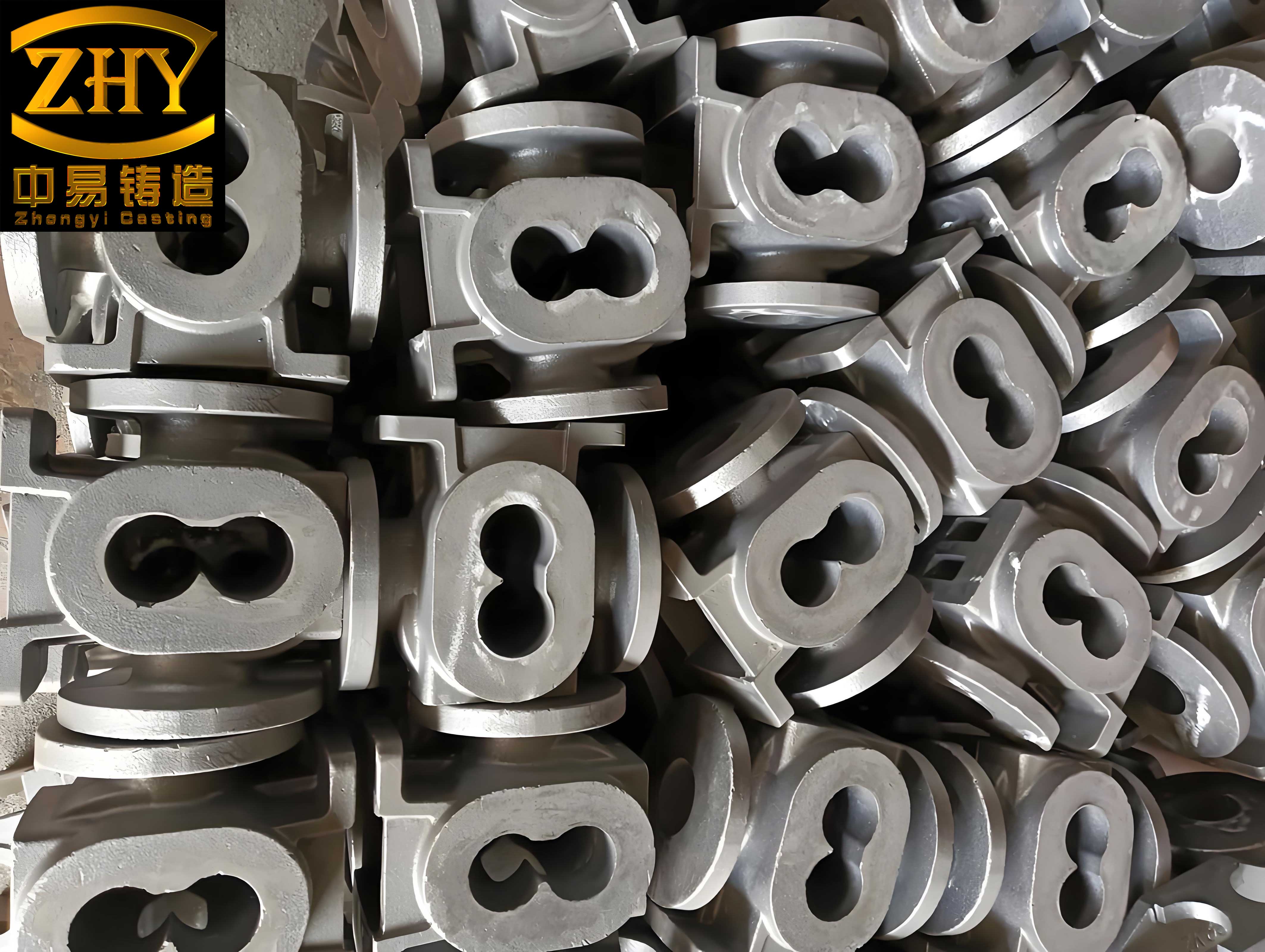
The investigation was centered on producing a critical industrial component: an oxygen generator housing. The baseline material specification was equivalent to the standard grade QT400-18, which requires a minimum tensile strength of 400 MPa and a minimum elongation of 18%. The key challenge was to enhance these properties while ensuring superior low-temperature impact toughness, with a target of not less than 12 J at -40°C. To achieve this, the standard chemistry was modified with a controlled titanium addition. The raw materials included high-quality pig iron, steel scrap (in the form of cold-pressed plate), returns, and necessary additives. The specific chemical compositions of the primary metallic charge materials are summarized in Table 1.
| Material | C | Si | Mn | P | S | Ti |
|---|---|---|---|---|---|---|
| Q12 Pig Iron | 4.41 | 1.08 | 0.08 | 0.033 | 0.017 | 0.042 |
| Cold-Pressed Plate | 0.08 | 0.05 | 0.06 | 0.025 | 0.020 | 0.020 |
The treatment alloys were carefully selected. A rare-earth-bearing magnesium ferrosilicon alloy was used as the nodularizer to ensure effective graphite spheroidization. A strontium/barium-containing ferrosilicon alloy served as the inoculant to promote graphite nucleation and suppress carbide formation. The titanium was introduced in the form of powdered ferrotitanium. Their compositions are detailed in Tables 2, 3, and 4.
| Mg | RE | Si | Ca | Ba |
|---|---|---|---|---|
| 7.4 | 2.4 | 42.5 | 2.3 | 1.5 |
| Si | Ca | Ba | Al |
|---|---|---|---|
| 69.88 | 1.36 | 4.68 | 1.30 |
| Ti | Si | Mn | P | Cu | S |
|---|---|---|---|---|---|
| 34.0 | 4.48 | 1.98 | 0.049 | 0.09 | 0.013 |
1.2 Melting, Treatment, and Casting Process
A short-flow, green sand casting process was employed, integrating sintering, ironmaking, and casting systems. The charge consisted of approximately 70% pig iron, 20% steel scrap, and 10% returns. The key reaction for the in-situ formation of TiC is given by:
$$ \text{Ti} + \text{C} \rightarrow \text{TiC} $$
To facilitate this reaction and control the resultant particle size, the ferrotitanium powder was added simultaneously with the charge materials into the furnace. For every 1000 kg of molten iron, the treatment additions were 12.5 kg of nodularizer, 5 kg of inoculant, 3.2 kg of ferrotitanium powder, and 1 kg of recarburizer. Preliminary trials established the effective titanium range. Additions above 0.1 wt.% Ti led to deteriorated graphite spheroidization and poor melt fluidity. Consequently, six separate melts were conducted with target titanium contents of 0.03%, 0.04%, 0.05%, 0.06%, and 0.09% (with 0.03% repeated). The final chemical compositions of these heats are listed in Table 5. The melt with 0.03% Ti demonstrated the most favorable combination of microstructure and properties and was selected for detailed analysis, hereafter referred to as QT400-180.03Ti.
| Heat No. | C | Si | Mn | P | S | Mg | Ti |
|---|---|---|---|---|---|---|---|
| 1 | 3.61 | 2.48 | 0.093 | 0.027 | 0.005 | 0.040 | 0.027 |
| 2 | 3.55 | 2.60 | 0.100 | 0.027 | 0.008 | 0.035 | 0.030 |
| 3 | 3.57 | 2.67 | 0.215 | 0.057 | 0.014 | 0.048 | 0.040 |
| 4 | 3.58 | 2.42 | 0.191 | 0.028 | 0.004 | 0.032 | 0.048 |
| 5 | 3.62 | 2.40 | 0.207 | 0.043 | 0.012 | 0.055 | 0.062 |
| 6 | 3.63 | 2.57 | 0.226 | 0.060 | 0.016 | 0.047 | 0.088 |
The treatment was performed in a ladle using a sandwich method. The molten iron was poured at a controlled temperature of 1370°C into resin-bonded sand molds. The casting geometry was a housing component with varying wall thicknesses. The total pouring time was maintained at 36 seconds to ensure consistent thermal conditions and allow for the controlled formation of TiC particles.
1.3 Microstructural and Mechanical Characterization
Samples for microstructural analysis were sectioned from the casting at a location corresponding to one-quarter of the main wall thickness to ensure representativeness. Standard metallographic preparation was followed, culminating in etching with a 4% nital solution. The microstructure was examined using optical microscopy and scanning electron microscopy (SEM) equipped with energy-dispersive X-ray spectroscopy (EDS) for phase identification and compositional analysis. Graphite nodule count, size distribution, and nodularity were quantitatively evaluated according to standard metallographic procedures.
Mechanical testing comprised tensile tests and Charpy V-notch impact tests. Tensile specimens were machined according to ISO 6892-1 standards. Impact specimens were prepared as per ISO 148-1 and tested at three different temperatures: room temperature (RT), -20°C, and -40°C, using appropriately conditioned specimens and an instrumented impact tester.
2. Results and Discussion
2.1 Microstructural Characteristics of Ti-Modified Nodular Cast Iron
The microstructure of the QT400-180.03Ti material is shown in the provided micrograph. It reveals a predominantly ferritic matrix with well-dispersed, spheroidal graphite nodules. Quantitative image analysis confirmed a high nodularity of 93.89%, corresponding to a nodularity grade of 2. The graphite morphology was excellent, with an average nodule size of approximately 118.5 µm (Size Class 8) and a nodule count of 187.3 nodules/mm². This indicates that the addition of 0.03 wt.% Ti did not have any detrimental effect on the graphite spheroidization process, which is a critical prerequisite for maintaining good ductility in nodular cast iron.
Closer inspection via SEM and EDS analysis confirmed the presence of secondary particles distinct from the graphite nodules. Point analysis on these particles showed a very high concentration of titanium, accompanied by carbon and a small amount of iron, identifying them as titanium carbide (TiC). The typical composition from one such particle is given in the spectrum, showing a dominant Ti signal. Elemental mapping further illustrated the distribution: carbon was concentrated in the graphite nodules, silicon was uniformly distributed in the ferrite, and titanium was exclusively localized in the fine, blocky TiC particles. The size of these in-situ formed TiC particles was predominantly in the sub-micron to a few micron range. It is important to note that the stoichiometry of these carbides often deviates from the ideal TiC due to carbon vacancies, which can be as high as 50% in non-equilibrium solidification conditions, explaining the variable C/Ti ratio detected.
2.2 Formation Mechanism and Role of TiC Particles
The formation of TiC in the melt occurs through the direct reaction between dissolved titanium and carbon, as per the equation given earlier. The potency of these particles lies not only in their inherent hardness but also in their crystallographic relationship with the phases in nodular cast iron. According to the planar lattice disregistry theory proposed by Bramfitt, a substrate can act as an effective heterogeneous nucleation site for a solidifying phase if the crystallographic mismatch between their closely packed planes is less than 12%. The lattice parameters for graphite (a=0.246 nm, c=0.671 nm) and TiC (a=0.433 nm, FCC structure) can be used to calculate this mismatch. The interatomic spacing along the close-packed direction on the (0001) plane of graphite is 0.246 nm. The corresponding spacing on the (111) plane of TiC is $$ d_{\{111\}_{TiC}} = a / \sqrt{2} = 0.433 / \sqrt{2} \approx 0.306 \text{ nm} $$. The disregistry δ is calculated as:
$$ \delta = \frac{|d_s – d_n|}{d_n} \times 100\% $$
where \( d_s \) is the interatomic spacing of the substrate (TiC {111}) and \( d_n \) is that of the nucleating phase (Graphite {0001}). Using average values, the mismatch is approximately:
$$ \delta = \frac{|0.306 – 0.246|}{0.246} \times 100\% \approx 8.33\% $$
This value, being less than 12%, strongly suggests that TiC particles can serve as potent heterogeneous nucleation sites for graphite. This explains the observed microstructural refinement: the increased number of nucleation sites leads to a higher nodule count and a smaller average nodule size in the Ti-modified nodular cast iron compared to conventional grades.
Furthermore, TiC particles can also influence the solidification of the ferritic matrix. Theoretical calculations of interfacial energies indicate that the energy of the interface between body-centered cubic (bcc) iron (ferrite) and TiC is lower than the solid-liquid interfacial energy of bcc iron. This thermodynamic favorability allows TiC particles to also act as nuclei for ferrite grains during the eutectoid transformation, contributing to overall grain refinement of the metallic matrix. This dual role—refining both the graphite and the matrix—is a key microstructural advantage imparted by the in-situ TiC particles.
2.3 Mechanical Performance Enhancement
2.3.1 Tensile Properties
The tensile stress-strain curve for the QT400-180.03Ti material exhibited a typical ductile profile. The quantitative results, compared to the standard QT400-18 requirements and typical values, are presented in Table 6.
| Material | Tensile Strength (MPa) | Yield Strength (MPa) | Elongation (%) |
|---|---|---|---|
| QT400-18 (Standard Min.) | 400 | 250 | 18 |
| QT400-180.03Ti (Experimental) | 425.6 | 264 | 22.47 |
| Improvement | +5.3% | +5.2% | +22.8% |
The data clearly shows a simultaneous improvement in both strength and ductility. The strength increase can be attributed to multiple strengthening mechanisms: (1) Grain refinement strengthening (Hall-Petch effect) due to finer ferrite grains, where the yield strength \( \sigma_y \) relates to grain size \( d \) by \( \sigma_y = \sigma_0 + k_y d^{-1/2} \); (2) Orowan strengthening from the non-shearable TiC particles that force dislocations to loop around them; and (3) Load transfer from the softer ferritic matrix to the hard, well-bonded TiC particles. The significant enhancement in elongation is more remarkable and is directly linked to the refined and uniform microstructure. The finer graphite nodules and higher nodule count distribute stress concentrations more evenly. The fine TiC particles themselves, by initiating numerous, very small micro-voids during plastic deformation, help to relax triaxial stresses and delay the coalescence of voids originating from graphite nodules, thereby increasing the overall strain to fracture.
2.3.2 Impact Toughness and Low-Temperature Behavior
The impact toughness is a critical property, especially for low-temperature applications. The results for the Charpy V-notch tests are graphically summarized, showing the impact absorption energy at room temperature, -20°C, and -40°C. The QT400-180.03Ti material exhibited an impact energy of 17 J at room temperature. More importantly, it retained excellent toughness at sub-zero temperatures, with values of approximately 15 J at -20°C and 13 J at -40°C. These values represent an increase of about 10% and 8% over the baseline expectations for a standard QT400-18L (Low-temperature grade) material at -20°C and -40°C, respectively. The ability to consistently maintain impact energy above the critical 12 J threshold at -40°C is a major achievement, fulfilling the stringent requirement for components like oxygen generator housings operating in cold environments.
The retention of toughness at low temperatures is a direct consequence of the microstructural modifications. The refined graphite structure reduces the effective stress concentration factor. The fine, well-dispersed TiC particles alter the fracture mode. They can act as obstacles, forcing cracks to deflect or branch, increasing the fracture surface area and energy consumption. They can also bridge crack tips, reducing the local stress intensity. The fine ferrite grain size increases the number of grain boundaries, which act as barriers to cleavage crack propagation, a dominant failure mode at low temperatures. The combined effect is a material that resists brittle fracture more effectively.
2.3.3 Fractographic Analysis
Examination of the fracture surfaces provided further evidence of the operative mechanisms. The tensile fracture surface showed a dimpled morphology, indicative of micro-void coalescence, which is characteristic of ductile fracture. The dimples were often associated with graphite nodules, but numerous smaller dimples were observed in the matrix, likely nucleated at the TiC/matrix interfaces. This corroborates the role of TiC in promoting a finer-scale ductile fracture process.
The impact fracture surfaces, particularly at -40°C, exhibited a mixed-mode morphology. While areas of quasi-cleavage with river patterns were present, signifying localized brittle fracture, these areas were interspersed with tear ridges and ductile dimples. The presence of these ductile features even at -40°C explains the retained impact energy. The fracture path was not perfectly flat but showed signs of local plastic deformation and crack deflection, consistent with the microstructural obstacles presented by the TiC particles and refined grains.
2.4 Summary of Microstructure-Property Relationships
The properties of any nodular cast iron are dictated by its microstructure. For demanding low-temperature applications, specific microstructural targets are often set, as shown in Table 7. The developed QT400-180.03Ti material not only meets but exceeds these typical requirements.
| Microstructural Feature | Typical Target | QT400-180.03Ti Result |
|---|---|---|
| Nodularity | > 90% | 93.89% |
| Graphite Nodule Size | ≤ Size Class 6 | Size Class 8 (Finer) |
| Nodule Count (per mm²) | 100 – 200 | 187.3 |
The success of this material lies in the synergistic effect of the in-situ formed TiC particles. They refine the graphite structure by providing nucleation sites, refine the ferrite matrix grains, and subsequently act as strengthening and toughening agents within the matrix. This multi-faceted role breaks the traditional strength-toughness trade-off, enabling the development of a nodular cast iron with enhanced comprehensive properties.
3. Conclusions
This study demonstrates a viable and effective methodology for enhancing the low-temperature performance of ferritic nodular cast iron through minor titanium additions. The primary conclusions are as follows:
- Controlled Titanium Addition: The addition of 0.03 wt.% titanium via a short-flow casting process successfully leads to the in-situ formation of fine TiC particles within the matrix of nodular cast iron, without impairing the essential graphite spheroidization process.
- Microstructural Refinement: The TiC particles act as potent heterogeneous nucleation sites for both graphite and ferrite, resulting in a refined microstructure characterized by a higher nodule count, smaller graphite size (Size Class 8), and a finer ferritic grain structure, while maintaining excellent nodularity (>93%).
- Enhanced Mechanical Properties: The Ti-modified nodular cast iron exhibits a simultaneous improvement in strength and ductility. Tensile strength and yield strength increased by over 5%, while elongation increased significantly by 22.8% compared to standard QT400-18.
- Superior Low-Temperature Toughness: The material demonstrates outstanding impact toughness, with room temperature energy of 17 J. Crucially, it retains high impact energy at sub-zero temperatures, showing approximately 10% and 8% improvement at -20°C and -40°C, respectively, reliably exceeding the 12 J threshold required for critical low-temperature applications.
- Underlying Mechanisms: The strengthening and toughening are attributed to a combination of mechanisms: grain refinement (Hall-Petch), Orowan looping, and load transfer from the TiC particles. The improved toughness stems from the refined microstructure that homogenizes stress and the particles’ ability to deflect cracks and promote ductile fracture processes even at low temperatures, as explained by the favorable crystallographic mismatch between TiC and graphite.
This research confirms that micro-alloying with titanium to form in-situ TiC particles is a promising pathway for developing advanced grades of nodular cast iron. The resulting material offers a superior balance of strength, ductility, and low-temperature impact resistance, making it highly suitable for demanding components such as oxygen generator housings, wind turbine parts, and other structural applications in cold environments. Future work will focus on scaling up the process for industrial production, conducting rigorous component-level validation, and exploring the long-term durability and performance in real-world operating conditions.