
In my extensive experience within the foundry industry, particularly focusing on high-volume production for the automotive sector, the selection and application of additives in green sand molding systems are paramount. The production of complex, dimensionally accurate, and surface-finish-critical sand casting parts, such as engine blocks, differential cases, brake discs, and pump housings, demands a meticulous approach to molding material science. Among these additives, pulverized coal stands out as a critical component for iron castings. Its function during metal pouring is multifaceted: it thermally decomposes to release reducing gases that suppress iron oxide formation, and it deposits a lustrous carbon film on the mold cavity surface. This dual action is essential for preventing common defects like metal penetration, burn-on, and sand expansion-related issues such as scabbing, thereby directly enhancing the surface integrity of the final sand casting parts. This article delves into a first-hand, detailed investigation into the technical specifications of various pulverized coals, their quantitative impact on molding sand properties, and their profound influence on the quality and efficiency of producing automotive sand casting parts.
The foundational principle behind using coal dust in green sand for iron castings can be partially described by the pyrolysis reactions occurring at high temperatures. When liquid iron contacts the mold, the coal undergoes devolatilization. The release of volatile matter, primarily hydrocarbons, creates a gaseous barrier. A simplified representation of the thermal decomposition of coal can be given by:
$$ \text{Cool} ( \text{complex hydrocarbon} ) \xrightarrow{\Delta T} \text{Volatiles} (CH_4, C_2H_4, H_2, CO) + \text{Semi-coke} + \text{Tar} $$
The “lustrous carbon” forming potential is a critical metric, often correlated with the volatile content and the specific aromaticity of the coal. This carbon layer’s effectiveness in preventing wetting of the sand grains by the metal can be conceptually linked to surface energy phenomena. While a full thermodynamic model is complex, the practical outcome is a significant reduction in the adhesion force between the sand and the casting, expressed notionally as a reduction in the effective interfacial energy $ \gamma_{sl} $.
The performance of pulverized coal is not monolithic; it is dictated by a suite of technical indicators. In our operations, we rigorously measure and monitor these to ensure consistency and quality. The key indicators, their significance for sand casting parts production, and typical ideal ranges are summarized below.
| Technical Indicator | Symbol / Unit | Ideal Range (for High-Quality Coal) | Physical Significance in Casting |
|---|---|---|---|
| Moisture Content | $M$, % | ≤ 4.0 | Excess moisture leads to steam generation, promoting gas defects in sand casting parts and reducing effective volatile content. |
| Ash Content | $A$, % | ≤ 7.0 | Inert residue that dilutes the active carbon, increases sand sintering tendency, and can contribute to slag inclusion defects. |
| Volatile Matter | $VM$, % | 33 – 38 | Primary source of reducing gases and lustrous carbon precursors. Directly correlates with casting surface finish for sand casting parts. |
| Lustrous Carbon | $LC$, % | 12 – 16 | Quantifies the specific fraction of volatiles that condense as a smooth, graphite-like layer. Crucial for peel-off behavior of sand from sand casting parts. |
| Sulfur Content | $S$, % | ≤ 0.5 | High sulfur can lead to formation of iron sulfide (FeS) at metal surface, causing brittleness and promoting pinholes in sand casting parts. |
| Coke Residue Type | – | 4 – 5 | Indicates the swelling and cohesiveness of the residue after volatiles are driven off; affects sand permeability and compactability. |
| Oxygen-to-Carbon Ratio | $O/C$ | Low (≤ specific threshold) | Lower ratio indicates higher rank/anthracitic character, leading to higher thermal stability and reduced spontaneous combustion risk. |
| Gross Calorific Value | $Q$, kcal/kg | 6500 – 7200 | Indicates the energy content; related to the volatile yield and combustion efficiency in the mold atmosphere. |
The determination of these indicators follows standardized procedures. For instance, moisture and volatile matter are determined by controlled heating. The volatile matter calculation, after correcting for moisture, is fundamental:
$$ VM_{dry} = \left( \frac{m_{105^\circ C} – m_{950^\circ C, 7min}}{m_{105^\circ C}} \right) \times 100\% $$
where $m_{105^\circ C}$ is the mass of the coal sample after drying at 105°C, and $m_{950^\circ C, 7min}$ is the mass after pyrolysis at 950°C for 7 minutes in a covered crucible.
Ash content is determined by complete combustion in air:
$$ A_{dry} = \left( \frac{m_{ash}}{m_{105^\circ C}} \right) \times 100\% $$
Lustrous carbon is typically measured using specialized condensation tests, where the carbon film deposited on a cold plate is weighed. The sulfur content is often determined via combustion analysis with infrared detection.
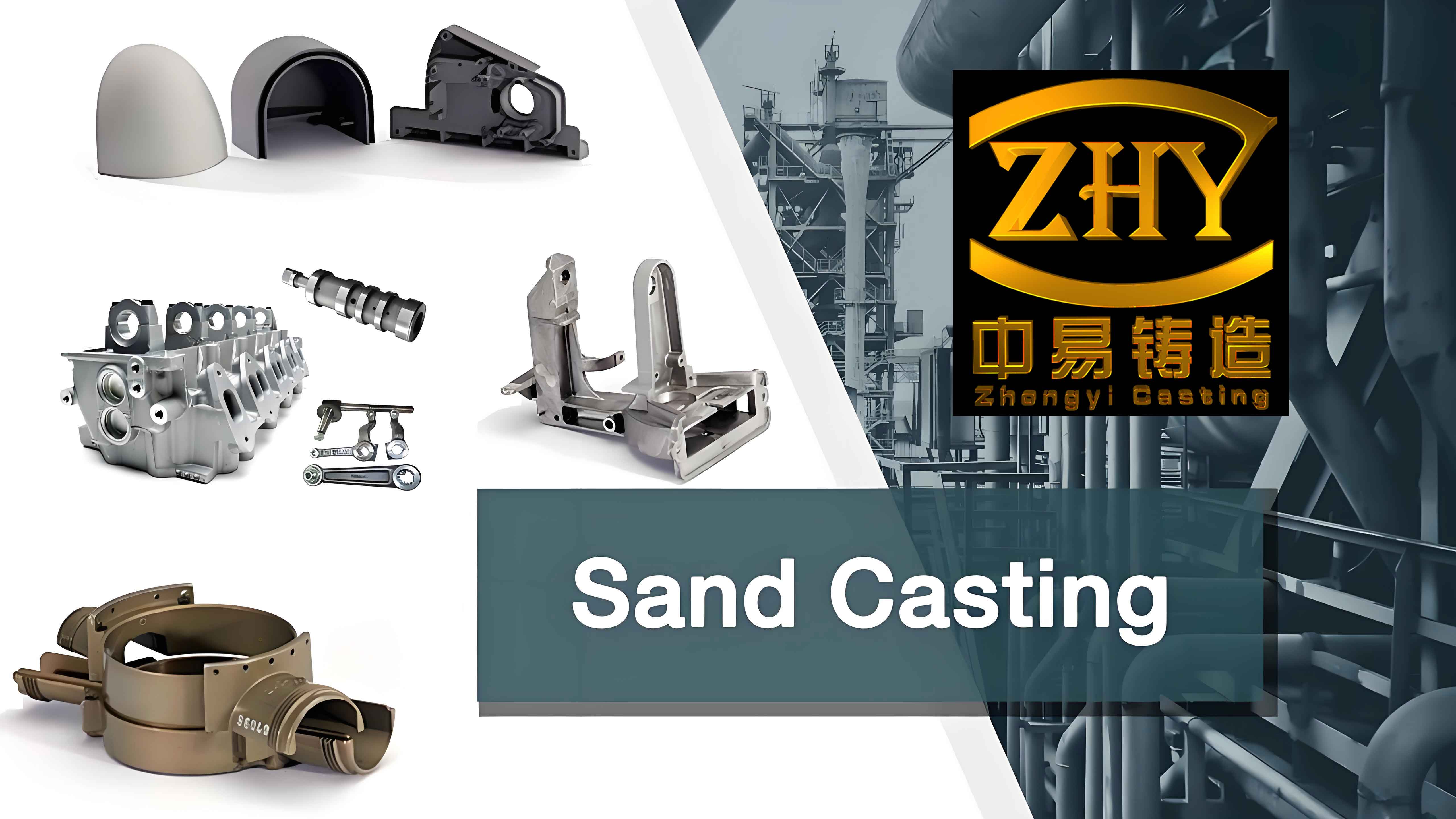
The visual evidence above underscores the importance of surface quality in automotive sand casting parts. Achieving such fidelity requires not just good pattern equipment but, fundamentally, a molding sand that behaves predictably under thermal load. This is where the choice of pulverized coal becomes a decisive economic and quality factor.
In our pursuit of optimal performance, we have evaluated several commercial pulverized coals over the years. The following table presents a comparative analysis of four distinct types, labeled here as Type A, B, C, and a premium Type P (representing the high-quality, non-self-igniting grade like SMFZ-1). The data is compiled from our internal quality control logs.
| Parameter | Coal Type (Measured Values) | Industry Standard Reference (e.g., JB/T9222) | |||
|---|---|---|---|---|---|
| Type A | Type B | Type C | Type P (Premium) | ||
| Moisture, M (%) | 6.5 – 9.0 | 5.5 – 8.5 | 8.0 – 12.0 | 3.6 – 4.0 | ≤ 4.0 |
| Ash, A (%) | 7.5 – 11.5 | 7.2 – 10.5 | 9.0 – 13.0 | 5.7 – 6.5 | ≤ 7.0 |
| Volatile Matter, VM (%) | 30 – 34 | 32 – 35 | 30 – 32 | 34 – 36 | |
| Lustrous Carbon, LC (%) | 9 – 12 | 9 – 12 | 4.0 – 9.6 | 14 – 16.6 | ≥ 12 |
| Sulfur, S (%) | 0.65 – 0.75 | 0.60 – 0.70 | 1.0 – 1.3 | 0.42 – 0.48 | ≤ 0.6 |
| Coke Residue Type | 4 – 5 | 4 – 5 | 4 – 6 | 4 – 5 | 4 – 6 |
| Effective O/C Ratio | High | High | Very Low | Not Specified | |
The data clearly illustrates the superiority of Type P coal across all major parameters. Its low moisture and ash, coupled with high volatile matter and lustrous carbon, define the “three highs and three lows” characteristic of premium coal. This has a direct and calculable impact on the sand system. The required addition rate of coal to maintain a target “loss on ignition” (LOI) in the system sand can be significantly lower. If we define the necessary carbon equivalent from coal as $C_{req}$, and the effective carbon contribution from a coal type is proportional to its $(VM + FC – k \cdot A)$ where FC is fixed carbon and k is an ash inerting factor, then for coals with higher LC and VM, the addition percentage $Add\%$ satisfies:
$$ Add\%_{Type P} \cdot (LC_P + \alpha VM_P) = Add\%_{Other} \cdot (LC_{Other} + \alpha VM_{Other}) $$
where $ \alpha $ is an efficiency factor. Given the higher LC and VM of Type P, $Add\%_{Type P}$ is necessarily lower to achieve the same protective effect for the sand casting parts.
This theoretical advantage manifests concretely in our sand mixing formulations and the resulting sand properties. Our typical sand system for automotive sand casting parts like differential carriers and balance shafts is based on high-quality silica sand, sodium-activated bentonite, and additives. The table below shows the practical formulation adjustments enabled by using premium coal.
| Component / Property | Standard Process Target | With Type A/B Coal | With Type C Coal | With Type P Premium Coal |
|---|---|---|---|---|
| Formulation (wt.%) | ||||
| Return Sand | 97 – 99 | 97 – 99 | 97 – 99 | 97 – 99 |
| Fresh Sand | 1 – 3 | 1 – 3 | 1 – 3 | 1 – 3 |
| Bentonite | 0.9 – 1.2 | 0.9 – 1.2 | 0.9 – 1.2 | 0.9 – 1.2 |
| Pulverized Coal | 0.4 – 0.6 | 0.46 – 0.60 | 0.50 – 0.65 | 0.3 – 0.5 |
| Starch/Cellulose | 0.01 – 0.07 | 0.01 – 0.07 | 0.01 – 0.07 | 0.01 – 0.07 |
| Resultant Properties | ||||
| Compactability, CB (%) | 34 – 39 | 33 – 35 | 32 – 36 | 34 – 36 |
| Green Compression Strength (kPa) | 160 – 180 | 160 – 175 | 160 – 170 | 165 – 185 |
| Permeability Number | 100 – 130 | 95 – 120 | 90 – 120 | 100 – 135 |
| Effective Bentonite (%) | 7.5 – 9.5 | 7.5 – 9.5 | 7.0 – 9.5 | 7.0 – 8.5 |
| Loss on Ignition, LOI (%) | 3.0 – 4.0 | 3.0 – 3.55 | 3.0 – 3.30 | 3.5 – 3.80 |
| Total Clay (%) | 10.5 – 12.5 | 11.0 – 13.0 | 11.5 – 14.0 | 10.5 – 12.0 |
| AFS Grain Fineness | 58 – 63 | 58 – 63 | 58 – 63 | 58 – 63 |
The reduction in coal addition by approximately 15-25% when using Type P coal is economically significant over thousands of tons of sand processed annually. More importantly, the sand properties are not just maintained but improved. The green strength and permeability are at the optimal or higher end of the target range. The lower total clay content indicates less “dead” clay buildup, a common problem when using high-ash coals that contribute inert fines. This leads to better sand flowability during shooting and more consistent mold density, which is crucial for the dimensional accuracy of intricate automotive sand casting parts.
The ultimate test of any molding material modification is the quality of the castings produced. For automotive sand casting parts, surface finish, lack of defects, and reduced need for post-casting cleaning are critical KPIs. The transition to premium pulverized coal yielded dramatic improvements. The lustrous carbon layer formed is more continuous and tenacious, leading to a near-perfect peel-off effect. This is quantifiable in the shot blasting department. Previously, initial cleaning cycles for sand casting parts like differential housings required 10-20 minutes. With premium coal, this time was halved to 5-15 minutes. For many components, the secondary fine-blasting stage could be eliminated entirely, resulting in energy savings of 30-50% in the cleaning process. The surface roughness (Ra) of non-machined faces on our sand casting parts improved by nearly two grades, consistently meeting specifications of 2.5-12.5 µm.
The defect analysis tells a compelling story. By tracking major defect categories over several years before and after the implementation of premium coal, the impact is clear. The following table summarizes the defect rate (as a percentage of total production) for key surface-related issues in our automotive sand casting parts.
| Production Period (Representative) | Sand Inclusions / Erosion (%) | Gas Porosity / Pinholes (%) | Metal Penetration / Burn-On (%) | Overall Surface Rejection Rate (%) |
|---|---|---|---|---|
| Period 1 (Using Type A/B Coal) | 1.18 | 0.45 | 0.86 | 2.49 |
| Period 2 (Transitional) | 0.76 | 0.29 | 0.07 | 1.12 |
| Period 3 (Using Type P Coal – 1st Full Year) | 0.82 | 0.26 | 0.26 | 1.34 |
| Period 4 (Using Type P Coal – Recent Half-Year) | 0.72 | 0.20 | 0.04 | 0.96 |
The near-elimination of metal penetration defects (from 0.86% to 0.04%) is a direct testament to the efficacy of the high lustrous carbon film. Furthermore, the reduction in gas-related defects suggests a more controlled and reducing mold atmosphere, minimizing oxygen availability for reaction with the molten metal. This also had a positive secondary effect on the internal quality of ductile iron sand casting parts; ultrasonic testing showed a marked decrease in subsurface shrinkage and micro-porosity, enhancing the mechanical reliability of safety-critical components.
Beyond casting quality, a major operational hurdle overcome by the premium coal was the issue of spontaneous combustion during storage. Ordinary coals, especially those with high volatile matter and oxygen content, are prone to exothermic oxidation at ambient temperatures. The heat release rate $ \dot{q} $ from such a porous coal pile can be modeled by a Frank-Kamenetskii type relation dependent on activation energy $E_a$, ambient temperature $T_a$, and pile geometry. When $ \dot{q} $ exceeds the heat dissipation rate, thermal runaway occurs. We experienced this frequently with Type A, B, and C coals, leading to stock losses and fire hazards.
The premium coal is engineered to mitigate this. Its low oxygen-to-carbon (O/C) atomic ratio indicates a more graphitized, less reactive structure. The production process involves low-temperature, prolonged drying and grinding in an open-circuit mill to keep the post-milling temperature low, minimizing thermal activation. Finally, vacuum packaging prevents initial contact with air. This combination drastically reduces the initial oxidation rate constant $k$ in the Arrhenius equation:
$$ k = A \exp\left(-\frac{E_a}{RT}\right) $$
By starting with a low inherent reactivity (higher effective $E_a$ for oxidation) and a low initial temperature $T$, the probability of reaching critical conditions for self-heating is negligible. Since adopting this coal, we have had zero incidents of self-ignition, even during prolonged summer heatwaves where warehouse temperatures exceeded 45°C.
The economic and environmental implications are substantial. The reduced coal addition rate lowers raw material cost and freight. The superior performance decreases binder demand slightly and significantly reduces the generation of waste sand due to poor performance. The dramatic reduction in shot blast time and energy consumption contributes directly to a lower carbon footprint per casting. Moreover, because this premium coal is derived from selected natural seams without additives like coal tar pitch, it avoids introducing polycyclic aromatic hydrocarbons (PAHs) and other hazardous compounds into the workplace atmosphere during pouring, making the foundry environment safer for workers and more compliant with stringent environmental regulations governing the production of automotive sand casting parts.
In conclusion, the meticulous evaluation and selection of pulverized coal based on comprehensive technical indicators is not a minor detail but a cornerstone of efficient and high-quality green sand foundry operations. For manufacturers focused on producing premium automotive sand casting parts, the choice of a high-performance coal characterized by low moisture, ash, and sulfur, coupled with high volatile matter, lustrous carbon, and a low O/C ratio, delivers multifaceted benefits. It enables lower usage rates, improves sand system stability and properties, virtually eliminates critical surface defects like metal penetration, enhances casting surface finish, reduces cleaning costs, and solves the persistent safety issue of stockpile self-heating. The quantitative data from formulation tables, property analyses, and defect tracking irrefutably supports the strategic value of this material selection. Therefore, investing in such scientifically characterized and optimally processed pulverized coal is not merely an operational expense but a vital investment in quality, efficiency, and sustainability for any foundry dedicated to excelling in the competitive market of automotive sand casting parts. The consistent production of flawless, high-integrity sand casting parts is the ultimate reward for this disciplined approach to molding material science.