
In the development of advanced engineering materials, the precise control of microstructure remains a fundamental objective. Among ferrous alloys, gray iron castings hold a pivotal position due to their excellent castability, damping capacity, and machinability. The mechanical properties, particularly tensile strength, hardness, and wear resistance, of these castings are predominantly dictated by the matrix structure. A fully pearlitic matrix is often desired for applications requiring higher strength and durability. Consequently, a significant focus of metallurgical research has been on understanding and controlling the factors that promote and stabilize pearlite. My investigation centers on one particularly potent element in this regard: antimony (Sb). While its efficacy is acknowledged, a comprehensive understanding of its underlying mechanisms, especially in the context of modern gray iron castings, warrants deeper exploration. This article details my systematic study on the influence of antimony on both the volume fraction and the thermal stability of pearlite.
The quest for improved performance in gray iron castings frequently leads to alloying. Elements like chromium and molybdenum are well-known for their carbide-stabilizing effects, thereby promoting pearlite. However, antimony presents a unique case. It is a non-carbide forming element, yet it exerts a remarkably strong influence on inhibiting ferrite formation and stabilizing the pearlitic structure. Despite its common use in industrialized nations, optimal application parameters and a unified mechanistic theory are sometimes lacking. My work was designed to isolate the effect of antimony from other variables and to probe the thermodynamic and kinetic principles behind its behavior.
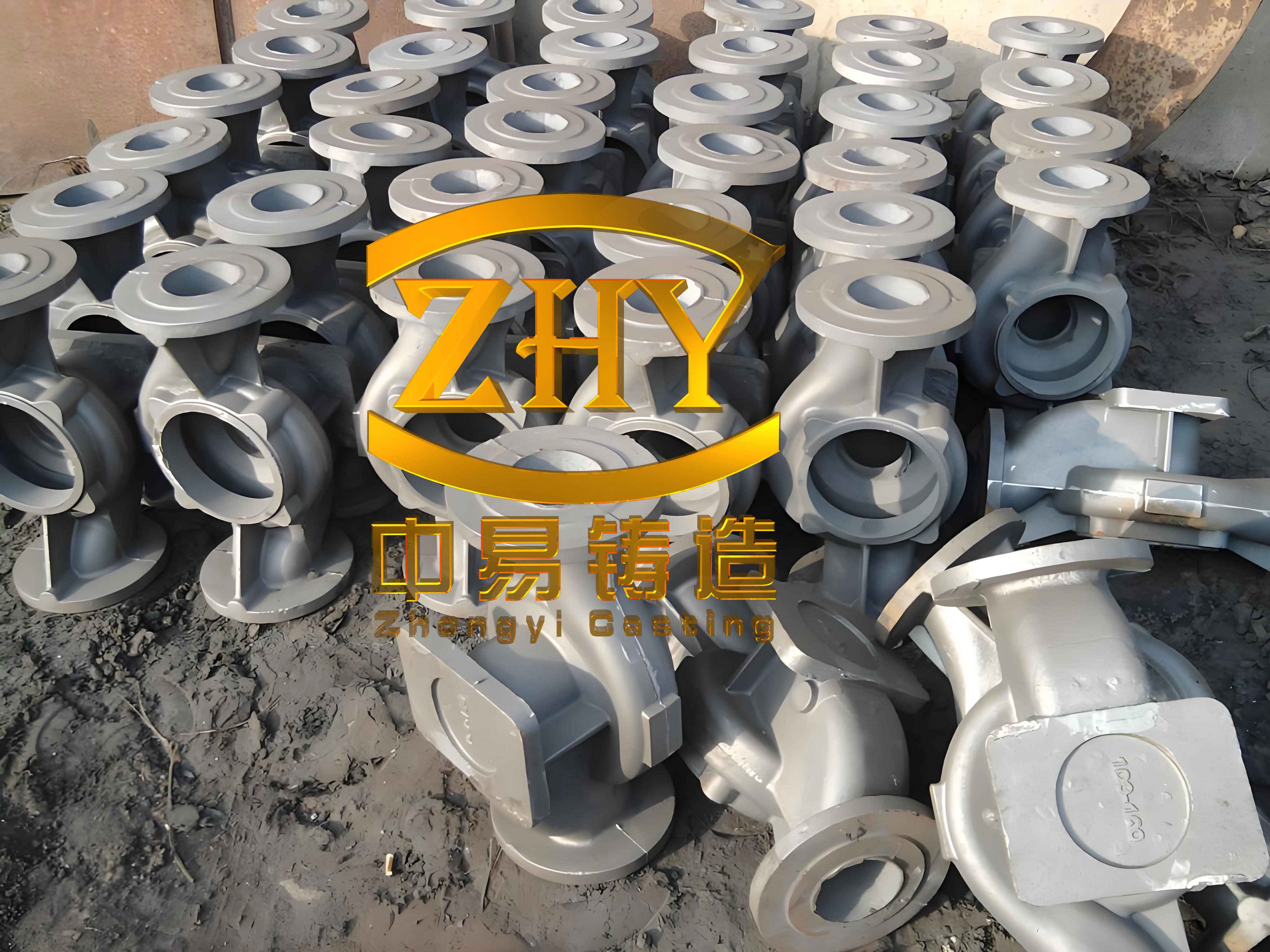
The performance demands on modern gray iron castings are ever-increasing. To meet specifications for precision components, such as those in automotive or heavy machinery, consistent and stable pearlite content is non-negotiable. The decomposition of pearlite into ferrite and graphite during prolonged service at elevated temperatures can lead to softening and a loss of strength. Therefore, elucidating how elements like antimony impede this process is of direct industrial relevance for enhancing the reliability and lifespan of gray iron castings.
Experimental Methodology and Material Design
To accurately assess the role of antimony, it was imperative to minimize confounding influences from trace elements commonly found in commercial pig iron. Therefore, my experimental approach utilized two primary material systems: high-purity Fe-C-Si-Mn alloys and industrial-grade gray iron.
1. Study on Pearlite Promotion: For this phase, I prepared a series of high-purity alloys. Electrolytic iron, high-purity graphite, silicon, and manganese were used as starting materials. Measured quantities of industrial-purity antimony were added to create a matrix with varying Sb content. The base composition was carefully controlled, and the final chemical analysis of the experimental alloys is presented in Table 1.
| Alloy ID | C | Si | Mn | Sb | Fe |
|---|---|---|---|---|---|
| 1 | 3.2 | 1.8 | 0.6 | 0.00 | Bal. |
| 2 | 3.2 | 1.8 | 0.6 | 0.02 | Bal. |
| 3 | 3.2 | 1.8 | 0.6 | 0.05 | Bal. |
| 4 | 3.2 | 1.8 | 0.6 | 0.10 | Bal. |
The melting was conducted in alumina crucibles within a resistance furnace under an argon protective atmosphere. The charge was heated to 1450°C, held for 20 minutes to ensure homogeneity, and then cooled to room temperature at a controlled rate of approximately 50°C/min. The resulting samples were prepared for standard metallographic examination to quantitatively determine the pearlite fraction using image analysis software. This setup allowed me to observe the intrinsic effect of Sb on the as-cast microstructure without interference from complex inoculants or other alloying elements.
2. Study on Pearlite Thermal Stability: To evaluate stability, I needed samples with a significant initial pearlite content. Using a medium-frequency induction furnace, I melted a standard gray iron charge with a base composition conducive to pearlite formation. Antimony was added as a master alloy to the melt in varied amounts. The melts were poured into standard keel block sand molds to produce Y-block test castings. The chemical composition of this series is shown in Table 2.
| Sample | C | Si | Mn | P | S | Sb |
|---|---|---|---|---|---|---|
| A | 3.4 | 2.1 | 0.7 | <0.05 | <0.08 | 0.00 |
| B | 3.4 | 2.1 | 0.7 | <0.05 | <0.08 | 0.04 |
| C | 3.4 | 2.1 | 0.7 | <0.05 | <0.08 | 0.08 |
Specimens were cut from the test castings and subjected to prolonged annealing treatments. The heat treatment cycle involved austenitizing at 900°C for 1 hour, followed by furnace cooling to simulate a moderate cooling rate that might initially yield pearlite. These samples were then isothermally held at 700°C for extended periods (up to 100 hours) to accelerate the potential decomposition of pearlite into ferrite and graphite (a process often called “ferritization” or “pearlite degradation”). The microstructure was examined at intervals to monitor the change in pearlite volume fraction.
Experimental Results and Microstructural Observations
The results from the high-purity alloy series were striking. The alloy with no antimony addition (Alloy 1) exhibited a mixed matrix of approximately 60% pearlite and 40% free ferrite, predominantly surrounding the graphite flakes. With the addition of just 0.02% Sb (Alloy 2), the free ferrite halo was significantly reduced, and the pearlite content increased to over 85%. Alloys 3 and 4 (0.05% and 0.10% Sb) showed a fully pearlitic matrix with virtually no discernible free ferrite under optical microscopy. This clearly demonstrated antimony’s powerful capacity to suppress the eutectoid transformation to ferrite-graphite ($\gamma \rightarrow \alpha + C_{graphite}$) and promote the pearlite reaction ($\gamma \rightarrow \alpha + Fe_3C$).
The thermal stability tests yielded even more insightful data. The initial as-cast + heat-treated structure for all three gray iron casting samples was nearly 100% pearlite. After the prolonged holding at 700°C, dramatic differences emerged, quantified in Table 3.
| Sample | Sb Content (wt.%) | Pearlite after 10h (%) | Pearlite after 50h (%) | Pearlite after 100h (%) | Observations |
|---|---|---|---|---|---|
| A | 0.00 | 75 | 30 | ~10 | Rapid ferritization, graphite spheroidization. |
| B | 0.04 | 95 | 80 | ~60 | Slower decomposition, some pearlite remains. |
| C | 0.08 | 100 | 95 | >85 | High stability, minimal pearlite degradation. |
Sample A (0% Sb) underwent rapid degradation. After 50 hours, the matrix was predominantly ferritic with clustered graphite. In contrast, Sample C (0.08% Sb) retained a largely pearlitic structure even after 100 hours, with only slight coarsening of the cementite lamellae. Sample B showed intermediate behavior. This experiment unequivocally proved that antimony dramatically increases the kinetic barrier to the decomposition of pearlitic cementite ($Fe_3C$) into ferrite and carbon (which deposits onto existing graphite).
Mechanistic Analysis and Discussion
The experimental data compel a deeper inquiry into the mechanisms through which antimony operates. Being a non-carbide former, its influence cannot be attributed to the thermodynamic stabilization of cementite. The key lies in its profound impact on the kinetics of solid-state transformations, primarily through its segregation behavior and its effect on carbon diffusion.
1. Promotion of Pearlite Formation (Suppression of Free Ferrite)
During the eutectoid transformation upon cooling, the austenite ($\gamma$) in gray iron castings can follow two competing paths:
$$ \text{Path I: } \gamma \rightarrow \alpha + C_{graphite} \quad \text{(leading to ferrite matrix)}
$$
$$ \text{Path II: } \gamma \rightarrow \alpha + Fe_3C \quad \text{(leading to pearlite matrix)}
$$
Path I requires the diffusion of carbon atoms over long distances from the transforming austenite to the pre-existing graphite flakes. Path II involves the coordinated, short-range diffusion associated with the lamellar growth of pearlite. Antimony strongly favors Path II through several kinetic interventions:
- Carbon Enrichment in Austenite: During solidification, antimony, a strong surface-active element, segregates to the solid-liquid interface. This segregation alters the local equilibrium, resulting in a higher carbon content in the primary and eutectic austenite. This carbon-enriched austenite has greater stability against the ferrite reaction and a higher driving force for the pearlite transformation upon cooling.
- Segregation at Graphite Interfaces: Antimony powerfully segregates to the graphite/austenite interface, forming a solute-rich layer. During the eutectoid transformation, this layer acts as a barrier, hindering the diffusion flux of carbon atoms from the transforming $\gamma$ to the graphite surfaces. This “blockage” of Path I makes the localized, coupled diffusion required for pearlite nucleation and growth (Path II) more favorable. The diffusion flux $J$ can be conceptually impeded by this interfacial barrier, modifying Fick’s first law for the process: $J = -D \cdot \frac{\partial C}{\partial x} \cdot f(Sb)$, where $f(Sb) < 1$ represents the reduction factor due to the antimony-rich layer.
- Increased Undercooling: The presence of solute antimony in austenite can increase the observed eutectoid transformation undercooling. Transformation at a lower temperature inherently favors the formation of pearlite over ferrite, as the diffusion-controlled ferrite reaction is more severely slowed.
- Strain Field Effects: The atomic radius of antimony is significantly larger than that of iron. When dissolved in austenite, it creates substantial lattice strain. This strain field increases the activation energy for the movement of carbon atoms, effectively reducing the carbon diffusion coefficient $D_C^\gamma$. The reduction in carbon mobility is more detrimental to the long-range diffusion required for ferrite formation than to the short-range, cooperative diffusion in pearlite.
2. Enhancement of Pearlite Thermal Stability
The stability of pearlite is essentially the stability of its constituent cementite lamellae against graphitization. At temperatures below the eutectoid but still significant (e.g., 700°C), cementite is metastable and tends to decompose: $Fe_3C \rightarrow 3Fe(\alpha) + C_{graphite}$. For this to occur in the microstructure of gray iron castings, carbon atoms from $Fe_3C$ must dissolve into the surrounding ferrite, diffuse through it, and precipitate onto adjacent graphite. Antimony retards every step of this process through its unique distribution in the decomposed pearlite structure.
After the pearlite transformation, antimony is rejected from the cementite phase (as it does not dissolve in $Fe_3C$) and concentrates in the ferrite lamellae and, most importantly, at the $\alpha / Fe_3C$ interlamellar boundaries. This creates a complex diffusion landscape for carbon atoms attempting to leave the cementite:
- Barrier at the $Fe_3C/\alpha$ Interface: The carbon atom must first detach from the cementite lattice and enter the ferrite. The antimony-enriched interface presents an additional energy barrier for this transfer process.
- Impeded Diffusion through Ferrite: Carbon diffusion in ferrite ($D_C^\alpha$) is already fast, but the antimony atoms in solid solution create strain fields and act as trapping sites, effectively reducing the mean free path and mobility of carbon. The effective diffusion coefficient can be modeled as: $$ D_{C, eff}^{\alpha} = \frac{D_C^{\alpha}}{1 + g \cdot C_{Sb}} $$ where $g$ is a trapping factor related to the binding energy between Sb and C in the $\alpha$-Fe lattice.
- Barrier at the $\alpha$/Graphite Interface: Finally, the carbon atom must cross the original, persistent antimony-rich layer surrounding the graphite flake to be incorporated. This is the same barrier that inhibited ferrite formation during cooling, now acting to slow down the final stage of pearlite degradation.
This multi-stage retardation can be conceptually represented by a series resistance model for the carbon flux $J$ driving decomposition:
$$ J \propto \frac{1}{R_{total}} = \frac{1}{R_{interface, Fe_3C/\alpha} + R_{bulk, \alpha} + R_{interface, \alpha/Gr}} $$
where each resistance term $R$ is significantly increased by the presence of antimony. The cumulative effect is a drastic reduction in the rate of the $Fe_3C$ decomposition reaction, thereby stabilizing the pearlite in gray iron castings for extended periods at elevated temperatures.
Conclusions and Implications for Gray Iron Castings
My investigation provides a consolidated view of antimony’s role in the metallurgy of gray iron. The conclusions are as follows:
- Antimony is an exceptionally potent promoter and stabilizer of pearlite in gray iron castings. Additions as low as 0.02-0.05 wt.% effectively suppress free ferrite formation in the as-cast condition.
- The thermal stability of pearlite against long-term exposure at elevated temperatures (e.g., ~700°C) is dramatically enhanced by antimony. An addition of 0.08 wt.% Sb can preserve over 85% pearlite after 100 hours, whereas an unalloyed iron may degrade to less than 10% pearlite.
- The primary mechanisms are kinetic in nature. Antimony does not thermodynamically stabilize cementite. Instead, it operates by:
- Segregating to key interfaces (graphite/matrix and ferrite/cementite), creating diffusion barriers for carbon.
- Solid solution strengthening of the ferrite phase, reducing the carbon diffusion coefficient within it.
- Increasing the undercooling required for transformation, favoring the pearlitic over the ferritic reaction.
- For most engineering applications of gray iron castings requiring high and stable strength, a controlled addition of antimony in the range of 0.04% to 0.08% is highly recommended and represents an optimal balance between efficacy and the risk of creating undesirable undercooled graphite forms at higher concentrations.
The implications for the foundry industry are clear. The use of antimony offers a reliable and relatively inexpensive method to achieve consistent, high-pearlite matrices in gray iron castings, ensuring that components like engine blocks, cylinder heads, brake drums, and machine tool beds maintain their mechanical properties throughout their service life, even under moderate thermal loads. This understanding directly supports the broader industrial goals of enhancing performance, reliability, and longevity of ferrous components. Future work may focus on quantitatively modeling the diffusion barriers and integrating Sb’s effect with other common alloying elements used in advanced gray iron castings.