
In the production of cast iron parts, achieving a smooth, defect-free surface is a persistent and critical challenge. Surface imperfections not only degrade the aesthetic and functional quality of the components but also increase post-processing costs significantly. Among various defects, adhesive sand burning-on, or simply “adherent sand,” is particularly troublesome. This defect occurs when molten iron penetrates the pores of the molding sand or when sand grains fuse to the casting surface, making them extremely difficult to remove during cleaning. Traditional solutions often involve the use of additives like high-quality coal dust in green sand or the application of refractory coatings to the mold cavity. While effective, these methods add complexity and cost to the foundry process.
An alternative, highly economical approach utilizes naturally occurring clay-based sands, primarily composed of local yellow loam mixed with a small proportion of inexpensive slag. This natural clay sand formulation, requiring minimal processing, has demonstrated remarkable success in producing high-surface-quality cast iron parts such as sewing machine motor housings and end caps. The key to its success lies in the formation of a distinct, peelable “sintered shell” at the interface between the casting and the mold during pouring. This shell acts as a barrier against metal penetration and easily detaches upon cooling, revealing a clean casting surface. However, the application of this same sand formulation to other cast iron parts with different geometries and, crucially, different section thicknesses, has revealed limitations. For instance, when used to cast inertia wheels with thin spokes (3-5 mm thick), the sand failed to form a coherent sintered layer, leading to persistent adherent sand defects in those areas. This inconsistency highlights a fundamental gap in understanding: the sintering behavior of natural clay sand is not universal but is highly dependent on its composition and the thermal conditions imposed by the casting.
This investigation, therefore, originates from a practical industrial problem. It posits that the controlled sintering of natural clay sand is the cornerstone for preventing adherent sand and obtaining superior surface finish on cast iron parts. The research question focuses on how the individual components of the sand—specifically, different types of yellow loam and slag—influence its sintering characteristics. Furthermore, it explores the role of iron oxides, which are inherently present or form during the casting process. The central hypothesis is that by understanding and manipulating these compositional factors, the sintering degree of the mold sand can be tailored to match the thermal demands of any given cast iron part, regardless of its wall thickness, thereby consistently achieving a peelable sintered shell and an excellent surface.
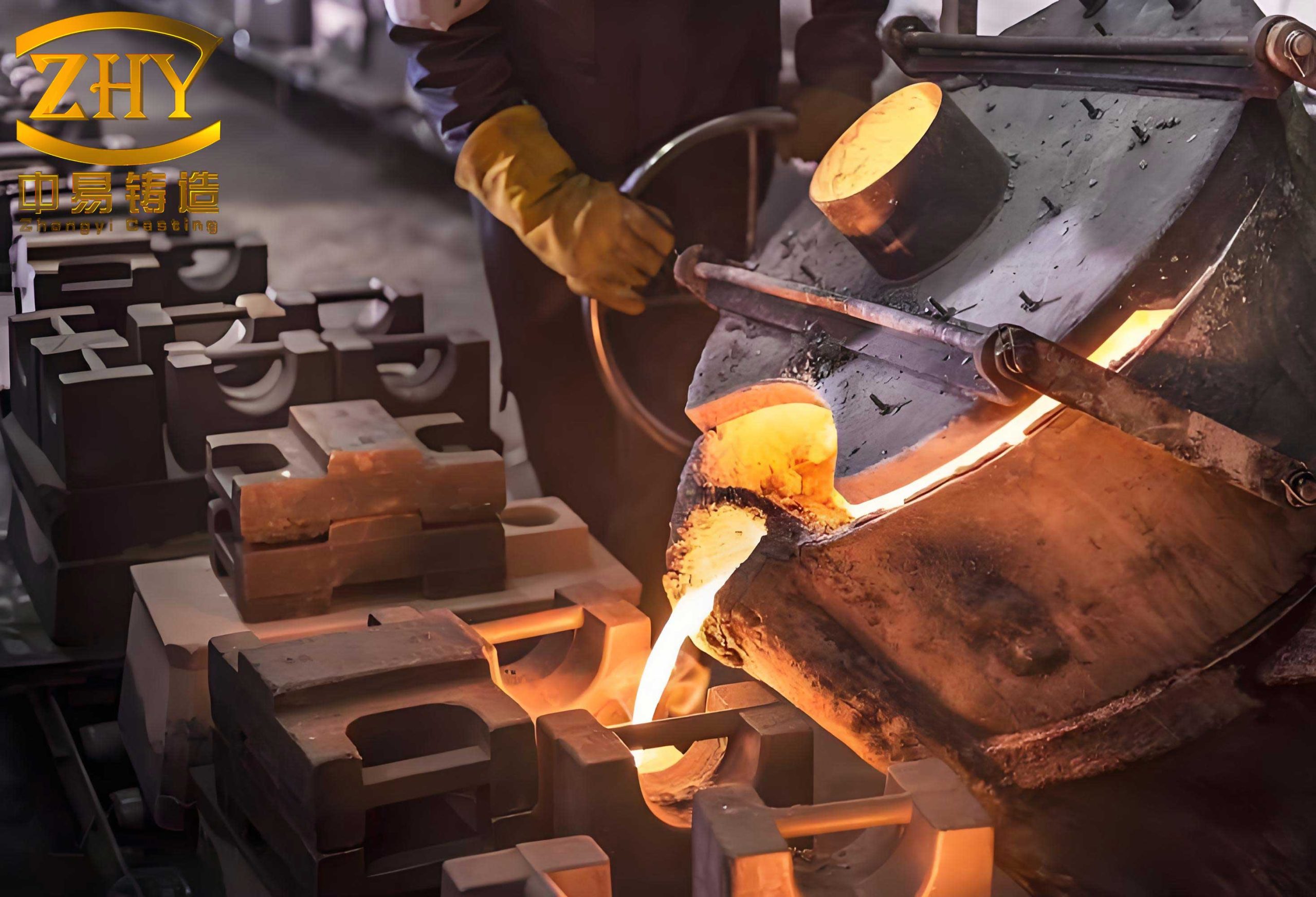
Literature Review and Problem Statement
The formation of a sintered layer at the metal-mold interface is a well-documented phenomenon in foundry science. An effective sintered shell must be “peelable”—exhibiting sufficient strength to resist metal penetration during pouring but also possessing a thermal expansion coefficient mismatch or brittle nature that allows it to spall off easily upon cooling. Traditional green sand molds rely on the volatile gases and carbonaceous deposits from coal dust to create a reducing atmosphere and a weak, carbon-rich layer that minimizes sand-metal interaction. While functional, this does not always result in a definitive, mechanically separable shell.
The use of natural sands with inherent bonding properties, like clay-rich loams, presents a different pathway. The sintering of ceramic and clay-based materials is a process where solid particles bond together into a coherent mass below their melting point, driven by atomic diffusion, often facilitated by the presence of liquid phases. In the context of molding sands, the low-melting-point constituents (fluxes) become liquid at casting temperatures, flow into the inter-particle voids, and upon cooling, cement the sand grains together forming a shell. The degree of sintering is critical: insufficient sintering leads to a weak, porous layer that allows metal penetration, while excessive sintering causes the shell to fuse permanently to the cast iron part surface.
Prior research has established that the chemical composition of the molding aggregate directly affects its sintering temperature and behavior. Materials high in silica (SiO₂) generally have high refractoriness and resist sintering, while the presence of alumina (Al₂O₃), alkali metal oxides (Na₂O, K₂O), and alkaline earth metal oxides (CaO, MgO) can significantly lower the liquidus temperature of the silicate system, promoting earlier and more extensive liquid phase formation. Industrial slags, by-products from metallurgical processes, are rich in such fluxing agents (CaO, FeO, etc.) and are known to drastically reduce the refractoriness of silica sands.
However, a systematic study focusing on the synergistic sintering effect in ternary systems comprising natural yellow loam (a source of SiO₂ and Al₂O₃), industrial slag (a source of fluxes), and iron oxides (FeO/Fe₂O₃, ubiquitous in iron casting environments) is lacking. Furthermore, the practical implication of tailoring this ternary composition to suit the thermal cycle experienced by molds for thin-section versus thick-section cast iron parts remains unexplored. Thin sections solidify rapidly, subjecting the adjacent mold to a shorter, albeit still high-temperature, thermal pulse. This may not provide sufficient time or energy to initiate and complete the sintering reactions needed for shell formation if the sand composition is not adequately reactive.
Therefore, the problem is two-fold: first, to deconvolute the individual and combined contributions of loam type, slag content, and iron oxides to the sintering kinetics and final state of natural clay sand; and second, to translate this understanding into practical sand recipes that can be deployed reliably for cast iron parts across a spectrum of wall thicknesses.
Materials and Experimental Methodology
The experimental work was structured to first isolate the sintering behavior of binary mixtures, then introduce the critical third component, and finally validate the findings with practical casting trials.
2.1 Raw Materials and Characterization
Two distinct types of naturally occurring yellow loam, designated as Loam #1 and Loam #2, were sourced. Their primary chemical compositions, determined by X-ray fluorescence (XRF), are presented in Table 1. Loam #1 is characterized by a higher alumina (Al₂O₃) and lower silica (SiO₂) content compared to Loam #2, suggesting a higher proportion of clay minerals like kaolinite (Al₂Si₂O₅(OH)₄). The slag was a basic, granulated blast furnace slag, rich in calcium silicate phases with significant amounts of CaO, Al₂O₃, and MgO. Iron oxide (Fe₂O₃) powder of analytical grade was used as the additive to simulate the in-situ oxidation of iron during pouring.
| Component | Loam #1 (w1/%) | Loam #2 (w2/%) |
|---|---|---|
| SiO₂ | 59.0 | 69.0 |
| Al₂O₃ | 34.0 | 24.0 |
| Fe₂O₃ | 2.4 | 2.3 |
| Others (K₂O, Na₂O, CaO, MgO, etc.) | 4.6 | 4.7 |
2.2 Sintering Test Procedure
All raw materials (loams and slag) were thoroughly dried to remove moisture. Precise mixtures were prepared according to the weight ratios outlined in Table 2. For the initial binary tests (Series A), 10g samples of Loam/Slag mixtures were prepared. For the ternary tests (Series B), 7g samples of the same Loam/Slag base mixtures were homogeneously blended with 3g of iron oxide (Fe₂O₃), resulting in a fixed 30 mass% iron oxide addition. Each sample was divided into five equal portions and placed in ceramic crucibles.
| Series | Sample ID | Loam #1 (mass%) | Loam #2 (mass%) | Slag (mass%) | Fe₂O₃ (mass%) |
|---|---|---|---|---|---|
| Binary (A) | A-1A | 100 | 0 | 0 | 0 |
| A-1B | 90 | 0 | 10 | 0 | |
| A-1C | 80 | 0 | 20 | 0 | |
| … | … | … | … | … | |
| A-2A | 0 | 100 | 0 | 0 | |
| A-2B | 0 | 90 | 10 | 0 | |
| … | … | … | … | … | |
| Ternary (B) | B-1A | 70 | 0 | 0 | 30 |
| B-1B | 63 | 0 | 7 | 30 | |
| B-1C | 56 | 0 | 14 | 30 | |
| … | … | … | … | … | |
| B-2A | 0 | 70 | 0 | 30 | |
| B-2B | 0 | 63 | 7 | 30 | |
| … | … | … | … | … |
Sintering was conducted in a high-temperature box furnace (SX2 type). For the binary Series A, samples were heated to 1350°C, held for 30 minutes, and then furnace-cooled. For the ternary Series B, isothermal sintering tests were performed at 950°C and 1000°C with a 30-minute hold. Additional kinetic studies were performed on selected compositions (e.g., B-1D: Loam#1/Slag=7/3 base + Fe₂O₃; B-2D: Loam#2/Slag=7/3 base + Fe₂O₃) by varying hold times from 5 to 30 minutes at 1000°C.
The sintered state was evaluated qualitatively based on established criteria for inorganic materials, as defined in Table 3. The assessment involved visual inspection, probing with a steel needle to assess mechanical integrity, and observing the cohesion of the sintered mass.
| Sintering Degree | Macroscopic Morphology | Estimated Liquid Phase (mass%) | Probe Test Result |
|---|---|---|---|
| No Sintering | Loose, particulate state | 0-1% | Needle penetrates freely |
| Light Sintering | Friable, brick-like mass | 1-5% | Needle penetrates easily, mass crumbles |
| Moderate Sintering | Coherent, ceramic-like body | 5-10% | Needle penetration requires effort, mass holds shape |
| Heavy Sintering | Dense, vitreous/glassy surface | 10-30% | Needle cannot penetrate or scratches surface, mass is strong |
| Fusion/Melting | Glassy, fully fluid melt | >30% | Material is liquid or has flowed |
2.3 Casting Validation Trials
Based on sintering test results, new sand formulations were designed by blending Loam #1, Loam #2, and slag in various ternary ratios without pre-added iron oxide (relying on the oxidation from the cast iron parts during pouring). These sands were used to produce standard test plates with thicknesses of 3, 4, 5, and 6 mm via green sand molding. Gray iron was poured at approximately 1380°C. After cooling, the cast plates were inspected for the presence and peelability of the sintered shell and any adherent sand defects. Successful formulations were then applied in a production setting to cast inertia wheels, and the surface quality of the spokes was evaluated.
Experimental Results and Analysis
3.1 The Necessity of a Ternary System
The initial binary sintering tests (Series A) yielded a clear and fundamental result: none of the mixtures containing only yellow loam and slag, regardless of ratio, showed any signs of sintering after exposure to 1350°C for 30 minutes. All samples remained in a loose, powdery state. This was a critical finding, as it demonstrated conclusively that the peelable sintered shell observed on industrial cast iron parts could not be formed solely from the reaction between the base loam and the slag. This prompted a microanalysis of actual industrial sinter shells from successful castings. Energy Dispersive Spectroscopy (EDS) revealed that these shells contained iron oxide concentrations averaging around 30 mass%, far exceeding the inherent 2-3% Fe₂O₃ in the raw loams. This pointed directly to iron oxide as the essential third component.
3.2 Sintering Behavior of the Loam-Slag-Iron Oxide System
The introduction of 30% Fe₂O₃ (Series B) dramatically altered the sintering response. The results for Loam #2-based mixtures are summarized in Table 4, and for Loam #1-based mixtures in Table 5.
| Sample ID | Base Loam#2:Slag Ratio | Sintering State @ 950°C, 30 min | Sintering State @ 1000°C, 30 min |
|---|---|---|---|
| B-2A | 100:0 | No Sintering | Light Sintering |
| B-2B | 90:10 | No Sintering | Light Sintering |
| B-2C | 80:20 | No Sintering | Moderate Sintering |
| B-2D | 70:30 | No Sintering | Heavy Sintering |
| B-2E | 60:40 | No Sintering | Heavy Sintering (adhered to crucible) |
| B-2F | 50:50 | No Sintering | Heavy Sintering (adhered to crucible) |
| Sample ID | Base Loam#1:Slag Ratio | Sintering State @ 950°C, 30 min | Sintering State @ 1000°C, 30 min |
|---|---|---|---|
| B-1A | 100:0 | No Sintering | Light Sintering |
| B-1B | 90:10 | No Sintering | Light Sintering |
| B-1C | 80:20 | No Sintering | Moderate Sintering |
| B-1D | 70:30 | No Sintering | Heavy Sintering |
| B-1E | 60:40 | No Sintering | Heavy Sintering (adhered to crucible) |
| B-1F | 50:50 | No Sintering | Heavy Sintering (adhered to crucible) |
The data reveals several key trends:
- Essential Role of Iron Oxide: Sintering only occurred in the presence of Fe₂O₃, confirming it as a vital fluxing agent in this system.
- Catalytic Effect of Slag: For both loam types, increasing the slag content in the base mixture consistently promoted more severe sintering at 1000°C. A mixture with no slag (B-1A, B-2A) only reached light sintering, while a 30% slag content (B-1D, B-2D) resulted in heavy sintering. This is attributed to the fluxing oxides (CaO, MgO, etc.) in the slag which form low-melting-point eutectics with silica, alumina, and iron oxide.
- Influence of Loam Type: Comparing samples with identical base ratios (e.g., B-1D vs. B-2D), the Loam #1-based mixture consistently showed a slightly more advanced sintered state at the same temperature, indicating a higher sintering propensity.
3.3 Sintering Kinetics: The Time Factor
The results from the isothermal kinetic studies at 1000°C are critical for understanding the process in the context of casting, where high-temperature exposure time is limited. The data for the representative “7:3 base + Fe₂O₃” compositions are shown in Table 6.
| Time (min) | B-2D (Loam#2:Slag=7:3 base) | B-1D (Loam#1:Slag=7:3 base) |
|---|---|---|
| 5 | No Sintering | No Sintering |
| 6 | No Sintering | No Sintering |
| 8 | No Sintering | Light Sintering |
| 9 | No Sintering | – |
| 10 | Light Sintering | Moderate Sintering |
| 15 | Moderate Sintering | Heavy Sintering |
| 20 | Heavy Sintering | Heavy Sintering |
This kinetic comparison starkly highlights the difference between the two loams. The Loam #1-based mixture began sintering between 6-8 minutes, reaching a moderate state by 10 minutes. In contrast, the Loam #2-based mixture required 9-10 minutes to initiate sintering and took 15 minutes to reach a moderate state. This demonstrates that Loam #1 has a faster sintering kinetic than Loam #2. This property is vital for thin-section cast iron parts, where the mold’s high-temperature dwell time is short. A sand that sinters too slowly will not form a complete shell before the metal solidifies, leading to adherent sand.
3.4 Chemical and Microstructural Analysis of the Sintering Mechanism
The sintering process can be understood through phase equilibrium in the SiO₂-Al₂O₃-Fe₂O₃-CaO system. Yellow loam provides SiO₂ and Al₂O₃. The slag provides CaO and other fluxes. Iron oxide (Fe₂O₃, reducing to FeO in the casting environment) acts as a powerful flux. The combined system creates complex silicate melts with low liquidus temperatures. The sintering degree $S$ can be conceptually related to the volume fraction of liquid phase $V_l$ formed at temperature $T$ and time $t$, which is a function of composition $C_i$:
$$ S(T, t) \propto V_l(T, t, C_{SiO_2}, C_{Al_2O_3}, C_{FeO}, C_{CaO}, …) $$
Loam #1, with higher Al₂O₃ and lower SiO₂, likely contains more kaolinite. Upon heating, kaolinite decomposes to metakaolin and eventually mullite, but in the presence of fluxes, it readily participates in low-temperature eutectic reactions. The higher initial alumina content may shift the composition into a region of the phase diagram with a lower solidus temperature. Furthermore, the lower silica content means less of the highly refractory quartz is present, reducing the overall resistance to liquid phase formation. This explains its faster sintering kinetics.
The role of slag is primarily to introduce CaO. The CaO-FeO-SiO₂ ternary system is notorious for its low-melting-point regions. The addition of CaO can significantly depress the melting temperature of fayalite (2FeO·SiO₂) and other iron silicates. Therefore, increasing slag content increases $C_{CaO}$, thereby increasing $V_l$ at a given temperature, leading to more severe sintering, as observed.
The formation of the peelable shell is a dynamic process. During pouring, the mold surface rapidly heats up. Iron from the molten metal oxidizes, supplying FeO to the sand interface. This FeO, along with the inherent fluxes from the slag, reacts with the clay and silica to form a viscous liquid that infiltrates sand grain boundaries. Upon cooling, this liquid solidifies, cementing the grains into a continuous, brittle layer. The thermal contraction mismatch between this sintered shell and the cast iron part facilitates its detachment.
Industrial Application and Validation for Cast Iron Parts
The practical challenge was to design a sand that would sinter adequately for the thin (3-5 mm) spokes of an inertia wheel, where the original production sand (based on Loam #2 and slag) failed. The laboratory sintering kinetics indicated that Loam #1 sinters faster but is often unsuitable as a sole binder due to inferior room-temperature properties (strength, permeability). The solution was to create a blended system leveraging the faster sintering of Loam #1 while maintaining the structural benefits of Loam #2.
Initial casting trials with binary Loam#2/Slag sands for thin plates confirmed the problem, as shown in Table 7.
| Loam#2 : Slag Ratio | 3 mm plate | 4 mm plate | 5 mm plate | 6 mm plate |
|---|---|---|---|---|
| 9 : 1 | Adherent Sand | Adherent Sand | Adherent Sand | Adherent Sand |
| 8 : 2 | Adherent Sand | Adherent Sand | Adherent Sand | Adherent Sand |
| 7 : 3 | Adherent Sand | Adherent Sand | Peelable Shell | Peelable Shell |
| 6 : 4 | Adherent Sand | Adherent Sand | Peelable Shell | Peelable Shell |
Subsequent trials with ternary Loam#2/Loam#1/Slag blends yielded the successful results summarized in Table 8.
| Loam#2 : Loam#1 : Slag | 3 mm plate | 4 mm plate | 5 mm plate | 6 mm plate |
|---|---|---|---|---|
| 5 : 2 : 3 | Adherent Sand | Adherent Sand | Peelable Shell | Peelable Shell |
| 4 : 3 : 3 | Adherent Sand | Adherent Sand | Peelable Shell | Peelable Shell |
| 5 : 1 : 4 | Adherent Sand | Adherent Sand | Peelable Shell | Peelable Shell |
| 4 : 2 : 4 | Adherent Sand | Peelable Shell | Peelable Shell | Peelable Shell |
| 3 : 3 : 4 | Peelable Shell | Peelable Shell | Peelable Shell | Peelable Shell |
The formulations with ratios of 4:2:4 and 3:3:4 (Loam#2 : Loam#1 : Slag) proved effective for sections down to 4 mm and 3 mm, respectively. These were adopted for production of the inertia wheels. The result was the consistent formation of a coherent, peelable sintered shell over the entire casting, including the problematic thin spokes. After shakeout and light tapping, the shell detached completely, revealing a smooth, clean surface on the cast iron parts, eliminating the need for aggressive shot blasting. This principle has been successfully extended to other thin-wall castings like bearing housings.
Conclusion
This comprehensive investigation elucidates the complex sintering mechanism of natural clay sand and establishes a practical framework for optimizing the surface quality of cast iron parts. The key findings are:
- The formation of a peelable sintered shell, essential for preventing adherent sand, is not a binary process but a ternary one. It requires the synergistic interaction of yellow loam (SiO₂-Al₂O₃ source), slag (CaO/flux source), and iron oxides (FeO flux) generated during the casting process. The reaction can be modeled as a liquid phase sintering process where the volume of low-melting-point silicate melt determines the final sintering degree $S$.
- The slag content is a powerful lever controlling sintering severity. Increasing the slag percentage linearly promotes more extensive liquid phase formation and heavier sintering, as described by the relationship $S \propto f(C_{slag})$. Excessive slag can lead to a shell that fuses to the casting.
- The type of yellow loam significantly impacts sintering kinetics. Loam with higher alumina and lower silica content (Loam #1) exhibits markedly faster sintering kinetics than loam with higher silica (Loam #2). This is critical for thin-section cast iron parts where thermal exposure time is limited. The time to achieve a moderate sinter $t_{moderate}$ is shorter for Loam #1-based systems.
- The practical outcome is a methodology for sand design. By understanding the thermal profile imposed by a specific cast iron part (a function of its geometry and wall thickness), foundries can tailor the sand composition. For thick sections with longer thermal exposure, a slower-sintering sand (higher Loam #2 ratio) is suitable. For challenging thin sections, a blended sand incorporating a proportion of faster-sintering Loam #1 (e.g., in a 3:3:4 or 4:2:4 ratio with Loam #2 and slag) can be formulated to ensure timely shell formation.
This work moves beyond empirical trial-and-error, providing a scientific basis for the use of economical natural clay sands. It demonstrates that by consciously engineering the sand’s compositional triad, the sintering behavior can be precisely controlled to match the casting process, thereby reliably achieving high surface quality in a wide range of cast iron parts.