
As an industry analyst with decades of experience in the metalworking sector, I have observed the cyclical nature of foundry operations with keen interest. Today, I wish to delve into the current landscape, particularly for sand casting manufacturers, who form the backbone of component production across numerous industries. The recent data from Europe presents a concerning picture, yet within this challenge lies technological innovation that could redefine sustainability. This article will explore the economic sentiment indicators affecting these manufacturers, analyze a groundbreaking sand reclamation technology, and project the future pathways for this vital industry. Throughout, we will see how sand casting manufacturers are navigating a period of uncertainty by embracing efficiency and circular economy principles.
The European Foundry Industry Sentiment Indicator (FISI) serves as a crucial barometer for the health of our sector. Having tracked this index since its inception, the recent trend is undeniably troubling. June 2023 saw the FISI drop to 98.6 points, a decline of 2.1 points from May and, more significantly, falling below its initial 100.0 point benchmark set in 2015. This marks the fourth consecutive monthly decline, signaling a deepening negative trend. For sand casting manufacturers, this index is more than a number; it reflects real-world challenges in order books and production planning. While backlogs remain high, they are being consumed without sufficient new orders to replenish them, leading to a perceived “collapse” in new inquiries across several downstream industries.
To understand the depth of this trend, let us examine a hypothetical model for the sentiment index. We can posit that the FISI at time \( t \), denoted as \( S_t \), is a function of several underlying factors: current order intake \( O_t \), production levels \( P_t \), and future expectations \( E_t \). A simplified representation could be:
$$ S_t = \alpha \cdot O_t + \beta \cdot P_t + \gamma \cdot E_t + \epsilon_t $$
where \( \alpha, \beta, \gamma \) are weighting coefficients reflecting the importance of each factor, and \( \epsilon_t \) represents statistical noise or external shocks. The consecutive declines suggest that for recent periods, the combined weighted effect of these variables has been negative. The expectation component \( E_t \), in particular, appears heavily pessimistic, dragging the entire index down. This mathematical perspective helps sand casting manufacturers quantify the intangible “mood” of the market.
The following table illustrates a simulated monthly trend for key indicators relevant to sand casting manufacturers, based on the reported trajectory. It shows how different facets of the business have evolved over a critical six-month period.
| Month (2023) | FISI Index | Monthly Change | Order Book Status | Production Level Index | Price Expectation Index |
|---|---|---|---|---|---|
| January | 103.5 | -0.8 | High, Stable | 105.2 | 102.1 |
| February | 102.1 | -1.4 | High, Slightly Declining | 103.8 | 100.5 |
| March | 101.0 | -1.1 | High, Eroding | 102.0 | 99.2 |
| April | 100.7 | -0.3 | Moderate, Declining | 101.5 | 98.0 |
| May | 100.7 | 0.0 | Moderate, Stable | 100.8 | 97.1 |
| June | 98.6 | -2.1 | Low, Collapsing | 99.1 | 95.0 |
Parallel to the FISI, the Business Climate Indicator (BCI) for the eurozone manufacturing sector provides a broader, but equally grim, context. In June, it fell by 0.13 points to a mere 0.06 points. This places it perilously close to the negative territory last seen in the late pandemic period of 2020. The BCI is a composite, derived from five survey balances: production trends, order books, export order books, stocks of finished products, and production expectations. For sand casting manufacturers, a low BCI implies constrained capital expenditure among their clients, reduced demand for durable goods, and overall economic hesitation. The formula for the BCI, as used by the European Commission, is a weighted average. If we denote the five balances as \( B_1, B_2, B_3, B_4, B_5 \), with respective standard weights \( w_1, w_2, w_3, w_4, w_5 \), the BCI is calculated as:
$$ \text{BCI} = \sum_{i=1}^{5} w_i B_i $$
where \( \sum w_i = 1 \). The recent drop indicates negative movements across several of these balances simultaneously.
In such an environment, the imperative for sand casting manufacturers is not just to weather the storm but to fundamentally improve operational resilience and cost structure. This is where innovation in core processes becomes a lifeline. One of the most significant cost and environmental burdens for sand casting manufacturers is the consumption and disposal of molding sand. Traditionally, producing 1,000 tonnes of steel castings could require approximately 2,500 tonnes of silica sand, most of which, after use, became waste destined for landfills—a practice now largely prohibited in Europe. The logistics of importing virgin sand and disposing of used sand present both economic and environmental challenges.
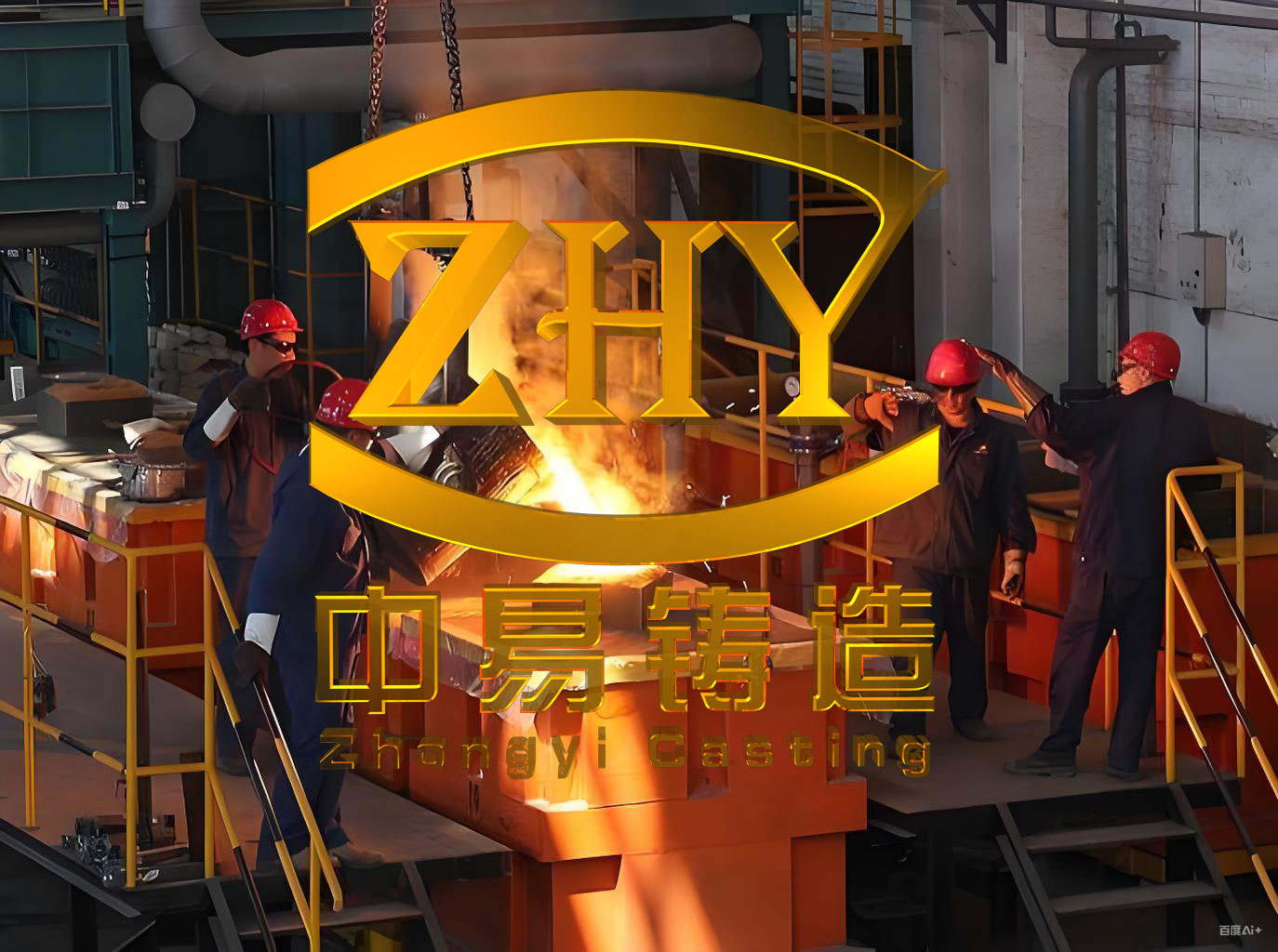
The breakthrough comes from advanced sand reclamation technology, such as the modular system developed by RESAND. This technology employs a combination of thermal and mechanical treatment to regenerate spent foundry sand. The process can be modeled to show its efficiency. Let \( M_{\text{virgin}} \) be the mass of virgin sand required per year without reclamation, \( M_{\text{waste}} \) be the mass of waste sand generated, and \( R \) be the reclamation rate (the fraction of waste sand that can be recovered for reuse). With a reclamation system, the annual mass of virgin sand needed, \( M_{\text{new}} \), becomes:
$$ M_{\text{new}} = M_{\text{virgin}} – R \cdot M_{\text{waste}} $$
For a typical foundry, \( M_{\text{waste}} \approx M_{\text{virgin}} \). If the reclamation rate \( R \) achieves a value of, say, 0.88 (or 88%), then the savings are substantial. In our earlier example, \( M_{\text{virgin}} = 2500 \) tonnes. With \( R = 0.88 \), we get:
$$ M_{\text{new}} = 2500 – 0.88 \times 2500 = 2500 – 2200 = 300 \text{ tonnes.} $$
This represents an 88% reduction in virgin sand consumption. This mathematical reality is a game-changer for sand casting manufacturers globally, offering a direct path to cut material costs and environmental footprint.
The benefits for sand casting manufacturers adopting such a system are multi-faceted and can be summarized in another detailed table, comparing traditional practice versus the modern reclamation approach.
| Aspect | Traditional Sand Practice | With On-site Sand Reclamation | Impact for Sand Casting Manufacturers |
|---|---|---|---|
| Virgin Sand Consumption | Very High (e.g., 2500t for 1000t castings) | Dramatically Reduced (e.g., 300t for 1000t castings) | Major cost saving, reduced import dependency, lower logistics carbon footprint. |
| Waste Disposal | Landfilling (high cost, regulatory risk) | Near-zero landfill; waste stream becomes input. | Elimination of disposal fees and compliance headaches, enhancing sustainability credentials. |
| Sand Quality | Variable, dependent on batch consistency of new sand. | More uniform, often with finer and more consistent grain size after reclamation. | Improved casting surface finish, reduced defects, and potentially lower binder requirements. |
| Binder Usage | Standard amount required for fresh sand mixes. | Can be reduced due to better sand properties and thermal cleaning of old binder residues. | Further material cost savings and reduced emissions from binder decomposition. |
| Operational Logistics | Complex: inbound sand shipments, outbound waste transport. | Simplified: minimal inbound sand, no outbound waste for disposal. | Leaner operations, less handling, reduced risk of supply chain disruption for key raw material. |
| Capital Investment | Lower upfront cost (just sand purchasing). | Higher upfront cost for reclamation plant, but with rapid ROI. | Strategic investment that transforms a cost center into a value-retention loop. |
For sand casting manufacturers, the calculus is clear. In a time of declining business sentiment and squeezed margins, investing in sand reclamation is not merely an environmental gesture but a core competitive strategy. The technology allows them to decouple production growth from linear resource consumption. Consider the implications on the cost per tonne of casting, \( C_{\text{casting}} \). Traditionally, \( C_{\text{casting}} \) includes a significant sand cost component \( C_{\text{sand}} \). With reclamation, \( C_{\text{sand}} \) is drastically reduced. We can express the new cost \( C_{\text{casting, new}} \) as:
$$ C_{\text{casting, new}} = C_{\text{raw material (metal)}} + C_{\text{sand, reclaimed}} + C_{\text{energy}} + C_{\text{labor}} + C_{\text{capital, amortized}} $$
where \( C_{\text{sand, reclaimed}} \ll C_{\text{sand, virgin}} \). Over time, the amortized capital cost of the reclamation plant is offset by the recurring savings, leading to a lower total cost and higher margin resilience—a critical advantage when the FISI points to weak pricing power.
The experience of forward-thinking sand casting manufacturers in Northern Europe, who have pioneered the use of such modular reclamation plants, offers compelling evidence. Since early 2023, one such steel foundry has been operating a system that processes waste sand directly on-site. The preliminary results are transformative. They have eliminated landfill concerns entirely, nullified the logistical headaches of sand supply and waste removal, and are saving approximately 2,200 tonnes of new sand annually. Furthermore, the reclaimed sand exhibits superior properties: finer grain size distribution and lower demand for binding agents. This case underscores that for modern sand casting manufacturers, operational excellence is inextricably linked with sustainable material management. The ability to close the loop on sand usage directly addresses two major pressure points: cost volatility of raw materials and stringent environmental regulations.
Looking ahead, the convergence of economic pressure and technological opportunity will likely accelerate change among sand casting manufacturers. The pessimistic expectations embedded in the current FISI and BCI may act as a catalyst for investment in efficiency-enhancing technologies like advanced sand reclamation. The future business climate for sand casting manufacturers could be modeled as a function of both external demand and internal innovation adoption rate. Let \( D_t \) represent an index of external demand (driven by sectors like automotive, machinery, and construction), and \( I_t \) represent an index of internal innovation adoption (e.g., the percentage of foundries using high-efficiency reclamation). A simple prognostic model for future industry health \( H_{t+1} \) might be:
$$ H_{t+1} = \delta \cdot D_t + \theta \cdot I_t + \zeta $$
where \( \delta \) and \( \theta \) are positive coefficients, and \( \zeta \) is a constant. Even if \( D_t \) remains weak in the short term, a rising \( I_t \) can help stabilize or even improve \( H_{t+1} \). This highlights the strategic imperative for sand casting manufacturers to innovate from within.
In conclusion, the current sentiment indicators paint a challenging picture for the European foundry sector, and by extension, for sand casting manufacturers everywhere. However, within this challenge lies a powerful narrative of adaptation and technological progress. By embracing circular economy principles through advanced sand reclamation, sand casting manufacturers can build a more resilient, cost-effective, and sustainable operation. This transformation reduces dependence on volatile raw material markets, eliminates waste liabilities, and improves product quality. As the industry navigates this period of economic uncertainty, those sand casting manufacturers who invest in such core process innovations will be best positioned to thrive, regardless of the fluctuations in the next FISI report. The journey from linear consumption to circular production is not just an environmental necessity but the next frontier of competitiveness for sand casting manufacturers worldwide.