
The relentless pursuit of manufacturing efficiency, geometric freedom, and component performance has driven the evolution of advanced production techniques. In the domain of agricultural machinery manufacturing, where components often face demanding operational conditions involving variable loads, abrasive environments, and the need for high reliability, the quest for robust and cost-effective parts is paramount. Precision investment casting, a centuries-old process refined for modern industry, stands as a cornerstone for producing complex, high-integrity metal parts with excellent surface finish and dimensional accuracy. Concurrently, the advent of Additive Manufacturing (AM), commonly known as 3D printing or rapid prototyping, has revolutionized design and manufacturing paradigms by enabling the layer-wise fabrication of intricate geometries without dedicated tooling. This article, from my perspective as a practitioner and researcher in advanced manufacturing, explores the profound and transformative integration of various Additive Manufacturing technologies with the established precision investment casting process, specifically for the production of agricultural machinery components.
The fundamental principle of precision investment casting, also known as the lost-wax process, involves creating a disposable pattern (traditionally wax), assembling it into a cluster, building a ceramic shell around it, dewaxing, firing the shell to create a mold, pouring molten metal, and finally removing the ceramic shell to reveal the metal casting. While capable of exceptional results, traditional pattern production can be time-consuming, expensive for low volumes or highly complex designs, and limited in geometric flexibility. This is where Additive Manufacturing introduces a disruptive capability: the direct digital fabrication of patterns, molds, or even cores. By fusing AM with precision investment casting, we unlock a hybrid manufacturing pathway that synergizes the geometric freedom and rapid tool-less production of AM with the superior metallurgical properties and surface quality of cast metal components.
An Overview of Additive Manufacturing Technologies
Additive Manufacturing encompasses a family of processes that build objects from 3D model data by successively adding material layer upon layer. Key technologies relevant to enhancing precision investment casting include:
| AM Technology | Fundamental Principle | Common Materials | Key Characteristics |
|---|---|---|---|
| Selective Laser Sintering (SLS) | Uses a laser to selectively fuse powdered material (polymer, sand, metal) layer by layer. | Polyamide (Nylon), Sand composites, Polystyrene | Good mechanical strength, no support structures needed for powders, porous surface. |
| Stereolithography (SLA) | Uses an ultraviolet laser to cure and solidify liquid photopolymer resin layer by layer. | Photopolymer resins (standard, castable) | High resolution, smooth surface finish, parts can be brittle. |
| Fused Deposition Modeling (FDM) | Extrudes and deposits a heated thermoplastic filament through a nozzle along a defined path. | ABS, PLA, Investment Casting Wax | Widely accessible, lower cost, visible layer lines. |
| Binder Jetting (3D Printing) | Deposits a liquid binding agent onto a thin layer of powder (polymer, sand, ceramic) to join particles. | Sand, Gypsum, Metal powders | Fast build speeds, suitable for full-color models and direct sand mold printing. |
| Laminated Object Manufacturing (LOM) | Laminates and cuts sheets of material (paper, plastic, metal foil) layer by layer using a laser or blade. | Paper, Plastic films | Lower material cost, good for large prototypes, stair-step texture. |
The mathematical core of many AM processes, particularly laser-based ones like SLS and SLA, involves precise energy delivery. The energy density \( E_d \) delivered to the material is a critical parameter governing fusion or curing, and can be expressed as:
$$ E_d = \frac{P}{v \cdot h} $$
where \( P \) is the laser power, \( v \) is the scan speed, and \( h \) is the hatch spacing. In the context of SLA for creating casting patterns, the curing depth \( C_d \) is crucial and is modeled by the Beer-Lambert law:
$$ C_d = D_p \ln\left(\frac{E}{E_c}\right) $$
Here, \( D_p \) is the penetration depth of the resin, \( E \) is the exposure energy, and \( E_c \) is the critical energy required for curing.
The Core Principles of Precision Investment Casting
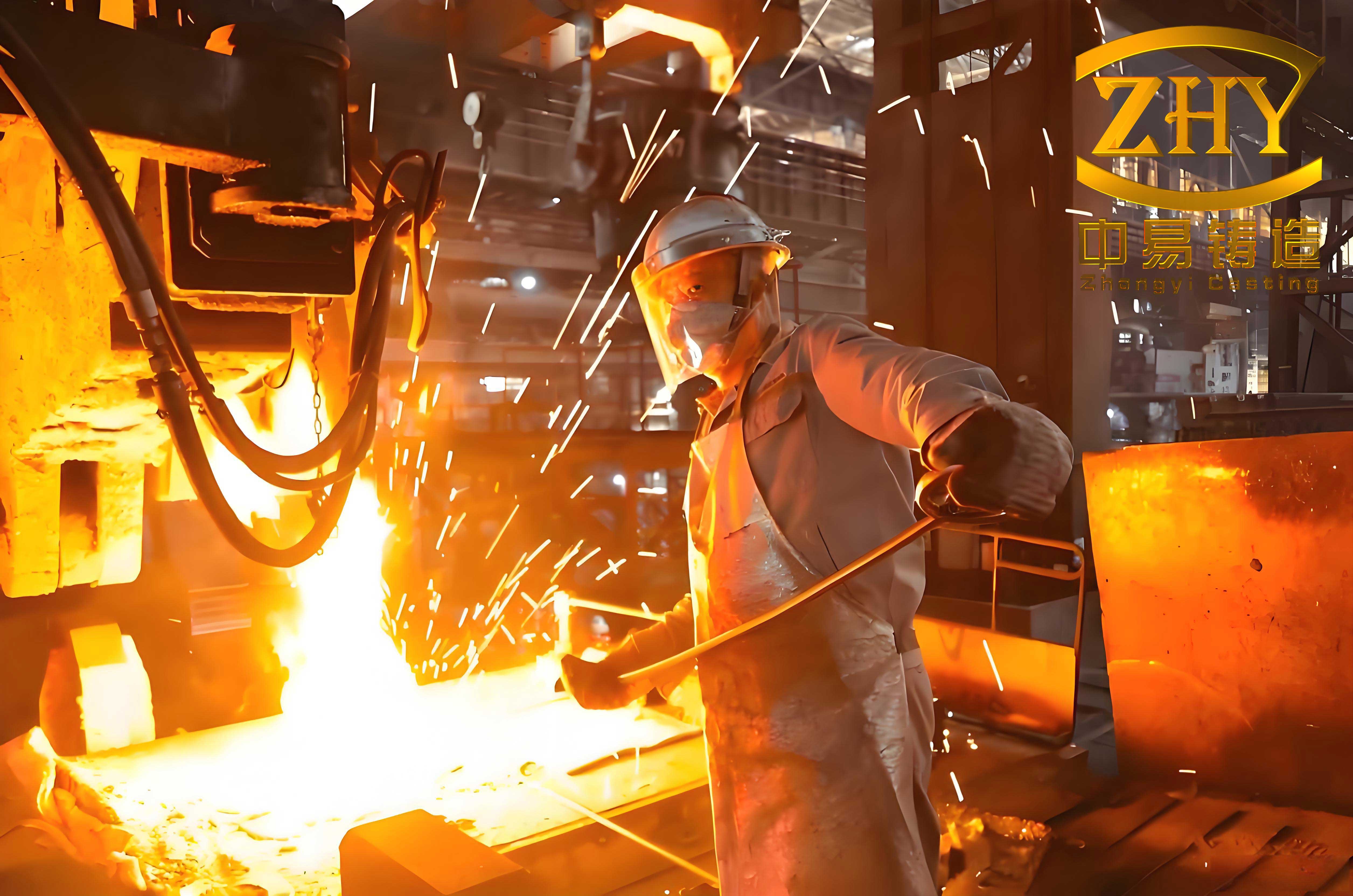
Precision investment casting is revered for its ability to produce net-shape or near-net-shape components with complex internal passages, thin walls, and superior surface finishes (often achieving Ra values below 3.2 μm). The process yields isotropic metal properties inherent to casting, allowing for the use of a wide range of alloys—from stainless steels and aluminum to superalloys—crucial for agricultural implements requiring corrosion resistance, strength, and wear resistance. The dimensional tolerances achievable are typically within ±0.005 in/in for the first inch. The process flow, while effective, traditionally depends on machined or injection-molded wax patterns, which impose lead time and cost barriers for prototyping and low-volume production.
A critical aspect of the process is managing shrinkage and achieving dimensional fidelity. The total linear shrinkage \( S_t \) in precision investment casting is a cumulative effect of pattern material shrinkage, ceramic shell sintering shrinkage, and metal solidification shrinkage. It can be approximated as:
$$ S_t = S_p + S_s + S_m $$
where \( S_p \), \( S_s \), and \( S_m \) represent pattern, shell, and metal shrinkage, respectively. Compensating for this total shrinkage in the initial pattern design is essential for final part accuracy. When AM-produced patterns are used, their thermal expansion and burnout behavior become new variables in this equation, requiring careful process calibration.
The Strategic Integration: AM as an Enabler for Enhanced Precision Investment Casting
The integration strategy revolves around using AM to fabricate key sacrificial or tooling elements within the precision investment casting workflow. This hybrid approach effectively decouples geometric complexity from production cost and time for small to medium batches. The primary application pathways are:
- Direct Pattern Fabrication: AM is used to produce the disposable patterns that replace traditional wax patterns. These can be “burn-out” patterns designed to vaporize cleanly during dewaxing.
- Direct Shell/Mold Fabrication: AM is used to build the ceramic shell mold or sand molds directly, bypassing the need for a physical pattern altogether.
- Core Fabrication: AM can produce complex sand cores for internal features, which are then assembled into a traditional wax or AM pattern.
The economic and technical benefits are significant. Lead times can be reduced from weeks to days. The cost of complex geometry becomes almost invariant with complexity. Design iterations are accelerated, allowing for rapid prototyping and functional testing of cast components for new agricultural equipment designs. This agility is invaluable in responding to the evolving needs of modern, precision agriculture.
Selective Laser Sintering (SLS) in Precision Investment Casting for Agriculture
In my application experience, SLS with polyamide or polystyrene powders is exceptionally effective for producing robust, complex patterns for precision investment casting. For instance, a complex gear housing for a tractor transmission or an intricately shaped manifold for a crop sprayer system can be directly printed. The SLS pattern has sufficient strength to withstand handling during cluster assembly and the initial ceramic slurry dipping stages.
The key advantage lies in creating consolidated assemblies. A component that would traditionally require multiple wax pieces to be welded together can be printed as a single, monolithic SLS pattern, eliminating assembly errors and seam lines that could become failure points in the final casting. The porosity of SLS parts, often seen as a drawback, can be managed through infiltration (e.g., with wax or resin) to improve surface sealant during shell building. The process parameters for successful burnout are critical; a controlled thermal cycle ensures the polymer decomposes completely without causing shell cracking. The burnout kinetics can be described by an Arrhenius-type relation for the decomposition rate \( k \):
$$ k = A \exp\left(-\frac{E_a}{RT}\right) $$
where \( A \) is the pre-exponential factor, \( E_a \) is the activation energy for polymer decomposition, \( R \) is the gas constant, and \( T \) is the temperature.
| Material | Advantages | Challenges | Best Suited For |
|---|---|---|---|
| Polyamide (PA 12) | High strength, good thermal resistance, relatively clean burnout. | Higher ash content than wax, requires optimized burnout cycle. | Large, sturdy patterns; functional prototypes. |
| Polystyrene (PS) | Very clean burnout (low ash), cost-effective. | More brittle than PA, lower strength. | Small to medium, complex patterns where low ash is critical. |
| Composite Powders (e.g., sand-filled polymer) | Can be used for direct shell/mold making. | Lower resolution for fine features. | Direct sand mold fabrication for larger components. |
Stereolithography (SLA) in Precision Investment Casting for Agriculture
SLA technology brings unparalleled surface smoothness and fine feature resolution to pattern making for precision investment casting. Specialty “castable” resins are formulated to burn out with minimal residue, making them ideal for producing high-precision patterns for components like fuel injector nozzles, hydraulic valve bodies, or intricate linkages in harvesting equipment. The process allows for the direct translation of a CAD model’s complex geometries—including undercuts, internal channels, and textured surfaces—into a physical pattern with minimal stair-stepping effect.
The transition from a wax-based system to a resin-based pattern system via SLA streamlines the workflow. It eliminates the need for expensive metal injection molds for wax patterns during the development phase. For a complex ploughshare tip or a seed meter housing, an SLA pattern can be produced overnight, invested, and cast within a few days, enabling rapid design validation. The high accuracy of SLA patterns directly contributes to the dimensional precision of the final metal part, reducing downstream machining allowances. The primary consideration is managing the resin’s curing characteristics and thermal expansion during burnout to prevent shell damage.
Fused Deposition Modeling (FDM) in Precision Investment Casting for Agriculture
FDM offers a highly accessible and cost-effective route for pattern production in precision investment casting. While the surface finish from standard thermoplastics like ABS or PLA may not match SLA, it is often sufficient for functional prototypes and certain production parts, especially after light post-processing (sanding, sealing). More importantly, the development of specialized investment casting wax filaments for FDM has been a game-changer. These filaments are designed to mimic the thermal expansion and burnout properties of traditional injection-molded wax, making them directly compatible with existing foundry processes.
For agricultural machinery manufacturers, this means in-house, on-demand pattern production. A replacement part for a legacy combine harvester, for which tooling no longer exists, can have its pattern printed via FDM and cast locally, drastically reducing downtime and logistics costs. The environmental benefit is also notable compared to traditional wood or metal pattern-making. The deposition path planning in FDM influences the pattern’s strength and burnout behavior. The fill density \( \rho_f \) is a key parameter:
$$ \rho_f = \frac{V_{deposited}}{V_{envelope}} $$
A lower \( \rho_f \) (hollow or sparse fill) speeds up print time and can facilitate easier burnout but may compromise pattern strength during handling.
Binder Jetting (3D Printing) in Precision Investment Casting for Agriculture
Binder Jetting technology applied to foundry sand enables the most direct disruption of the precision investment casting process: the direct digital manufacturing of sand molds and cores. This approach completely bypasses the need for any physical pattern. The CAD model of the final part is used to create a digital model of the mold cavity and any cores. The printer then deposits a binder onto layers of silica or zircon sand, building the complete, ready-to-pour mold.
For agricultural machinery, this is transformative for large, bulky, or low-to-medium volume components. A complex transmission case or a differential housing can have its sand mold printed directly, eliminating weeks of lead time associated with pattern and core box fabrication. It enables the production of optimized conformal cooling channels within mold cores, which can improve solidification control and final part quality. The mechanical properties of the printed sand mold, such as its green strength and permeability, are vital. The strength \( \sigma_g \) is often related to binder saturation \( S_b \):
$$ \sigma_g \propto k \cdot (S_b – S_{th})^n $$
where \( k \) is a constant, \( S_{th} \) is a threshold saturation level, and \( n \) is an exponent typically between 1 and 2. Achieving uniform and adequate saturation is key to producing a mold that can handle the metallostatic pressure during pouring.
Laminated Object Manufacturing (LOM) in Precision Investment Casting for Agriculture
While less common today, LOM technology utilizing paper or plastic films coated with adhesive can be highly effective for rapidly producing patterns for shallow-cavity molds or for creating large, low-cost master patterns. In the context of agricultural equipment, LOM could be used to create patterns for sheet metal forming dies or large covers. The resulting paper-based patterns are not typically used directly in ceramic shell investment but can be heavily sealed and used in sand casting processes or as masters for creating silicone rubber molds to then produce multiple wax patterns. This indirect route still leverages AM’s speed for tooling. The dimensional stability of the LOM pattern is affected by material moisture absorption, which must be controlled to maintain accuracy for precision investment casting applications.
Comparative Analysis and Selection Framework
Choosing the optimal AM technology to complement precision investment casting depends on a matrix of factors including part size, geometric complexity, required surface finish, quantity, lead time, and available budget. The following table provides a consolidated comparison to guide this decision-making process for agricultural component manufacturing.
| Evaluation Criterion | SLS (Polymer Pattern) | SLA (Castable Resin) | FDM (Wax Filament) | Binder Jetting (Sand Mold) |
|---|---|---|---|---|
| Typical Achievable Casting Precision | Good to Very Good | Excellent | Good (with sealing) | Good (mold-dependent) |
| As-Printed Surface Quality | Porous/Grainy (Ra ~10-15 µm) | Very Smooth (Ra ~1-5 µm) | Visible Layer Lines (Ra ~15-30 µm) | Grainy (Sand Texture) |
| Build Speed for Medium Part | Medium-Fast | Medium | Slow-Medium | Very Fast (for mold) |
| Material Cost per Volume | Medium-High | High | Low-Medium | Low |
| Ability to Create Internal Channels/Cores | Excellent (single-piece patterns) | Excellent | Good (with supports) | Excellent (direct core printing) |
| Suitability for Direct Burnout Patterns | Yes (with process control) | Yes (ideal with castable resins) | Yes (ideal with wax filaments) | N/A (Direct Mold) |
| Primary Application in Agri-Casting | Complex housings, functional prototypes | High-precision nozzles, valves, intricate parts | On-demand replacements, low-volume patterns | Large structural casings, gearboxes |
The overarching technical goal in all these hybrid approaches is to minimize the introduction of defects during the transition from the AM artifact to the final metal casting. This involves managing parameters such as burnout residue (ash content), thermal expansion mismatch, and gas generation. The quality of the final casting, in terms of porosity and surface inclusions, is closely tied to the cleanliness of the pattern removal stage. A metric for burnout efficiency \( \eta_b \) can be conceptualized as:
$$ \eta_b = 1 – \frac{M_{ash}}{M_{pattern}} $$
where \( M_{ash} \) is the mass of non-volatile residue and \( M_{pattern} \) is the initial pattern mass. Maximizing \( \eta_b \) (approaching 1) is critical for high-integrity precision investment casting.
Technical Challenges and Future Directions
Despite the clear advantages, challenges persist in fully realizing the potential of AM-precision investment casting synergy. Material development is ongoing: creating AM materials that perfectly mimic the thermal and burnout properties of traditional wax while offering better mechanical handling strength. Process standardization is needed to ensure repeatable results across different foundries and AM systems. The economics of scaling from prototyping to higher-volume production using AM patterns requires careful analysis, as the per-part cost of an AM pattern may not always be competitive with injection-molded wax for very large quantities.
Future research and development are poised to address these challenges and open new frontiers. The development of ceramic AM for direct, high-resolution shell fabrication is a promising area. Multi-material AM could enable the printing of patterns with integrated soluble cores or graded properties. The integration of artificial intelligence for process parameter optimization—predicting and compensating for distortion during AM pattern printing and subsequent metal solidification—will enhance first-time-right success rates. The concept of “digital inventory” for agricultural machinery spare parts, where a digital file is stored and a casting is produced on-demand via AM-enabled precision investment casting, represents a paradigm shift in supply chain logistics and sustainability.
Conclusion
The fusion of Additive Manufacturing and precision investment casting constitutes a powerful hybrid manufacturing strategy that is particularly resonant for the agricultural machinery sector. By leveraging the geometric freedom, speed, and digital flexibility of AM within the robust, high-quality metallurgical framework of precision investment casting, manufacturers can achieve unprecedented agility in component development and production. This convergence enables the rapid realization of complex, high-performance parts—from durable transmission components to intricate hydraulic elements—that are essential for the next generation of efficient, reliable, and intelligent agricultural equipment. As both AM and precision investment casting technologies continue to evolve and their integration deepens, they will collectively form a cornerstone of advanced, responsive, and sustainable manufacturing for global agriculture, driving forward the essential goals of food security and agricultural modernization.