
Lost foam casting, often hailed by industry authorities as the “green casting technology of the 21st century,” represents a transformative process with vast potential. This innovative technique yields castings with excellent surface finish, precise dimensional accuracy, and a relatively simple production flow. The formation of the casting under vacuum leads to a dense microstructure, free from the parting lines and flash characteristic of traditional sand casting. However, this promising technology is not without its challenges. One persistent issue that has perplexed engineers and become a focal point for extensive research is the problem of surface carburization in steel castings produced via the lost foam process. This phenomenon, where the carbon content at the surface of a steel casting increases beyond its nominal composition, detrimentally affects key mechanical properties. It leads to a reduction in elongation and reduction of area, diminished plasticity, toughness, and weldability, while increasing hardness. These changes often complicate subsequent machining operations and can cause a significant rise in rejection rates, thereby severely constraining the wider application and development of lost foam casting for steel components. Therefore, a deep understanding of the root causes, patterns, and influencing factors of surface carburization is not merely academic—it is an industrial imperative. By mastering this knowledge, we can implement targeted control measures in production, continuously improve product quality and manufacturing profitability, and unlock the full potential of this advanced casting method.
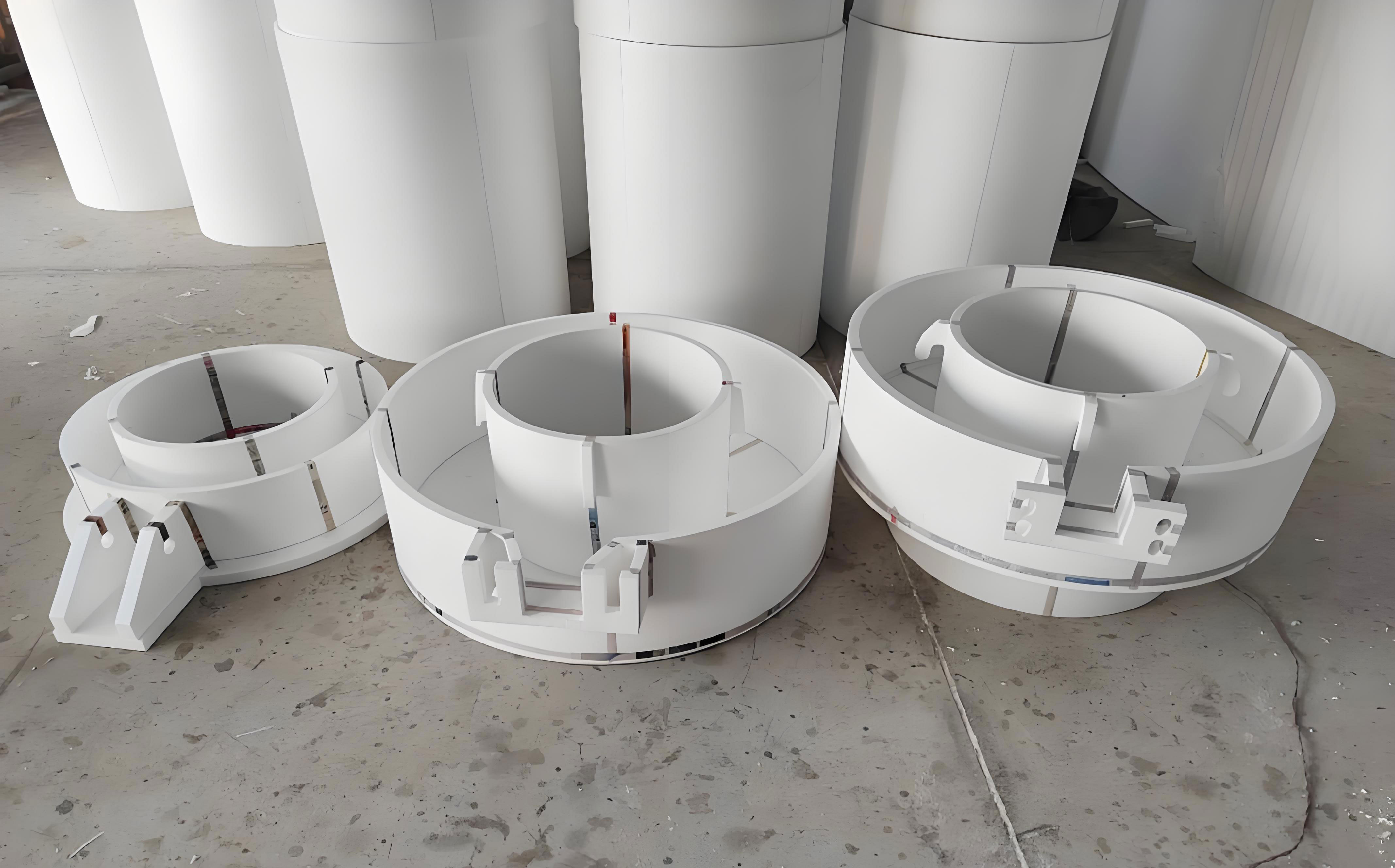
The core reason for surface carburization in lost foam cast steel components lies in the very nature of the pattern material. In lost foam casting, the expendable pattern is typically made of expanded polystyrene (EPS) foam. As the molten steel is poured into the mold, the intense heat causes the EPS pattern to undergo rapid thermal degradation. This complex process involves depolymerization, cracking, and gasification, producing a substantial volume of gaseous products, liquid hydrocarbon tars, and solid free carbon. These decomposition products act as a potent carbon source. During the filling stage, the advancing metal front pushes these pyrolysis products ahead of it. Furthermore, un-evaporated liquid residues and solid carbon can become trapped and concentrated at the interface between the molten metal and the refractory coating lining the mold cavity. Consequently, throughout the pouring and initial solidification stages, the steel is in intimate, prolonged contact with these carbon-rich species. Carbon atoms from this environment diffuse into the steel surface, leading to carburization. The extent of this carburization is governed by factors such as contact time, contact area, the concentration of carbon at the interface, and the existing carbon concentration in the steel itself.
To systematically investigate this phenomenon, a study was conducted focusing on lost foam cast steel components with a nominal carbon content below 0.65%. The chemical analysis for carbon was performed using dual methods—non-aqueous titration and gas volumetric analysis—to ensure accuracy and cross-verification. Samples were obtained by both spoon-sampling thin slices of molten metal and by drilling to collect turnings from specific locations on the surface of finished castings. The test materials encompassed a range of carbon and low-alloy steel castings for applications in automotive, construction, mining, and crushing machinery. The selection included components with complex geometries and substantial wall thicknesses, as well as simpler plate-like and cylindrical shapes. All patterns were made from EPS with a density of 18-20 kg/m³, produced either by automated molding of pre-expanded beads or by cutting and gluing EPS boards. These patterns were coated with a refractory slurry, dried, and then embedded in unbonded sand within a flask. Castings were produced by pouring molten steel from a medium-frequency induction furnace under a controlled vacuum.
The results from analyzing the surface carbon content at various locations on the castings revealed distinct and consistent patterns. The data, consolidated from numerous tests, is presented in the table below. The term $w_{\text{melt}}(C)$ denotes the mass fraction of carbon in the ladle-adjusted steel just before pouring, while $w_{\text{casting}}(C)$ represents the measured carbon mass fraction at the specified location on the cast component. For thicker sections (generally >35 mm), hollow pattern structures were employed to reduce the mass of foam.
| Casting Description | Material (Approx.) | Wall Thickness (mm) | $w_{\text{melt}}(C)$ (%) | Sampling Location on Casting | $w_{\text{casting}}(C)$ (%) | Absolute Carburization ($\Delta w(C)$, %) |
|---|---|---|---|---|---|---|
| Cutting Head Body | ZG16Mn | 60 | 0.14 | Near Gate | 0.20 | 0.06 |
| Mid-Distance from Gate | 0.26 | 0.12 | ||||
| Farthest from Gate (End of Fill) | 0.38 | 0.24 | ||||
| Tooth Base | ZG20SiMn | 45 | 0.16 | Near Gate | 0.22 | 0.06 |
| Mid-Distance from Gate | 0.27 | 0.11 | ||||
| Farthest from Gate (End of Fill) | 0.38 | 0.22 | ||||
| Flange Plate | ZG230-450 | 20 | 0.20 | Near Gate | 0.25 | 0.05 |
| Mid-Distance from Gate | 0.29 | 0.09 | ||||
| Farthest from Gate (End of Fill) | 0.36 | 0.16 | ||||
| Wear Plate | ZG270-500 | 12 | 0.28 | Near Gate | 0.32 | 0.04 |
| Mid-Distance from Gate | 0.34 | 0.06 | ||||
| Farthest from Gate (End of Fill) | 0.38 | 0.10 | ||||
| Support Bracket | ZG270-500 | 30 | 0.27 | Near Gate | 0.31 | 0.04 |
| Mid-Distance from Gate | 0.37 | 0.10 | ||||
| Farthest from Gate (End of Fill) | 0.51 | 0.24 | ||||
| Hammer Head | ZG50SiMnCr2Mo | 100 | 0.50 | Near Gate | 0.52 | 0.02 |
| Mid-Distance from Gate | 0.54 | 0.04 | ||||
| Farthest from Gate (End of Fill) | 0.58 | 0.08 |
Analysis of this data allows us to formulate several key rules governing surface carburization in lost foam casting:
1. Inhomogeneity of Carburization: The degree of surface carburization is not uniform. It varies significantly between different castings and, more importantly, between different locations on the same casting produced via lost foam casting.
2. Spatial Gradient from Gate to End of Fill: A pronounced spatial gradient exists. The carburization is always most severe at the farthest point from the gate (the end of fill or last place to solidify) and least severe near the gate or pouring point. The surface carbon content increases progressively along the metal flow path: Gate $\rightarrow$ Mid-Distance $\rightarrow$ End of Fill. This can be conceptually modeled by considering the accumulation of pyrolysis products. If $C_{\text{pyro}}(x)$ is the local concentration of carbonaceous species at a distance $x$ from the gate, and $t_{\text{contact}}(x)$ is the local contact time, the local carburization depth or intensity $\delta_C(x)$ can be related by a function of the form:
$$\delta_C(x) \propto \int_{0}^{t_{\text{contact}}(x)} D(T) \cdot \nabla w(C) \cdot dt$$
where $D(T)$ is the temperature-dependent carbon diffusivity in austenite and $\nabla w(C)$ is the carbon concentration gradient between the interface and the steel bulk. Both $C_{\text{pyro}}$ and $t_{\text{contact}}$ generally increase with $x$, leading to greater $\delta_C$.
3. Inverse Relationship with Initial Carbon Content: The absolute increase in surface carbon is inversely related to the initial carbon content of the steel melt. Lower carbon steels (e.g., 0.14% C) experience a much larger absolute carbon pickup (up to 0.24%) compared to higher carbon steels (e.g., 0.50% C, with a pickup of ~0.08%). This is a direct consequence of Fick’s first law of diffusion. The flux of carbon atoms $J$ into the steel is proportional to the concentration gradient:
$$J = -D \frac{\partial C}{\partial x}$$
When the steel carbon content $C_{\text{steel}}$ is very low, the gradient between the carbon-saturated interface ($C_{\text{interface}} \approx 1.5-2.0\%$) and the bulk is extremely steep ($\Delta C = C_{\text{interface}} – C_{\text{steel}}$ is large), driving rapid diffusion. As $C_{\text{steel}}$ increases, this gradient $\Delta C$ diminishes, reducing the driving force and thus the carburization rate and final magnitude.
4. Influence of Casting Geometry: Casting geometry plays a critical role. Complex-shaped castings and those with heavier wall sections exhibit greater overall carburization and more pronounced inhomogeneity. Simple, thin-walled castings show less severe and more uniform carburization. This is due to several intertwined factors in the lost foam casting process: the mass of foam (carbon source), the metal flow dynamics affecting pyrolysis product evacuation, and the solidification time.
The factors influencing surface carburization in lost foam casting are multifaceted and interconnected. A deeper dive into these parameters is essential for developing effective control strategies.
Pattern Material and Mass: The type, density, and total mass of the foam pattern are primary sources of carbon. EPS has a high carbon-to-hydrogen ratio. Using lower-density foam or alternative materials like co-polymer (EPMMA/STMMA) which have a lower carbon content and produce more gaseous products relative to liquid tars, can reduce the available carbon. For thick sections, creating hollow cavity patterns is an effective direct method to reduce the total mass of decomposable material, a practice noted in the study.
Gating System and Pouring Practice: The design of the gating system in lost foam casting is paramount as it dictates the flow of both metal and pyrolysis products. A well-designed system promotes smooth, progressive filling and efficient expulsion of gases and tars out through the coating and sand, rather than trapping them against the metal surface. Bottom gating or multi-level gates for tall castings can be beneficial. The pouring temperature is also crucial; a higher superheat can enhance the gasification of the foam, reducing the formation of heavy tars and solid carbon, and improve the fluidity of metal to shorten fill time.
Coating and Sand Permeability: The refractory coating is the critical barrier through which all gaseous and volatile pyrolysis products must escape. Its permeability is a key control variable. A highly permeable coating, coupled with dry sand of appropriate grain size (e.g., AFS 20/40) and the correct level of applied vacuum (typically in the range of 0.04 – 0.05 MPa or 400 – 500 mbar), creates an efficient evacuation pathway. This reduces the residence time and partial pressure of carbon-bearing gases at the metal interface, thereby mitigating carburization. The permeability $k$ can be thought of as a factor in the effective evacuation rate constant.
Chemical Interventions: Research has explored adding oxidizing agents (e.g., certain inorganic compounds) to the EPS beads prior to pre-expansion or to the coating. During decomposition, these additives promote the oxidation of carbon to CO or CO$_2$, effectively “gasifying” the carbon source before it can deposit on the metal. The reaction can be simplified as:
$$\mathrm{C(s) \; (from\; foam) + O_2 \; (from\; additive) \rightarrow CO_2(g)}$$
This approach can significantly reduce, and in some cases nearly eliminate, surface carburization in lost foam casting.
Controlling surface carburization in production-scale lost foam casting requires a holistic, integrated approach. It is rarely sufficient to adjust a single parameter. Based on the mechanistic understanding and empirical rules outlined, a multi-pronged strategy is recommended:
1. Material and Process Foundation: Maintain strict control over charge materials in melting to achieve precise and consistent base chemistry. Select the optimal pattern material (considering co-polymers for critical low-carbon steels) and employ hollow structures for heavy sections. Use low-carbon adhesives sparingly.
2. Optimized Gating and Pouring Design: Design the gating system for the specific casting geometry to achieve directional solidification and efficient pyrolysis product removal. For low-carbon steels prone to severe carburization, consider bottom gating and the strategic use of small, non-functional risers or vents at the end of fill locations to collect last-stage pyrolysis products. Optimize pouring temperature and speed to balance foam degradation and mold filling.
3. Enhanced Evacuation: Develop and apply a highly permeable refractory coating. Optimize the sand granulometry and the vacuum level during pouring to establish and maintain a strong, consistent flow of gases out of the mold cavity in lost foam casting.
4. Advanced Chemical Methods: For the most demanding applications, investigate the use of controlled oxidation techniques via pattern or coating additives to chemically reduce the carbon potential of the decomposition atmosphere.
In conclusion, surface carburization is a inherent challenge in the lost foam casting of medium and low carbon steels, governed by fundamental principles of mass transfer and diffusion. Its manifestation follows clear patterns: severity increases with lower initial carbon content, greater distance from the gate, and more complex/heavier casting geometry. The successful mitigation of this defect in industrial lost foam casting hinges on a systems-based understanding that links pattern properties, process physics (fluid flow, heat transfer, degassing), and material interactions. By strategically controlling the factors that influence the concentration and contact time of carbonaceous pyrolysis products—through intelligent design, process optimization, and potential chemical aids—the detrimental effects of surface carburization can be minimized to acceptable levels. As research and practical experience in lost foam casting continue to accumulate, the industry moves closer to robust, predictable solutions for producing high-integrity steel castings, ultimately expanding the boundaries of this innovative and sustainable manufacturing technology.