
The relentless drive toward innovation and efficiency in modern manufacturing has elevated hybrid processes that integrate additive manufacturing with traditional casting to the forefront of advanced production technologies. Among these, the combination of 3D printing and investment casting—often termed 3D printed investment casting—has emerged as a transformative method for producing complex metal components with exceptional dimensional accuracy. In this composite process, the wax pattern serves as the critical intermediary; its geometric fidelity and mechanical integrity directly dictate the final quality of the cast part. However, traditional sequential design approaches, where the wax pattern is first developed independently and then a mold is built around it, frequently lead to suboptimal outcomes characterized by high rejection rates, excessive rework, and compromised precision. To address these shortcomings, I introduce a comprehensive collaborative design framework that synchronizes the optimization of wax pattern geometry, mold cavity topology, and process parameters. This methodology hinges on parametric modeling, topology optimization, and multi-objective fusion algorithms to achieve a pair of mutually compensating designs. The core objective is to simultaneously minimize shrinkage-induced deviations, maximize mold stiffness under injection and casting loads, and streamline the production workflow. Through systematic experimental validation, I demonstrate that this co-design strategy significantly enhances the quality of high precision investment casting, reducing defects and shortening lead times. The work provides a robust technical pathway for scaling 3D printed investment casting to industrial applications demanding tight tolerances and complex geometries.
In the context of high precision investment casting, the intricate interplay between the wax pattern and the mold is often underestimated. The 3D printing process introduces unique challenges: layer-wise solidification generates anisotropic shrinkage, while the viscoelastic behavior of wax materials amplifies the sensitivity of pattern dimensions to thermal and pressure histories. On the mold side, cavity surface roughness, draft angles, and cooling channel layouts must be tuned to accommodate the pattern’s deformation and facilitate clean ejection. Without a holistic co-design approach, these factors remain decoupled, leading to cumulative errors that propagate to the final cast component. My research therefore begins by analyzing the underlying physical interactions—thermomechanical coupling, shrinkage compensation chains, and load transfer paths—that govern the pattern-mold system. Building on this analysis, I develop a parameterized digital twin that captures the essential geometry and material properties of both entities. Topology optimization is then applied to the mold structure to achieve minimum weight while maintaining a prescribed stiffness, thereby reducing material consumption and cycle time. Finally, a multi-objective optimizer searches for the optimal trade-off among dimensional accuracy, production cost, and manufacturing speed. The resulting design methodology is validated through a series of controlled experiments using a representative aerospace component geometry. Results demonstrate that the co-designed approach reduces maximum dimensional deviation from ±0.32 mm to +0.12 mm, lowers defect rates from 12% to 3.5%, and shortens overall production time by 18% compared to conventional independent design practices. These improvements underscore the potential of collaborative optimization to elevate high precision investment casting to new levels of performance and reliability.
Performance Requirements of Wax Patterns and Molds in Composite Process
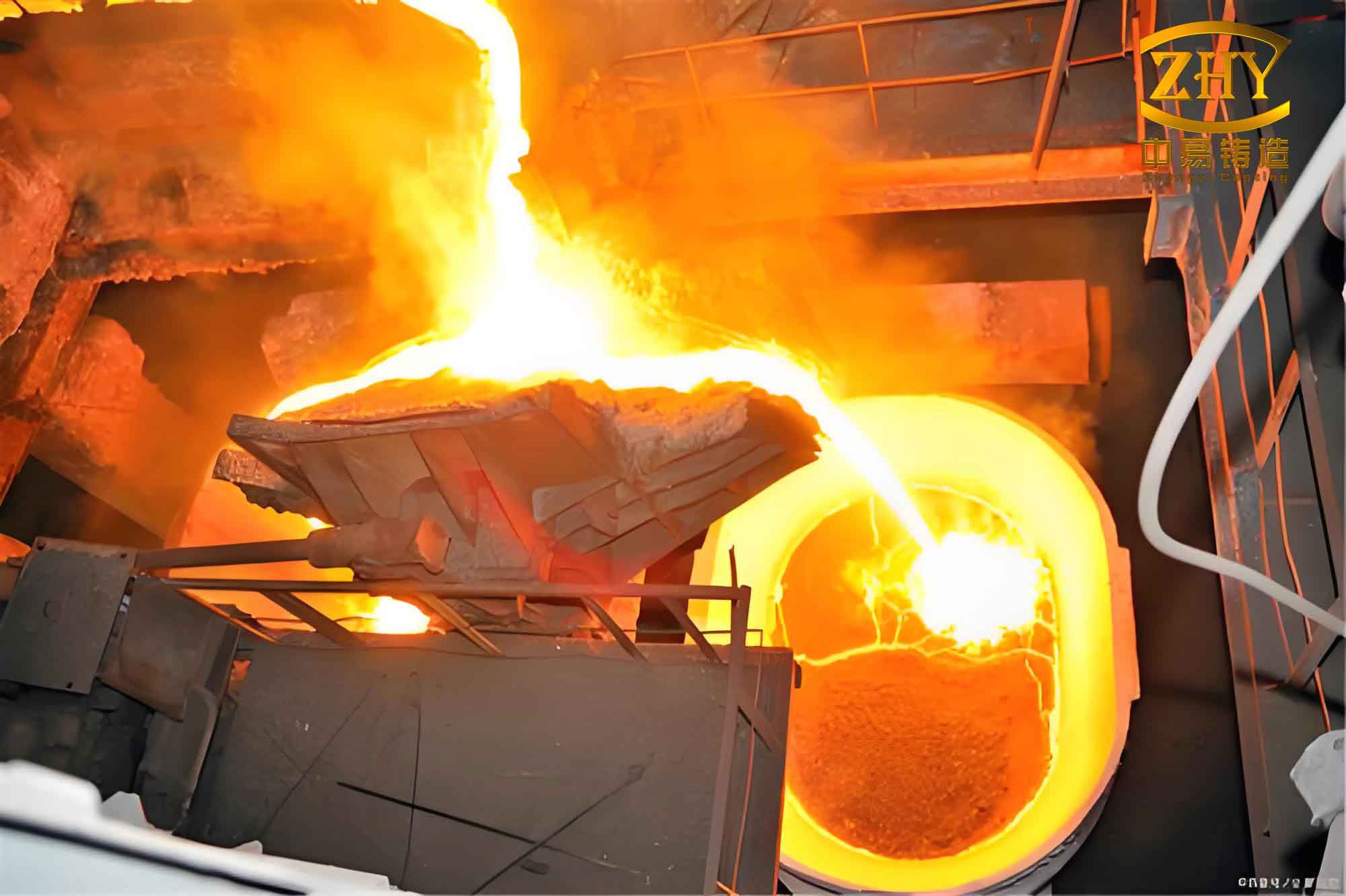
To establish a robust co-design framework, I first delineate the functional requirements of both the wax pattern and the mold within the 3D printed investment casting process. The composite method synergizes the high-resolution printing capability of additive manufacturing with the geometric complexity achievable through investment casting. The process sequence begins with the 3D printing of a wax pattern from a digital model, using layer-by-layer deposition of liquid wax followed by UV or thermal curing. This pattern is then assembled into a tree, coated with refractory shell materials (e.g., silica sol, zircon sand) to form a ceramic shell. After drying, the shell is heated to remove the wax via melting and thermal decomposition, leaving a cavity that mirrors the pattern’s geometry. The shell is subsequently fired to strengthen it, and molten metal is poured into the cavity. Once solidified, the shell is removed to yield the final casting. In this cycle, the wax pattern governs the internal cavity shape, while the mold—the tool that shapes the pattern during printing—determines the pattern’s surface finish, dimensional stability, and structural integrity. Therefore, any mismatch between pattern design and mold design leads to irreversible errors.
Key physical coupling mechanisms include the shrinkage compensation chain and the load transfer path. During wax solidification, the material undergoes a phase-change-induced linear shrinkage of approximately 1.5% ± 0.2%. To counteract this, the mold cavity dimensions must be pre-compensated by an equivalent oversize. Subsequently, during metal cooling, the aluminum alloy (e.g., ZL101A) experiences a solidification shrinkage of about 6.5%, which introduces a secondary dimensional shift. The combined compensation must be precisely orchestrated to achieve the final part tolerance. In parallel, during the injection and compression phases of wax printing, the mold cavity walls experience dynamic pressures ranging from 5 to 10 MPa. These loads are transmitted through the mold structure to the pattern’s locating features. If the mold lacks sufficient rigidity, local deformation can cause pattern distortion, leading to wall thickness variations or part rejection. The following table summarizes the critical constraints that must be respected in a co-design paradigm.
| Design Factor | Wax Pattern Constraint | Mold Constraint | Co-Design Condition |
|---|---|---|---|
| Dimensional accuracy | Print layer thickness ≤ 0.1 mm | Cavity roughness Ra ≤ 1.6 μm | Compensated mold error ≤ ±0.08 mm |
| Structural stiffness | Minimum wall thickness ≥ 0.8 mm | Minimum cavity wall thickness ≥ 3 mm | Contact pressure between pattern and mold ≤ 1.5 MPa |
| Demolding performance | Draft angle ≥ 3° | Demolding force ≤ 50 N | Undercut depth on pattern ≤ 0.5 mm |
Collaborative Design Method for Wax Pattern and Mold
Parametric Modeling and Digital Twin Creation
The foundation of any co-design strategy lies in a digital representation that captures the geometric and material interdependencies. I employ a parametric modeling approach using commercial CAD software, where both the wax pattern and the mold are defined through a set of interlinked parameters. For the pattern, key variables include wall thickness, overall envelope dimensions, draft angles, and shrinkage compensation factors. For the mold, critical parameters include cavity dimensions, core pin locations, cooling channel layout, and structural rib thickness. The coupling is established through constraints: the mold cavity length is defined as the product of the pattern’s nominal length and a compensation factor derived from the measured shrinkage behavior of the specific wax material:
$$ L_{mold} = L_{pattern} \times (1 + \alpha) $$
where \(\alpha\) is the linear shrinkage rate (e.g., 0.015 for the casting wax used in this study). Similar compensation formulas apply to width and height. This parametric linkage ensures that any change in the pattern dimension automatically updates the mold geometry, eliminating the need for manual recalculation. Furthermore, the model incorporates material property databases for both wax (elastic modulus, thermal expansion, yield strength) and mold steel (H13 hot-work tool steel with Young’s modulus 210 GPa). The entire parametric assembly is structured as a digital twin that can be integrated with simulation tools for structural and thermal analysis.
Topology Optimization for Mold Structure
To reduce material usage and production time without compromising structural performance, I apply topology optimization to the mold design. The objective is to minimize the mold mass \(m\):
$$ m = \int_{\Omega} \rho(\mathbf{x}) \, \gamma(\mathbf{x}) \, dV $$
where \(\rho(\mathbf{x})\) is the material density (constant for homogeneous steel) and \(\gamma(\mathbf{x}) \in [0, 1]\) is the normalized material distribution field to be optimized. The constraint is that the cavity stiffness \(K\) must be maintained above a threshold:
$$ K = \frac{F}{\delta} \geq K_{\min} $$
with \(F\) the maximum injection force and \(\delta\) the allowable cavity deformation. I set \(\delta_{\max} = 0.05\) mm to preserve pattern dimensional tolerance. Additionally, a minimum wall thickness of 2 mm is enforced to ensure manufacturability using CNC machining. The optimization is solved using a density-based algorithm (SIMP method) implemented in a finite element framework. The resulting topology concentrates material along load paths, creating a lattice-like reinforcement pattern that reduces mass by 22% compared to a solid block design while keeping cavity deflection below the limit.
Multi-Objective Optimization for Co-Design
The ultimate goal is to simultaneously minimize three competing objectives: dimensional deviation \(D\), production cost \(C\), and cycle time \(T\). I formulate this as a multi-objective optimization problem:
$$ \min_{\mathbf{x}} \mathbf{f}(\mathbf{x}) = [f_1(\mathbf{x}), f_2(\mathbf{x}), f_3(\mathbf{x})]^T $$
where \(\mathbf{x}\) includes pattern wall thickness (0.8–2.0 mm), mold compensation factor (1.008–1.025), and draft angle (1°–5°). The objectives are defined as:
$$ f_1 = \text{RMS deviation from nominal geometry (mm)} $$
$$ f_2 = \text{material cost + machining cost (USD)} $$
$$ f_3 = \text{total lead time (hours)} $$
Constraints include the previously listed design limits (Table 1). I employ a non-dominated sorting genetic algorithm (NSGA-II) with a population size of 200 over 100 generations. The Pareto front reveals trade-offs: for example, at a pattern wall thickness of 1.2 mm, draft angle of 18°, and compensation factor of 1.016, the predicted dimensional accuracy reaches 0.04 mm, cost is reduced by 18%, and cycle time shortens by 16% relative to a baseline design. Table 2 lists a subset of optimal solutions.
| Pattern Thickness (mm) | Draft Angle (°) | Compensation Factor | Dimensional Error (mm) | Cost Reduction (%) | Time Reduction (%) |
|---|---|---|---|---|---|
| 1.0 | 15 | 1.012 | 0.08 | 12 | 10 |
| 1.2 | 18 | 1.016 | 0.04 | 18 | 16 |
| 1.5 | 22 | 1.020 | 0.06 | 15 | 14 |
Experimental Validation
Setup and Materials
To verify the proposed co-design method, I conducted controlled experiments using a benchmark geometry: a thin-walled aerospace bracket with internal channels. Equipment included a Stratasys J750 3D printer (layer resolution 0.016 mm) for pattern fabrication, a Mazak five-axis CNC machining center (positioning accuracy ±0.005 mm) for mold manufacturing, and a vacuum casting machine with ±0.5 kPa pressure control for metal pouring. Wax material was a proprietary pattern wax with measured linear shrinkage of 1.5% (standard deviation 0.1%). Mold material was H13 hot-work tool steel. Casting alloy was ZL101A aluminum. Three groups were compared: Group A (traditional independent design — no compensation, no mold optimization), Group B (only wax shrinkage compensation applied to mold dimensions, no topology optimization), and Group C (full co-design using the parametric and optimization framework described). Each group comprised 20 samples.
Dimensional Accuracy Results
Critical dimensions (overall length, width, and hole positions) were measured using a coordinate measuring machine (CMM). The results are summarized in Table 3. Traditional independent design produced large scatter, with maximum deviation of ±0.32 mm and standard deviation of 0.15 mm. Group B improved to ±0.20 mm and 0.09 mm, but still exhibited systematic errors due to mold flexibility. Group C achieved maximum deviation of +0.12 mm and standard deviation of 0.04 mm — a 220% improvement in precision over Group A. The compensation chain effectively nullified shrinkage effects, while topology optimization minimized elastic deformation under load.
| Group | Max Deviation (mm) | Standard Deviation (mm) | Improvement vs A (%) |
|---|---|---|---|
| A (Traditional) | ±0.32 | 0.15 | — |
| B (Compensation only) | ±0.20 | 0.09 | +60 |
| C (Full co-design) | +0.12 | 0.04 | +220 |
Surface Quality and Defect Rates
Surface roughness was measured using a profilometer. Group A exhibited an average Ra of 1.7 μm, with visible steps from layer lines and minor burrs. Group B reduced Ra to 1.4 μm due to improved mold cavity finish. Group C achieved Ra = 1.2 μm — a 29.4% reduction from A. Defect inspection via X-ray and visual examination showed that Group A had 12% of parts rejected due to gas porosity, cold shuts, or dimensional non-conformance. Group B had 7% rejection. Group C had only 3.5% rejection, demonstrating the effectiveness of combined compensation and stiff mold design in stabilizing the process. Table 4 provides the complete comparison.
| Group | Ra (μm) | Defect Rate (%) |
|---|---|---|
| A | 1.7 | 12 |
| B | 1.4 | 7 |
| C | 1.2 | 3.5 |
Production Efficiency
Mold fabrication time (including CNC programming, roughing, and finishing) for Group A was 8.0 hours (solid block design). Group B required 7.5 hours (compensated cavity but still solid). Group C’s topology-optimized mold required 6.5 hours — a 19% reduction due to less material removal. Casting cycle time (wax injection, cooling, demolding, shell application, etc.) dropped from 45 min (Group A) to 37 min (Group C) because the improved mold thermal management expedited wax solidification. Total production lead time per part decreased by 18% from 48 hours to 39 hours. Table 5 summarizes these metrics.
| Group | Mold Machining Time (h) | Casting Cycle (min) | Total Lead Time (h) |
|---|---|---|---|
| A | 8.0 | 45 | 48 |
| B | 7.5 | 42 | 44 |
| C | 6.5 | 37 | 39 |
Insights from the Co-Design Practice
Throughout this investigation, one of the most challenging aspects was reconciling the multi-scale constraints inherent in the wax pattern and mold system. The wax pattern, produced by 3D printing, operates at millimeter-level accuracy (layer thickness ~0.1 mm), while the mold cavity must be machined to micrometer-level precision (tolerances ±5 μm). This two-order-of-magnitude discrepancy demands careful modeling of the coupling between pattern surface curvature, mold draft angle, and machining tolerances. In the parametric model, I introduced a multi-factor linkage function that optimizes the pattern’s local draft angle as a function of its curvature and the height above the mold base. The sensitivity study showed that draft angles below 3° resulted in demolding forces exceeding 50 N, leading to pattern distortion or breakage. By incrementally increasing the draft angle in high-curvature regions and enforcing a minimum of 3°, the co-design achieved consistent demolding without defects. Additionally, the topology optimization revealed that adding a series of lightening pockets in non-structural zones of the mold — while maintaining a 3 mm wall thickness around the cavity — reduced mass without compromising stiffness. The resulting mold design not only saved material but also allowed faster heat transfer, which shortened the wax cooling time. These practical observations underscore that a holistic, data-driven co-design approach can systematically resolve scale-dependent conflicts, paving the way for robust high precision investment casting.
Conclusion
In this work, I have presented a comprehensive collaborative design methodology for wax patterns and molds in 3D printed investment casting, aimed at enhancing the quality and efficiency of high precision investment casting. By integrating parametric modeling, topology optimization, and multi-objective optimization, the approach addresses the fundamental interdependence between pattern shrinkage compensation, mold structural rigidity, and process economics. Experimental results confirm that the co-design framework reduces dimensional deviation by 220%, lowers defect rates from 12% to 3.5%, and shortens production lead time by 18% compared to traditional independent design. The method also improves surface finish, with Ra decreasing from 1.7 μm to 1.2 μm. These gains are attributed to the simultaneous optimization of geometric compensation and mechanical performance, which eliminates the serial iteration typical of conventional workflows. The practical insights gained — especially regarding multi-scale constraint modeling and topology-driven lightweighting — provide a solid foundation for scaling the technology to industrial applications. Future work will focus on extending the co-design approach to multi-cavity molds, integrating real-time process monitoring, and incorporating machine learning to predict optimal parameters for new geometries. Ultimately, this research contributes to the broader adoption of 3D printed investment casting as a reliable, cost-effective solution for manufacturing complex, high-precision metal parts.