
As I explore the advancements in modern foundry technology, lost foam casting stands out as a transformative method that has revolutionized metal casting processes. This technique, often referred to as evaporative pattern casting (EPC), involves using foam patterns that vaporize upon contact with molten metal, leaving behind a precise casting. In this article, I will delve into the principles, workflows, and critical aspects of this foundry technology, emphasizing its applications and challenges. Through detailed explanations, tables, and mathematical models, I aim to provide a comprehensive understanding of how lost foam casting integrates into contemporary foundry operations.
The core principle of lost foam casting in foundry technology revolves around creating a foam pattern that mirrors the final product’s geometry. This pattern, typically made from expandable polystyrene (EPS), is coated with a refractory material and embedded in dry sand within a flask. When molten metal is poured under vacuum conditions, the foam vaporizes, allowing the metal to fill the cavity. The process can be summarized by the following equation representing the energy balance during vaporization: $$ Q = m \cdot L_v + m \cdot c_p \cdot (T_m – T_0) $$ where \( Q \) is the heat input, \( m \) is the mass of the foam, \( L_v \) is the latent heat of vaporization, \( c_p \) is the specific heat capacity, \( T_m \) is the metal temperature, and \( T_0 \) is the initial foam temperature. This equation highlights the thermal dynamics critical to successful pattern elimination in foundry technology.
In foundry technology, the lost foam process is divided into two main zones: the white zone and the black zone. The white zone focuses on pattern creation, while the black zone handles molding and casting. Below, I present a table summarizing the key steps in the white zone workflow, which is essential for producing high-quality patterns in foundry technology applications.
| Step | Process Description | Key Parameters |
|---|---|---|
| 1 | Selection of raw foam beads | Bead diameter, density |
| 2 | Pre-expansion in intermittent pre-expander | Steam pressure, temperature |
| 3 | Aging in maturation silo | Time, humidity |
| 4 | Injection into mold and steam heating | Mold temperature, expansion ratio |
| 5 | Cooling and drying | Cooling rate, drying time |
After the white zone processes, the patterns are ready for the black zone, where casting occurs. This phase in foundry technology involves preparing the sand mold and conducting the pour under vacuum. The table below outlines the black zone steps, which are crucial for achieving dimensional accuracy and minimizing defects in foundry technology implementations.
| Step | Process Description | Control Factors |
|---|---|---|
| 1 | Placement of sand flask on vibration table | Vibration frequency, amplitude |
| 2 | Laying base layer of dry silica sand | Sand grain size (20-40 mesh), thickness |
| 3 | Positioning foam pattern and attaching gating system | Pattern alignment, gating design |
| 4 | Filling with sand and compacting via vibration | Compaction density, vacuum level |
| 5 | Covering with plastic film and setting pouring cup | Film integrity, cup placement |
| 6 | Applying vacuum and pouring molten metal | Vacuum pressure, pouring rate |
| 7 | Cooling and shakeout | Cooling time, shakeout force |
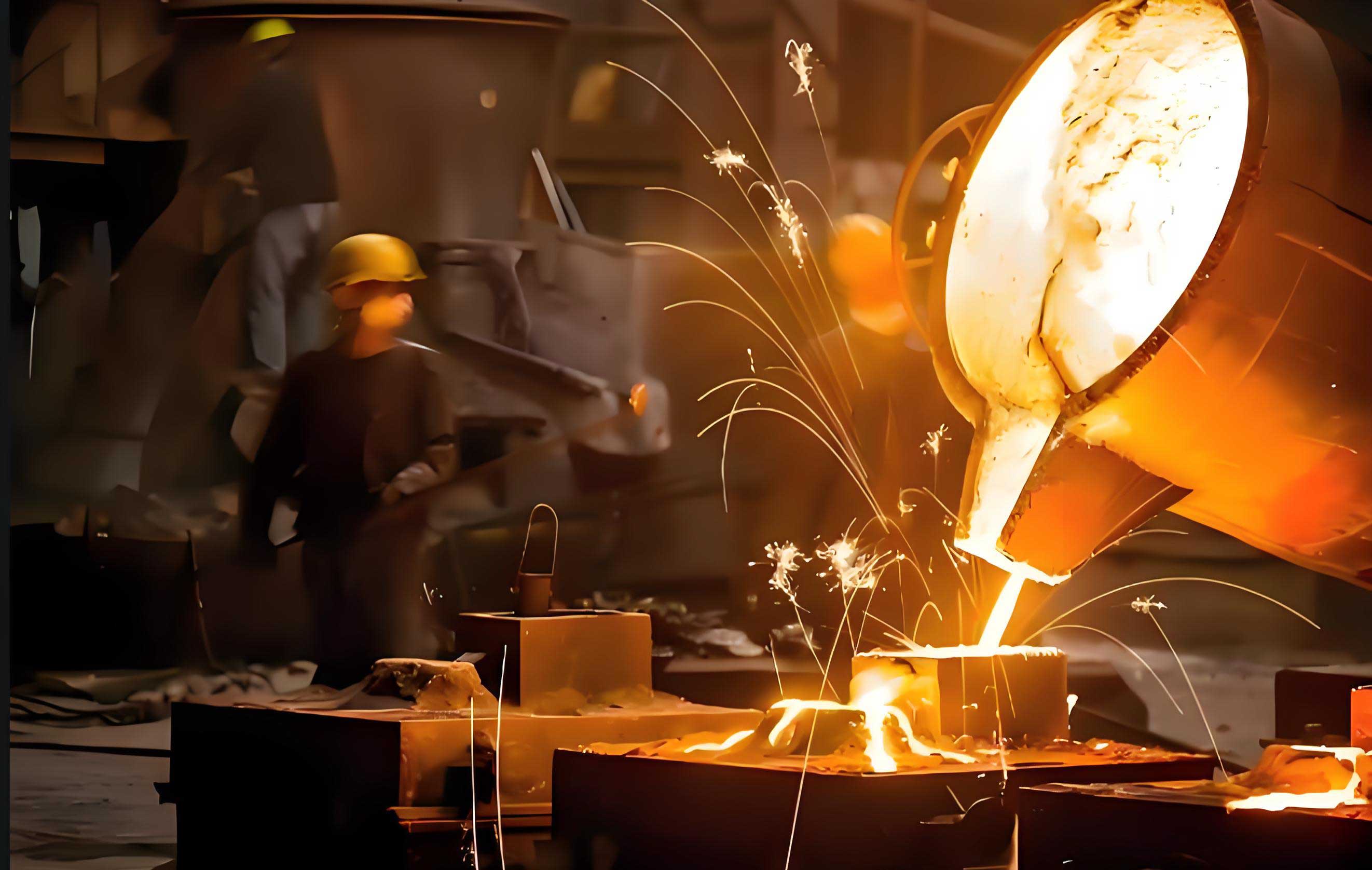
Refractory coatings play a pivotal role in lost foam foundry technology by protecting the pattern and ensuring cast quality. As I analyze this component, the coating must exhibit high permeability and strength to handle thermal shocks. The effectiveness can be modeled using Darcy’s law for fluid flow through porous media: $$ v = \frac{k}{\mu} \frac{\Delta P}{L} $$ where \( v \) is the flow velocity, \( k \) is the permeability, \( \mu \) is the dynamic viscosity, \( \Delta P \) is the pressure drop, and \( L \) is the coating thickness. This equation underscores the importance of coating properties in foundry technology for venting decomposition gases.
The composition of refractory coatings in foundry technology includes multiple ingredients, each serving a specific function. I have compiled a table to summarize the typical components and their roles, which are vital for optimizing performance in foundry technology applications.
| Component | Function | Examples |
|---|---|---|
| Refractory aggregate | Provides thermal insulation and prevents metal penetration | Zircon flour, alumina, quartz powder |
| Carrier (solvent) | Facilitates application and drying | Water, ethanol |
| Suspension agent | Maintains homogeneity and prevents settling | Bentonite, cellulose derivatives |
| Binder | Enhances adhesion and coating strength | Silicate binders, organic resins |
| Additives | Improves properties like wettability and gas evolution | Surfactants, anti-foaming agents |
In foundry technology, the advantages of lost foam casting are substantial, contributing to its adoption in various industries. As I evaluate these benefits, they include reduced machining allowances, lower environmental impact, and enhanced precision. For instance, the machining allowance can be as low as 1.5–2 mm, which translates to cost savings. The reduction in machining volume \( V_m \) can be expressed as: $$ V_m = V_i – V_f $$ where \( V_i \) is the initial volume and \( V_f \) is the final volume, with typical reductions of 40–50% compared to traditional sand casting in foundry technology.
However, lost foam foundry technology is not without defects. Common issues like cold shuts, slag inclusions, and sand penetration can arise from improper process control. For example, cold shuts occur when metal fronts fail to fuse, often due to low pouring temperatures. The thermal condition can be described by: $$ T_p > T_l + \Delta T_s $$ where \( T_p \) is the pouring temperature, \( T_l \) is the liquidus temperature, and \( \Delta T_s \) is the superheat required for proper flow in foundry technology. Similarly, slag inclusions result from inadequate slag removal, and their prevention relies on optimizing gating designs and coating quality in foundry technology processes.
To quantify the performance of lost foam foundry technology, I often refer to key metrics such as yield strength and defect rates. The yield \( Y \) of good castings can be modeled as: $$ Y = \frac{N_g}{N_t} \times 100\% $$ where \( N_g \) is the number of good castings and \( N_t \) is the total number produced. In advanced foundry technology, this yield can exceed 90% with proper parameter control, highlighting the efficiency of lost foam methods.
In conclusion, lost foam casting represents a significant evolution in foundry technology, aligning with sustainability goals by minimizing waste and energy consumption. As I reflect on its potential, this foundry technology offers a path toward cleaner production and automated workflows. The integration of mathematical models and empirical data, as discussed, enables continuous improvement in foundry technology applications. With ongoing research, lost foam foundry technology is poised to expand its footprint, driving innovation in metal casting industries worldwide.