
Lost foam casting, often referred to as evaporative pattern casting, represents a significant advancement in metal casting technology, offering near-net-shape capabilities with minimal machining requirements. As a researcher and practitioner in this field, I have extensively studied the intricacies of the lost foam casting process, particularly focusing on defect formation and control. This article aims to provide a comprehensive analysis of one of the most common defects in lost foam casting: gas holes, specifically invasive gas holes in steel castings. Through a first-person perspective, I will share insights derived from theoretical models, experimental data, and industrial applications, emphasizing the keyword “lost foam casting” throughout. The discussion will be enriched with mathematical formulas, tables, and practical recommendations to aid foundries in optimizing their lost foam casting operations.
The lost foam casting process involves creating a foam pattern, usually from expandable polystyrene (EPS), coating it with a refractory material, embedding it in unbonded sand, and then pouring molten metal to replace the pattern, which decomposes upon contact. This method eliminates the need for traditional cores and allows for complex geometries, but it introduces unique challenges due to the interaction between the metal and the decomposing foam. Gas holes are a prevalent issue, often stemming from the gases and liquids produced during foam decomposition. If not properly managed, these by-products can infiltrate the molten metal, leading to defects that compromise the integrity of the castings. In this context, understanding the dynamics of gas invasion is paramount for improving the quality of lost foam castings.
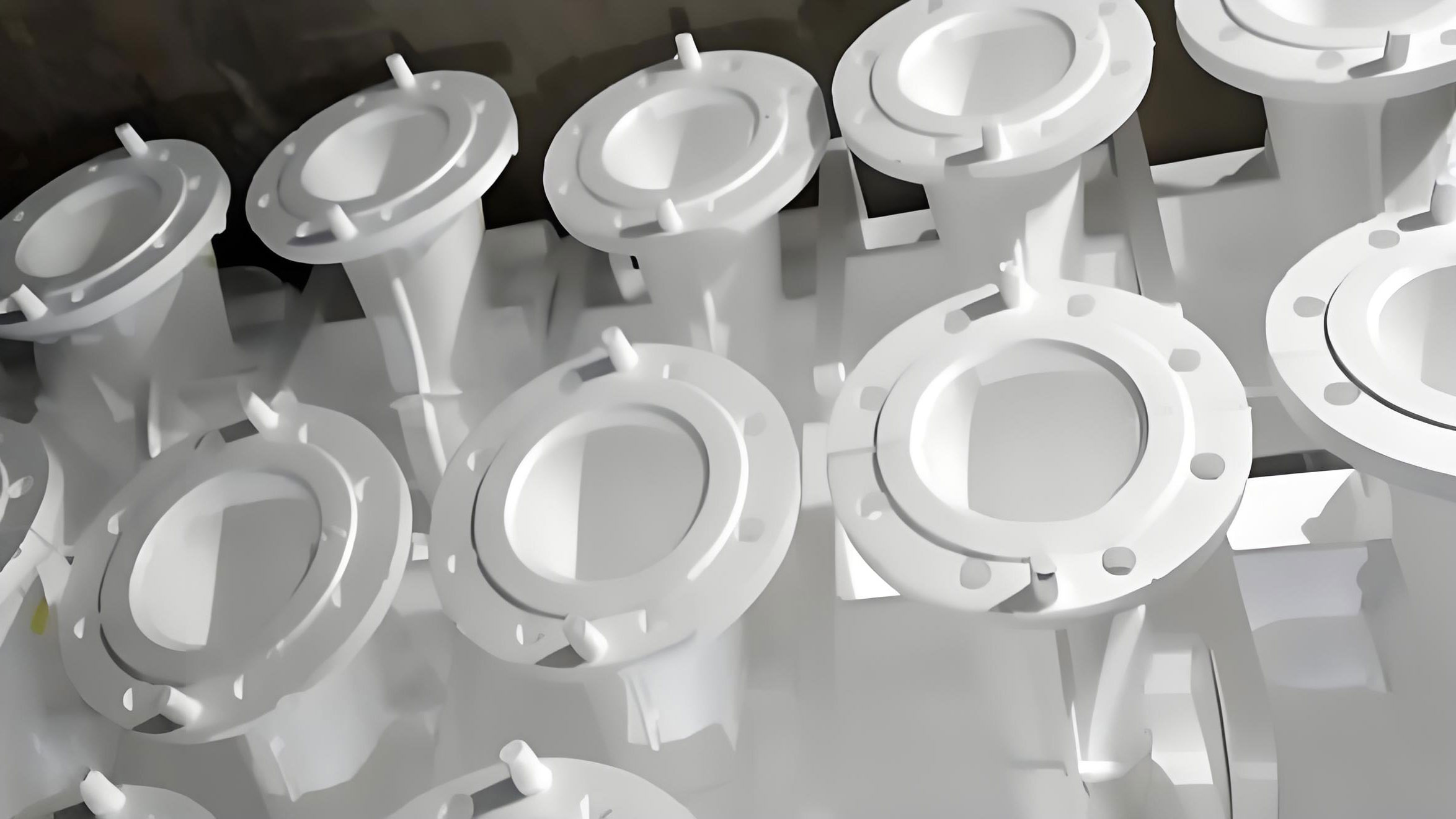
The image above depicts a typical lost foam casting setup, highlighting the foam pattern, coating layer, and sand mold. This visual aids in comprehending the process flow and the critical interfaces where gas-related defects may originate. As we delve deeper, we will explore the factors influencing gas hole formation and how modifications in process parameters can alleviate these issues.
Gas holes in lost foam castings are primarily invasive, meaning that external gases penetrate the molten metal during filling and solidify within the casting. To analyze this phenomenon, we must consider the pressure balances at play. In conventional sand casting, the condition for gas invasion is expressed as:
$$P_{\text{gas}} > P_{\text{cavity}} + P_{\text{static}} + P_{\text{resistance}}$$
Here, $P_{\text{gas}}$ denotes the gas pressure at the interface between the molten metal and the mold sand, $P_{\text{cavity}}$ is the gas pressure on the free surface of the metal in the mold cavity, $P_{\text{static}}$ represents the static pressure exerted by the molten metal column, and $P_{\text{resistance}}$ signifies the resistance to gas invasion, influenced by metal viscosity and surface tension. However, in lost foam casting, this model must be adapted due to the presence of the foam pattern and its decomposition products.
During the filling stage in lost foam casting, a gas film forms between the advancing metal front and the foam pattern. This film contains gases from the thermal degradation of the foam, creating a pressure $P_{\text{film}}$ that acts similarly to $P_{\text{cavity}}$ in the traditional model. Additionally, if the foam decomposes incompletely, liquid residues may accumulate at the interface between the metal and the coating, leading to a localized increase in gas pressure $P_{\text{gas}}$ at that boundary. Consequently, gas invasion in lost foam casting can occur under two distinct scenarios, each governed by different pressure dominance:
-
Scenario 1: Dominance of Gas Film Pressure. When the metal filling velocity exceeds the foam decomposition rate, $P_{\text{film}}$ rises sharply. If it surpasses the combined pressures at the metal-coating interface and within the metal, gas from the film invades the molten metal. The condition for this scenario is:
$$P_{\text{film}} > P_{\text{gas}} + P_{\text{static}} + P_{\text{resistance}}$$
This often results in gas holes near the top surfaces of castings, where $P_{\text{static}}$ is lower, and the metal temperature is cooler, trapping the gas.
-
Scenario 2: Dominance of Coating Interface Pressure. When liquid residues from foam decomposition accumulate at the coating interface, they continue to degas, elevating $P_{\text{gas}}$. If this pressure becomes sufficiently high, gas invades from the interface into the metal. The condition is:
$$P_{\text{gas}} > P_{\text{cavity}} + P_{\text{static}} + P_{\text{resistance}}$$
In this case, $P_{\text{cavity}}$ is typically low due to the venting through the coating and sand, but it can increase if ventilation is inadequate. This scenario tends to cause gas holes on the side surfaces of castings.
To elucidate these mechanisms further, let’s break down the key parameters involved. The static pressure $P_{\text{static}}$ is calculated as:
$$P_{\text{static}} = \rho g h$$
where $\rho$ is the density of the molten metal (e.g., approximately 7,800 kg/m³ for steel), $g$ is the acceleration due to gravity (9.81 m/s²), and $h$ is the height of the metal column above the point of interest. In lost foam casting, $h$ varies dynamically during filling, making gating design crucial for maintaining adequate $P_{\text{static}}$ to suppress gas invasion. The resistance $P_{\text{resistance}}$ can be approximated by considering the surface tension $\sigma$ and viscosity $\mu$ of the metal, though it is often treated empirically in practice.
The following table summarizes the pressures and their influences in lost foam casting:
| Pressure Component | Symbol | Description | Effect on Gas Invasion |
|---|---|---|---|
| Gas Film Pressure | $P_{\text{film}}$ | Pressure in the gap between molten metal and foam pattern, filled with decomposition gases. | Promotes invasion if excessive; increases with faster filling or higher foam density. |
| Coating Interface Pressure | $P_{\text{gas}}$ | Gas pressure at the interface between molten metal and coating, influenced by liquid residue decomposition. | Promotes invasion if residues accumulate; depends on coating permeability and foam properties. |
| Static Pressure | $P_{\text{static}}$ | Hydrostatic pressure from the molten metal column. | Inhibits invasion; higher values are beneficial, achievable through proper gating height. |
| Resistance Pressure | $P_{\text{resistance}}$ | Resistance due to metal properties like surface tension and viscosity. | Inhibits invasion but may also trap gas if invasion occurs; higher viscosity reduces gas escape. |
| Cavity Pressure | $P_{\text{cavity}}$ | Pressure in the mold cavity, often near atmospheric if venting is effective. | Generally low but can rise if gas evacuation is poor, exacerbating invasion risks. |
In addition to these pressures, the kinetics of foam decomposition play a critical role. The decomposition rate of EPS foam can be modeled using an Arrhenius equation:
$$k = A e^{-E_a / (RT)}$$
where $k$ is the rate constant, $A$ is the pre-exponential factor, $E_a$ is the activation energy (typically around 200 kJ/mol for EPS), $R$ is the universal gas constant (8.314 J/mol·K), and $T$ is the absolute temperature at the metal-foam interface. In lost foam casting, $T$ can reach 1500–1600°C for steel, leading to rapid decomposition. However, if the filling speed $v$ is too high, the contact time $t_c = L/v$ (where $L$ is the characteristic length of the foam) may be insufficient for complete decomposition, resulting in leftover residues and increased $P_{\text{film}}$. The gas generation rate $Q_g$ from foam decomposition can be expressed as:
$$Q_g = \rho_f V_f k$$
with $\rho_f$ being the foam density and $V_f$ the foam volume. Then, $P_{\text{film}}$ is roughly proportional to $Q_g / v$, highlighting the inverse relationship with filling speed.
To mitigate gas holes in lost foam casting, several preventive measures have been developed and validated in industrial settings. These measures target the key parameters identified above, aiming to balance pressures and enhance gas evacuation. The table below outlines these strategies, their implementations, and their mechanisms of action:
| Preventive Measure | Specific Implementation | Mechanism of Action | Expected Impact on Pressures |
|---|---|---|---|
| Increase Pouring Time | Reduce cross-sectional areas of gating channels (e.g., sprue from 50mm×50mm to 45mm×45mm) to slow filling speed. | Allows more time for foam decomposition and gas evacuation through coating; reduces $P_{\text{film}}$. | Decreases $P_{\text{film}}$; may slightly increase $P_{\text{static}}$ due to longer exposure. |
| Optimize Gating Design | Switch from bottom gating to top or step gating; use ratios like $A_s : A_r : A_g = 1.3 : 1.1 : 1.4$ for controlled flow. | Maintains higher metal temperature in upper sections, reducing viscosity and aiding gas floatation; minimizes turbulence. | Increases $P_{\text{static}}$ in critical zones; stabilizes $P_{\text{cavity}}$. |
| Reduce Foam Density | Use EPS foam with density 18–20 g/cm³ instead of 24 g/cm³; create hollow patterns for thick sections to decrease mass. | Lowers total gas generation from foam, reducing both $P_{\text{film}}$ and $P_{\text{gas}}$ from residues. | Directly reduces $P_{\text{film}}$ and $P_{\text{gas}}$. |
| Enhance Coating Permeability | Select coatings with high gas permeability (e.g., alumina-based); apply thinner layers (1.0–2.0 mm) and ensure uniform drying. | Improves gas flow through coating, preventing buildup at interface; described by Darcy’s law: $Q = \frac{K A \Delta P}{\mu L}$. | Reduces $P_{\text{gas}}$ at interface; may lower $P_{\text{cavity}}$ if venting is efficient. |
| Implement Controlled Pouring Sequence | Adopt “slow-fast-slow” pouring: start slowly to fill sprue, then rapidly to maintain flow, then slow near completion to allow gas escape. | Minimizes initial gas entrapment and provides a calm finish for gas expulsion; reduces turbulence-induced pressure spikes. | Balances $P_{\text{film}}$ and $P_{\text{gas}}$ dynamically; enhances $P_{\text{resistance}}$ effectiveness. |
| Adjust Vacuum and Venting | Maintain vacuum around 0.05–0.06 MPa during pouring; ensure adequate venting in sand mold to avoid suction effects. | Assists in removing gases from the mold cavity but must be balanced to prevent metal penetration into coating. | Lowers $P_{\text{cavity}}$ and $P_{\text{gas}}$; requires careful calibration. |
| Monitor and Control Pouring Temperature | Keep pouring temperature within optimal range (e.g., 1520–1570°C for steel); avoid excessive superheat to reduce gas solubility. | Higher temperatures improve fluidity but may increase gas dissolution; optimal range balances decomposition and flow. | Affects $P_{\text{resistance}}$ via viscosity; influences decomposition rate $k$. |
These measures have proven effective in practical applications. For instance, in a case involving a ZG270-560 steel rotor casting weighing 690 kg, initial lost foam casting parameters led to dispersed gas holes up to 6 mm in diameter on the top surface. By increasing the pouring time from 19–26 seconds to approximately 40 seconds, modifying the gating to a step design, reducing foam density to 18 g/cm³, and using a high-permeability alumina-based coating, the defect was virtually eliminated. This demonstrates the synergistic effect of addressing multiple factors in lost foam casting.
To further quantify the benefits, consider the coating permeability $K$, which is critical for gas evacuation. Darcy’s law can be rearranged to express the pressure drop across the coating:
$$\Delta P = \frac{Q \mu L}{K A}$$
where $Q$ is the volumetric gas flow rate, $\mu$ is the gas viscosity, $L$ is the coating thickness, $A$ is the surface area, and $K$ is the permeability. By increasing $K$ (e.g., through optimized coating composition) or decreasing $L$, $\Delta P$ decreases, facilitating gas escape and reducing $P_{\text{gas}}$. Experimental data suggest that for steel lost foam castings, a coating permeability of at least $10^{-12}$ m² is desirable, combined with a thickness of 1–2 mm.
Another aspect is the gating ratio, which influences the filling dynamics. A well-designed gating system in lost foam casting should ensure a smooth, non-turbulent flow to minimize gas entrainment. The ratio of sprue area ($A_s$), total runner area ($A_r$), and total gate area ($A_g$) can be optimized based on the casting geometry. For the rotor example, changing from $A_s : A_r : A_g = 1 : 1 : 1.3$ to $1.3 : 1.1 : 1.4$ resulted in a more controlled fill, reducing $P_{\text{film}}$ peaks. This can be modeled using Bernoulli’s principle with modifications for foam decomposition:
$$v = \sqrt{\frac{2(P_{\text{pressure}} – P_{\text{film}})}{\rho}}$$
where $v$ is the metal velocity at the gate, and $P_{\text{pressure}}$ is the driving pressure from the sprue. Slower $v$ achieved through larger ratios decreases $P_{\text{film}}$.
Beyond these technical adjustments, the selection of foam material is vital. While EPS is common, alternatives like polymethylmethacrylate (PMMA) offer lower gas generation but higher cost. The decomposition characteristics can be summarized in the following table:
| Foam Material | Density Range (g/cm³) | Gas Generation per Unit Mass (L/g) | Liquid Residue Formation | Suitability for Steel Castings |
|---|---|---|---|---|
| Expandable Polystyrene (EPS) | 16–24 | 0.3–0.5 | Moderate to High | Good, with proper process control |
| Polymethylmethacrylate (PMMA) | 20–30 | 0.2–0.4 | Low | Excellent, but more expensive |
| Co-polymer Blends | 18–22 | 0.25–0.45 | Low to Moderate | Good for complex shapes |
In addition to material choices, process monitoring plays a key role. Implementing real-time sensors to track vacuum levels, pouring speed, and metal temperature can help maintain optimal conditions in lost foam casting. For example, a sudden drop in vacuum during pouring might indicate gas buildup, prompting adjustments in pouring rate or venting.
Mathematical modeling of the entire lost foam casting process can integrate these factors. A simplified governing equation for gas pressure dynamics might be:
$$\frac{\partial P}{\partial t} = D \nabla^2 P + S(x,t)$$
where $P$ is the gas pressure (either $P_{\text{film}}$ or $P_{\text{gas}}$), $D$ is the effective diffusivity of gas through the coating or sand, and $S(x,t)$ is a source term representing gas generation from foam decomposition. Solving this numerically with boundary conditions (e.g., venting at mold walls) can predict pressure distributions and identify risk zones for gas holes.
In conclusion, lost foam casting is a versatile and efficient casting method, but its success hinges on managing the complex interactions between molten metal and foam decomposition. Gas holes, particularly invasive types, can be mitigated through a holistic approach that addresses filling speed, gating design, foam properties, coating performance, and pouring practices. The conditions $P_{\text{film}} > P_{\text{gas}} + P_{\text{static}} + P_{\text{resistance}}$ and $P_{\text{gas}} > P_{\text{cavity}} + P_{\text{static}} + P_{\text{resistance}}$ provide a framework for understanding gas invasion, while the preventive measures outlined offer practical solutions. As lost foam casting technology continues to evolve, ongoing research into advanced materials, real-time control systems, and multi-scale modeling will further enhance its reliability and expand its applications in industries such as automotive, aerospace, and energy. By sharing these insights, I hope to contribute to the optimization of lost foam casting processes worldwide, ensuring high-quality castings with minimal defects.
Looking ahead, innovations in lost foam casting may include the development of biodegradable foams, nano-enhanced coatings for superior permeability, and AI-driven process optimization. These advancements could reduce environmental impact and improve consistency. For now, foundries should focus on implementing the proven strategies discussed here, tailoring them to specific casting geometries and alloy systems. Through continuous improvement and collaboration, the full potential of lost foam casting can be realized, making it a cornerstone of modern manufacturing.