
In the manufacturing of large-scale, complex machine tool components such as beds, columns, and tables, the demand for materials offering an optimal balance of strength, damping capacity, machinability, and wear resistance is paramount. High Carbon Equivalent (CE) grey iron castings have emerged as a superior choice for these applications. However, their production is fraught with challenges, including the propensity for casting defects like shrinkage porosity, thermal cracking, and graphite flotation, which can severely compromise the final component’s quality and service performance. Therefore, the optimization of the production process is not merely a technical exercise but a critical necessity for enhancing quality, reducing costs, advancing technological progress, and ensuring the reliability of precision machinery.
This article delves into the short-flow production methodology for high-CE grey iron machine tool castings. The short-flow approach is fundamentally centered on streamlining the production chain—reducing intermediate steps, enhancing material yield, and integrating processes to improve overall efficiency and cost-effectiveness. Within this framework, meticulous control over every stage, from material selection and melting to molding, pouring, and post-casting operations, is the cornerstone of achieving consistent, high-performance grey iron casting.
Characteristics of High Carbon Equivalent Grey Iron
High Carbon Equivalent grey iron casting is typically defined by a CE value exceeding 3.85%, often reaching up to 3.9-4.0%. The Carbon Equivalent is calculated using a standard formula that accounts for the graphitizing influence of silicon and phosphorus:
$$CE = C + \frac{Si + P}{3}$$
This high CE confers a set of distinctive and generally favorable properties crucial for machine tool structures.
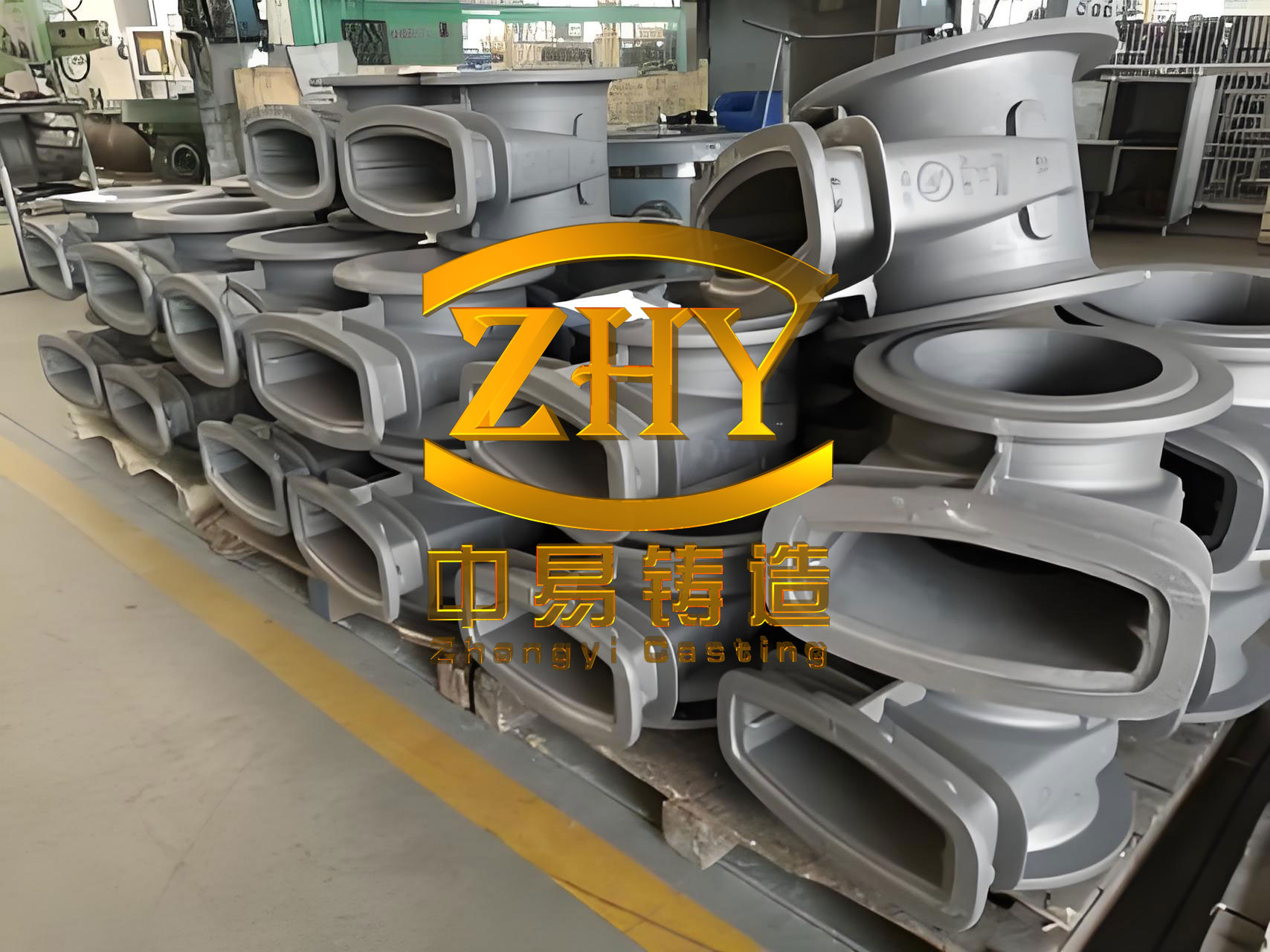
Key characteristics include:
- Excellent Castability: The high carbon and silicon content significantly improves the fluidity of the molten iron, enabling it to fill intricate and complex mold cavities effectively. This reduces the likelihood of mistruns and cold shuts, which is vital for producing large, thin-walled sections common in machine tool frames.
- Reduced Shrinkage Tendency: During solidification, the precipitation of graphite flakes is accompanied by volumetric expansion. This “graphitization expansion” can partially or fully compensate for the shrinkage of the austenitic matrix, thereby minimizing the formation of internal shrinkage porosity and macro-shrinkage cavities. This leads to denser, more sound castings.
- Enhanced Damping Capacity: The graphite flakes within the ferrous matrix act as internal dampers, absorbing vibrational energy. This inherent damping is significantly higher than in steel and is a primary reason for selecting grey iron for machine tool beds, as it improves machining accuracy by dampening vibrations from cutting forces.
- Good Machinability: The presence of graphite flakes acts as a chip-breaker and provides self-lubrication at the tool-chip interface, resulting in good machinability. This reduces tool wear and power consumption during subsequent machining operations.
- Thermal Sensitivity: While offering benefits, the high CE also makes the material more sensitive to cooling rates and heat treatment parameters. Inadequate control can lead to undesirable microstructures, such as excessive ferrite or coarse graphite, which degrade mechanical properties, or can induce casting stresses and cracking.
To harness these characteristics while mitigating the associated risks, precise control over the entire production process is non-negotiable. The following sections detail the optimized short-flow production process developed and applied for a significant machine tool component—a horizontal machining center bed.
The Short-Flow Production Process for High-CE Grey Iron Castings
The subject component for this process development was a large bed for a horizontal machining center. The key specifications were: Material Grade: HT300 (equivalent to Class 30 in ASTM standards), Nominal Tensile Strength: ≥ 300 MPa, Dimensions: 4900 mm (L) x 2900 mm (W) x 1490 mm (H), Weight: Approximately 12,270 kg, Wall Thickness: Ranging from 20 mm (min) to 80 mm (max), with an average of 30 mm.
The production philosophy integrates several innovative strategies: a duplex melting process linking blast furnace and medium-frequency induction furnace, the use of proprietary refractory coatings, adoption of a high-CE and high Si/C ratio chemistry coupled with micro-alloying, and a controlled nitrogen addition process.
1. Material Selection and Charge Composition
The foundation of a high-quality grey iron casting lies in the purity and consistency of the charge materials. The charge was meticulously designed to ensure cleanliness and target chemistry.
| Charge Material | Proportion (wt.%) | Purpose & Requirement |
|---|---|---|
| Steel Scrap | 30% | Provides a clean, low-impurity base for carbon adjustment. Must be free from contaminants like alloying elements detrimental to grey iron (e.g., high Cr, Mo). |
| Return Material (Internal) | ≤ 20% | Improves yield and cost-efficiency. Quantity is limited to prevent the buildup of undesirable trace elements. |
| Pretreated Blast Furnace Hot Metal | 45% | Serves as the primary source of hot metal and carbon. Pretreatment (desulfurization, etc.) in a transfer ladle ensures consistent, high-quality input. |
| Alloying Additions | ~5% | Includes ferrosilicon, manganese, chromium, tin, and nitrogen-bearing alloys (e.g., nitrided manganese) for final chemistry adjustment and property enhancement. |
2. Melting and Composition Control
Melting is the most critical step where the metallurgical destiny of the grey iron casting is determined. A two-stage process was employed.
Stage 1: Blast Furnace Hot Metal Pretreatment. The hot metal is subjected to desulfurization and temperature homogenization in a specially designed pretreatment ladle. Oxygen injection may be used to refine the melt and raise its temperature to a consistent range of 1650-1720°C before transfer.
Stage 2: Medium-Frequency Induction Furnace Finishing. The charge (scrap, returns, pretreated hot metal) is melted in the coreless induction furnace. This furnace offers excellent stirring action for homogeneity and precise temperature control. The key process parameters and chemical targets are summarized below:
| Process Parameter | Target/Control Range |
|---|---|
| Melting Temperature | 1480 – 1550 °C |
| Tapping Temperature | ~1480 °C |
| Pouring Temperature | 1380 – 1410 °C |
| Carbon Equivalent (CE) | 3.80 – 3.90 % |
| Si/C Ratio | > 0.75 |
| Manganese (Mn) | 0.8 – 1.0 % |
| Chromium (Cr) | 0.10 – 0.20 % |
| Tin (Sn) | 0.04 – 0.06 % |
| Nitrogen (N) | 90 – 110 ppm |
The underlying metallurgical principles are:
- High Si/C Ratio: A high ratio promotes graphitization, reducing chilling tendency and increasing ferrite. However, this is counterbalanced by pearlite-stabilizing elements.
- Micro-alloying (Cr, Sn, N): Chromium and tin are potent pearlite promoters. Nitrogen, in controlled amounts, refines the graphite structure and strengthens the matrix through solid solution and nitride formation. The combined effect of N+Sn+Cr ensures a predominantly pearlitic matrix (>98%) despite the high Si/C ratio, which is essential for achieving the required HT300 strength.
- Inoculation Practice: A multi-stage inoculation process is vital for graphite nucleation and refinement.
- Pre-inoculation: 0.1% fine silicon carbide (SiC, 0.2-1 mm) is sprinkled on the melt surface. SiC dissolves and provides exogenous nuclei for graphite.
- Ladle Inoculation: During tapping, 0.4% silicon-barium-calcium (Si-Ba-Ca) inoculant is added to the stream. This is the primary inoculation event.
- Stream Inoculation: During pouring, 0.1% fine 75% ferrosilicon (0.2-0.7 mm) is added to the metal stream entering the mold. This late inoculation counters fading and ensures effective nucleation in the casting.
The chemical composition evolution from raw charge to final inoculated iron is critical to monitor, as shown in the following analysis:
| Stage | CE (%) | C (%) | Si (%) | Mn (%) | P (%) | S (%) | Sn (%) | Cr (%) | N (ppm) |
|---|---|---|---|---|---|---|---|---|---|
| Base Iron (Before Inoculation) | 3.41 | 3.04 | 1.07 | 0.51 | 0.023 | 0.029 | 0.0076 | 0.094 | 33 |
| Inoculated Iron (Final) | 3.84 | 3.02 | 2.44 | 0.86 | 0.026 | 0.051 | 0.047 | 0.150 | 119 |
3. Molding and Core Making Process
For a large, complex grey iron casting like a machine tool bed, dimensional accuracy and surface finish are paramount. The process utilized a furan resin-bonded sand system enhanced by additive manufacturing.
- 3D Printed Sand Cores: Complex internal cavities and waterway cores were produced using binder jetting 3D printing. This technology allows for the creation of highly precise, integrated cores without the need for pattern equipment, significantly reducing lead time and enabling geometries impossible with traditional methods.
- Conventional Resin Sand Molding: The main mold was produced using furan no-bake sand. Key parameters were strictly controlled to ensure mold integrity:
- Resin: 1.0 – 1.1% of sand weight.
- Catalyst (Toluene sulfonic acid): 28 – 35% of resin weight.
- Strip Time: 25 – 30 minutes.
- Compressive Strength: 0.8 – 1.2 MPa.
- Hardness (Surface): 70 – 90.
- Coating Application: A proprietary zircon-based refractory coating with a controlled viscosity of 38°Bé was applied uniformly to the mold and core surfaces. This coating is essential to prevent metal penetration (burn-on), improve surface finish, and facilitate shakeout.
4. Gating, Pouring, and Solidification Control
A properly designed gating system is crucial for delivering clean, quiescent, and turbulence-free metal into the mold cavity. For this large bed casting, a pressurized gating system was designed with a choke at the base of the sprue to quickly establish a full sprue and minimize air entrainment.
The gating ratio used was:
$$ \Sigma A_{sprue} : \Sigma A_{runner} : \Sigma A_{ingate} = 1.2 : 1.0 : 0.9 $$
This ratio helps in achieving a non-turbulent fill. The pouring temperature was tightly maintained between 1380°C and 1410°C, and the total pouring time for the ~12-ton casting was controlled within 60 to 90 seconds to ensure directional solidification.
Cooling rate control is implicit in the mold design (use of chills where necessary) and the high CE of the iron itself, which reduces the chilling tendency and promotes a more uniform cooling curve, mitigating thermal stress.
5. Post-Casting Operations
After shakeout, the casting undergoes several critical steps:
- Cleaning: Removal of sand, fins, and gates.
- Stress Relief Annealing: The casting is subjected to a sub-critical annealing heat treatment, typically heating to 500-550°C, holding for several hours (based on section thickness), and slowly cooling. This process effectively reduces residual casting stresses by 80-90%, which is vital for long-term dimensional stability of the precision machine tool component.
- Inspection: Includes visual inspection for surface defects, dimensional checks, and non-destructive testing if required.
Mechanical Performance and Metallurgical Quality Assessment
The true measure of the optimized short-flow process lies in the final properties of the grey iron casting. Extensive testing was conducted on the produced bed casting and separately cast test bars.
1. Residual Stress and Hardness
Residual stress measurements were taken at multiple locations on the stress-relieved bed casting using the hole-drilling strain gauge method. The results confirmed the effectiveness of the annealing process, with most measured stresses at acceptably low levels for a component of this size and complexity. Hardness was measured at 12 different locations on the machined导轨 (slideway) surfaces using a portable Brinell hardness tester.
| Measurement Point | Hardness (HBW) | Measurement Point | Hardness (HBW) |
|---|---|---|---|
| 1 | 209 | 7 | 202 |
| 2 | 214 | 8 | 202 |
| 3 | 207 | 9 | 201 |
| 4 | 216 | 10 | 206 |
| 5 | 203 | 11 | 209 |
| 6 | 215 | 12 | 208 |
| Average Hardness: 207 HBW | |||
The hardness range of 201-216 HBW is considered ideal for machine tool slideways, offering an excellent compromise between wear resistance and machinability.
2. Metallurgical Quality Indices
Beyond basic mechanical properties, several derived indices are used to assess the overall “quality” or perfection of a grey iron. These indices, calculated from the chemical composition and measured properties, provide a holistic view of the grey iron casting‘s performance.
a) Eutectic Saturation (Sc): Also known as relative carbon content, it indicates how close the iron’s composition is to the eutectic point. A higher Sc generally implies better castability and lower shrinkage tendency.
$$ Sc = \frac{C}{4.26 – \frac{Si + P}{3}} = \frac{3.021}{4.26 – \frac{2.439 + 0.026}{3}} \approx 0.88 $$
An Sc of 0.88 indicates a slightly hypereutectic composition, beneficial for fluidity and self-feeding.
b) Degree of Maturation (RG): This index compares the actual tensile strength to the “normal” strength expected for its eutectic saturation. An RG > 1.0 indicates that the iron has achieved a higher strength than typically expected for its CE, signifying good metallurgical control (effective inoculation, pearlitic matrix).
$$ RG = \frac{R_m (measured)}{1000 – 800 \times Sc} = \frac{310.9}{1000 – 800 \times 0.88} \approx 1.05 $$
c) Degree of Hardening (HG): Similar to RG, but for hardness. An HG < 1.0 is desirable, indicating that the achieved hardness is lower than normally expected for its CE, which translates to better machinability.
$$ HG = \frac{HBW (measured)}{530 – 344 \times Sc} = \frac{207}{530 – 344 \times 0.88} \approx 0.91 $$
d) Quality Coefficient (Qi): This is the ratio of RG to HG. A Qi > 1.0 is the ultimate goal, signifying that the iron has achieved high strength (good RG) simultaneously with relatively low hardness (good HG), i.e., an excellent combination of mechanical properties and machinability.
$$ Q_i = \frac{RG}{HG} = \frac{1.05}{0.91} \approx 1.19 $$
e) Machinability Index (m): A pragmatic German standard defines machinability as the ratio of tensile strength to Brinell hardness. Higher m values indicate better machinability.
$$ m = \frac{R_m}{HBW} = \frac{310.9}{207} \approx 1.50 $$
A value of 1.50 places this casting in the excellent machinability range for its strength class (comparable to GG-30).
The summary of these key metallurgical indices clearly demonstrates the high quality achieved:
| Index | Symbol | Calculated Value | Target/Interpretation |
|---|---|---|---|
| Eutectic Saturation | Sc | 0.88 | 0.75-1.00 (Good castability, low stress) |
| Degree of Maturation | RG | 1.05 | > 1.0 (High strength for given CE) |
| Degree of Hardening | HG | 0.91 | < 1.0 (Lower hardness, good machinability) |
| Quality Coefficient | Qi | 1.19 | > 1.0 (Superior property combination) |
| Machinability Index | m | 1.50 | > 1.2 (Excellent machinability) |
3. Microstructural Analysis
Microstructure is the direct link between process and properties. Evaluation of separately cast keel blocks confirmed:
- Graphite Morphology: >96% Type A (uniformly distributed, randomly oriented flake graphite), Size: Grade 4-5 (ASM/AFS). This is the ideal graphite form for balancing strength and damping.
- Matrix Structure: >98% Fine Pearlite with a small amount of ferrite surrounding the graphite flakes. This is achieved through the precise micro-alloying (Cr, Sn, N) which counteracts the ferrite-promoting effect of the high Si/C ratio.
The tensile strength from these test bars was 310.9 MPa, comfortably exceeding the HT300 requirement, and the elastic modulus was a robust 124 GPa.
Conclusion and Future Outlook
The production of high-performance, high Carbon Equivalent grey iron castings for machine tools is a sophisticated engineering endeavor that requires integrated control over the entire manufacturing chain. This work demonstrates that a well-designed short-flow production process is not only feasible but highly advantageous.
The key conclusions are:
- Employing a high CE (3.84%) coupled with a high Si/C ratio (>0.75) improves castability and reduces shrinkage and stress formation without leading to excessive ferrite, provided it is counterbalanced by precise micro-alloying with pearlite stabilizers like Tin and Chromium, and strengthening agents like Nitrogen.
- The synergistic use of N (90-110 ppm), Sn (0.04-0.06%), and Cr (0.10-0.20%) is effective in securing a predominantly pearlitic matrix (>98%) essential for high strength, while the high Si/C ratio and good inoculation ensure a fine, Type A graphite structure for optimal damping and thermal conductivity.
- The derived metallurgical quality indices (Sc=0.88, RG=1.05, HG=0.91, Qi=1.19, m=1.50) provide quantitative proof that the produced grey iron casting achieves a superior synthesis of properties: excellent castability, high strength, low residual stress, and outstanding machinability.
- The integration of advanced techniques like blast furnace/induction furnace duplex melting, 3D sand printing for cores, and rigorous process control in molding and pouring establishes a robust, efficient, and repeatable short-flow production route for heavy-section, high-quality machine tool components.
Looking forward, the evolution of high-performance grey iron casting for precision machinery will continue. Research directions may include further refinement of micro-alloying packages, development of even more effective and fade-resistant inoculants, advanced simulation tools for predicting distortion and stress, and deeper integration of Industry 4.0 concepts for real-time process monitoring and adaptive control. The goal remains steadfast: to push the boundaries of material performance, production efficiency, and cost-effectiveness, thereby supporting the continuous advancement of the global manufacturing sector.