
In the evolving landscape of modern manufacturing, the integration of digital, networked, and intelligent technologies has become a cornerstone for advancing industrial processes. As a researcher deeply involved in the field of foundry engineering, I have observed firsthand the transformative potential of data-driven approaches in addressing long-standing challenges. Among these, sand casting stands out as a critical manufacturing method, particularly in the production of high-value components like engine cylinder heads and blocks for the automotive industry. However, the inherent complexity of sand casting—characterized by intricate processes, extended production cycles, and high-volume outputs—often leads to significant quality fluctuations and difficulties in defect traceability. This has spurred a pressing need for innovative solutions that leverage the vast amounts of data generated in contemporary foundries.
The advent of enterprise resource planning (ERP) and manufacturing execution systems (MES) has ushered in an era of信息化管理, enabling the collection of extensive datasets encompassing equipment parameters,工艺 conditions, environmental factors, and quality metrics. Yet, in many sand casting enterprises, these data remain underutilized, creating a paradoxical situation of “data explosion but knowledge scarcity.” As someone committed to bridging this gap, I have explored the application of data mining techniques to unlock the hidden insights within these repositories. Data mining, defined as the process of discovering meaningful patterns, trends, and relationships from large databases, offers a powerful framework for decision support. In this article, I present a data mining model developed based on the Huazhu ERP system, tailored specifically for sand casting environments. The model aims to facilitate quality control, defect溯源, and predictive analytics, thereby enhancing operational efficiency and product reliability in sand casting operations.
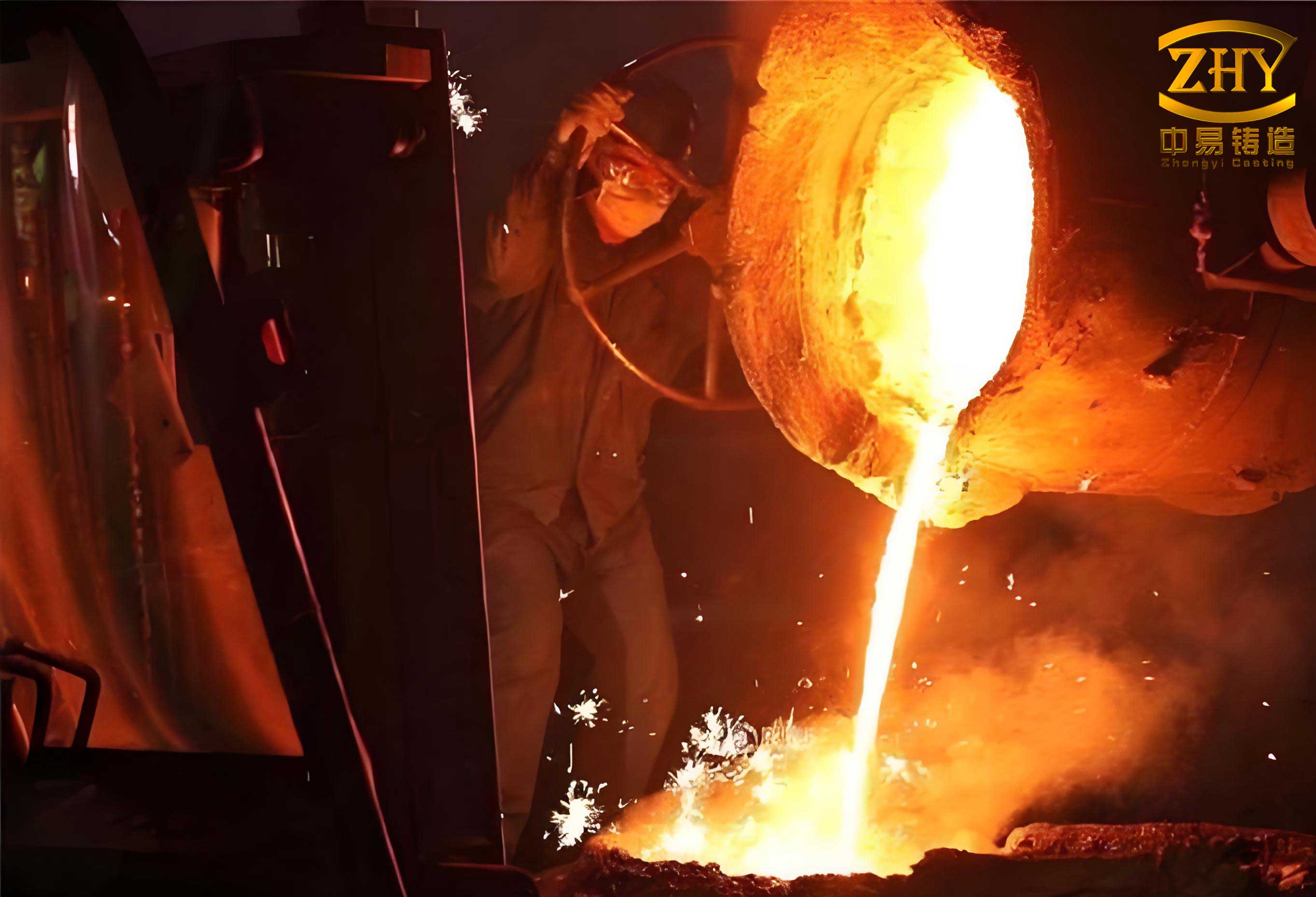
The core of our approach lies in the seamless integration of data acquisition, mining models, and visualization techniques. To provide context, let me first outline the foundational framework of the Huazhu ERP system, which serves as the data backbone for our sand casting data mining initiatives. This system is designed to streamline all aspects of foundry management, from order entry to production scheduling, inventory control, and quality assurance. Its relational database architecture, built on SQL Server, enables the interconnection of various data tables through key relationships, forming a cohesive information ecosystem. For instance, in a typical sand casting facility, the ERP workflow might encompass steps such as order registration, process route definition, bill of materials (BOM) creation, production planning, and quality inspection. Each step generates data that are either automatically captured via sensors or manually entered by operators, creating a rich tapestry of information relevant to sand casting quality.
To elucidate the data structure, consider the following table summarizing key entities and their attributes within the ERP database for sand casting management:
| Entity | Key Attributes | Description |
|---|---|---|
| Order Details | Order ID, Part Number, Quantity, Customer ID | Records customer orders for sand casting parts |
| Production Plan | Plan ID, Part Number, Start Date, Machine ID | Tracks scheduled production runs in sand casting |
| Quality Records | Inspection ID, Part ID, Defect Type, Date | Logs quality inspection outcomes for sand casting outputs |
| Process Parameters | Record ID, Parameter Type, Value, Timestamp | Captures real-time工艺 data during sand casting |
| Shipping Information | Shipment ID, Order ID, Date, Destination | Manages logistics for finished sand casting products |
Our data mining model is architected to exploit these interrelationships. At its heart is an associative analysis methodology that uses the unique casting identifier (e.g., a single part number) as the primary key for linking disparate data tables. This allows us to traverse from quality records back to specific工艺 parameters,订单 details, and even customer information, enabling holistic traceability in sand casting processes. Mathematically, we can express the association between entities using relational algebra. Let \( R \) represent a relation (table), and let \( \bowtie \) denote the natural join operation. For example, to link quality defects with process parameters in sand casting, we define:
$$ \text{QualityTrace} = R_{\text{QualityRecords}} \bowtie R_{\text{ProcessParameters}} \bowtie R_{\text{ProductionPlan}} $$
This query yields a dataset where each defect instance is associated with the corresponding sand casting工艺 conditions at the time of production. To quantify the strength of associations, we employ metrics such as support and confidence from association rule mining. For a rule \( X \rightarrow Y \) (e.g., “high pouring temperature leads to porosity in sand casting”), the support is calculated as:
$$ \text{Support}(X \rightarrow Y) = \frac{\sigma(X \cup Y)}{N} $$
where \( \sigma(X \cup Y) \) is the number of transactions containing both \( X \) and \( Y \), and \( N \) is the total number of transactions in the sand casting database. The confidence is given by:
$$ \text{Confidence}(X \rightarrow Y) = \frac{\sigma(X \cup Y)}{\sigma(X)} $$
These measures help identify robust patterns that can inform process adjustments in sand casting. For instance, if we discover a high-confidence rule linking low sand moisture to surface defects in sand casting, it may prompt tighter control over molding sand preparation.
Beyond associative analysis, our model incorporates neural networks for predictive quality assessment in sand casting. Given the nonlinear relationships often present in manufacturing data, neural networks offer a flexible tool for mapping input工艺 parameters to output quality scores. We structure a feedforward neural network with one hidden layer, as illustrated below. Let the input vector \( \mathbf{x} \) represent sand casting parameters such as pouring temperature, cooling rate, and sand composition, normalized to a range [0,1]. The hidden layer activations \( \mathbf{h} \) are computed as:
$$ \mathbf{h} = \phi(\mathbf{W}^{(1)} \mathbf{x} + \mathbf{b}^{(1)}) $$
where \( \mathbf{W}^{(1)} \) is the weight matrix, \( \mathbf{b}^{(1)} \) is the bias vector, and \( \phi \) is an activation function (e.g., ReLU). The output layer produces a quality prediction \( \hat{y} \), representing the likelihood of a defect-free sand casting part:
$$ \hat{y} = \psi(\mathbf{W}^{(2)} \mathbf{h} + \mathbf{b}^{(2)}) $$
Here, \( \psi \) might be a sigmoid function for binary classification (defect vs. no defect) in sand casting. The network is trained using backpropagation with a loss function such as cross-entropy, minimized via gradient descent. This enables us to simulate the impact of varying工艺 parameters on sand casting quality, as shown in the following table of hypothetical predictions:
| Pouring Temperature (°C) | Sand Moisture (%) | Predicted Quality Score | Likely Defect in Sand Casting |
|---|---|---|---|
| 720 | 3.5 | 0.92 | Low |
| 750 | 4.0 | 0.85 | Moderate (Porosity) |
| 780 | 2.5 | 0.45 | High (Shrinkage) |
Such predictive capabilities are invaluable for proactive quality management in sand casting, allowing engineers to optimize parameters before production runs.
The data acquisition phase in our sand casting data mining model is multifaceted, encompassing both automated and manual inputs. In modern sand casting facilities, sensors embedded in equipment like melting furnaces, molding machines, and cooling lines continuously monitor parameters such as temperature, pressure, and humidity. These data streams are integrated into the ERP system via IoT interfaces, providing real-time insights into the sand casting process. Concurrently, operators manually录入 information related to订单,工艺 cards, and quality inspections through user-friendly modules. This dual approach ensures comprehensive coverage of all variables influencing sand casting outcomes. To illustrate the volume and variety of data, consider the following formula estimating the total data points collected per sand casting production cycle:
$$ D_{\text{total}} = \sum_{i=1}^{n} (A_i \times T_i) + M $$
where \( D_{\text{total}} \) is the total data points, \( A_i \) represents automated sensors per process step \( i \) in sand casting, \( T_i \) is the sampling frequency, \( n \) is the number of steps, and \( M \) denotes manual entries. For a typical sand casting line with 10 automated steps sampling at 1 Hz over an 8-hour shift, plus 50 manual entries, this could yield over 288,000 data points daily—a testament to the big data nature of sand casting operations.
Visualization plays a crucial role in translating mined insights into actionable knowledge for sand casting teams. Our model outputs results in various formats, including interactive tables, scatter plots, and pie charts. For example, a scatter plot might depict daily production volumes against defect rates in sand casting, highlighting trends or anomalies. Similarly, a pie chart can break down defect types by percentage, aiding in prioritization of quality improvement efforts. We also generate summary statistics using descriptive metrics. Let \( Q \) represent a set of quality measurements for sand casting parts, with \( q_i \) denoting the quality score of the \( i \)-th part. The mean quality \( \bar{Q} \) and standard deviation \( \sigma_Q \) are calculated as:
$$ \bar{Q} = \frac{1}{N} \sum_{i=1}^{N} q_i, \quad \sigma_Q = \sqrt{\frac{1}{N} \sum_{i=1}^{N} (q_i – \bar{Q})^2} $$
These statistics, when tracked over time, can reveal shifts in sand casting process stability. Below is a hypothetical table showing monthly quality metrics for a sand casting production line:
| Month | Total Sand Casting Parts | Defect Rate (%) | Mean Quality Score | Top Defect Type |
|---|---|---|---|---|
| January | 10,000 | 5.2 | 0.88 | Porosity |
| February | 12,500 | 4.8 | 0.90 | Sand Inclusion |
| March | 11,200 | 6.1 | 0.85 | Shrinkage |
By correlating such tables with process parameter logs, we can drill down into root causes—for instance, identifying that a spike in shrinkage defects in sand casting during March coincided with fluctuations in pouring temperature.
The practical application of our data mining model in a sand casting environment has yielded significant benefits. In one implementation, we utilized the Huazhu ERP system to analyze historical data from a high-volume sand casting production line for engine components. By applying associative analysis, we uncovered that specific combinations of sand grain size and binder content were strongly linked to surface finish issues in sand casting. This led to a工艺 adjustment, resulting in a 15% reduction in rework rates. Moreover, the neural network predictor was deployed to evaluate new工艺 settings before trial runs, reducing scrap rates by approximately 20% over six months. The ability to trace defects back to individual production batches in sand casting has also enhanced customer satisfaction, as quality issues can be addressed more swiftly and transparently.
To further elaborate on the technical underpinnings, our data mining model incorporates several advanced algorithms tailored for sand casting data. For time-series analysis of process parameters, we employ autoregressive integrated moving average (ARIMA) models to forecast trends. Let \( P_t \) represent a process variable (e.g., mold temperature in sand casting) at time \( t \). The ARIMA(p,d,q) model is expressed as:
$$ \phi(B)(1-B)^d P_t = \theta(B) \epsilon_t $$
where \( B \) is the backshift operator, \( \phi(B) \) and \( \theta(B) \) are polynomials of orders \( p \) and \( q \), \( d \) is the differencing order, and \( \epsilon_t \) is white noise. This helps in predicting parameter drifts that could impact sand casting quality. Additionally, for clustering similar defect patterns in sand casting, we use k-means clustering. Given a set of defect feature vectors \( \mathbf{d}_1, \mathbf{d}_2, \dots, \mathbf{d}_m \), the algorithm partitions them into \( k \) clusters by minimizing the within-cluster variance:
$$ \sum_{j=1}^{k} \sum_{\mathbf{d} \in C_j} \|\mathbf{d} – \mu_j\|^2 $$
where \( \mu_j \) is the centroid of cluster \( C_j \). This aids in identifying common defect profiles in sand casting, such as those related to gating design or cooling rates.
The integration of these techniques into a cohesive data mining framework for sand casting is facilitated by the relational database design of the ERP system. As noted earlier, key tables are linked via primary and foreign keys, enabling complex queries that join quality data with process, order, and customer information. For example, to analyze the impact of raw material batches on sand casting defects, we might execute a SQL-like query that joins the QualityRecords table with the MaterialInventory table based on part IDs and timestamps. This relational approach ensures that our data mining model can scale with the growing data volumes in sand casting enterprises.
In terms of visualization, beyond basic charts, we have developed dashboards that present real-time key performance indicators (KPIs) for sand casting operations. These include metrics like overall equipment effectiveness (OEE), which combines availability, performance, and quality rates specific to sand casting lines. The OEE formula is:
$$ \text{OEE} = \text{Avalability} \times \text{Performance} \times \text{Quality} $$
where each component is derived from ERP data—for instance, Quality is calculated as (Good Sand Casting Parts / Total Parts Produced). By monitoring OEE trends alongside mined patterns, managers can make informed decisions to optimize sand casting productivity.
Looking ahead, the potential for expanding this data mining model in sand casting is vast. With the rise of industrial Internet of Things (IIoT) and edge computing, real-time data streams from sand casting equipment can be processed on-the-fly for instant anomaly detection. Machine learning models can be retrained periodically to adapt to changing process dynamics in sand casting. Furthermore, integrating external data sources, such as weather conditions (which may affect sand properties) or supplier quality reports, could enhance the predictive accuracy for sand casting outcomes. We are also exploring the use of deep learning architectures, like convolutional neural networks (CNNs), to analyze images of sand casting surfaces for defect classification automatically.
In conclusion, the journey toward data-driven excellence in sand casting is both challenging and rewarding. Our data mining model, rooted in the robust infrastructure of the Huazhu ERP system, demonstrates how associative analysis and neural networks can transform raw data into actionable insights for sand casting quality improvement. By emphasizing rigorous data acquisition, sophisticated modeling, and intuitive visualization, we empower foundries to overcome the “knowledge scarcity” paradox and achieve higher levels of efficiency and reliability in sand casting. As the manufacturing world continues to evolve, such data-centric approaches will undoubtedly become indispensable for sustaining competitiveness in the sand casting industry and beyond.
To recap, the key elements of our sand casting data mining model include: a relational database framework enabling seamless data linkage; associative techniques for uncovering hidden relationships in sand casting processes; neural network predictors for quality forecasting; and comprehensive visualization tools for insight dissemination. The iterative nature of data mining—where new findings inform process adjustments, which in turn generate fresh data for analysis—creates a virtuous cycle of continuous improvement in sand casting operations. As we refine these methodologies, I am confident that sand casting enterprises will increasingly harness the power of their data to drive innovation and quality excellence, solidifying their role in the advanced manufacturing landscape.