
The application of refractory coatings to molds and cores is a fundamental, indispensable step in sand casting processes. The primary function of this coating layer is to act as a barrier, preventing direct contact between the molten metal and the sand substrate. This barrier drastically reduces common casting defects such as metal penetration, burn-on, and surface roughness, thereby significantly enhancing the surface finish and dimensional accuracy of the final sand casting parts. The selection of a coating is multifaceted, depending on the alloy being cast (steel, iron, aluminum, copper), the carrier liquid (water-based, alcohol-based, or other solvent-based), the casting process itself (sand casting, investment casting, lost foam), and the application method (brushing, spraying, dipping, flowing).
Among these, alcohol-based coatings, applied via brushing, remain prevalent in many jobbing foundries and for complex cores due to their rapid drying characteristics (often ignited) and good performance. However, a critical challenge in their application lies in achieving an optimal coating thickness. The coating must possess sufficient rheological properties to penetrate the sand surface to form a strong mechanical bond, yet not penetrate so deeply as to be wasteful or weaken the surface layer. Conversely, insufficient penetration leads to poor adhesion, causing the coating to spall or crack during pouring, resulting in defective sand casting parts. Therefore, controlling the final dried coating thickness is paramount for ensuring the quality and yield of sand casting parts.
Two major operational parameters under the foundry engineer’s control are the coating density, often measured in Baumé (°Bé), and the number of coating layers applied. The Baumé degree is a proxy for the coating’s solids content and viscosity. A higher °Bé indicates a denser, thicker slurry with lower fluidity. The number of brush passes directly influences the total amount of coating material deposited. This article presents a detailed investigation into the effects of these two parameters—Baumé degree and number of brushing passes—on the ultimate dry coating thickness for alcohol-based coatings in sand casting. The goal is to establish a more quantitative understanding to guide process optimization for producing reliable, high-quality sand casting parts.
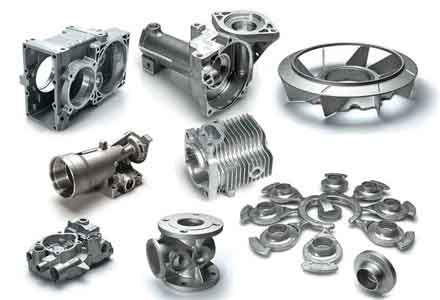
The image above illustrates the desired outcome: a sand casting part with an excellent surface finish, which is directly attributable to the effective protection offered by a properly applied and controlled refractory coating system on the sand mold.
1. Foundational Principles and Experimental Methodology
The effectiveness of a coating in producing sound sand casting parts hinges on its behavior during application. When a coating is brushed onto a porous sand surface, a dynamic competition occurs: penetration into the interstices of the sand grains versus buildup on the surface. The initial layer sees significant penetration, as the liquid carrier wicks into the voids, leaving a thin film of solids behind. This first layer’s thickness ($T_1$) is generally low. Upon drying (e.g., by ignition for alcohol-based coatings), this layer forms a preliminary barrier. Subsequent brushing passes interact primarily with this already-formed, less porous layer. The penetration rate decreases markedly, leading to a greater proportion of the coating solids remaining on the surface, thereby increasing the net thickness per pass.
The coating’s viscosity, indicated by its Baumé degree ($B$), governs this behavior. A coating with a low $B$ (thinner) will penetrate more easily, potentially leading to a lower initial surface buildup but deeper penetration. A coating with a high $B$ (thicker) has higher solids loading and shear-thinning behavior; it may not penetrate as deeply on the first pass but will build up more effectively on the surface during subsequent passes due to its inherent lower fluidity and higher tackiness.
For typical steel sand casting parts, the required dry coating thickness often ranges from 0.4 mm to 0.7 mm, with heavier sections sometimes requiring up to 1.0 mm or more to withstand prolonged thermal and mechanical stress from the molten metal.
1.1 Experimental Framework
The core experimental data, upon which this extended analysis is based, investigated alcohol-based coatings applied by hand brushing onto standard sand molds for steel castings. The key variables were:
- Number of Brushing Passes ($n$): Varied from 1 to 5. Each pass was allowed to dry completely (via ignition and cooling) before the next application to isolate the layer-building effect.
- Coating Baumé Degree ($B$): Four levels were tested: 75°Bé, 78°Bé, 80°Bé, and 82°Bé.
- Measurement: Dry coating thickness was measured using appropriate gauges (e.g., coating thickness gauge). Multiple measurements were taken per sample to account for local variations inherent in manual brushing, and averages were used for analysis.
2. Results, Advanced Analysis, and Mathematical Modeling
The experimental results provide clear trends that can be modeled to predict coating behavior for sand casting parts.
2.1 Effect of Brushing Passes ($n$) at Constant Viscosity
Holding the Baumé degree constant at 75°Bé, the increase in dry coating thickness ($T_n$) with each successive brush pass was recorded. The data demonstrates a non-linear relationship, where the incremental gain per pass is not constant but tends to increase after the first few layers.
| Brushing Pass (n) | Average Dry Coating Thickness, Tn (mm) | Incremental Thickness Gain, ΔT (mm) |
|---|---|---|
| 1 | 0.17 | – |
| 2 | 0.24 | 0.07 |
| 3 | 0.51 | 0.27 |
| 4 | 0.79 | 0.28 |
| 5 | 0.91 | 0.12 |
The significant jump between pass 2 and 3 ($\Delta T_{2->3} = 0.27$ mm) versus the smaller jumps later on can be modeled. The first pass ($n=1$) results in a base layer where penetration is maximal: $T_1 = P$, where $P$ is the effective penetration depth of solids. For $n>=2$, the thickness can be approximated by a cumulative model that accounts for decreasing penetration ($\alpha$) and increasing surface adherence ($\beta$) on the pre-existing layer:
$$
T_n \approx T_1 + \sum_{i=2}^{n} (\beta \cdot B – \alpha \cdot \frac{1}{T_{i-1}})
$$
Where $\beta$ is a adherence coefficient proportional to Baumé, and $\alpha$ is a penetration decay constant. A simplified, practical empirical model for a given Baumé is:
$$
T_n = k \cdot \ln(n) + C
$$
Where $k$ and $C$ are constants derived from experimental data. For the 75°Bé data above, a logarithmic fit provides a good approximation for predicting thickness for sand casting parts.
2.2 Combined Effect of Baumé Degree ($B$) and Brushing Passes ($n$)
The interaction between viscosity and number of layers is critical. The study highlighted that for a moderate number of passes (e.g., $n=3$), the coating thickness was relatively insensitive to changes in $B$ within the tested range, hovering around 0.63 mm. However, for a higher number of passes (e.g., $n=5$), the thickness showed a strong positive correlation with $B$.
| Baumé Degree, B (°Bé) | Avg. Thickness @ n=3, T3 (mm) | Avg. Thickness @ n=5, T5 (mm) |
|---|---|---|
| 75 | 0.63 | 0.85 |
| 78 | 0.60 | 0.94 |
| 80 | 0.65 | 1.03 |
| 82 | 0.65 | 1.15 |
This phenomenon can be explained through the lens of layer saturation and rheology. At $n=3$, the coating process is still significantly influenced by the initial penetration phases into the sand. The surface layer may not be fully continuous or thick enough to completely alter the flow mechanics of the incoming coating. Thus, variations in $B$ have a muted effect. At $n=5$, a substantial, coherent base coating exists. The applied coating now interacts primarily with this solid-like surface. A higher $B$ coating, with greater solids content and yield stress, exhibits less “flow-out” or leveling, leading to greater retained thickness per pass. This can be conceptualized by a modified build-up equation for $n > n_{sat}$ (where $n_{sat}$ is the saturation pass, ~3):
$$
\Delta T_n (B) \propto \eta(B) \cdot S
$$
Where $\Delta T_n (B)$ is the thickness gain per pass at high $n$, $\eta(B)$ is an effective viscosity function increasing with $B$, and $S$ is a “stickiness” or adherence factor also related to $B$. Therefore, the total thickness for $n$ passes can be expressed as a two-regime function crucial for process design for sand casting parts:
$$
T(n, B) \approx \begin{cases}
f_{penetration}(n, B) & \text{for } n \leq n_{sat} \\
T_{sat}(B) + (n – n_{sat}) \cdot g(B) & \text{for } n > n_{sat}
\end{cases}
$$
Here, $f_{penetration}$ is a complex function dominant early on, $T_{sat}$ is the thickness at the saturation point, and $g(B)$ is a linear build-up rate that increases with Baumé $B$.
2.3 Statistical Distribution and Process Window for Sand Casting Parts
Analyzing the distribution of thickness measurements is essential for quality control in producing consistent sand casting parts. For $n=3$, approximately 61% of measurements fell within the 0.55–0.65 mm band. For $n=5$, the distribution was wider, with a prominent peak (31%) in the 1.00–1.10 mm band. This widening distribution at higher $n$ and $B$ likely reflects the increased influence of manual brushing technique variability when building up thicker, more viscous layers.
Combining these insights allows us to define a process window for achieving a target thickness range (e.g., 0.5–0.7 mm for standard steel sand casting parts).
| Target Dry Thickness (mm) | Recommended Brushing Passes (n) | Recommended Baumé Range (°Bé) | Key Considerations for Sand Casting Parts |
|---|---|---|---|
| 0.4 – 0.5 | 2 – 3 | 75 – 80 | Suitable for small, non-critical parts. Lower viscosity ensures good coverage on intricate details. |
| 0.5 – 0.7 | 3 | 75 – 82 | The optimal, robust window for most steel sand casting parts. Process is relatively insensitive to B variation. |
| 0.8 – 1.0+ | 4 – 5 | 78 – 82 | Required for large or heavy-section sand casting parts. Higher B is necessary to achieve efficient build-up. Uniformity requires careful process control. |
3. Extended Discussion: Advanced Factors and Optimization Strategies
While $n$ and $B$ are primary levers, achieving optimal coating performance for high-integrity sand casting parts involves several additional factors.
3.1 Coating Rheology and Penetration Dynamics
The penetration of a coating into a sand mold is not merely a capillary action but a filtration process. The coating is a suspension of refractory particles (e.g., zircon, graphite) in a volatile carrier. As it penetrates, the sand pores can filter out larger particles, leading to a particle size gradient and potentially altering the sintering properties of the interface layer. The depth of effective penetration ($P_e$) can be estimated by a simplified Darcy-like law for a shear-thinning fluid:
$$
P_e(t) \propto \sqrt{\frac{\gamma \cos\theta \cdot K \cdot t}{\mu_{eff}}}
$$
Where $\gamma$ is surface tension, $\theta$ is contact angle, $K$ is sand permeability, $t$ is time, and $\mu_{eff}$ is the time-dependent effective viscosity of the coating. A higher $B$ increases $\mu_{eff}$, thereby reducing $P_e$, which explains the shift from penetration-dominated to build-up-dominated behavior. For sand casting parts with very fine sand or low permeability, this can lead to poor adhesion if the coating is too viscous, causing it to sit on the surface and later peel off.
3.2 Thermal and Mechanical Performance of the Coating Layer
The ultimate goal of the coating is to perform under the extreme conditions of pouring molten metal onto the sand casting parts’ mold. The coating thickness directly impacts its insulating capacity and resistance to metal pressure and erosion. The thermal shock resistance is critical. A coating that is too thin may crack due to rapid thermal expansion mismatch. A coating that is too thick, while more insulating, may be more prone to spalling if the internal stresses during heating exceed its cohesive strength or its adhesion to the sand. The optimal thickness is thus a compromise that maximizes defect prevention for the specific geometry and alloy of the sand casting parts being produced.
3.3 Process Control and Automation Considerations
Manual brushing inherently introduces variability in pressure, stroke, and overlap, affecting local thickness. For critical sand casting parts, moving towards automated brushing, spraying, or flow coating can significantly reduce this variation. In such automated systems, the models relating viscosity, application time/pressure, and number of passes become even more critical for programming and control. Furthermore, real-time monitoring of coating weight or thickness, coupled with feedback control to adjust viscosity or application parameters, represents the future of optimized coating application for premium sand casting parts.
4. Comprehensive Conclusions and Industrial Implications
This detailed analysis of alcohol-based coating application in sand casting elucidates the complex interplay between process parameters and final coating geometry, which is a decisive factor for the quality of sand casting parts.
- Layer-by-Layer Growth Dynamics: The relationship between brushing passes ($n$) and dry coating thickness ($T$) is non-linear. An initial penetration-dominated regime (passes 1-2) yields modest thickness gains, followed by a build-up-dominated regime (passes 3+) where each pass adds a more substantial, and for viscous coatings, increasing amount of material. This can be modeled empirically with logarithmic or piecewise functions to predict outcomes for sand casting parts.
- Viscosity-Dependent Saturation Effect: Coating Baumé degree ($B$) has a differential effect based on the number of layers. For a standard application of 3 passes, thickness is relatively stable across a practical Baumé range (75-82°Bé), centering around 0.6 mm, making this a robust, forgiving process window for most steel sand casting parts. For applications requiring thicker coatings (>0.8 mm, via 4-5 passes), a higher Baumé degree (≥78°Bé) becomes necessary to leverage the increased per-pass build-up rate, as described by the function $g(B)$ in the build-up regime.
- Process Window Definition: The findings enable the definition of clear process windows. Three brush passes with a Baumé in the common working range reliably deliver the 0.5–0.7 mm thickness required for a vast majority of conventional steel sand casting parts. Demanding applications for large or heavy-section sand casting parts necessitate increased passes (4-5) with consciously higher coating density to achieve the required 1.0+ mm thickness efficiently and with adequate surface buildup.
- Pathway to Optimization: Achieving consistent, high-quality coatings for critical sand casting parts requires moving beyond fixed recipes. It involves:
- Understanding the underlying rheology and penetration physics.
- Characterizing the coating’s build-up behavior ($g(B)$ function) for specific products.
- Controlling sand mold permeability and surface condition.
- Minimizing manual variability through tooling, training, or automation.
Implementing statistical process control (SPC) on coating thickness measurements is essential for continuous improvement in the production of defect-free sand casting parts.
In summary, the art of coating application is grounded in controllable science. By systematically managing the Baumé degree and the number of brushing passes in relation to the target thickness and part geometry, foundries can significantly enhance coating performance. This leads directly to reduced scrap rates, improved surface quality, and greater overall reliability in the manufacturing of sand casting parts, solidifying the coating process as a cornerstone of quality in sand casting operations.
| Parameter | Symbol | Effect on Coating Process | Primary Impact on Sand Casting Parts Quality |
|---|---|---|---|
| Number of Brushing Passes | $n$ | Directly increases total deposited solids. Incremental gain increases after a saturation point (~n=3). | Insufficient $n$ leads to thin coating, risk of metal penetration. Excessive $n$ may cause cracking/spalling, wasted material. |
| Baumé Degree (Viscosity) | $B$ | Governs penetration depth ($P_e$) and surface build-up rate ($g(B)$). Higher $B$ reduces penetration, increases build-up on existing layers. | Low $B$ may give poor adhesion on coarse sand. High $B$ at low $n$ may not penetrate enough for bonding. Critical for achieving thick coatings efficiently. |
| Sand Permeability | $K$ | Higher $K$ increases penetration depth $P_e$ for a given coating viscosity. | Affects the coating-sand bond strength. Must be matched with coating viscosity to ensure optimal adhesion without excessive penetration loss. |
| Dried Coating Thickness | $T$ | Target output variable, determined by $n$, $B$, $K$, and application technique. | Optimal range (e.g., 0.5-0.7mm) maximizes barrier properties and thermal shock resistance, minimizing defects on final sand casting parts. |