
As a professional in the field of foundry environmental management, I have extensively studied the challenges associated with exhaust gas treatment during the pouring and mold internal cooling stages of sand casting. Sand casting parts are fundamental components in various industries, including automotive, aerospace, and machinery, due to their cost-effectiveness and versatility. However, the production process, particularly in sand casting, generates significant airborne pollutants that require efficient control to meet environmental standards. In this article, I will delve into the technical aspects of exhaust gas treatment, focusing on sand casting parts, and propose innovative solutions based on practical engineering experiences. The discussion will encompass casting processes, pollutant characteristics, existing treatment methods, and a novel integrated approach, supported by tables and formulas to enhance clarity.
Sand casting processes are broadly categorized into two groups: sand casting and special casting. Sand casting involves methods such as green sand molding, resin self-hardening sand, and sodium silicate self-hardening sand, which are commonly used for producing sand casting parts. Special casting includes techniques like centrifugal casting, investment casting, die casting, and lost foam casting, each with unique pollutant profiles. The pouring and mold internal cooling stages are critical in sand casting, as they involve high-temperature operations that release complex mixtures of particulate matter and volatile organic compounds (VOCs). These emissions arise from the decomposition of binders, coatings, and other organic materials used in mold preparation. For instance, in sand casting, additives like coal dust or organic binders break down under heat, generating VOCs such as benzene, toluene, and formaldehyde, alongside fine dust particles. The dispersed nature of these pollution sources, coupled with large exhaust volumes and low concentrations, makes treatment particularly challenging.
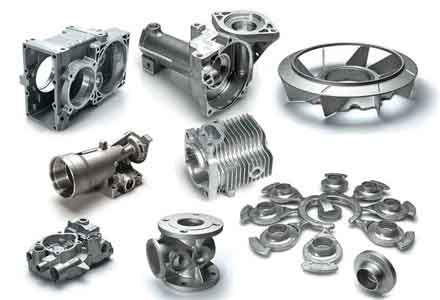
The exhaust gases from pouring and cooling sections in sand casting parts production are characterized by their variability and complexity. During pouring, the high temperatures cause rapid emission of pollutants, while the cooling phase involves slower, continuous release as the sand casting parts solidify. The pollutant concentration can be modeled using mass balance equations. For example, the emission rate of VOCs during pouring can be expressed as: $$E_{VOC} = k \cdot A \cdot e^{-\frac{E_a}{RT}}$$ where \(E_{VOC}\) is the emission rate, \(k\) is a rate constant, \(A\) is the surface area of the mold, \(E_a\) is the activation energy, \(R\) is the gas constant, and \(T\) is the temperature. Similarly, particulate matter emissions depend on factors like sand type and pouring speed. In sand casting parts production, typical pollutant concentrations range from 20 to 50 mg/Nm³ for VOCs and 20 to 40 mg/Nm³ for dust, as observed in field measurements. These values highlight the need for effective capture and treatment systems to comply with regulations such as GB 39726-2020, which sets limits for particulate matter and NMHC (non-methane hydrocarbons) emissions.
Existing treatment technologies for exhaust gases in sand casting parts manufacturing involve a combination of capture methods and purification devices. Capture systems are designed based on the operation mode: fixed side-draft hoods for stationary pouring or mobile hoods for manual pouring. The efficiency of capture is crucial, as inadequate collection can lead to fugitive emissions. After capture, the exhaust is treated using devices like bag filters or wet scrubbers for particulate removal, and methods like liquid absorption or activated carbon adsorption for VOCs. Bag filters rely on fabric filtration to trap dust, with removal efficiencies exceeding 98%, as described by the filtration equation: $$\eta = 1 – e^{-\frac{2L\alpha}{d_p}}$$ where \(\eta\) is the efficiency, \(L\) is the filter thickness, \(\alpha\) is the packing density, and \(d_p\) is the particle diameter. Wet scrubbers, on the other hand, use liquid sprays to capture pollutants, with efficiencies around 90-95%. For VOCs, activated carbon adsorption is common, leveraging the adsorption isotherm: $$q = K C^{1/n}$$ where \(q\) is the amount adsorbed, \(C\) is the concentration, and \(K\) and \(n\) are constants. However, these systems often operate separately for pouring and cooling sections, leading to high costs and space requirements.
To address these issues, I have developed and implemented a push-series process that integrates the exhaust treatment for pouring and mold internal cooling stages in sand casting parts production. This approach leverages the distinct aerodynamic characteristics of each stage: pouring requires high negative pressure with low flow rates, while cooling needs low pressure with high flow rates. In the push-series system, a booster fan captures exhaust from the pouring section at high suction, then distributes it evenly into a sealed cooling line via air distribution inlets. The cooling line, maintained at a slight negative pressure, extracts the combined exhaust at a high flow rate for centralized treatment. This design ensures effective capture while reducing energy consumption. The system’s performance can be analyzed using fluid dynamics equations, such as the Bernoulli equation for pressure drop: $$P_1 + \frac{1}{2}\rho v_1^2 = P_2 + \frac{1}{2}\rho v_2^2 + \Delta P_{loss}$$ where \(P\) is pressure, \(\rho\) is density, \(v\) is velocity, and \(\Delta P_{loss}\) represents losses due to friction. Additionally, a pre-treatment stage is incorporated to coat sticky dust particles, preventing filter clogging and maintaining system stability. This innovation has proven effective in real-world applications, significantly lowering both capital and operational expenses.
Data from field applications of the push-series process demonstrate its efficacy. Pollutant concentrations at the outlet of the integrated system are consistently below regulatory limits. For example, NMHC levels range from 28 to 45 mg/Nm³, and particulate matter is around 33 mg/Nm³, which after treatment through bag filters and catalytic oxidation, result in emissions below 10 mg/Nm³ for dust and 15 mg/Nm³ for NMHC. The capture efficiency exceeds 90% for the pouring section, with hood face velocities of 12-15 m/s and negative pressures of 500 Pa. In the cooling line, air entry velocities are maintained at 1.8-2.3 m/s, ensuring uniform airflow and effective pollutant containment. These metrics underscore the system’s ability to handle the complex exhaust profiles of sand casting parts production while optimizing resource use.
Economic comparisons between conventional separate systems and the push-series process reveal substantial advantages. The initial investment for separate systems includes multiple units for pouring and cooling, whereas the integrated approach consolidates equipment. Operating costs, such as energy consumption and consumable replacement, are also reduced. Below, I present tables summarizing these comparisons, emphasizing the cost-effectiveness of the push-series method in sand casting parts manufacturing.
| Component | Separate Systems (Pouring + Cooling) | Push-Series Integrated System |
|---|---|---|
| Number of Dust Collectors | 2 | 1 |
| Total Airflow (m³/h) | 85,000 (45,000 + 40,000) | 65,000 |
| Number of VOC Treatment Units | 2 | 1 |
| Piping Material (tons) | 13 | 9 |
| Pre-coating Devices | 2 | 1 |
The reduction in equipment count and material usage directly translates to lower capital expenditure. For instance, the push-series system uses approximately 30% less piping steel, contributing to cost savings and simplified installation. Moreover, the integrated design minimizes floor space requirements, which is often a constraint in foundry layouts for sand casting parts.
| Cost Factor | Separate Systems (Pouring + Cooling) | Push-Series Integrated System |
|---|---|---|
| Pre-coating Agent Consumption (kg/day) | 150 | 100 |
| Total Fan Power (kW) | 165 | 132 |
| Filter Replacement Frequency | High (due to separate units) | Reduced (consolidated unit) |
| Energy Cost per Year (estimated) | $$C_{energy} = P \cdot t \cdot r$$ where \(P\) is power, \(t\) is operating time, and \(r\) is electricity rate. | Lower due to optimized airflow |
Using the formula for energy cost, $$C_{energy} = \sum (P_i \cdot t_i \cdot r)$$ where \(P_i\) represents the power of each fan, the push-series system shows a reduction of about 20% in energy consumption. This is achieved by matching fan speeds to operational needs via variable frequency drives, adjusting for seasonal temperature variations in sand casting parts cooling. Additionally, the lower consumption of pre-coating agents and less frequent filter changes further decrease operational expenses, enhancing the sustainability of sand casting parts production.
In terms of technical performance, the push-series process excels in handling the sticky dust common in sand casting, which often hampers filter regeneration. The pre-treatment stage applies a coating material that encapsulates fine particles, improving dust separation and maintaining low pressure drops across filters. This can be modeled using the Darcy equation for flow through porous media: $$\Delta P = \frac{\mu v L}{k}$$ where \(\mu\) is viscosity, \(v\) is velocity, \(L\) is thickness, and \(k\) is permeability. By reducing \(\Delta P\), the system ensures stable operation and extends filter life, critical for continuous sand casting parts manufacturing. Furthermore, the integrated VOC treatment, such as catalytic oxidation, benefits from the consistent exhaust stream, with destruction efficiencies exceeding 90% as per the Arrhenius equation: $$k = A e^{-\frac{E_a}{RT}}$$ where \(k\) is the reaction rate constant, ensuring complete oxidation of hydrocarbons to CO₂ and H₂O.
The environmental benefits of this approach are significant. By consolidating treatment, the push-series process reduces the overall carbon footprint of sand casting parts production. It aligns with circular economy principles by minimizing waste and energy use. For example, the reuse of treated air in the cooling line for heat recovery can be quantified using thermal efficiency formulas: $$\eta_{thermal} = \frac{Q_{useful}}{Q_{input}}$$ where \(Q\) represents heat energy. This not only cuts costs but also supports compliance with stringent emissions standards, potentially improving the environmental performance rating of foundries specializing in sand casting parts.
Looking ahead, the push-series process represents a scalable solution for various foundry scales. Its adaptability to different sand casting parts, from small intricate components to large castings, makes it versatile. Future advancements could involve integrating real-time monitoring sensors and AI-based controls to optimize airflow and treatment parameters dynamically. Such innovations would further enhance efficiency, ensuring that sand casting parts production remains economically viable and environmentally responsible. In conclusion, the push-series exhaust treatment method offers a compelling alternative to traditional systems, addressing the unique challenges of pouring and cooling stages in sand casting. By leveraging aerodynamic principles and integrated design, it delivers superior performance, cost savings, and regulatory compliance, paving the way for greener foundry operations centered on sand casting parts.