
In my extensive exploration of advanced manufacturing techniques for aluminum alloys, I have focused on the increasingly pivotal role of additive manufacturing (AM) within the automotive sector. This industry shift is driven by the compelling need for design validation, production of complex, low-volume components, and the fabrication of enhanced tooling. My investigation centers on AlSi10Mg, a workhorse hypoeutectic alloy prized for its excellent castability, favorable strength-to-weight ratio, and good thermal properties. Traditionally, components like brackets, housings, and engine parts are produced as sand casting parts. However, the rise of laser-based AM, particularly Selective Laser Melting (SLM), presents a disruptive alternative capable of producing parts with superior and more consistent properties. In this detailed analysis, I compare the microstructure and mechanical performance of AlSi10Mg produced via SLM with those of sand casting parts fabricated using molds created by binder jetting (3DP), aiming to quantify the advantages and understand the underlying metallurgical principles.
1. Experimental Methodology: SLM and 3DP Sand Casting
My experimental framework was designed to directly compare the two manufacturing routes under controlled, optimized conditions for each process.
1.1. SLM Additive Manufacturing
I utilized gas-atomized AlSi10Mg powder with the chemical composition detailed in Table 1. The powder morphology and characteristics, critical for smooth recoating and dense part fabrication, are summarized in Table 2.
| Si | Mg | Fe | Cu | Mn | Ni | Ti | Al |
|---|---|---|---|---|---|---|---|
| 10.20 | 0.31 | 0.06 | <0.01 | <0.01 | <0.01 | <0.01 | Bal. |
| Apparent Density (g/cm³) | Tapped Density (g/cm³) | Angle of Repose (°) | Hall Flow Rate (50g) (s) | Moisture Content (%) |
|---|---|---|---|---|
| 1.34 | 1.61 | 36 | 97 | <0.10 |
The SLM specimens were printed in different orientations relative to the build plate: 0° (horizontal), 45°, and 90° (vertical). To ensure proper fabrication of overhanging surfaces, support structures were employed for the 45° specimens. The key processing parameters I employed are consolidated in Table 3. A subset of the as-built SLM specimens subsequently underwent a stress-relief annealing treatment at 300°C for 2 hours.
| Layer Thickness (mm) | Scan Speed (mm/s) | Laser Power (W) | Oxygen Content (ppm) | Hatch Spacing (mm) | Chamber Pressure (kPa) | Baseplate Temp. (°C) |
|---|---|---|---|---|---|---|
| 0.04 | 1300 | 400 | 0-1000 | 0.15 | 1-3 | 160 |
1.2. 3DP Sand Mold Casting
For the traditional casting route, I employed binder jetting technology to fabricate the sand molds directly from a CAD model. This approach allows for the complex mold geometries possible with AM while retaining the fundamental solidification characteristics of conventional sand casting parts. The molds were produced using 100-140 mesh silica sand. The AlSi10Mg alloy was then gravity-poured into these 3DP sand molds to produce cast specimens of identical nominal dimensions to the SLM ones. To achieve peak strength, these sand casting parts were subjected to a T6 heat treatment, comprising a solution treatment followed by artificial aging, using precisely controlled ramp-and-hold profiles to minimize distortion.
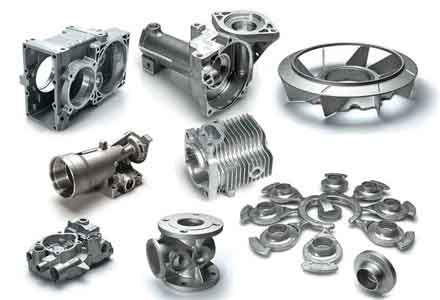
2. Results and Discussion: A Tale of Two Microstructures
2.1. Microstructural Evolution
My microstructural analysis revealed fundamental differences stemming from the vastly different thermal histories. The SLM process is characterized by extreme heating and cooling cycles. The high energy density laser rapidly melts the powder, creating a small melt pool that solidifies at cooling rates estimated in the range of $$10^3$$ to $$10^6$$ K/s. This results in a very fine, cellular-dendritic structure. After the 300°C/2h anneal, I observed a microstructure consisting of a supersaturated α-Al(Si) matrix with a fine, discontinuous network of spheroidized Si particles decorating the cell boundaries. The melt pool boundaries, indicative of the layer-wise build strategy, were faintly visible.
In stark contrast, the microstructure of the T6 heat-treated sand casting parts was markedly coarser. The slower cooling inherent to sand casting, typically in the range of 0.1 to 10 K/s, leads to the formation of a dendritic α-Al matrix with larger, acicular (needle-like) and lamellar eutectic Si in the interdendritic regions. While the T6 treatment dissolves some of this Si and promotes precipitation of Mg₂Si hardening phases, it cannot fully alter the coarse initial as-cast structure. The fundamental difference can be conceptualized by considering the relationship between cooling rate (R) and secondary dendrite arm spacing (λ₂), often expressed as:
$$\lambda_2 = k R^{-n}$$
where \(k\) and \(n\) are material constants. The orders-of-magnitude higher \(R\) in SLM directly explains the dramatically refined microstructure compared to sand casting parts.
2.2. Mechanical Performance and Anisotropy
The mechanical property data I collected provides quantitative evidence of the performance gap. Let’s first address the anisotropy in the as-built SLM specimens. My results showed a clear orientation dependence: yield strength (YS) and ultimate tensile strength (UTS) increased systematically as the build angle decreased from 90° to 0°. The data is compelling: each 45° reduction in angle correlated with an approximate 20 MPa increase in strength. I attribute this primarily to two factors. First, the effectiveness of thermal conduction: a specimen printed at 0° has its entire layer in intimate contact with solid material beneath, promoting rapid heat extraction and excellent fusion. A 90° specimen, however, relies on point-wise conduction through previously solidified tracks, leading to less efficient cooling and potentially more defects. Second, the inherent layer-by-layer nature creates microstructural “weak planes” parallel to the build layers; loading perpendicular to these layers (as in a 90° specimen) exploits these planes, while loading parallel to them (0° specimen) does not.
The stress-relief anneal at 300°C for 2 hours was remarkably effective. My post-anneal testing revealed that this treatment virtually eliminated the strength anisotropy. The YS values for the 0°, 45°, and 90° orientations converged. This is because the annealing process facilitates dislocation recovery and relaxation of internal stresses locked in from the rapid solidification, homogenizing the mechanical response. Furthermore, the ductility, measured as elongation at break, increased significantly—by a factor of 2.5 to 3—after annealing, with the 0° specimen achieving an elongation exceeding 10%. This balance of strength and ductility in the annealed SLM material is exceptional.
Now, comparing the optimized SLM material to the T6-treated sand casting parts reveals a decisive advantage for AM. The data is best summarized in a comparative table:
| Material & Condition | Yield Strength (MPa) | Ultimate Tensile Strength (MPa) | Elongation (%) | Property Consistency |
|---|---|---|---|---|
| SLM (0°, Annealed 300°C/2h) | ~230-240 | ~320-330 | >10.0 | Very High |
| 3DP Sand Cast (T6 Condition) | ~140 (As-Cast) / ~210 (T6) | ~195 (As-Cast) / ~240 (T6) | ~3.2 (As-Cast) / ~1.5 (T6) | Low to Moderate (Scatter due to defects) |
The SLM material exhibits significantly higher strength (both YS and UTS) and dramatically superior ductility. The high scatter in the properties of the sand casting parts is a critical observation. Despite careful processing, these parts remain susceptible to inherent casting defects like microporosity, oxide inclusions, and sand-related imperfections, which act as stress concentrators and failure initiation sites. The SLM process, conducted in a controlled inert atmosphere, largely avoids such extrinsic defects, leading to superior property consistency and reliability—a key factor for critical automotive components.
The strength difference can be rationalized using the Hall-Petch relationship, which links yield strength (\(\sigma_y\)) to grain size (\(d\)):
$$\sigma_y = \sigma_0 + \frac{k_{HP}}{\sqrt{d}}$$
where \(\sigma_0\) is the friction stress and \(k_{HP}\) is the strengthening coefficient. The extremely fine cellular structure and Si particle distribution in SLM material act similarly to a fine grain size, providing substantial strengthening. The coarse microstructure of sand casting parts, even after T6, offers a much lower \(d\) value in this conceptual framework, limiting their strength potential.
2.3. Fractographic Analysis
Examining the fracture surfaces under the scanning electron microscope provided further insight into the failure mechanisms. The fracture surface of the annealed SLM specimen (0° orientation) displayed a mixed morphology. Areas showed fine dimples indicative of micro-void coalescence, contributing to its good ductility. Other areas exhibited cleavage-like features and tear ridges, suggesting a more brittle fracture mode influenced by the fine Si particles. Crucially, only a minimal number of small gas pores were observed, confirming the high integrity of the SLM process.
In contrast, the fracture surface of the T6 sand casting parts was predominantly brittle. It featured large, flat facets with cleavage steps and river patterns, characteristic of transgranular cleavage fracture. The brittle, acicular silicon phases in the coarse eutectic structure provide easy paths for crack propagation. The presence of occasional shrinkage porosity or oxide films, common in sand casting parts, further exacerbates this brittle behavior, explaining the low and inconsistent ductility.
3. Conclusions and Implications
Through my comprehensive comparative study, I have reached several definitive conclusions regarding the capabilities of SLM additive manufacturing versus traditional sand casting for AlSi10Mg alloy.
- Microstructural Superiority: The SLM process, due to its ultra-fast cooling rates, produces a metastable, fine-grained microstructure with a homogeneous dispersion of nanoscale Si particles. The common 300°C/2h anneal further stabilizes this structure by spheroidizing the Si phase. This is fundamentally different from the coarse, dendritic structure with acicular eutectic Si found in sand casting parts, even after T6 heat treatment.
- Mechanical Performance Gap: The refined microstructure of SLM AlSi10Mg translates directly into superior mechanical properties. My results demonstrate that SLM material, after a simple stress-relief anneal, possesses a combination of tensile strength and ductility that far exceeds that of premium T6 heat-treated sand casting parts. The performance is not only higher but also significantly more consistent and reliable, a crucial advantage for automotive applications.
- Anisotropy Management: I confirmed that as-built SLM parts exhibit measurable mechanical anisotropy aligned with the build direction, a consequence of layer-wise fabrication and thermal gradients. However, this anisotropy is not an intrinsic, unmanageable flaw. A relatively low-temperature stress-relief annealing treatment effectively homogenizes the microstructure and residual stress state, eliminating the directional dependence of strength and simultaneously enhancing ductility.
- Process Choice Implications: For applications where maximizing specific strength, weight reduction, design complexity (internal channels, topology-optimized lattices), and property reliability are paramount, SLM presents a compelling solution. For larger, simpler geometries where very high ductility is not the primary concern and cost-effectiveness at higher volumes is key, traditional sand casting parts remain viable. The 3DP sand mold process itself is a powerful tool for rapid prototyping of casting designs or producing complex cores for conventional foundries.
In summary, my work substantiates that laser additive manufacturing via SLM is not merely a prototyping tool but a production-capable process that can generate aluminum alloy components with properties surpassing those achievable by conventional casting. For the automotive industry’s journey towards lightweighting and part consolidation, the ability to reliably produce high-strength, durable aluminum components like those I have characterized offers a significant technological pathway forward, moving beyond the limitations inherent to traditional sand casting parts.