
In the realm of industrial manufacturing, the production of engine sand casting parts is widely regarded as a benchmark for a nation’s foundry capabilities. These components, such as cylinder blocks, cylinder heads, crankshafts, and manifolds, are characterized by their complex geometries, thin-walled sections, stringent dimensional accuracy, and demanding material properties. The annual production volume for these parts is immense, ranging from tens of thousands to millions of pieces, necessitating highly specialized, high-volume流水线 production. The quality of these sand casting parts directly dictates the performance, durability, and reliability of the engines they constitute. Therefore, analyzing the current landscape of producing these critical sand casting parts offers profound insights into the broader state of metal casting technology.
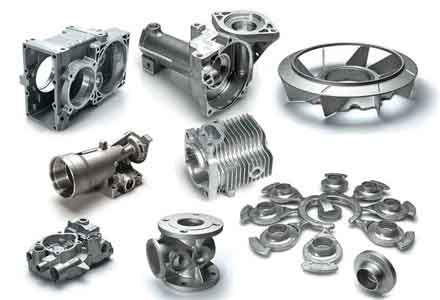
The complexity of modern engine sand casting parts cannot be overstated. A cylinder block, for instance, integrates intricate internal water jackets, oil galleries, and camshaft bores within a rigid external structure. Achieving this with walls as thin as 4-5 mm requires exceptional control over every stage of the sand casting process. Material specifications are equally rigorous. A typical gray iron for cylinder blocks must meet specific mechanical thresholds, while a crankshaft made from ductile iron requires high strength, impact toughness, and fatigue resistance, often necessitating post-casting heat treatments like normalizing and tempering. This intricate dance between geometry and material science defines the core challenge of producing high-integrity engine sand casting parts.
Fundamental Technical Requirements for Engine Sand Casting Parts
The journey to a perfect engine sand casting part begins with a clear and uncompromising set of technical requirements. These requirements span material science, dimensional control, surface quality, and internal soundness.
1. Material and Metallurgical Specifications
The material properties are non-negotiable. For critical sand casting parts like cylinder blocks and heads, the metallurgical structure is as important as the chemical composition. The matrix must primarily consist of pearlite, with a controlled graphite morphology (Type A in gray iron). Key alloying elements are carefully managed; for example, in ductile iron for crankshafts, Magnesium (Mg) and Cerium (Ce) residues must be minimized to prevent embrittlement. Hardness is a critical parameter, often required to fall within a narrow band (e.g., 187-241 HB), with minimal variation across a single casting. This ensures uniform machinability and performance.
| Casting Part | Material | Key Mechanical Property Target | Critical Metallurgical Requirement | Key Element Control |
|---|---|---|---|---|
| Cylinder Block | Gray Iron (e.g., HT250) | Tensile Strength ≥ 250 MPa | >95% Pearlite, Type A Graphite | Stable C, Si; Low variation in trace elements |
| Cylinder Head | Alloyed Gray Iron | As per specification, good thermal fatigue resistance | Fine, uniformly distributed graphite | Alloying with Cr, Mo, Cu for strength |
| Crankshaft | Ductile Iron (e.g., QT800-2) | Tensile Strength ≥ 800 MPa, Elongation ≥ 2% | Nodular graphite (≥80% nodularity), matrix structure post-heat treatment | Mg残 < 0.04%, P < 0.04% |
| Exhaust Manifold | High-Si Mo Alloyed Ductile Iron | High-temperature strength, oxidation resistance | Ferritic matrix, stable at high temperature | High Si (3.5-5.5%), Mo addition |
The carbon equivalent (CE) is a fundamental formula used to predict the castability and final structure of iron alloys for sand casting parts:
$$ CE = \%C + \frac{1}{3}\%Si $$
A carefully controlled CE ensures good fluidity to fill thin sections while avoiding excessive graphite precipitation that weakens the structure. For ductile iron sand casting parts, the nodularizing yield is paramount, often assessed via the efficiency of Mg recovery, which can be conceptually framed as:
$$ \eta_{Mg} = \frac{[Mg]_{final} – [Mg]_{base}}{Mg_{added}} \times 100\% $$
where a high ηMg indicates efficient and economical treatment.
2. Dimensional Accuracy and Tolerances
Precision is paramount. General dimensional tolerances for these sand casting parts must comply with international standards like CT8-CT9. However, specific features demand extraordinary precision. For cylinder blocks with dry liners, the uniformity of the cylinder bore wall thickness after machining is critical. A typical advanced specification might require a wall thickness variation of less than 0.1 mm around the entire circumference of each bore. Achieving this in the final machined part imposes extreme demands on the raw sand casting part: the core shift must be negligible, and the as-cast dimensions of the bore features must be exceptionally consistent. This remains one of the most significant challenges in producing high-performance engine sand casting parts.
3. Surface Finish, Internal Soundness, and Cleanliness
The surface roughness of unmachined areas, such as water jacket passages, is typically required to be between Ra 6.3 and 12.5 μm. Geometrical accuracy of internal passages must be maintained without flash or veining, which can disrupt fluid flow. Furthermore, internal stresses must be relieved through a controlled thermal process (stress relief annealing) to prevent distortion during machining or in service. Finally, internal cleanliness is rigorously enforced. After cleaning, residual core sand in water jackets must be below a strict mass limit (e.g., 20g). Pressure testing, often at 0.2-0.3 MPa, is mandatory to check for leaks, ensuring the integrity of these pressurized sand casting parts.
Core Process Requirements for High-Quality Sand Casting Parts
Meeting the above specifications dictates a rigorously controlled sand casting process. Each step, from molten metal to finished cleaning, is interlinked.
1. Melting and Molten Metal Treatment
Stable, high-temperature, and clean molten metal is the foundation. Dual melting, such as cupola plus induction furnace holding/duplexing, is common to separate melting from precise thermal and compositional adjustment. Pouring temperatures for thin-wall sand casting parts are high, typically around 1400-1450°C for gray iron, to ensure complete filling. In-mold filtration is ubiquitous to remove non-metallic inclusions. Inoculation is performed during pouring (“stream inoculation”) to promote a fine, uniform graphite structure. Key process parameters can be summarized as:
| Process Stage | Parameter | Target Value / Requirement | Purpose |
|---|---|---|---|
| Molten Metal | Tap Temperature | >1500°C (Ideal: >1520°C) | Superheat for fluidity, treatment |
| Pouring Temperature | ~1420°C | Balance of fluidity and reduced shrinkage | |
| Slag Control (FeO in slag) | < 3% | Indicates low oxidation, clean metal | |
| Molding Sand | Green Compression Strength | 120-180 kPa | Resist mold wall movement |
| Compactability | 35-45% (Variation < 5%) | Consistent mold density | |
| Moisture Content | 2.8-3.2% | Bond strength without gas generation | |
| Permeability | >100 | Escape of gases from mold cavity | |
| Cores | Process | In-Box Hardening (Cold Box, Shell) | Precision, strength, collapsibility |
2. Molding, Coremaking, and Sand Control
For high-volume production, high-pressure green sand molding lines (squeeze, impact, or静压) are the standard. They provide the necessary mold hardness (e.g., surface >90, sides >70) and dimensional repeatability. Automated core setting with fixtures is essential to achieve the micron-level accuracy required for cylinder bore alignment in sand casting parts. Coremaking has largely shifted to in-box hardening processes. Cold-box cores (using amine or SO₂ gas catalysis) are preferred for critical, complex cores like cylinder water jackets due to their high precision and immediate strip strength. Shell cores (覆膜砂) are used for other components, offering good surface finish and collapsibility. A critical, often underestimated, aspect is sand preparation and cooling. Return sand must be effectively cooled to near ambient temperature (+10°C max) and have its fines content controlled to maintain consistent properties for the next molding cycle, which is vital for producing consistent sand casting parts.
The permeability (P) of the molding sand, crucial for venting gases from these complex sand casting parts, can be related to its density and grain distribution. While measured empirically, it underscores the need for consistent sand grain morphology.
3. Cleaning and Finishing
Post-shakeout, delicate sand casting parts like cylinder blocks must be handled with care, using manipulators rather than free-fall onto conveyors, to prevent distortion or damage. Cleaning involves aggressive shot blasting to remove sand residues, followed by precision grinding of parting lines and feeders. A 100% leak test for water jacket sand casting parts is standard, often using a sensitive pressure decay method. Internal inspection with borescopes is common for quality assurance.
Essential Equipment for Modern Production of Sand Casting Parts
The pursuit of quality in engine sand casting parts is underpinned by advanced, automated equipment.
- Melting: Medium Frequency Coreless Induction Furnaces or advanced hot-blast cupolas for dual melting provide the necessary thermal and compositional stability.
- Molding: High-pressure automatic molding lines (静压,气冲, or high-pressure squeeze) are the backbone, offering the required mold density and productivity for these high-volume sand casting parts.
- Sand Preparation: Fully automated sand systems with integrated cooling, moisture control, and additive dosing are non-negotiable for stable sand properties.
- Coremaking: Automated cold-box and shell core machines, often with robotic handling for core setting and assembly, ensure precision and repeatability.
- Cleaning: Rotary table or continuous pass-through shot blast machines, supplemented by grinding robots and automated inspection stations, guarantee final quality.
- Process Control: This is the nervous system. Direct Reading Optical Emission Spectrometers (for chemistry), thermal analysis modules (for C, Si, and inoculation efficiency), and automated sand property testers provide real-time data to control the process for every batch of sand casting parts.
| Equipment Category | Specific Type | Primary Function for Sand Casting Parts |
|---|---|---|
| Melting & Holding | Medium Frequency Induction Furnace | Precise temperature & chemistry control for high-integrity metal. |
| Molding Line | 静压 (Static Pressure) or 气冲 (Air Impact) Line | Produces dimensionally accurate, high-density molds for complex parts. |
| Core Machine | Cold-Box (Amine/SO₂) Core Shooter | Manufactures precise, high-strength internal cores for water jackets, etc. |
| Sand System | Automated System with Cooler & Mixer | Maintains consistent, cooled, and conditioned sand for stable molding. |
| Process Control | Direct Reading Spectrometer | Provides rapid, accurate molten metal chemistry analysis. |
Current Landscape: Progress and Persistent Challenges
From my observation, the production of engine sand casting parts has seen remarkable progress. The widespread adoption of advanced high-pressure molding lines, the shift to cold-box and shell core processes, and the integration of process control instrumentation have collectively elevated the quality and consistency of domestic sand casting parts. New materials like compacted graphite iron (CGI) for cylinder heads and high-silicon molybdenum ductile iron for exhaust manifolds are being successfully implemented, extending component life. Technologies like lost foam casting are finding niches for complex aluminum intake sand casting parts and are being explored for iron applications.
However, significant challenges remain that hinder the full potential of the industry from being realized in the production of premium sand casting parts.
1. Structural and Economic Inefficiencies
The legacy of vertically integrated manufacturing has resulted in numerous captive foundries attached to engine plants, often operating below economic scale. This fragmentation limits investment in specialized, cutting-edge technology for sand casting parts. Conversely, a proliferation of smaller, low-tech foundries creates overcapacity in simple components but leaves a gap in the capability to produce the most demanding, high-value sand casting parts.
2. Underutilization of Advanced Technology and Capability Gaps
While world-class equipment has been imported, its operational efficiency is frequently sub-optimal. Mastering the intricate interplay of parameters on a静压 line or a fully automated sand system requires deep process knowledge that is sometimes lacking. Furthermore, domestic development of reliable, high-performance equipment for making critical sand casting parts (like high-pressure molders or core machines) still lags, leading to continued dependence on foreign suppliers for top-tier projects.
3. Inadequate R&D and Quality Inconsistency
Margins in casting are often thin, stifling investment in fundamental R&D. Research into advanced simulation software for solidification and stress analysis, new binder systems for cores, or innovative melting techniques is not as vigorous as needed. This results in a “followership” rather than leadership in technology for sand casting parts. Quality, while improved, can still be inconsistent compared to global benchmarks, particularly for the most stringent specifications like cylinder bore wall uniformity.
| Challenge Category | Specific Issue | Impact on Sand Casting Parts |
|---|---|---|
| Industry Structure | Fragmentation, Small Scale | Low specialization, inhibited investment in advanced tech for niche parts. |
| Technology & Skill | Under-utilization of imported advanced equipment | Fails to achieve full potential quality and productivity of sand casting parts. |
| Quality & Capability | Inconsistency in meeting extreme tolerances (e.g., bore wall thickness) | Limits ability to produce for most advanced engine platforms. |
| Gap in producing defect-free, high-integrity heavy-section ductile iron parts | Restricts market for high-power engine components. | |
| Supply Chain & Market | Export reliance on low-value-added parts | Fails to capitalize on full value potential of complex sand casting parts. |
4. The Path Forward: Integration, Intelligence, and Specialization
The future of producing elite engine sand casting parts lies in deeper integration of digital and physical processes. Solidification and flow simulation software must evolve from a design tool to a real-time process-predictive one, linked to actual production data for adaptive control. The concept of the “digital twin” for a mold or a core package will become central to achieving first-time-right production of sand casting parts.
Advanced process monitoring will move beyond just chemistry and temperature. Real-time analysis of mold sand properties, core gas evolution during pouring, and thermal imaging of cooling castings will provide a holistic view of the process. This data can feed AI-driven algorithms to predict and preempt defects in sand casting parts, moving from statistical process control to predictive quality control.
Finally, a fundamental restructuring towards specialization is inevitable. Foundries will increasingly focus on specific families of sand casting parts (e.g., cylinder blocks, turbocharger housings, or structural chassis components). This focus allows for targeted investment in process technology and the accumulation of deep, specific expertise, ultimately leading to world-class competitiveness in the global market for critical engine sand casting parts. The journey from a casting country to a casting powerhouse for these components will be paved with data, specialization, and an unwavering focus on mastering the complete physics of the sand casting process.