
Sand casting foundries represent a fundamental sector in the manufacturing industry, producing metal components through the process of pouring molten metal into sand molds. The working environment in these facilities is characterized by a complex mixture of airborne particulates, including coarse particles, fine particles, and ultrafine particles, which pose significant occupational health risks. Over decades, researchers have focused on characterizing these particulates in terms of mass concentration, size distribution, chemical composition, and morphology. This review synthesizes the current knowledge on particulate exposure features in sand casting foundries, with an emphasis on traditional metrics and emerging concerns regarding ultrafine particles. We aim to provide a comprehensive framework for understanding the occupational exposure profile and to highlight gaps that necessitate further investigation.
The sand casting process involves several key stages: sand preparation, molding, core making, melting, pouring, shakeout, and finishing. Each stage generates airborne particulates through distinct mechanisms. The raw materials include quartz sand, bentonite, coal dust, resins, and metal alloys. During mechanical operations (e.g., mixing, grinding) and thermal processes (e.g., melting, pouring), particles are released into the air. These particles carry a variety of hazardous substances, such as crystalline silica, metals (iron, manganese, lead, zinc), polycyclic aromatic hydrocarbons (PAHs), and dioxins. The complexity of the particulate mixture makes exposure assessment challenging.
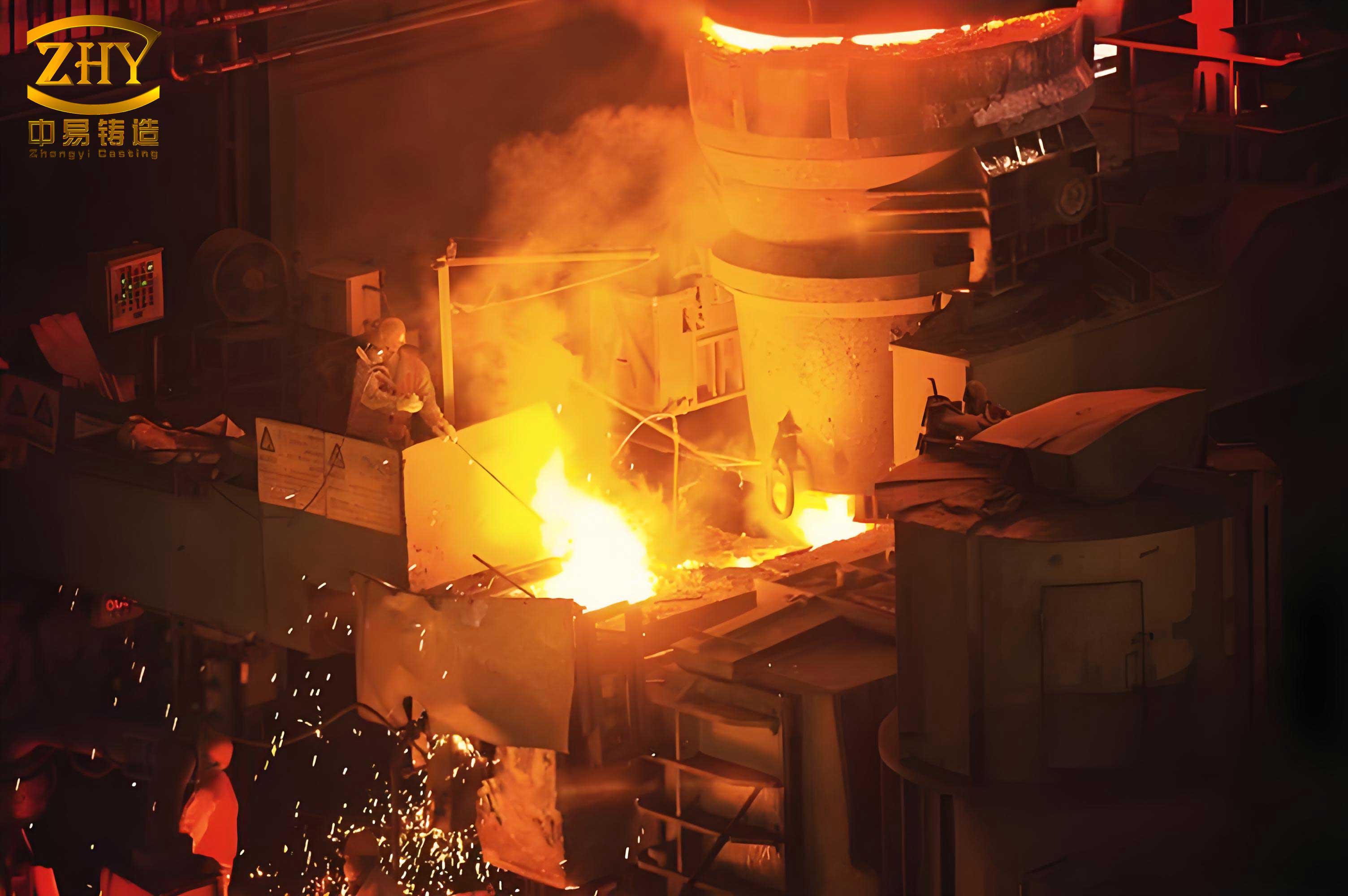
Table 1 summarizes the main production processes in sand casting foundries, the materials involved, and the confirmed hazardous components identified in airborne particulates. The data are compiled from multiple studies that applied chemical and physical analyses to workplace samples.
| Process Stage | Main Materials | Particulate Generation Step | Identified Hazardous Components |
|---|---|---|---|
| Sand Treatment | Quartz sand, bentonite, coal dust, etc. | Grinding, sieving, mixing; drying and blending | SiO₂, Mn, Fe, Zn, Pb; benzo[a]pyrene; tridecane, diisopropyl phthalate, other organics |
| Molding | Quartz sand, resin, hardener | Molding operation | SiO₂, Mn, Fe, Zn, Pb; benzo[a]pyrene |
| Core Making | Quartz sand, resin, hardener | Core making | SiO₂, Mn, Fe, Zn, Pb; benzo[a]pyrene |
| Melting & Pouring | Limestone, metal charge | Melting and pouring | O, Na, K, Si, S, Fe, Mg, Al, Ca, Cr, Ti, Mn, etc.; dioxins; benzo[a]pyrene |
| Shakeout & Cleaning | Quartz sand; steel shot | Shakeout, shot blasting, grinding | SiO₂, Mn, Fe, Zn; Al, Pb, Na, Ti; PAHs (naphthalene, phenanthrene, anthracene, etc.) |
In many countries, occupational exposure limits for particulates in sand casting foundries are based on total inhalable dust, respirable dust, and specific components like crystalline silica. The European Union and the United States have adopted refined definitions for particle size fractions (e.g., PM₁₀, PM₂.₅, PM₀.₁), whereas China’s current standards primarily utilize total dust and respirable dust (following the BMRC curve) with a limit derived from free silica content. The lack of a unified definition for “casting dust” complicates international comparisons. Internationally, the term “ferrous foundry particulate” (FFP) has been used to describe the complex mixture emitted from iron and steel foundries.
Early studies on sand casting foundry dust concentrated on mass concentrations, size distribution (dispersity), and free silica content. Table 2 presents a compilation of typical findings from Chinese and international investigations on conventional particulate characteristics.
| Characteristic | Observed Values / Details |
|---|---|
| Free silica content | Core making: mean 70.2% (range 21.5%–31.4% for other jobs); respirable dust: 3%–27% (quartz mean 7.3%–10.6%, cristobalite 2%–6%). |
| Particle morphology | Under SEM: cleaning dust shows blocky agglomerates at 500×, polyhedral structures at 5000×; quartz grains exhibit reduced size and complex crystal interfaces due to thermal treatment. |
| Size distribution (dispersity) | Proportion of particles <2 µm: 39%–45% in mixing, molding, pouring, cleaning; <5 µm: 82.25% overall. Mass fractions: >10 µm: 1.5–1.7 mg/m³; 1–10 µm: 0.8–2.5 mg/m³; <1 µm: 0.1–2.9 mg/m³ (data from three iron foundries). |
| Mass concentration | Total dust (various jobs): 5.2–34 mg/m³; respirable quartz: 0.19–2.25 mg/m³. Highest levels in melting, cleaning, pouring, sand preparation. |
| Inorganic and metallic elements | O, Na, K, Si, S, Fe, Mg, Al, Ca, Cr, Ti, Mn; additional: B, C, F, P, Cl, Cu, Ni, Pb, Zn, Co, etc. Up to 46 elements detected, including trace amounts of Ag, Sb, As, Mo, Cd. |
| Dioxins (PCDD/Fs) | Dust from workshops: 171.55–812.62 pg/g (mean 391.89 pg/g); WHO-TEQ 3.34–18.64 pg TEQ/g. Melting furnace area had highest concentration. Air concentrations: 0.102–0.480 pg I-TEQ/m³. |
| Polycyclic aromatic hydrocarbons (PAHs) | Benzo[a]pyrene: 1.50×10⁻⁶–2.50×10⁻³ µg/m³ (air); 0.2–72 µg/m³ in air, 0.02–1.0 µg/m³ in bulk dust. Other PAHs include naphthalene, phenanthrene, fluoranthene. |
| Other organic compounds | 61 organic compounds identified in post-casting dust (e.g., 2,4-dimethylphenol), of which 91.8% were generated during casting. |
Despite a general decline in mass concentration and free silica content due to improved ventilation and automation, the compositional complexity and the presence of submicron particles continue to raise concerns. More recent studies have shifted focus toward fine (PM₂.₅) and ultrafine (PM₀.₁) particles in sand casting foundries. These particles, due to their high number concentration and large surface area, are suspected to cause greater health effects per unit mass compared to coarse particles.
Table 3 summarizes the reported number concentrations and surface area concentrations of ultrafine particles (UFP) in various sand casting foundry operations. Measurements were typically performed using mobility particle sizers (e.g., SMPS, FMPS) and condensation particle counters.
| Particle Size Range | Sampling Method / Location | Number Concentration (particles/cm³) | Surface Area Concentration (μm²/cm³) |
|---|---|---|---|
| 10–100 nm | Melting, pouring, molding stations | 2.07×10⁴–2.82×10⁵ | 67.56–2.13×10³ |
| 10–100 nm | Molding, casting, melting, cleaning (winter) / (summer) | 2.09×10⁵–2.39×10⁵ (winter); 7.01×10⁴–1.68×10⁵ (summer); summer melting: up to 1.60×10⁶ | Not specified |
| 20–1000 nm | Area sampling in iron foundry | 10×10³–130×10³ | 50–3800 |
| 20–1000 nm | Area sampling in various foundries | 26,000–537,000 | Not specified |
The data indicate that ultrafine particles account for a substantial fraction of total particle number, even though their mass contribution is often below 1% of total respirable mass. For instance, in an aluminum foundry study, the core making, molding, and pouring areas exhibited ultrafine particle fractions exceeding 90% of the total number concentration. The geometric mean diameter in the molding area was as low as 22 nm. Surface area concentrations in hot processes (e.g., melting, pouring) reached 200–300 μm²/cm³, which is associated with enhanced reactivity and potential toxicity.
The chemical composition of fine and ultrafine particles often differs from coarse particles. Using electron microscopy and energy-dispersive X-ray spectroscopy, researchers found that metals (Fe, Mn, Zn, Pb) and organic compounds (PAHs, dioxins) are enriched in the submicron fraction. This enrichment is attributed to condensation and adsorption processes during the high-temperature stages. A quantitative relationship between particle surface area and adsorbed PAH concentration can be expressed as:
$$ C_{PAH} = \frac{\text{Total PAH mass}}{\text{Surface area of particles}} $$
However, this relationship is not linear due to variations in particle morphology and chemical affinity.
Several studies have attempted to model the deposition of inhaled particles in the human respiratory tract using particle size distributions measured in sand casting foundries. The deposition fraction for ultrafine particles in the alveolar region can be approximated by the ICRP model:
$$ DF_{alv} = \frac{1}{1 + \left(\frac{d_a}{d_{50}}\right)^\beta} $$
where \(d_a\) is the aerodynamic diameter, \(d_{50}\) is the median diameter for deposition (approx. 0.1 µm), and \(\beta\) is a shape parameter (typically 1.5–2). The high number concentration of particles in the 20–100 nm range suggests a significant deposition dose in the pulmonary region.
Despite these advances, several knowledge gaps remain regarding particulate exposure in sand casting foundries. First, the current Chinese occupational exposure limits for “total dust” and “respirable dust” follow the BMRC criterion, which is inconsistent with the internationally adopted CEN/ISO/ACGIH curves. This discrepancy prevents direct comparison of monitoring data and hinders translation of research findings. Second, the minimum detectable concentration for respirable dust using standard gravimetric methods in China is approximately 0.2 mg/m³ (for a 500 L sample), which is an order of magnitude higher than the exposure limits recommended by some countries (e.g., 0.025 mg/m³ for respirable crystalline silica). Consequently, current methods cannot reliably assess compliance with more protective limits. Third, the definition of “foundry dust” in China is ambiguous; it is classified only by free silica content, ignoring the complex mixture of metals, organics, and ultrafine particles that may contribute to chronic diseases such as lung cancer and cardiovascular disorders.
Future research in sand casting foundries should prioritize the following: (a) develop and standardize sampling methods for ultrafine particles (PM₀.₁) and fine particles (PM₂.₅) in workplace air, adopting the ISO size-selective sampling criteria; (b) conduct comprehensive chemical speciation of particles across all size fractions, including quantification of trace metals, PAHs, dioxins, and endotoxins; (c) establish temporal and spatial concentration profiles of number, mass, and surface area to identify peak exposures and high-risk tasks; (d) investigate the translocation and health effects of inhaled ultrafine particles using advanced toxicological models; and (e) revise occupational exposure limits to reflect the cumulative risk from multiple components, possibly adopting a “total dust + specific constituent” approach as in the UK (EH40/2005).
In conclusion, the airborne particulate environment in sand casting foundries is multifaceted, ranging from coarse silica dust to metal-rich ultrafine fumes. The shift toward automated and enclosed processes has reduced mass concentrations, but the emergence of ultrafine particles and their associated health risks warrants renewed attention. By integrating traditional dust monitoring with cutting-edge nanoparticle characterization, we can better protect the health of foundry workers and contribute to the global effort to prevent occupational diseases in the sand casting foundry industry.