
In the realm of aluminum casting, particularly for complex components like transmission housings, the lost foam casting process has emerged as a vital technique due to its ability to produce near-net-shape parts with intricate geometries and excellent surface finish. However, the inherent properties of aluminum-silicon (Al-Si) alloys, which are commonly used in such applications, often require modification to enhance their mechanical performance. As a practitioner deeply involved in foundry process control, I have extensively explored the application of strontium (Sr) modification within the context of lost foam casting. This article delves into the selection of modification agents, the intricacies of melt refinement, and the empirical validation of Sr modification parameters, all aimed at optimizing the production of high-integrity aluminum castings via the lost foam casting method.
The lost foam casting process, also known as expendable pattern casting, involves using a foam pattern that vaporizes upon contact with molten metal, leaving a precise cavity. This technique is especially advantageous for aluminum alloys, but it demands stringent control over melt quality to prevent defects like gas porosity and inclusions. For Al-Si alloys, modification treatment is a cornerstone process that transforms the morphology of silicon phases, thereby improving tensile strength and elongation. Historically, sodium (Na) modification was prevalent, but issues such as short effectiveness duration, fuming, and handling difficulties prompted the search for alternatives. Strontium modification has gained prominence due to its prolonged effectiveness and ease of use, particularly in lost foam casting environments where melt stability is paramount.
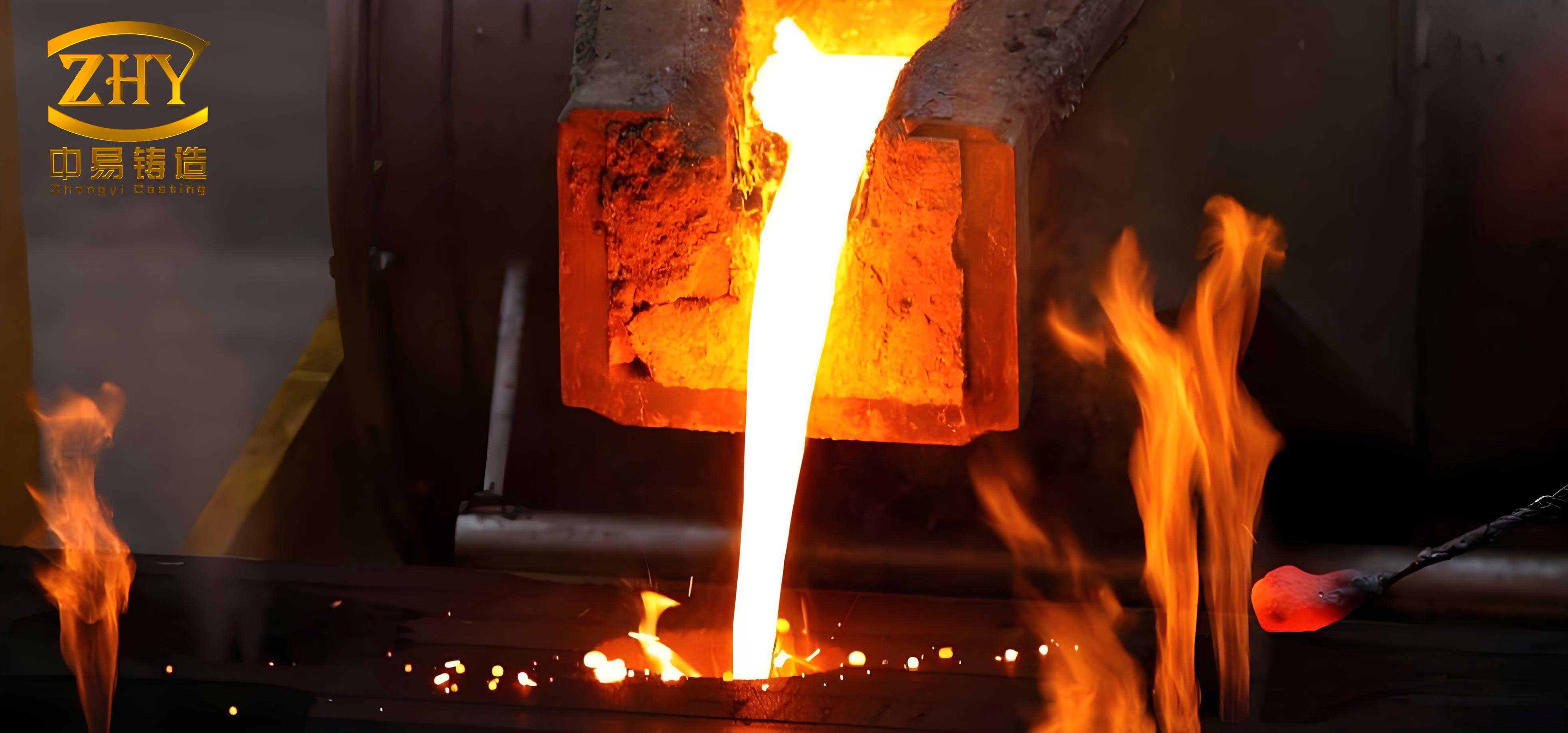
The choice of modification agent is critical in lost foam casting, as it directly influences the final microstructure and properties. In my experience, I evaluated several agents, including sodium salts, rare earth elements, and strontium. Sodium modification, while effective, suffers from rapid fading—typically lasting less than an hour—and generates substantial fumes, deteriorating the working environment. Rare earth modification showed inconsistent results, making it unreliable for high-volume production. Strontium, in contrast, offers a stable modification effect that can persist for 7–8 hours or longer, with residual effects even after multiple remelts. This longevity is particularly beneficial in lost foam casting operations, where melt holding times can be extended due to production schedules. Moreover, Sr addition can be precisely controlled using master alloys like AlSr10, simplifying storage and handling. The primary drawback of Sr is its tendency to increase hydrogen absorption in the melt, but this can be mitigated through proper degassing practices, as I will detail later.
To illustrate the comparative aspects, I have compiled a table summarizing the key characteristics of common modification agents for Al-Si alloys in lost foam casting:
| Modification Agent | Effective Duration | Environmental Impact | Handling Ease | Typical Addition Range | Suitability for Lost Foam Casting |
|---|---|---|---|---|---|
| Sodium (Na) | 30–60 minutes | High fuming, corrosive | Difficult (hygroscopic) | 2–3% as salts | Low due to short duration |
| Strontium (Sr) | 7–8 hours | Low fuming | Easy (master alloy) | 0.2–0.4% as AlSr10 | High due to stability |
| Rare Earths | Variable | Moderate | Moderate | 0.1–0.5% | Moderate due to inconsistency |
| Antimony (Sb) | Long | Low | Easy | 0.2–0.6% | Low for hypoeutectic alloys |
The melting and refining process is another cornerstone in ensuring high-quality aluminum melts for lost foam casting. In our setup, we employ a gas-fired reverberatory furnace with a melting chamber and a holding chamber. This design promotes efficient heat utilization and minimizes overheating, which is crucial for reducing oxidation and hydrogen pickup. The melt undergoes rigorous degassing and refining to counteract the hydrogen absorption tendency associated with Sr modification. The reaction between aluminum and water vapor, given by:
$$2\text{Al} + 3\text{H}_2\text{O} \rightarrow \text{Al}_2\text{O}_3 + 3\text{H}_2 \uparrow$$
highlights the need for dry raw materials and a controlled environment. We exclusively use in-house returns to maintain composition consistency and minimize contaminants. The refining sequence involves adding AlSr10 master alloy (at 0.25–0.3% of melt weight) to the holding chamber, followed by inert gas degassing using argon. Argon is preferred over nitrogen due to its superior degassing efficiency, though it is costlier. The degassing process typically lasts 30–40 minutes, coinciding with the latent period of Sr modification. After degassing, the melt is transferred through an online degassing unit and a ceramic foam filter (10 μm rating) to remove inclusions, resulting in a dense, clean melt suitable for lost foam casting.
The effectiveness of this refining protocol is quantified using a density index measurement, which compares sample densities under atmospheric and reduced pressures. The density index, expressed as a percentage, is given by:
$$\text{Density Index} = \left( \frac{\rho_{\text{atm}} – \rho_{\text{vac}}}{\rho_{\text{atm}}} \right) \times 100\%$$
where $\rho_{\text{atm}}$ is the density at atmospheric pressure and $\rho_{\text{vac}}$ is the density under vacuum. In our lost foam casting production, this index is consistently maintained below 1.5%, indicating low gas and inclusion content. However, seasonal variations and melt disruptions can affect this value; for instance, high humidity in summer elevates the index, while premium-grade aluminum ingots lower it. Notably, the first melt after a prolonged shutdown often shows an index spike to 3–5%, leading to higher scrap rates. Thus, continuous production is advocated for lost foam casting to sustain melt quality.
The validation of Sr modification parameters is essential for reproducible results in lost foam casting. Through systematic experiments, I investigated the latent period, addition amount, and fading behavior. The latent period, defined as the time between Sr addition and the onset of full modification, is influenced by factors like phosphorus content and process conditions. Literature suggests around 40 minutes, but our trials in lost foam casting indicated that 30 minutes was often sufficient, though extending to 40 minutes eliminated occasional under-modification. The addition amount of AlSr10 was optimized at 0.25–0.3%, balancing cost, effectiveness, and hydrogen pickup. The table below summarizes our findings on latent period and modification effectiveness:
| Latent Period (minutes) | AlSr10 Addition (%) | Microstructure Observation | Modification Rating |
|---|---|---|---|
| 20 | 0.25–0.3 | Eutectic Si partially refined, α-Al irregular | Partial |
| 30 | 0.25–0.3 | Eutectic Si well-refined, α-Al uniform | Good |
| 35 | 0.25–0.3 | Eutectic Si fully refined, α-Al homogeneous | Excellent |
| 40 | 0.25–0.3 | Eutectic Si fully refined, optimal structure | Optimal |
The fading of Sr modification was studied by holding the melt at 720°C and sampling periodically. No significant fading was detected within 4 hours, slight fading occurred at 5 hours, and noticeable fading appeared at 7 hours. After 48 hours, the modification was entirely lost, as evidenced by the reversion to coarse silicon morphology. This fading behavior can be described empirically by a decay function:
$$C_{\text{Sr}}(t) = C_0 \cdot e^{-kt}$$
where $C_{\text{Sr}}(t)$ is the effective Sr concentration at time $t$, $C_0$ is the initial concentration, and $k$ is the fading rate constant. For our lost foam casting conditions, $k$ is approximately 0.002 min⁻¹, indicating slow fading. Practical implications include the ability to rejuvenate faded melts by adding 0.2% AlSr10, restoring modification without full re-treatment—a significant advantage in lost foam casting where melt reuse is common.
The influence of mold type on modification efficacy is profound in lost foam casting. While lost foam casting inherently uses sand molds, which offer slower cooling rates, I compared results with permanent mold (metal) casting using identical melt treatment. The faster solidification in metal molds enhances modification, yielding finer α-Al grains and more spheroidized eutectic silicon. This difference underscores the importance of cooling conditions in lost foam casting. To quantify, tensile strengths were 290 MPa for metal mold casts versus 240 MPa for lost foam sand casts, despite similar Sr addition. The cooling rate $\dot{T}$ affects silicon morphology, as described by:
$$\lambda_{\text{Si}} = A \cdot \dot{T}^{-n}$$
where $\lambda_{\text{Si}}$ is the silicon interphase spacing, $A$ is a material constant, and $n$ is an exponent typically around 0.5 for Al-Si alloys. In lost foam casting, $\dot{T}$ is lower, leading to larger $\lambda_{\text{Si}}$ and reduced modification effectiveness. Therefore, strategies to improve cooling in lost foam casting, such as using chills or optimized sand properties, are crucial for maximizing benefits from Sr modification.
Beyond basic parameters, the mechanism of Sr modification in lost foam casting warrants discussion. Strontium alters the growth kinetics of eutectic silicon by poisoning the twin plane re-entrant edge (TPRE) growth mechanism, promoting isotropic growth and resulting in fibrous or globular silicon. This transformation improves ductility and strength. The effect can be modeled using interfacial energy considerations, where Sr adsorption reduces the solid-liquid interfacial energy $\gamma_{\text{SL}}$ for silicon, favoring rounded morphologies. The change in Gibbs free energy $\Delta G$ for silicon nucleation is given by:
$$\Delta G = \frac{16\pi \gamma_{\text{SL}}^3}{3(\Delta G_v)^2}$$
where $\Delta G_v$ is the volumetric free energy difference. With Sr addition, $\gamma_{\text{SL}}$ decreases, lowering the energy barrier for refined silicon formation. In lost foam casting, however, the slower cooling may partially counteract this, necessitating precise control.
To further optimize lost foam casting, I analyzed the interaction between Sr modification and hydrogen solubility. Strontium increases hydrogen pickup, which can lead to porosity in lost foam castings due to the foam decomposition gases. The equilibrium hydrogen solubility $S_{\text{H}}$ in aluminum melts is expressed by Sieverts’ law:
$$S_{\text{H}} = k_{\text{H}} \sqrt{P_{\text{H}_2}}$$
where $k_{\text{H}}$ is the solubility constant and $P_{\text{H}_2}$ is the partial pressure of hydrogen. With Sr, $k_{\text{H}}$ rises, necessitating vigorous degassing. Our practice of argon degassing for 30–40 minutes reduces hydrogen content to acceptable levels, as verified by density index measurements. The table below correlates degassing time with density index for Sr-modified melts in lost foam casting:
| Degassing Time (minutes) | Density Index (%) | Observed Porosity in Lost Foam Castings |
|---|---|---|
| 20 | 2.5–3.0 | High, unacceptable |
| 30 | 1.5–2.0 | Moderate, borderline |
| 40 | 0.8–1.5 | Low, acceptable |
| 50 | 0.5–1.0 | Very low, optimal |
Another aspect is the economic and environmental impact of Sr modification in lost foam casting. Strontium master alloys, while costlier than sodium salts, reduce waste through longer effectiveness and lower addition rates. The absence of toxic fumes improves workplace safety, aligning with modern foundry standards. In lost foam casting, where pattern decomposition generates gases like styrene, minimizing additional fuming is beneficial. Lifecycle analysis shows that Sr modification can lower overall energy consumption by reducing re-melting and scrap rates.
In conclusion, the application of strontium modification in aluminum lost foam casting is a robust method for enhancing the mechanical properties of Al-Si alloys. Through careful selection of modification agent, stringent control of melting and refining processes, and empirical validation of parameters, high-quality castings can be consistently produced. The latent period for Sr modification in lost foam casting should be tailored to specific conditions, with 40 minutes being optimal in our setup. Fading is slow, allowing for melt reuse with minor replenishment. Crucially, the cooling rate in lost foam casting significantly influences modification outcomes; thus, process adaptations to accelerate solidification are recommended. By integrating these insights, foundries can leverage lost foam casting for complex aluminum components while ensuring superior performance and efficiency.
Looking forward, advancements in lost foam casting technology, such as vacuum-assisted pouring or advanced binder systems, may further synergize with Sr modification. Continuous monitoring techniques, like real-time hydrogen sensors, could refine degassing protocols. As the demand for lightweight, high-strength aluminum parts grows, the marriage of lost foam casting and effective modification strategies will remain pivotal in the casting industry.