
The technique of forming components by pouring molten metal into a mold cavity and allowing it to solidify and cool is foundational to manufacturing, known as metal casting or liquid forming. This process holds immense significance in mechanical engineering, constituting a substantial portion of machine components. This article delves into the theoretical underpinnings of casting, with a particular focus on solidification mechanisms and the detailed methodology of sand casting, the most prevalent method for producing metal parts. Throughout this exploration, we will frequently examine the characteristics and production of sand casting parts.
Characteristics and Classification of Casting
Casting’s unique nature of transitioning from liquid to solid state endows it with distinct advantages and limitations.
Inherent Characteristics
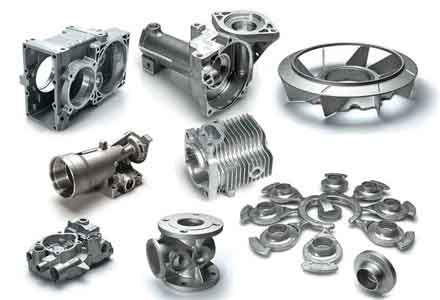
The process offers unparalleled flexibility in shaping, accommodating a vast spectrum of part sizes, complexities, and materials including ferrous and non-ferrous alloys. This makes it the default choice for intricate or large components like engine blocks, machine tool beds, and pump housings. Economically, casting is favorable as the near-net-shape capability minimizes material waste and subsequent machining. The raw materials are abundant and often incorporate recycled scrap, while the equipment generally requires lower capital investment compared to other forming processes. However, the as-cast microstructure often features coarse grains and potential chemical segregation, leading to mechanical properties that are generally inferior to those achieved through forging or rolling. Consequently, sand casting parts are typically designated for applications with static or moderate loads rather than high dynamic stresses.
| Advantage | Description & Implication | Typical Application for Sand Casting Parts |
|---|---|---|
| Forming Flexibility | Capable of producing extremely complex internal and external geometries, thin sections, and large sizes unattainable by other methods. | Engine cylinder heads, manifolds, complex housings. |
| Material Versatility | Applicable to几乎所有 engineering metals and alloys (Fe, Al, Cu, Zn, Mg, etc.) and non-metals. | Diverse industrial components from manhole covers (cast iron) to aerospace brackets (Al alloys). |
| Cost-Effectiveness | Low tooling cost (especially for sand molds), efficient material utilization, ability to use recycled metal. | Low to medium volume production runs, prototyping. |
| Key Limitation | Description & Implication | Mitigation Strategy |
| Microstructural Quality | As-cast structure may have porosity, shrinkage, coarse grains, and segregation, reducing ductility and fatigue strength. | Alloy modification, controlled solidification, post-casting heat treatment. |
| Dimensional Tolerance & Surface Finish | Generally lower precision and rougher surface compared to machining or die casting. | Allowance for machining on critical features, use of finer facing sand. |
Classification of Casting Processes
Casting methods are broadly categorized into two groups. The first is Sand Casting, where the mold is constructed from aggregated sand (silica, zirconia, etc.) bonded with clay, resin, or other binders. The metal fills the mold solely under gravitational force. This is further divided into manual (for low-volume, complex parts) and machine molding (for high-volume production). All other methods fall under Special Casting Processes, which include Die Casting (high-pressure injection into metal dies), Investment Casting (lost-wax process), Centrifugal Casting, Permanent Mold Casting, and others. Despite the advances in special processes, sand casting remains the most widely used globally due to its versatility and low cost, producing the majority of ferrous sand casting parts.
Solidification Modes of Castings
The solidification sequence critically governs the final microstructure, soundness, and mechanical properties of a casting. Upon cooling, most alloys develop three distinct zones: the solid shell, the mushy or凝固区 (solid + liquid), and the liquid core. The width of this two-phase mushy zone determines the mode of solidification, which can be classified into three primary types.
The temperature gradient ($G$) and the local solidification time or cooling rate ($\frac{dT}{dt}$) are the governing parameters. The width of the mushy zone is inversely related to the temperature gradient for a given alloy freezing range ($\Delta T_f = T_L – T_S$). This can be conceptually represented as:
$$
\text{Mushy Zone Width} \propto \frac{\Delta T_f}{G}
$$
where $T_L$ is the liquidus temperature and $T_S$ is the solidus temperature.
Planar (or Layer-by-Layer) Solidification
This mode is characteristic of pure metals, eutectic alloys, and alloys with a narrow freezing range (e.g., gray cast iron, Al-Si eutectic alloys, low-carbon steels). A sharp, planar interface exists between the fully solid and fully liquid regions. Solidification proceeds by the advancement of this interface from the mold wall inward. This often leads to columnar grain structures oriented opposite the heat flow direction. Defects like pipe shrinkage are centralized. Many common sand casting parts made from gray iron solidify in this manner, promoting good feeding and pressure tightness.
Paste-like (or Mushy) Solidification
Alloys with a wide freezing range (e.g., aluminum bronzes, tin bronzes, high-carbon steels, some magnesium alloys) exhibit this mode. As the temperature drops below the liquidus, nuclei form throughout the volume. A thick slurry of equiaxed dendrites develops, with liquid trapped in the inter-dendritic spaces until the final stages. There is no distinct solid front. This mode promotes a homogeneous equiaxed grain structure but makes feeding difficult, leading to dispersed micro-porosity. The soundness of such sand casting parts requires careful design of risers and chilling.
Intermediate (or Mixed) Solidification
This is a hybrid mode exhibited by alloys with a moderate freezing range (e.g., medium-carbon steels, some white cast irons, certain brasses). The process begins with a short mushy zone, which may transition into columnar growth, and finally to equiaxed grains in the center. The microstructure is a mix of columnar and equiaxed zones. The mode is not fixed for an alloy; it is highly dependent on cooling conditions. For instance, an alloy may solidify with an intermediate mode in a sand mold (low $G$) but shift towards planar solidification in a metal mold (high $G$).
| Solidification Mode | Alloy Examples | Mushy Zone Characteristic | Typical Grain Structure | Common Defects | Feeding Difficulty |
|---|---|---|---|---|---|
| Planar / Layer-by-Layer | Pure Al, Gray Iron, Al-12%Si | Very narrow, sharp interface | Columnar, often directional | Central pipe shrinkage, hot tears | Easy (concentrated) |
| Intermediate / Mixed | Medium C Steel, 60-40 Brass | Moderate width | Columnar + Equiaxed | Centerline porosity, minor shrinkage | Moderate |
| Paste-like / Mushy | Tin Bronze, Al-4.5%Cu, Ductile Iron | Very wide, diffuse interface | Equiaxed, often coarse | Dispersed micro-porosity, macro-segregation | Difficult (dispersed) |
The cooling rate, a critical factor, can be approximated for simple geometries using the Chvorinov’s Rule for solidification time:
$$
t = B \left( \frac{V}{A} \right)^n
$$
where $t$ is total solidification time, $V$ is casting volume, $A$ is surface area through which heat is extracted, $n$ is an exponent (typically ~2), and $B$ is a mold constant dependent on mold material, metal properties, and superheat.
Sand Casting Methodology
Accounting for over 90% of global casting tonnage, sand casting is the cornerstone of foundry technology. Its process flow is systematic, and the quality of the final sand casting parts hinges on each step.
The Sand Casting Process Flow
The core sequence involves: 1) Pattern Making: Creating a replica of the part, accounting for shrinkage and machining allowances. 2) Mold Making: Forming the mold cavity by packing molding sand around the pattern. 3) Core Making: Fabricating separate sand cores to define internal features. 4) Mold & Core Drying/Baking (for some binders). 5) Mold Assembly (Closing): Placing cores and closing the cope and drag halves. 6) Melting & Pouring. 7) Cooling & Shakeout. 8) Cleaning & Finishing: Removing gates, risers, and sand residues. 9) Inspection & Heat Treatment (if required).
The gating system design is paramount. The key parameters include the choke area ($A_c$), which controls pouring time ($t_p$). A basic relationship is:
$$
t_p \approx \frac{V_{casting}}{A_c \cdot v \cdot C_d}
$$
where $V_{casting}$ is casting volume, $v$ is theoretical velocity ($\sqrt{2gh}$ for gravity pouring), and $C_d$ is discharge coefficient accounting for friction.
Molding Sand Properties and Composition
The molding sand mixture is a composite material. Its performance is dictated by several interdependent properties crucial for producing sound sand casting parts:
- Flowability/Plasticity: Ability to conform to pattern details under ramming force.
- Green Strength: Resistance of the moist sand to deformation and erosion during handling and metal pouring. Insufficient strength leads to mold wall collapse or ‘washing’.
- Dry/Hot Strength: Strength after moisture removal or at high temperature, resisting metal static pressure and expansion.
- Permeability: Capacity to allow gases generated during pouring to escape. Low permeability causes gas porosity. It can be estimated from sand grain size and packing. A simplified form is Darcy’s law: $$ Q = \frac{k A \Delta P}{\mu L} $$ where $Q$ is gas flow rate, $k$ is permeability, $A$ is area, $\Delta P$ is pressure drop, $\mu$ is gas viscosity, $L$ is flow path length.
- Refractoriness: Resistance to fusion and softening at high temperatures, preventing sand burn-on and fusion defects.
- Collapsibility (Shakeout Property): Ability of the sand to disintegrate after solidification, allowing the casting to contract freely and ease of cleaning.
| Sand Type / Application | Base Sand (%) | Binder (%) | Additives (Water, etc.) | Key Properties Emphasized |
|---|---|---|---|---|
| Green Sand (Iron, Small Parts) | Silica Sand (85-90) | Bentonite Clay (5-10) | Water (3-5), Coal Dust (2-5) | Good green strength, plasticity, moderate permeability. |
| Core Sand (Oil/Resin) | Silica Sand (~97) | Resin (1-3) | Catalyst | High dry strength, collapsibility, smooth surface finish. |
| Facing Sand (Mold Face) | New Silica Sand, Zircon | Clay, Resin | Special additives | High refractoriness, fine finish for sand casting parts. |
| Dry Sand Molds (Large Steel) | Silica Sand | Clay, Silicate | Water, then oven-dried | Very high strength, rigidity, dimensional stability. |
Molding Techniques
Molding is categorized by the degree of automation.
Manual Molding is flexible and suitable for low-volume production. Techniques include:
– Bench, Floor, and Pit Molding for part size.
– Solid/One-Piece Pattern for simple shapes.
– Split-Pattern for complex shapes.
– Match-Plate Pattern for higher productivity.
– Core Assembly for intricate internal cavities.
Machine Molding is essential for mass production of consistent sand casting parts. The key operations performed by machines are:
1. Sand Slinging/Filling.
2. Compaction: Achieved by jolting, squeezing, shooting, or impact. The compaction pressure ($P_c$) relates to mold hardness.
3. Pattern Drawing (Stripping): Precisely removing the pattern plate using vibrations.
4. Mold Handling and Closing.
Common machine types are jolt-squeeze, sand slingers, and high-pressure impulse molding lines.
Defect Formation and Quality in Sand Casting
Producing defect-free sand casting parts requires controlling numerous variables. Defects are often categorized by their origin: metallurgical, molding, or pouring.
| Defect Category | Specific Defect | Primary Causes | Preventive Measures |
|---|---|---|---|
| Metallurgical / Solidification | Shrinkage Cavity/Porosity | Inadequate feeding during solidification, poor riser design. | Apply Chvorinov’s Rule: $A_{riser} > A_{casting}$; use chills, directional solidification. |
| Gas Porosity (Pinholes, Blows) | High gas content in metal, low sand permeability, moist sand/chills. | Proper metal degassing, increase sand permeability, ensure dry molds/cores. | |
| Segregation & Inclusions | Non-uniform cooling, slag/dross entrapment during pouring. | Control pouring temperature/turbulence, use filters in gating system. | |
| Molding & Core | Sand Inclusions & Burns | Eroded mold sand, low sand strength, low refractoriness. | Increase mold hardness, use facing sand with higher refractoriness. |
| Core Shift & Mold Shift | Poor core print/mold alignment, insufficient clamping. | Improve core support (chaps), secure mold clamping. | |
| Pouring & Shape | Misruns & Cold Shuts | Low pouring temp, slow pour, narrow gates, excessive thin sections. | Increase superheat, optimize gating: $v_{fill} > v_{critical}$. |
| Hot Tear & Crack | Restrained contraction during cooling, poor collapsibility. | Improve mold/core collapsibility, modify part design (uniform sections). |
The susceptibility to hot tearing is often related to the strain accumulation during solidification in the vulnerable temperature range. A simplified criterion considers the thermal stress ($\sigma$) exceeding the high-temperature strength ($S$):
$$
\sigma = E \cdot \alpha \cdot \Delta T \cdot f(R) > S(T)
$$
where $E$ is Young’s modulus, $\alpha$ is thermal expansion coefficient, $\Delta T$ is temperature drop, and $f(R)$ is a function of restraint.
Material Considerations and Applications
The choice of alloy for sand casting parts is vast, each selected based on required properties, cost, and castability (e.g., fluidity, shrinkage).
- Cast Irons (Gray, Ductile, Malleable): Excellent fluidity, low shrinkage, good machinability and wear resistance. Used for engine blocks, brake discs, machine bases, pipes.
- Cast Steels (Carbon & Low-Alloy): Higher strength and toughness than iron, but poorer fluidity and higher melting point. Used for structural components, gears, valve bodies.
- Aluminum Alloys (e.g., A356, 319): Excellent strength-to-weight ratio, good corrosion resistance and castability. Pervasive in automotive (wheels, intake manifolds), aerospace, and consumer goods.
- Copper-Based Alloys (Bronzes, Brasses): Good corrosion resistance, conductivity, and bearing properties. Used for valves, pumps, marine fittings, bushings.
The versatility of sand casting allows it to produce parts ranging from a few grams to hundreds of tons, making it indispensable across sectors like automotive, aerospace, construction, mining, and energy. The ongoing development focuses on simulation software for solidification and stress analysis, improved binder systems (e.g., environmentally friendly), and automation to enhance the consistency and quality of sand casting parts while reducing cost and environmental impact.