
In my extensive experience within the foundry industry, the production of high-integrity nodular cast iron components presents continuous challenges and opportunities for improvement. This article details a first-person account of the process optimization undertaken for a critical nodular cast iron drive frame housing. The component, with a material grade equivalent to QT600-3, serves as a key part in reduction systems, demanding stringent mechanical properties and dimensional accuracy. The initial production process, while functional, was plagued by shrinkage porosity, inconsistent metallurgical results, high costs, and environmental concerns. Through systematic investigation and innovation, we implemented a series of optimization measures that not only resolved the defects but also achieved significant weight reduction and cost savings. The journey underscores the potential of advanced process control and material science in enhancing the manufacturing of nodular cast iron castings.
The drive frame housing is a complex nodular cast iron casting with a mass of approximately 54 kg, an outline dimension of φ385 mm × 270 mm, and a wall thickness ranging from 11 mm to 45 mm. The technical specifications required a tensile strength of at least 600 MPa, an elongation over 3%, a hardness between 190 to 250 HB, and a sound microstructure with a nodularity rating above Grade 3. The original production method utilized a conventional sandwich method for spheroidization, with a charge composition of 40% pig iron and 60% steel scrap. The chemical composition was targeted within the following ranges: Carbon (C) 3.7-3.9%, Silicon (Si) 2.1-2.3%, Manganese (Mn) 0.4-0.45%, with Sulfur (S) and Phosphorus (P) kept below 0.015% and 0.04% respectively. This approach, however, led to shrinkage defects in thick sections, required high operator skill, generated substantial fumes and spatter, and was generally unstable.
1. Advanced Spheroidization Process: A Two-Step Methodology
The first and most critical optimization targeted the root cause of shrinkage porosity: the spheroidization process. We transitioned from the traditional single-step sandwich method to a sophisticated two-step process that integrates a vermicular graphite iron intelligent online measurement and control system. This system was adapted with a dedicated module for nodular cast iron, allowing precise control over the molten iron’s eutectic degree, a parameter crucial for minimizing shrinkage tendency.
The two-step process is meticulously designed. The first step involves a pretreatment using a modified sandwich method. A specific amount of a vermicularizing agent (composition: 10-35% RE, 1-10% Mg, 35-45% Si, 1-5% Al, 1-5% Ca, plus trace inoculants) is placed in the well of the treatment ladle. It is covered with a blend of ferrosilicon inoculant and silicon steel chips, compacted firmly. The base iron is then tapped into the ladle, carefully avoiding direct冲击 on the agent. After reaction completion, the slag is thoroughly removed.
The second step is the core of the innovation: wire-feeding compensation. A sample of the pretreated iron is quickly analyzed by the online system. Concurrently, the ladle is transferred to the wire-feeding station and sealed. Based on the real-time analysis, the system’s algorithm calculates the exact length of cored wire (typically containing Mg and inoculants) required to achieve the target residual magnesium content and optimal eutectic degree. The wire-feeder then automatically delivers this precise amount into the molten iron. Following this compensation, standard operations like final inoculation and pouring are conducted.
The key metallurgical parameters controlled are the residual magnesium content, $w(Mg_{res})$, and the eutectic degree, $SC$. We aimed for:
$$w(Mg_{res}) = 0.038\% \pm 0.006\%$$
$$SC = 0.8 \text{ to } 1.2$$
The eutectic degree ($SC$) is a dimensionless number indicating how close the iron’s composition is to the eutectic point. For nodular cast iron, it can be approximated using the carbon equivalent ($CE$) relative to the eutectic carbon content. A common formula is:
$$SC = \frac{CE}{C_{eutectic}}$$
Where the Carbon Equivalent is calculated as:
$$CE = \%C + 0.33 \times \%Si + 0.33 \times \%P – 0.027 \times \%Mn$$
And the eutectic carbon content for nodular cast iron is approximately 4.3%, but varies with alloying elements. Maintaining $SC$ within the 0.8-1.2 window ensures the iron has minimal contraction during solidification, thereby drastically reducing shrinkage defects. The comparison before and after this optimization was stark, with the thick-section shrinkage porosity being virtually eliminated.
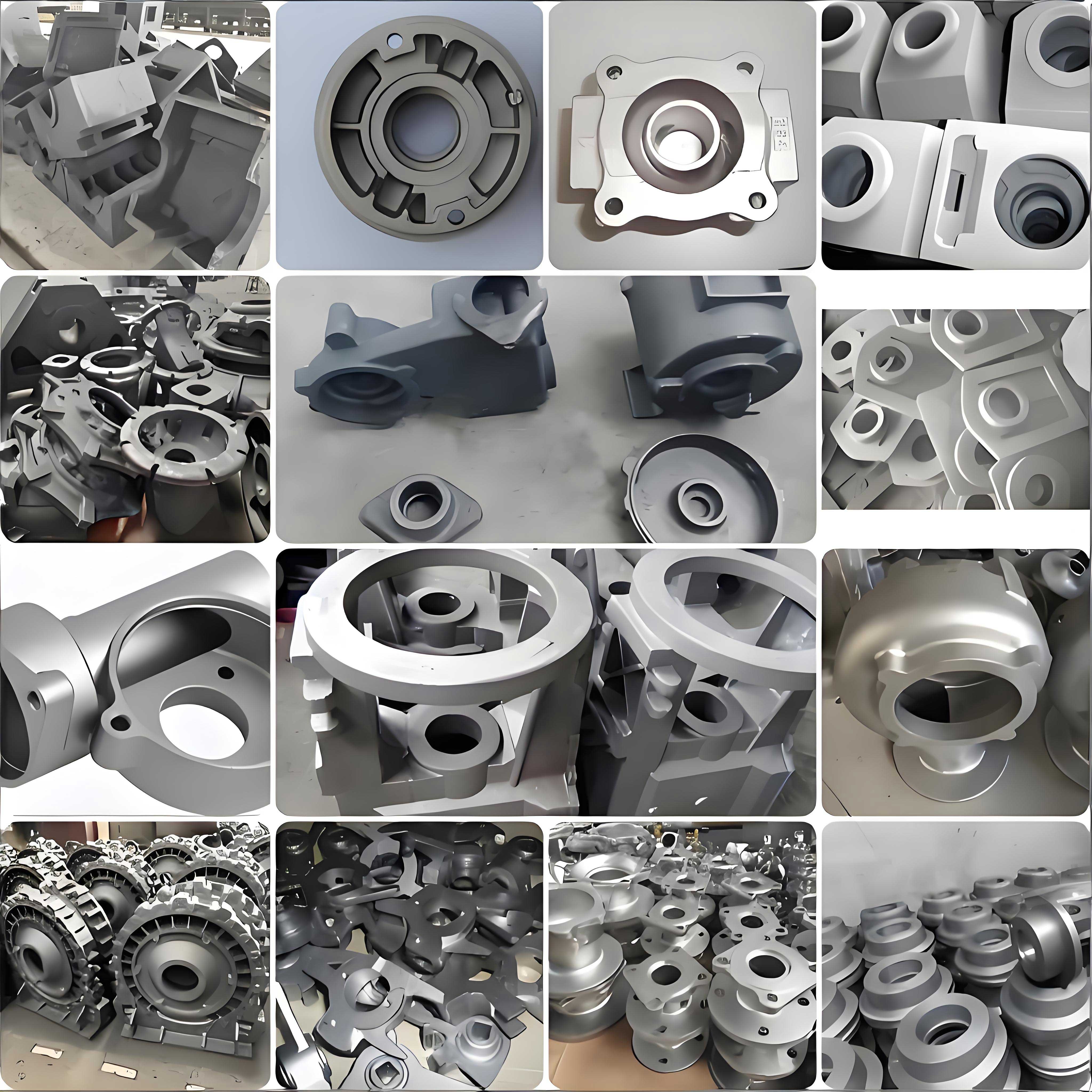
The benefits of this two-step process for producing high-quality nodular cast iron are multifaceted. It offers remarkable consistency, reduces reliance on operator skill, minimizes environmental pollution by containing reactions, and enhances safety by eliminating violent magnesium flare-ups. This represents a significant leap forward in the processing of nodular cast iron.
2. Lightweighting the Nodular Cast Iron Casting
Lightweighting is a paramount objective in modern manufacturing, aiming to reduce component mass without compromising strength or safety. For nodular cast iron parts, this not only improves performance in application (e.g., in automotive systems) but also directly reduces material cost. We embarked on a detailed project to lightweight the drive frame housing.
The methodology involved several stages. First, we collected statistical data from multiple production batches. We measured the as-cast dimensions of parts from different molds under varying chemical compositions. The average and minimum values for critical features were recorded. Second, we reverse-engineered the mold dimensions to understand the actual shrinkage allowance versus the designed value. Third, using 3D CAD software (like Pro/ENGINEER), we identified non-critical areas where wall thickness could be reduced with minimal impact on functionality and mold modification cost. The guiding principle was to bring dimensions to the lower safe limit of the casting tolerance grade CT9.
The specific weight reduction measures are summarized in the table below, which details the location, original dimension, modified dimension, and calculated mass saving.
| Location Description (Refer to Fig. 3) | Original Dimension (mm) | Modified Dimension (mm) | Material Removed (mm) | Calculated Mass Reduction (kg) |
|---|---|---|---|---|
| Primary Outer Diameter (Red area) | φ383.0 / Wall: 17.2 | φ381.0 / Wall: 16.2 | 1.0 on radius | 1.323 |
| Secondary Outer Diameter (Yellow area) | φ360.0 | φ358.6 | 0.7 on radius | 0.250 |
| Column Side Walls (Grey area) | Base thickness | Reduced thickness | 1.0 | 0.270 |
| Internal Web Wall (Blue area) | 14.5 | 13.0 | 1.5 | 0.300 |
| Machining Allowance on Bottom Face (Green area) | 4.93 | 2.93 | 2.0 | 0.820 |
| Total Mass Reduction: | 2.963 kg | |||
The mass reduction was calculated using the density of nodular cast iron, $ρ \approx 7100 \text{ kg/m}^3$. For a cylindrical shell section, the mass difference $\Delta m$ can be estimated by:
$$\Delta m = ρ \times \pi \times L \times (D_o t_o – D_n t_n)$$
Where $L$ is length, $D$ is diameter, and $t$ is thickness (subscripts ‘o’ for old and ‘n’ for new). For complex shapes, 3D software integration was essential.
The implementation resulted in the casting mass being reduced from 54.99 kg to approximately 52.03 kg, achieving a weight saving of about 5.4%. Subsequent batch processing and customer validation confirmed that all dimensional and performance requirements were met. This successful lightweighting of a nodular cast iron component demonstrates that intelligent design and precise process control can yield substantial economic benefits.
3. Core Weight Reduction
The drive frame housing is produced using three sand cores. A review of the core design revealed an opportunity for optimization in Core #3, which featured excessive core prints in the area designated for risers. These non-functional extensions were removed, as illustrated in the comparative diagram. This modification reduced the mass of Core #3 from 19.3 kg to 16.5 kg, saving 2.8 kg of core sand and resin per casting.
The economic impact is twofold: direct savings in core material consumption and reduced handling labor. The formula for material saving per core is straightforward:
$$\text{Saving} = (V_{old} – V_{new}) \times \rho_{sand-mixture}$$
Where $V$ is volume. For a typical furan resin sand density of around 1600 kg/m³, the volume saved was approximately 0.00175 m³ per core. While seemingly small per piece, over high-volume production, this translates to significant cost reduction and a smaller environmental footprint for our nodular cast iron foundry operations.
4. Optimization of Melting Charge and Alloying Additions
The final optimization pillar focused on the melting practice and alloying strategy to reduce raw material costs while maintaining, or even enhancing, the mechanical properties of the nodular cast iron. The original charge mix of 40% pig iron and 60% steel scrap was reevaluated. Given the minimal price differential at the time, we shifted to a high-pig-iron charge to leverage its inherent higher carbon content.
The new charge composition was set at 80% pig iron and 20% steel scrap. This significantly increased the baseline carbon level in the melt, thereby reducing the required additions of costly recarburizers. Similarly, the higher silicon content in pig iron decreased the amount of ferrosilicon needed for final composition adjustment. The chemical composition targets were adjusted accordingly to maintain the desired matrix and graphite structure.
A more strategic change involved the substitution of part of the copper addition with tin. Copper is a common alloying element in nodular cast iron to promote pearlite formation, thereby increasing strength and hardness. However, tin is a far more potent pearlite stabilizer. The potency factor $P$ of an element can be conceptualized relative to silicon (which is ferritizing). For pearlite promotion, approximate relative potencies are: Cu ≈ 5, Sn ≈ 50, Sb ≈ 100 (with Si = -1). Thus, replacing some copper with tin is highly efficient.
The adjustment in alloy additions is summarized below:
| Parameter | Original Practice | Optimized Practice | Rationale and Effect |
|---|---|---|---|
| Charge Mix (Pig Iron : Scrap) | 40 : 60 | 80 : 20 | Higher base C & Si, reducing recarburizer and FeSi needs. |
| Cathodic Copper Addition, w(Cu)% | 0.65 – 0.70% | 0.28 – 0.32% | Major cost saving on expensive cathode copper. |
| Tin Addition, w(Sn)% | 0% | 0.035 – 0.045% | Tin is a potent pearlite promoter (~10x Cu). Maintains strength/hardness. |
| Target Carbon Equivalent (CE) | ~4.5 | ~4.4 – 4.5 | Adjusted for new charge, kept optimal for processing. |
The new alloying strategy can be expressed through a simplified model for achieving target pearlite fraction. The combined effect of Cu and Sn can be estimated. The pearlite-promoting potential $PP$ might be modeled as:
$$PP = k_{Cu} \times \%Cu + k_{Sn} \times \%Sn$$
Where $k_{Sn}$ is much larger than $k_{Cu}$. By reducing %Cu and introducing a small %Sn, we maintained a constant $PP$, ensuring the required hardness of 190-250 HB and tensile strength over 600 MPa. Microstructural analysis confirmed a fully pearlitic matrix with well-dispersed graphite nodules, meeting all specifications. This reformulation led to a notable decrease in the cost per ton of molten nodular cast iron, proving that intelligent metallurgy is key to competitive manufacturing.
5. In-Depth Analysis of Eutectic Control and Solidification
To further elaborate on the first optimization, controlling the eutectic degree is fundamental for sound nodular cast iron production. The solidification of nodular cast iron occurs over a temperature range. The cooling curve and its derivatives provide critical information. The eutectic degree $SC$ directly influences the morphology of the eutectic cells and the feeding requirements. An $SC$ close to 1 indicates a near-eutectic composition, which solidifies with a large mushy zone but good graphitic expansion potential to counteract shrinkage. The intelligent online system we employed likely uses thermal analysis to determine parameters like the eutectic undercooling ($ΔT_{eu}$) and recalescence ($ΔT_{r}$), which correlate with $SC$ and nodularity.
The relationship can be complex, but a simplified linear correlation might be used for control:
$$SC = A – B \times ΔT_{eu} + C \times (\%Mg_{res})$$
Where A, B, C are system-specific constants. By targeting the $SC$ window of 0.8-1.2, the system ensures the solidification mode is conducive to minimizing shrinkage porosity, a perennial challenge in thick-section nodular cast iron castings. This scientific approach moves away from empirical methods, bringing reliability and reproducibility to the process.
6. Broader Implications and Sustainability
The collective impact of these optimizations extends beyond the specific drive frame housing. The two-step spheroidization process with online control sets a new standard for producing high-quality nodular cast iron with complex geometries. The lightweighting methodology provides a blueprint for applying statistical process control and CAD simulation to achieve material efficiency in cast components. The charge and alloy optimization demonstrates how foundry metallurgists can adapt to raw material market fluctuations without sacrificing quality.
From a sustainability perspective, these improvements contribute significantly. Weight reduction in automotive components leads to lower fuel consumption and emissions during the product’s life cycle. Reduced use of core sand and alloys decreases the environmental footprint of the casting process itself. The cleaner, more controlled spheroidization process improves workplace conditions and reduces emissions.
In conclusion, the journey to optimize this nodular cast iron drive frame housing involved a holistic view of the entire manufacturing chain. By integrating advanced process control systems, leveraging digital design tools for lightweighting, and applying shrewd metallurgical principles for cost-effective alloying, we achieved a superior product at a lower cost and with a reduced environmental impact. This case study reaffirms that nodular cast iron remains a highly versatile and optimizable engineering material, capable of meeting the ever-increasing demands of modern industry through continuous innovation and precise engineering. The future for nodular cast iron looks bright, with further advancements in simulation, real-time control, and alloy design poised to unlock even greater potential.