
As a dedicated steel castings manufacturer, my perspective is rooted in the continuous pursuit of excellence within the metallurgical and foundry sectors. The intricate dance of material science, process engineering, and economic forces defines our daily operations. The recent advancements in auxiliary materials and core technologies, such as those seen in investment casting for aerospace, offer profound insights that we, as steel castings manufacturers, can adapt and integrate. The fundamental challenge remains constant: achieving dimensional fidelity, superior mechanical properties, and cost-effectiveness in complex steel components. This article delves into the technical paradigms, material innovations, and strategic shifts that are reshaping our industry, all viewed through the lens of a practicing steel castings manufacturer.
The core of our work lies in mastering the behavior of materials under extreme thermal and mechanical conditions. Consider the issue of dimensional stability during sintering or heat treatment—a critical parameter for any steel castings manufacturer producing near-net-shape components. Research into ceramic core systems, while often focused on superalloys for turbines, provides a valuable analog. For instance, the modification of silica-based systems with additives like boron carbide reveals universal principles. During sintering, boron carbide (B4C) can undergo oxidation:
$$ \text{B}_4\text{C} (s) + \text{O}_2 (g) \rightarrow \text{Boron Oxide} (l/g) + \text{CO/CO}_2 (g) $$
This reaction is often accompanied by a significant volume expansion, theoretically up to 158.2% under specific conditions. For a steel castings manufacturer, understanding such phase transformations is crucial when designing binding systems or exothermic compounds for feeder heads and risers. The volume change can be modeled to predict its effect on core shrinkage or expansion, which directly impacts the final dimensions of the steel casting. The linear shrinkage (S) of a ceramic system can be expressed as a function of additive content (x) and sintering temperature (T):
$$ S(x, T) = S_0 – \alpha x + \beta x^2 + \gamma T $$
Where $S_0$ is the base shrinkage, and $\alpha$, $\beta$, $\gamma$ are material-specific coefficients. This non-linear relationship mirrors the behavior we observe in the sand and ceramic molds used for steel. A small amount of a reactive additive may reduce shrinkage, while a higher content promotes viscous flow and densification, thereby increasing shrinkage. This principle is paramount for a steel castings manufacturer aiming for tight tolerances in critical applications like valve bodies or gearbox housings.
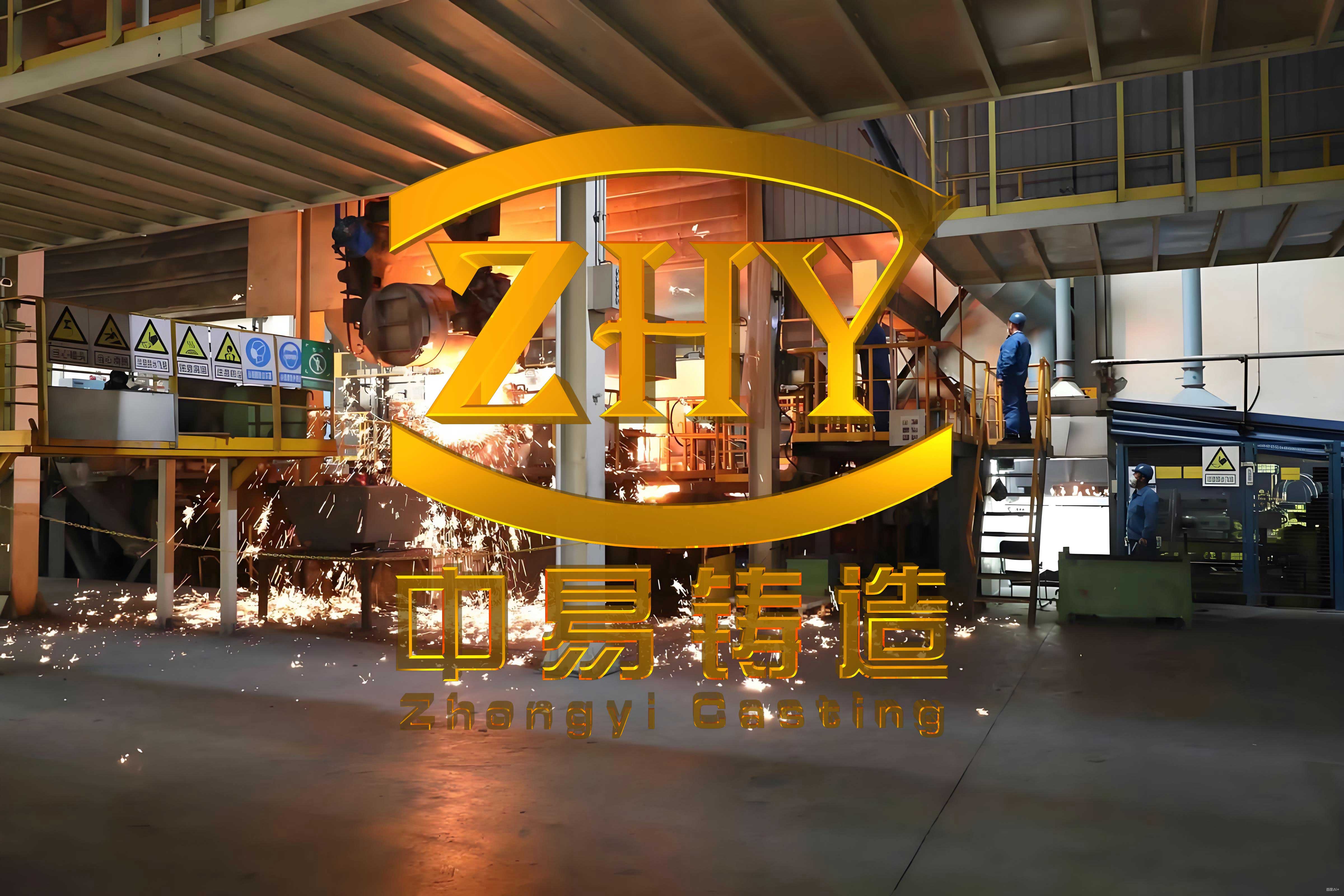
The mechanical properties of the molds and cores are equally vital. The room-temperature bending strength ($\sigma_b$) and high-temperature creep resistance are key indicators of a core’s ability to withstand the ferrostatic pressure of molten steel and resist deformation during solidification. For a steel castings manufacturer, optimizing these properties in core binders or facing sands directly translates to fewer casting defects like veining or core shift. The strengthening mechanism from additives like boron carbide, which forms a glassy phase that bridges particles and reduces microcracks, can be described by a modified rule-of-mixtures for composite materials:
$$ \sigma_b = \sigma_m V_m + \sigma_a V_a + \Gamma \cdot A_{interface} $$
Here, $\sigma_m$ and $\sigma_a$ are the strengths of the matrix and additive phases, $V$ their volume fractions, $\Gamma$ the interfacial energy, and $A_{interface}$ the specific interfacial area. The reduction in porosity ($P$) also plays a dominant role, often following an exponential decay with additive content: $P(x) = P_0 e^{-kx}$. The interplay between densification and viscous flow dictates the high-temperature performance. As a steel castings manufacturer, we constantly balance these factors to ensure cores maintain their shape until the steel skin is strong enough.
To illustrate the complex trade-offs in material formulation for a modern steel castings manufacturer, consider the following table summarizing hypothetical data inspired by advanced core research, but contextualized for steel foundry applications. It compares different modifier additives for a silica-based sand binder system used in steel casting:
| Additive Type | Doping Level (wt.%) | Linear Shrinkage (%) | Bulk Porosity (%) | Room Temp. Strength (MPa) | High-Temp Creep Index* | Remarks for Steel Casting |
|---|---|---|---|---|---|---|
| None (Base Silica) | 0.0 | 2.5 | 32.5 | 12.5 | 1.0 | Prone to veining, standard practice. |
| Boron Compound A | 0.5 | 2.1 | 30.8 | 14.2 | 0.8 | Improved strength, moderate cost. |
| Boron Compound B | 1.0 | 1.7 | 28.3 | 17.8 | 0.4 | Optimal balance for complex cores. |
| Boron Compound B | 2.0 | 2.4 | 24.1 | 21.5 | 0.7 | High strength, but increased shrinkage risk. |
| Alternative Carbide C | 1.5 | 1.9 | 26.7 | 16.3 | 0.6 | Good alternative, different sintering profile. |
*Creep Index: Relative measure of deformation under load at high temperature (lower is better).
For a steel castings manufacturer, selecting the right additive system depends on the specific steel grade and casting geometry. The data suggests an optimum around 1% doping for a critical combination of low shrinkage, adequate porosity for collapsibility, and high strength. The porosity is particularly crucial; it must be high enough to allow the core to be easily removed after casting but low enough to prevent metal penetration. This optimization is a daily task for any competitive steel castings manufacturer.
The strategic landscape for a steel castings manufacturer is also evolving rapidly. Consolidation and specialization are powerful trends. We have observed significant moves where larger entities acquire specialized foundries to gain technological edges or access new markets. For example, a recent acquisition in Europe saw a global manufacturing group take over a specialized iron foundry, a move aimed at filling a technological gap in large ductile iron casting capabilities. For a steel castings manufacturer, such dynamics highlight the importance of niche expertise. It is not merely about scale but about mastering specific processes—be it for heavy industrial machinery, commercial vehicles, or energy sector components. The shift away from over-reliance on traditional automotive powertrains towards diversified industrial applications is a strategic imperative for the modern steel castings manufacturer.
Similarly, the establishment of dedicated research and innovation hubs, such as post-doctoral practice bases, signifies the industry’s commitment to deep technological advancement. A steel castings manufacturer investing in such infrastructure focuses on the fundamental science of auxiliary materials—improving binder systems, developing new exothermic compounds, and enhancing refractory coatings. These centers work on the chemistry that controls the interface between the molten steel and the mold, which is where most casting defects originate. The innovation cycle from basic research to applied engineering and finally to shop-floor practice is what keeps a steel castings manufacturer at the forefront. The performance metrics of new materials can be evaluated through structured testing protocols, the results of which often fit phenomenological models. For instance, the relationship between high-temperature creep deformation ($\delta$) and time ($t$) under constant load can be approximated for core materials by a Norton-Bailey type equation:
$$ \delta = A \cdot \sigma^n \cdot t^m \cdot \exp\left(-\frac{Q}{RT}\right) $$
Where $A$ is a material constant, $\sigma$ is the applied stress, $n$ and $m$ are stress and time exponents, $Q$ is the activation energy for viscous flow, $R$ is the gas constant, and $T$ is the absolute temperature. For a steel castings manufacturer, characterizing these parameters for new core sand mixtures allows for predictive simulation of core behavior during casting, reducing costly trial runs.
The global supply chain pressures further compel a steel castings manufacturer to excel in material efficiency and process reliability. Every percentage point reduction in scrap due to improved dimensional accuracy or better surface finish directly impacts profitability and sustainability. The integration of real-time process monitoring and data analytics is becoming standard. As a steel castings manufacturer, we collect vast amounts of data from each heat and mold, which can be correlated to final quality. Statistical models help us identify key control variables. Consider a multiple regression model predicting the tensile strength ($TS$) of a low-alloy steel casting as a function of core-related and melting parameters:
$$ TS = \beta_0 + \beta_1(C_{core}) + \beta_2(P_{sand}) + \beta_3(\Delta T_{pour}) + \beta_4([Si]) + \epsilon $$
Where $C_{core}$ is a core strength index, $P_{sand}$ is the mold sand permeability, $\Delta T_{pour}$ is the pouring superheat, $[Si]$ is the silicon content, and $\epsilon$ is the error term. Optimizing such a model helps a steel castings manufacturer adjust process windows dynamically.
The economic calculus for a steel castings manufacturer also involves careful analysis of return on investment for new technologies. The following table provides a simplified cost-benefit analysis framework for adopting an advanced, modified core binder system versus a conventional one, over a production run of 10,000 tons of steel castings.
| Cost Factor | Conventional Binder System (USD) | Advanced Modified Binder System (USD) | Notes |
|---|---|---|---|
| Raw Material Cost per Ton | 50 | 75 | Higher cost due to specialized additives. |
| Core Scrap Rate (%) | 3.5 | 1.2 | Reduced breakage and handling loss. |
| Casting Scrap Due to Core Defects (%) | 5.0 | 1.5 | Major savings from fewer veining/misrun defects. |
| Energy Cost for Core Baking | 100,000 | 95,000 | Slightly lower temperature/time profile. |
| Labor for Core Repair/Rework | 80,000 | 25,000 | Significant reduction in manual correction. |
| Total Estimated Cost | 1,850,000 | 1,420,000 | Net saving: 430,000 USD |
| Cost per Ton of Saleable Casting | 194.7 | 144.9 | Clear economic advantage |
This analysis demonstrates that for a forward-thinking steel castings manufacturer, investing in higher-cost, performance-optimized materials can yield substantial overall savings and improve competitiveness. The key is to have the technical expertise to implement them correctly.
Looking ahead, the trajectory for a steel castings manufacturer is intertwined with macro-trends like digitalization, decarbonization, and supply chain resilience. The development of “smart” molds embedded with sensors to monitor temperature and pressure in real-time is on the horizon. Furthermore, the drive towards net-zero emissions pushes us to explore bio-based binders and low-carbon melting technologies. The fundamental material science explored earlier—the reaction kinetics, phase transformations, and strength mechanisms—will underpin these innovations. For example, understanding how new binder chemistries affect the sintering curve is essential. The densification rate during heating can be modeled using a constitutive equation for viscous sintering:
$$ \frac{d\rho}{dt} = \frac{3\gamma}{4\eta r} (1 – \rho) $$
Where $\rho$ is the relative density, $\gamma$ is the surface energy, $\eta$ is the viscosity, and $r$ is the particle radius. A steel castings manufacturer must adapt such models for large-scale sand core production.
In conclusion, the role of a steel castings manufacturer is perpetually evolving from a mere metal pourer to a sophisticated materials and process engineering entity. The insights from high-performance ceramic cores, the strategic moves in the global foundry landscape, and the relentless focus on innovation through dedicated research all converge to define our path forward. Mastery over dimensional control, driven by precise understanding of shrinkage and expansion phenomena, separates the leading steel castings manufacturer from the rest. The continuous improvement in mechanical properties of mold systems, guided by composite material principles, ensures reliability in producing critical components. As we integrate digital tools and sustainable practices, the core mission remains: to deliver flawless, high-integrity steel castings that meet the ever-increasing demands of industry. The future belongs to the steel castings manufacturer who can seamlessly blend empirical foundry wisdom with cutting-edge material science and strategic agility.
The journey involves constant calculation and optimization. Whether it’s adjusting the composition of a facing sand or evaluating the total life cycle cost of a new binder, the steel castings manufacturer operates at the intersection of art and science. Let us consider one final, overarching formula that symbolizes our goal—the Overall Equipment Effectiveness (OEE) for a foundry line, which a world-class steel castings manufacturer strives to maximize:
$$ \text{OEE} = \text{Availability} \times \text{Performance Rate} \times \text{Quality Rate} $$
$$ \text{Quality Rate} = 1 – \frac{\text{Total Defect Mass}}{\text{Total Poured Mass}} $$
The defect mass is directly influenced by the factors discussed: core strength, dimensional accuracy, and high-temperature stability. Every advancement in core material science, every strategic acquisition that brings in new capability, and every investment in an innovation base ultimately contributes to improving these multiplicative factors. For the ambitious steel castings manufacturer, there is no finish line, only the next frontier of precision, efficiency, and strength.