
In my extensive experience in foundry practices, I have encountered numerous challenges in producing castings with unconventional geometries. Among these, special-shaped castings—defined as those with a length-to-width ratio exceeding 8—present unique difficulties. Traditional sand casting methods often fall short due to complexities in mold-making, core setting, and assembly, leading to high scrap rates and prolonged production cycles. However, through the adoption and refinement of the lost foam casting process, I have successfully overcome these hurdles, particularly in manufacturing critical components like vacuum tank bodies. This article details my first-hand journey in optimizing lost foam casting for such abnormity castings, leveraging tables and formulas to encapsulate key insights, and emphasizing the transformative role of this technique.
The lost foam casting process, encompassing both hardened sand full-mold casting and dry sand vacuum-assisted full-mold casting, eliminates the need for pattern withdrawal, core assembly, and mold closing. This simplification is revolutionary. For special-shaped castings, which are often produced in small batches or as one-offs, lost foam casting offers unparalleled flexibility. By using expandable polystyrene (EPS) foam patterns that vaporize upon metal pouring, we can create intricate internal cavities without cores, significantly reducing lead times and costs. My focus here is on the dry sand vacuum-assisted variant, which employs unbonded dry sand consolidated through vibration and vacuum, providing superior dimensional accuracy and surface finish.
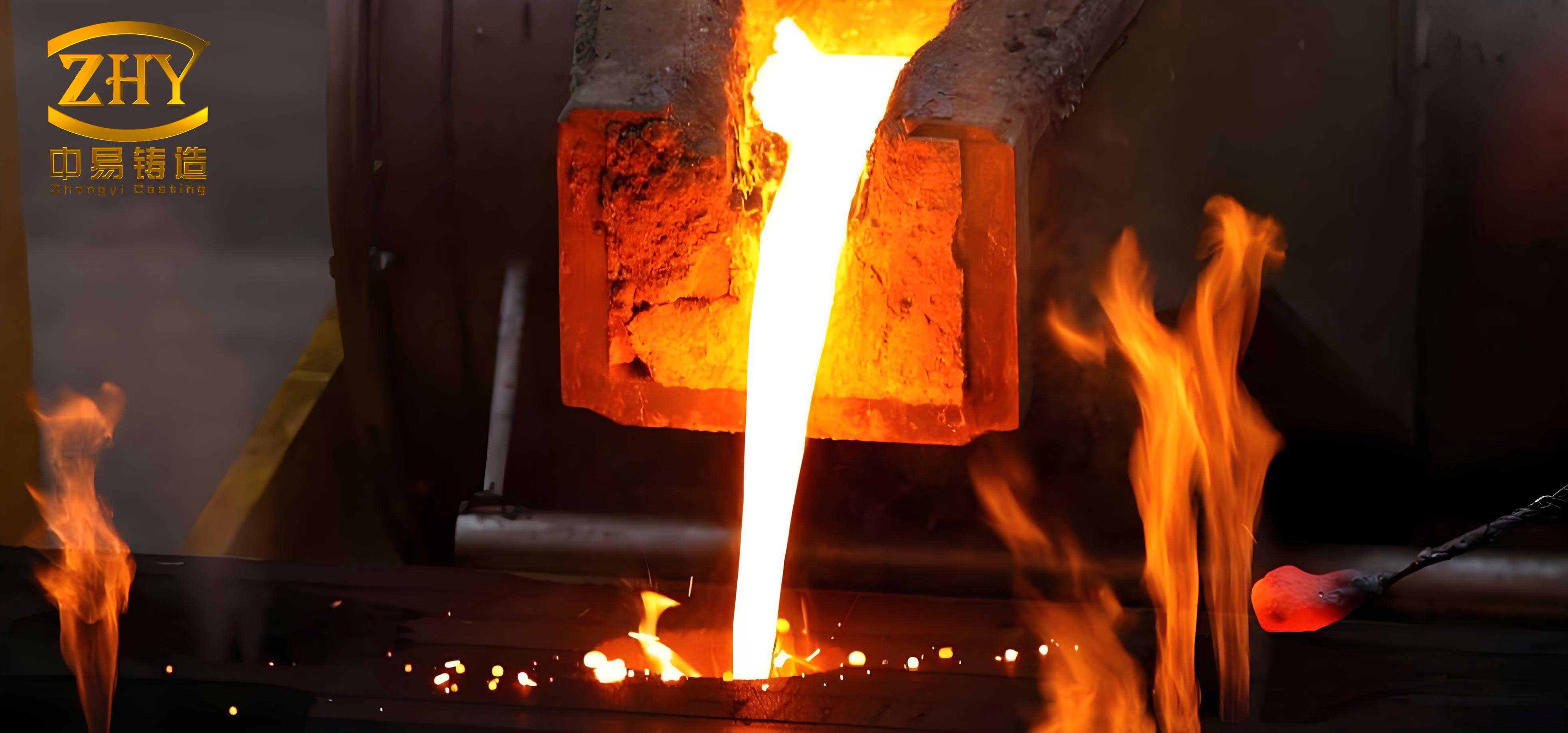
To illustrate, I will reference the production of a vacuum tank body—a quintessential special-shaped casting. Originally fabricated from welded steel plates, these components suffered from corrosion leakage and thermal distortion. Converting to gray iron castings was ideal, but traditional methods proved inefficient. Lost foam casting emerged as the solution. The vacuum tank body, with dimensions like 5 m length, 0.4 m width, and 0.7 m height, and a weight of 1800-3500 kg, required meticulous process control. Below, I delineate the optimized lost foam casting methodology, enriched with technical data.
Foam Pattern Selection and Fabrication
The foundation of lost foam casting lies in the foam pattern. For special-shaped castings, I prefer manual cutting and gluing of EPS boards, as it suits low-volume production. Pattern accuracy is paramount to prevent casting defects like dimensional deviations. I select EPS boards with a density range of 18–21 g/L and bead size of 3–4 mm. This density balances low gas generation during decomposition (crucial for avoiding defects) with adequate strength to resist handling deformation. Lower densities, while reducing gas, compromise surface finish and stability.
Pattern making involves creating templates from sheet metal or plywood, incorporating shrinkage allowances. The linear shrinkage for gray iron is typically 1-2%. Using a heated wire cutter guided by these templates, I cut foam blocks. To ensure straightness in long castings, assembly is performed on a flat reference plate. Adhesion is achieved with hot-melt glue, but sparingly to minimize gas evolution from adhesives. The pattern’s dimensions must account for shrinkage, calculated as:
$$ L_{\text{pattern}} = L_{\text{casting}} \times (1 + S) $$
where \( S \) is the shrinkage factor, often 0.01–0.02 for gray iron. For the vacuum tank body, with a casting length of 5000 mm, the pattern length would be:
$$ L_{\text{pattern}} = 5000 \, \text{mm} \times (1 + 0.015) = 5075 \, \text{mm} $$
This precise calculation is vital in lost foam casting to achieve net-shape outcomes.
Coating Application and Drying
A refractory coating is applied to the foam pattern to enhance surface finish, prevent sand penetration, and provide structural support during molding. In lost foam casting, the coating must exhibit high permeability to allow gas escape, sufficient strength to resist erosion, and good adhesion. I formulate a coating using 120–250 mesh quartz flour as refractory aggregate, combined with composite binders. The coating thickness is critical; I aim for 2.5–3.5 mm after drying.
The coating process involves dipping and brushing. For large patterns like the tank body, I use a rotational fixture to coat all surfaces evenly. Drying is done in an oven at 50–60°C for 24–48 hours. Proper drying eliminates moisture, which could cause gas defects. The coating’s permeability \( K \) can be estimated using the Kozeny-Carman equation:
$$ K = \frac{\phi^3}{k (1 – \phi)^2 S^2} $$
where \( \phi \) is porosity, \( k \) is a constant, and \( S \) is specific surface area. Optimizing these parameters ensures efficient gas venting during pouring, a core aspect of lost foam casting success.
| Property | Target Value | Importance in Lost Foam Casting |
|---|---|---|
| Viscosity (cup flow, s) | 25-35 | Ensures even application |
| Solid Content (%) | 60-70 | Affects drying time and thickness |
| Permeability (cm²/min) | ≥ 0.5 | Critical for gas evacuation |
| Adhesive Strength (MPa) | ≥ 0.3 | Prevents coating peel-off |
Molding and Vacuum System Setup
Molding in lost foam casting involves placing the coated pattern in a flask and filling it with dry sand. For special-shaped castings, I designed a universal flask of size 7.5 m × 1 m × 1.4 m to accommodate various tank body sizes. The flask is constructed from 10 mm steel plate reinforced with channels, featuring multiple sand-fill doors and vacuum ports. Vibration motors are attached to compact the sand.
The pouring position is crucial. I orient the tank body horizontally with its open slit facing upward to facilitate sand filling and metal flow. This minimizes the gas gap distance at the metal front, reducing the risk of mold collapse. Sand compaction is achieved through layered filling and vibration. I use 20–40 mesh round-grained zircon sand for its high permeability and flowability. The vibration parameters—frequency and amplitude—are tuned to achieve uniform density without pattern distortion. The sand density \( \rho_s \) after vibration can be related to compaction energy \( E \) by:
$$ \rho_s = \rho_0 + \alpha \log(E) $$
where \( \rho_0 \) is initial density and \( \alpha \) is a material constant.
Vacuum assistance is integral to lost foam casting. A vacuum pump maintains negative pressure (0.05–0.07 MPa) in the flask, stabilizing the mold and removing pyrolysis gases. The vacuum system must match the gas generation rate during pouring. The gas volume \( V_g \) from foam decomposition can be approximated as:
$$ V_g = m_f \times \beta $$
where \( m_f \) is foam mass and \( \beta \) is gas yield per unit mass (≈ 1000 cm³/g for EPS). For a tank body pattern weighing ~10 kg, \( V_g \) ≈ 10,000 L, necessitating a high-capacity vacuum system.
| Parameter | Value | Rationale |
|---|---|---|
| Sand Type | Zircon Sand, 20-40 mesh | High permeability and thermal stability |
| Vibration Time per Layer | ≤ 60 seconds | Prevents pattern deformation |
| Vacuum Level (Initial) | 0.05–0.07 MPa | Ensures mold rigidity |
| Sand Fill Layers | ~10 layers (200 mm each) | Guarantees uniform compaction |
Gating System Design and Pouring
Gating in lost foam casting must ensure smooth metal flow and rapid foam replacement to avoid cold shuts and misruns. For elongated castings, I employ a top-pouring, multi-point gating system. This reduces the distance metal must travel, minimizing heat loss. For tank bodies over 4 m, I use three to four gating points. The gating ratio (sprue:runner:gate) is designed to maintain pressurized flow, typically 1:2:1.5. The metal velocity \( v \) at the gate can be derived from Bernoulli’s equation:
$$ v = \sqrt{2gh} $$
where \( h \) is the metallostatic head. Controlled pouring is essential; I aim for a pouring temperature of 1360–1410°C for gray iron, with pouring time under 60 seconds. The vacuum is stabilized to within 15% of initial value to prevent mold collapse.
The lost foam casting process leverages the foam’s endothermic decomposition, which creates a gas gap influencing heat transfer. The thermal profile can be modeled using the heat conduction equation with a moving boundary:
$$ \frac{\partial T}{\partial t} = \alpha \frac{\partial^2 T}{\partial x^2} – \frac{Q}{\rho c_p} $$
where \( \alpha \) is thermal diffusivity, \( Q \) is heat sink from foam decomposition, \( \rho \) is density, and \( c_p \) is specific heat. Optimizing these parameters reduces defects like shrinkage porosity, common in thick sections.
Process Optimization and Defect Mitigation
In lost foam casting, defects such as collapse, distortion, and cold shuts are prevalent. For the vacuum tank body, I addressed these through iterative improvements. Collapse was initially caused by inadequate sand fixation in the large internal cavity. By inserting auxiliary vacuum pipes into the cavity to equalize pressure, I effectively created a “sand core” support. Distortion was mitigated by using rigid fixtures during pattern handling and molding. Cold shuts were eliminated by increasing pouring temperature and employing multi-point gating.
Chemical composition also plays a role. For gray iron, I target a carbon equivalent (CE) of 4.75–4.9 to enhance fluidity and reduce shrinkage. CE is calculated as:
$$ \text{CE} = \%C + \frac{\%Si + \%P}{3} $$
Inoculation practices are adapted; I use FeSi alloys for post-inoculation to refine graphite structure. The table below summarizes key metallurgical controls.
| Element/Property | Target Range (wt%) | Effect on Lost Foam Casting |
|---|---|---|
| Carbon (C) | 3.85–3.95 | Enhances fluidity, reduces shrinkage |
| Silicon (Si) | 2.70–2.90 | Promotes graphitization, improves strength |
| Manganese (Mn) | 0.20–0.30 | Counteracts sulfur, increases hardness |
| Phosphorus (P) | ≤ 0.05 | Minimizes brittleness |
| Sulfur (S) | ≤ 0.03 | Reduces gas defects |
| Tensile Strength (σ_b) | ≥ 441 MPa | Ensures component integrity |
| Elongation (δ) | ≥ 20% | Provides ductility for service loads |
Economic and Quality Benefits
The lost foam casting process has proven economically superior for special-shaped castings. Compared to resin sand casting, it saves approximately 500 USD per ton of casting, thanks to reduced labor, no core-making, and lower material waste. Production cycles are shortened by 30-40%, and pattern lead time is minimal. Quality-wise, the vacuum tank bodies produced via lost foam casting exhibit excellent dimensional accuracy, with tolerances within ±0.5 mm per meter, and surface roughness averaging Ra 12.5 μm. Internal soundness is high, with radiographic inspection showing no shrinkage or inclusions.
Moreover, the flexibility of lost foam casting allows rapid prototyping and design changes. For instance, altering tank body dimensions simply requires new foam templates, not expensive wooden patterns. This agility is invaluable in custom equipment manufacturing.
Advanced Considerations in Lost Foam Casting
To deepen the understanding of lost foam casting, I explore advanced factors. The foam decomposition kinetics significantly influence mold filling. The rate of gas generation \( \dot{m}_g \) can be expressed as an Arrhenius-type equation:
$$ \dot{m}_g = A \exp\left(-\frac{E_a}{RT}\right) $$
where \( A \) is a pre-exponential factor, \( E_a \) is activation energy, \( R \) is gas constant, and \( T \) is temperature. Controlling this rate through foam density and pouring temperature is key to avoiding turbulent flow.
Additionally, sand flowability during molding affects pattern replication. The angle of repose \( \theta \) for dry sand relates to internal friction \( \phi \):
$$ \theta = \arctan(\mu) $$
where \( \mu \) is the coefficient of friction. Using spherical sands like zircon reduces \( \theta \), enhancing filling of complex geometries in lost foam casting.
Vacuum dynamics also matter. The pressure drop \( \Delta P \) across the sand bed follows Darcy’s law:
$$ \Delta P = \frac{\mu v L}{K} $$
where \( \mu \) is gas viscosity, \( v \) is velocity, \( L \) is bed thickness, and \( K \) is permeability. Ensuring uniform \( \Delta P \) prevents localized collapse.
Conclusion
In summary, lost foam casting is a transformative technique for manufacturing special-shaped castings. My hands-on experience with vacuum tank bodies demonstrates that through meticulous control of pattern making, coating, molding, and pouring, we can achieve high-quality, cost-effective components. The process eliminates traditional bottlenecks, reduces scrap rates from 40% to under 2%, and enhances design freedom. The integration of vacuum assistance and dry sand molding provides the stability needed for elongated geometries. As foundries seek efficiency and precision, lost foam casting will continue to gain prominence, especially for abnormity castings. I encourage wider adoption and further research into foam material science and gas dynamics to unlock even greater potentials in this innovative casting method.
Throughout this exploration, the term lost foam casting has been central, underscoring its pivotal role in modern foundry practices. By embracing its principles, we can overcome the challenges of special-shaped castings, paving the way for more robust and economical industrial components.