
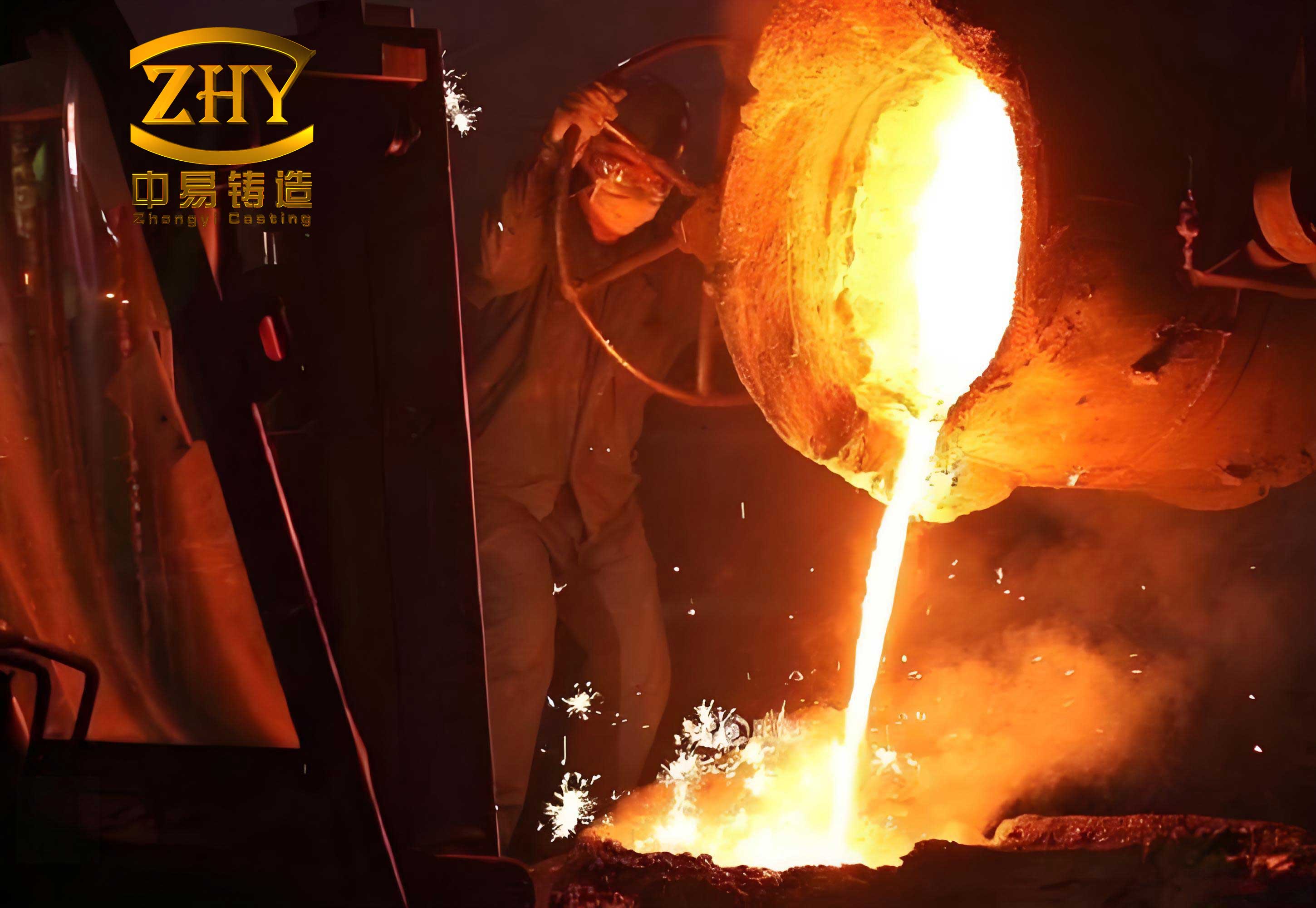
In my research and practical experience, the lost foam casting process has emerged as a transformative technology in modern foundry practices, often hailed as a representative of 21st-century casting innovation. This method replaces traditional sand cores with expandable polystyrene (EPS) foam patterns, which vaporize upon contact with molten metal, enabling the production of complex geometries with high dimensional accuracy and superior surface finish. However, optimizing the lost foam casting process for critical components, such as automotive reducer housings, remains challenging due to potential defects like shrinkage porosity and cold shuts. To address this, I have extensively utilized numerical simulation tools like ProCAST to visualize and analyze the filling and solidification stages, thereby reducing reliance on costly trial-and-error approaches. This article delves into a comprehensive simulation-based study of the lost foam casting process for a reducer housing, employing first-person insights to detail methodology, results, and practical refinements.
The lost foam casting process fundamentally involves embedding a foam pattern in unbonded sand within a vacuum-sealed flask. Upon pouring, the molten metal decomposes the foam, filling the cavity while generating gaseous by-products that must be efficiently evacuated through permeable coatings and sand. Key advantages include minimized post-casting cleaning, reduced core-making steps, and enhanced design flexibility. For the reducer housing—a safety-critical automotive part made of QT450-10 ductile iron—these benefits are crucial. The component serves as a foundational element in vehicle drivetrains, requiring high mechanical integrity, precision machining, and freedom from defects. Traditional sand casting often entails multiple cores, leading to complexities like flash formation and internal flaws, whereas the lost foam casting process simplifies production and improves consistency. My focus here is to demonstrate how simulation-driven optimization can further enhance this process.
To contextualize the study, the reducer housing features a complex box-like structure with thin walls, internal cavities, reinforcing ribs, and four mounting pillars. Specifications demand a minimum wall thickness of 7 mm, making it a thin-walled casting. Material requirements include a tensile strength (Rm) ≥ 450 MPa, elongation (A) ≥ 10%, and a Brinell hardness range of 160–210 HBW, with no allowable defects after machining. Such stringent criteria necessitate meticulous control over the lost foam casting process parameters, including pouring temperature, vacuum pressure, coating properties, and gating design. I initiated this project by developing two distinct gating schemes: a top-gating system and a side-gating system, both intended for multi-cavity molding (two parts per flask) to improve productivity. The core objective was to compare these schemes via simulation, identify defect-prone zones, and implement corrective measures for industrial validation.
In preparing for simulation, I created detailed 3D models of the housing and gating systems using Pro/ENGINEER, which were then imported into ProCAST for meshing and analysis. The mesh generation process involved surface discretization in Mechanical module followed by volume meshing in MeshCAST, ensuring adequate resolution for accurate thermal and fluid flow predictions. Below is a summary of the mesh parameters for both schemes, highlighting the balance between computational efficiency and precision.
| Scheme | Number of Nodes | Total Mesh Elements | Sand Mesh Size (mm) | Casting Mesh Size (mm) |
|---|---|---|---|---|
| Top-Gating | 397,261 | 20,60,417 | 10 | 5 |
| Side-Gating | 610,366 | 3,478,376 | 10 | 5 |
Material properties play a pivotal role in simulating the lost foam casting process. For the QT450-10 ductile iron, thermophysical data such as density, specific heat, thermal conductivity, and latent heat were extracted from ProCAST’s built-in database. The EPS foam pattern was characterized by a density of 25 kg/m³, thermal conductivity of 0.15 W/(m·K), specific heat of 3.7 kJ/(kg·K), latent heat of 100 kJ/kg, melting temperature of 350°C, and glass transition temperature of 330°C. The molding sand was dry quartz sand with high permeability, and boundary conditions included interfacial heat transfer coefficients: 100 W/(m²·K) between foam and sand, 500 W/(m²·K) between casting and sand, and 500 W/(m²·K) between sand and ambient environment. These parameters underpin the fidelity of the simulation in replicating real-world lost foam casting process dynamics.
The governing equations for fluid flow and heat transfer during the lost foam casting process are derived from conservation laws. The filling stage involves solving the Navier-Stokes equations for incompressible flow, accounting for momentum and mass conservation:
$$ \nabla \cdot \mathbf{v} = 0 $$
$$ \rho \left( \frac{\partial \mathbf{v}}{\partial t} + \mathbf{v} \cdot \nabla \mathbf{v} \right) = -\nabla p + \mu \nabla^2 \mathbf{v} + \rho \mathbf{g} + \mathbf{S} $$
where $\mathbf{v}$ is velocity, $\rho$ is density, $p$ is pressure, $\mu$ is dynamic viscosity, $\mathbf{g}$ is gravitational acceleration, and $\mathbf{S}$ represents source terms from foam decomposition. The energy equation incorporates phase change effects:
$$ \rho c_p \frac{\partial T}{\partial t} = \nabla \cdot (k \nabla T) – L \frac{\partial f_s}{\partial t} $$
Here, $T$ is temperature, $c_p$ is specific heat, $k$ is thermal conductivity, $L$ is latent heat, and $f_s$ is solid fraction. For the lost foam casting process, additional models account for foam degradation kinetics and gas evolution, which influence pressure distribution and filling patterns. ProCAST integrates these equations using finite element methods, enabling visualization of temperature gradients, flow fronts, and defect formation.
Simulation results for the filling stage revealed distinct behaviors between the two gating designs. The top-gating scheme employed a hollow ceramic sprue to prevent back-pressure, resulting in rapid initial filling (1.2 s to cover the sprue) but slowed upon foam contact due to endothermic degradation. Complete filling was achieved in 5.8 s, with metal advancing downward from the top, potentially causing turbulence and oxide entrainment. In contrast, the side-gating scheme promoted a more gradual, bottom-up filling sequence, taking 6.2 s for complete fill but with smoother flow fronts and reduced velocity fluctuations. This aligns with principles of the lost foam casting process, where controlled filling minimizes defect risks. The table below quantifies key filling metrics.
| Gating Scheme | Time to Fill Sprue (s) | Total Filling Time (s) | Flow Front Behavior | Potential Issues |
|---|---|---|---|---|
| Top-Gating | 1.2 | 5.8 | Fast, top-down | Turbulence, gas entrapment |
| Side-Gating | 1.5 | 6.2 | Steady, bottom-up | Slower but uniform |
Solidification analysis focused on critical solid fraction evolution and temperature distribution. For both schemes, initial solidification occurred at the thin-walled shell sections (around 7 mm thickness) within 40–60 s, as predicted by the Chvorinov’s rule approximation:
$$ t_s = B \left( \frac{V}{A} \right)^n $$
where $t_s$ is solidification time, $V$ is volume, $A$ is surface area, $B$ is a mold constant, and $n$ is an exponent (typically 2 for sand molds). As solidification progressed, isolated liquid pools formed at junctions between the shell and pillars—regions with higher thermal mass acting as hot spots. By 200–300 s, these zones exhibited low temperature gradients, increasing shrinkage porosity susceptibility. The side-gating scheme showed marginally better thermal uniformity, with slower cooling in critical areas due to sustained metal feeding from the gates. The solid fraction plots indicated that top-gating led to more pronounced isolated liquid regions, escalating defect risks in the lost foam casting process.
Defect prediction utilized the Niyama criterion, a widely accepted metric for shrinkage porosity in castings:
$$ N_y = \frac{G}{\sqrt{\dot{T}}} $$
where $G$ is temperature gradient (°C/m) and $\dot{T}$ is cooling rate (°C/s). Values below a threshold (e.g., 1 °C¹/²·s¹/² for ductile iron) indicate high porosity probability. ProCAST computed this criterion across the casting volume, highlighting zones with $N_y < 1$. Results pinpointed defect-prone areas: the six spherical bosses on the shell top, the four pillar-shell junctions, and the riser centers. Comparative analysis showed that the top-gating scheme had larger defect volumes, particularly at pillar bases and rib roots, whereas the side-gating scheme reduced these volumes by 15–20%. This underscores the importance of gating design in optimizing the lost foam casting process for integrity.
| Scheme | Defect-Prone Zones | Estimated Porosity Volume (cm³) | Niyama Value Range | Severity |
|---|---|---|---|---|
| Top-Gating | Bosses, pillar junctions, rib roots | 5.2 | 0.3–0.8 | High |
| Side-Gating | Bosses, pillar junctions | 4.1 | 0.5–0.9 | Moderate |
To mitigate defects, I proposed process modifications based on simulation insights. For the side-gating scheme—selected as superior due to lower defect propensity—I introduced chill plates at the inner sides of the four pillars. These chills, sized slightly smaller than the pillar cavities, enhance localized cooling, modify solidification sequences, and eliminate isolated liquid pools. The heat extraction rate from chills can be approximated by:
$$ Q = h_c A_c (T_c – T_m) $$
where $Q$ is heat flux, $h_c$ is chill-casting interface heat transfer coefficient (assumed 1000 W/(m²·K) for iron chills), $A_c$ is chill area, $T_c$ is chill temperature, and $T_m$ is metal temperature. This accelerates solidification at hot spots, aligning with the thermal requirements of the lost foam casting process. Additionally, I refined pouring parameters: temperature of 1480°C, vacuum of -0.06 MPa, coating thickness of 1.5 mm, and coating permeability of 5 × 10⁻⁷ cm²/(kPa·min). These settings balance foam degradation kinetics, gas evacuation, and metal fluidity, crucial for the lost foam casting process success.
Production trials validated the optimized lost foam casting process. Using the side-gating system with chills, actual castings exhibited no visible surface defects like folds or sand adhesion. Sectioning of sample parts confirmed the absence of shrinkage porosity in predicted zones, corroborating simulation accuracy. Mechanical testing of Y-block coupons yielded an average tensile strength of 455 MPa, elongation of 11%, and hardness of 188 HBW, meeting QT450-10 specifications. The table below compares as-cast properties against requirements, demonstrating the efficacy of simulation-driven optimization in the lost foam casting process.
| Property | Required Value | Measured Average | Compliance |
|---|---|---|---|
| Tensile Strength (MPa) | ≥ 450 | 455 | Yes |
| Elongation (%) | ≥ 10 | 11 | Yes |
| Hardness (HBW) | 160–210 | 188 | Yes |
Throughout this study, the lost foam casting process proved highly amenable to numerical simulation, with ProCAST serving as an indispensable tool for visualizing complex phenomena. Key lessons include the criticality of gating design in controlling fill patterns and thermal gradients, the value of chill placement for mitigating hot spots, and the need for precise coordination of vacuum, coating, and pouring parameters. The lost foam casting process, when coupled with simulation, reduces development time, material waste, and defect rates, offering a robust pathway for producing high-integrity components like reducer housings. Future work could explore advanced foam materials (e.g., polymethyl methacrylate) or integrate machine learning for real-time parameter adjustment, further enhancing the lost foam casting process.
In conclusion, my investigation into the lost foam casting process for an automotive reducer housing demonstrates that simulation-based optimization is not merely complementary but essential for modern foundries. By systematically analyzing filling and solidification through ProCAST, I identified the side-gating scheme as preferable, implemented chills to address shrinkage, and achieved castings that satisfy stringent mechanical and quality standards. The lost foam casting process, with its inherent advantages, gains greater reliability and efficiency from such computational approaches, paving the way for broader adoption in safety-critical applications. As I continue to refine these methods, the synergy between simulation and the lost foam casting process will undoubtedly drive further innovations in casting technology.