
In modern manufacturing, the production of high-integrity cast components, particularly those made from nodular cast iron, presents significant challenges due to complex geometries and stringent performance requirements. Nodular cast iron, also known as ductile iron, is widely utilized in automotive and mechanical applications for its excellent mechanical properties, such as high strength and ductility. However, the casting process for nodular cast iron often leads to defects like shrinkage porosity and cavities, which can compromise component reliability. This study focuses on optimizing the sand casting process for a QT600-3 caliper body, a critical component in disc brake systems, through numerical simulation and orthogonal experimental design. By leveraging finite element analysis, we aim to predict and mitigate defects, thereby enhancing casting quality and providing a robust methodology for similar industrial applications.
The caliper body, fabricated from QT600-3 nodular cast iron, serves as a core element in braking systems, where it must withstand high-impact loads during emergency operations. Its complex structure, characterized by uneven wall thicknesses and an internal cavity, makes it prone to casting defects. Traditional trial-and-error methods are time-consuming and costly, prompting the adoption of simulation-based optimization. In this work, we employ ProCAST software to simulate the filling and solidification processes, followed by an orthogonal simulation experiment to systematically analyze key process parameters. The goal is to reduce shrinkage-related defects and improve the overall integrity of nodular cast iron castings.
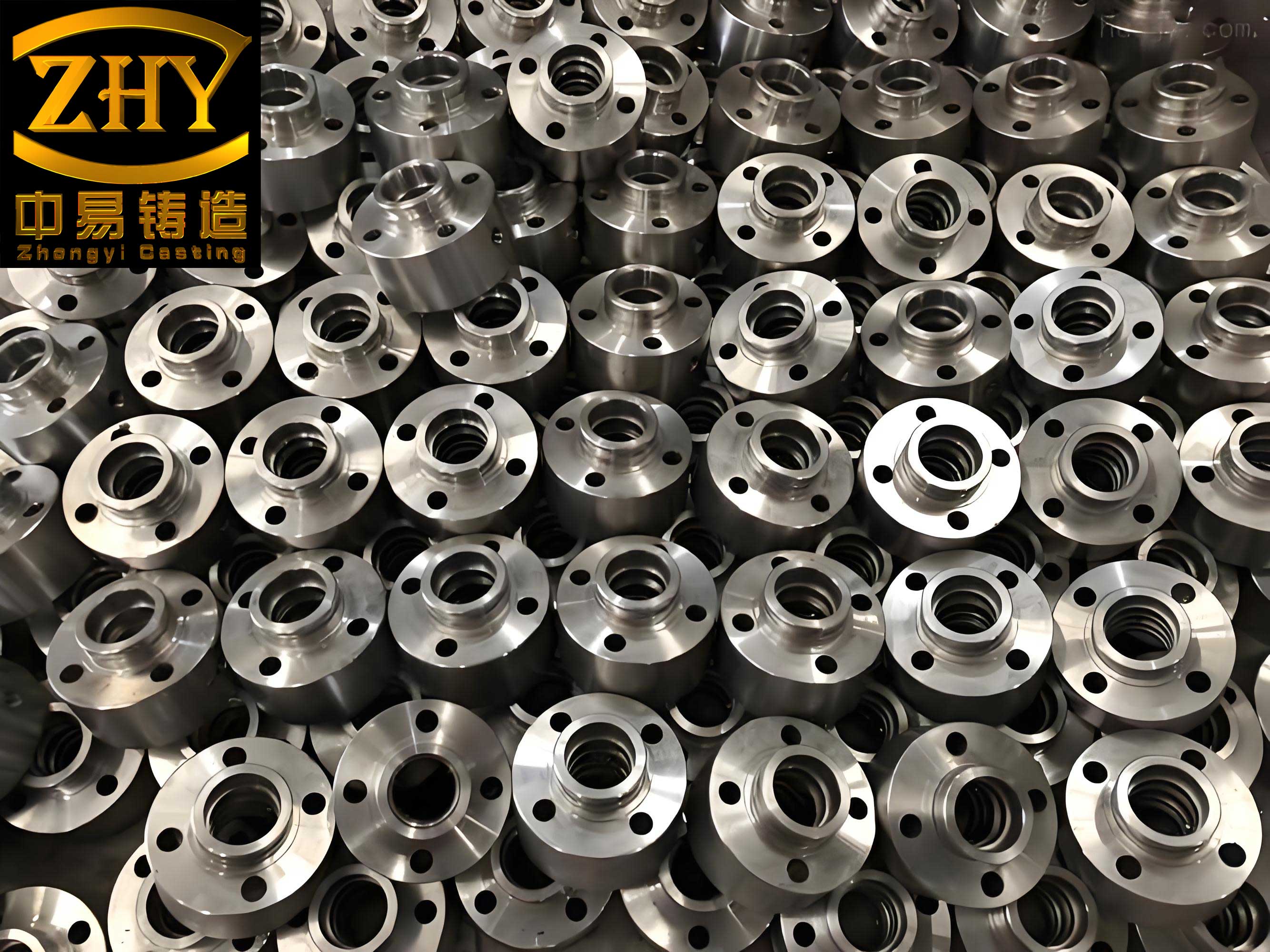
The QT600-3 nodular cast iron material exhibits a unique microstructure comprising ferrite and pearlite, which contributes to its mechanical performance. The chemical composition of QT600-3 nodular cast iron is critical for achieving desired properties, as outlined in Table 1. Key elements like carbon and silicon influence graphite nodularization and matrix structure, while magnesium acts as a nodulizing agent. The solidus and liquidus temperatures are 1143°C and 1166°C, respectively, guiding process parameter selection.
| Element | C | Si | Mn | P | S | Mg | Cu |
|---|---|---|---|---|---|---|---|
| Range (%) | 3.0–3.8 | 2.4–2.8 | 0.3–0.5 | <0.1 | 0.03–0.035 | 0.045–0.05 | 0.35–0.40 |
The casting geometry, with overall dimensions of 421 mm × 176 mm × 150 mm, features a maximum wall thickness of 24 mm, a minimum of 8 mm, and a critical thickness of 19 mm. Such variations necessitate careful design of the gating and risering systems to ensure proper feeding and minimize defects. For nodular cast iron, the solidification shrinkage is substantial, often leading to porosity if not adequately compensated. The initial casting process scheme involves a semi-open gating system, risers placed at thick sections, external chills at the bottom, and a furan resin sand mold. A two-cavity layout is adopted to improve yield, as illustrated in the initial design.
Numerical simulation serves as a cornerstone for predicting casting outcomes. The process begins with model preparation, where the 3D geometry is imported into ProCAST and meshed for finite element analysis. Mesh quality directly impacts simulation accuracy and computational efficiency; thus, we set element sizes of 15 mm for the mold and core, and 5 mm for the casting and gating system. This results in 125,056 surface elements and 2,490,611 volume elements. Boundary conditions are defined based on the sand casting environment: a pouring temperature of 1400°C, pouring speed of 8.5 kg/s, gravity in the Z-direction, and natural air cooling. The interfacial heat transfer coefficient between the casting and mold is set to 500 W/(m²·K), utilizing the NCOINC type in ProCAST.
The governing equations for heat transfer during solidification are essential for simulation. The energy equation can be expressed as:
$$ \rho C_p \frac{\partial T}{\partial t} = \nabla \cdot (k \nabla T) + Q $$
where \( \rho \) is density, \( C_p \) is specific heat, \( T \) is temperature, \( t \) is time, \( k \) is thermal conductivity, and \( Q \) represents latent heat release due to phase change. For nodular cast iron, the latent heat evolution is complex due to graphite precipitation, and ProCAST incorporates material databases to account for this. The solid fraction \( f_s \) is computed using a lever rule or Scheil model, depending on cooling rates. Defect prediction relies on criteria functions, such as the Niyama criterion for shrinkage porosity, given by:
$$ G / \sqrt{\dot{T}} $$
where \( G \) is temperature gradient and \( \dot{T} \) is cooling rate. Lower values indicate higher risk of microporosity.
Simulation of the initial scheme reveals a smooth filling process, with molten metal rising progressively without turbulence. Temperature fields show uniform distribution, validating the gating design. Solidification analysis indicates that risers solidify last, maintaining feeding paths to hot spots. However, defect prediction highlights shrinkage porosity at rib junctions and minor cavities in risers, with an overall porosity percentage of 6.908%. This underscores the need for optimization, particularly for nodular cast iron components where defects can propagate under stress.
To optimize the process, we design an orthogonal simulation experiment with three factors at three levels: pouring temperature (A), pouring speed (B), and number of internal runners (C). This L9 orthogonal array allows efficient exploration of parameter effects on porosity. The factors and levels are summarized in Table 2.
| Level | A: Pouring Temperature (°C) | B: Pouring Speed (kg/s) | C: Number of Internal Runners |
|---|---|---|---|
| 1 | 1380 | 7.5 | 2 |
| 2 | 1400 | 8.5 | 3 |
| 3 | 1420 | 9.5 | 4 |
Each trial is simulated in ProCAST, and porosity percentage is recorded as the response variable. The results, along with mean and range calculations, are presented in Table 3. Porosity is computed based on volume fraction of defects in the casting, using ProCAST’s post-processing tools. The analysis aims to minimize porosity for enhanced quality of nodular cast iron parts.
| Trial | A (°C) | B (kg/s) | C | Porosity (%) |
|---|---|---|---|---|
| L1 | 1380 | 9.5 | 2 | 8.335 |
| L2 | 1380 | 8.5 | 4 | 6.564 |
| L3 | 1380 | 7.5 | 3 | 8.588 |
| L4 | 1400 | 9.5 | 4 | 2.945 |
| L5 | 1400 | 8.5 | 3 | 6.908 |
| L6 | 1400 | 7.5 | 2 | 3.151 |
| L7 | 1420 | 9.5 | 3 | 3.110 |
| L8 | 1420 | 8.5 | 2 | 3.812 |
| L9 | 1420 | 7.5 | 4 | 3.913 |
The mean porosity for each factor level is calculated to assess influence. For factor A: mean1 (1380°C) = 7.829%, mean2 (1400°C) = 4.335%, mean3 (1420°C) = 3.612%. For factor B: mean1 (9.5 kg/s) = 5.217%, mean2 (8.5 kg/s) = 5.761%, mean3 (7.5 kg/s) = 4.797%. For factor C: mean1 (2 runners) = 5.099%, mean2 (3 runners) = 6.202%, mean3 (4 runners) = 4.474%. The range R, representing effect magnitude, is computed as max(mean) – min(mean): R_A = 4.217%, R_B = 0.964%, R_C = 1.728%. Thus, the order of influence is A > C > B, indicating pouring temperature is most critical for controlling defects in nodular cast iron castings.
Trend analysis shows that higher pouring temperatures generally reduce porosity, but excessive temperatures may degrade material properties. For nodular cast iron, a balance is needed to avoid oxidation and graphite flotation. The optimal theoretical combination from orthogonal analysis is A3B3C3 (1420°C, 9.5 kg/s, 4 runners). However, considering practical constraints for nodular cast iron, we select A2B3C3 (1400°C, 9.5 kg/s, 4 runners) as the optimized scheme, as it yields low porosity (2.945% in L4) while maintaining material integrity.
Validation simulations for the optimized scheme demonstrate improved outcomes. Filling patterns remain smooth, with risers solidifying last to ensure effective feeding. The porosity percentage drops to 2.945%, a significant reduction from the initial 6.908%. Defect distributions show minimized shrinkage at rib junctions, confirming the efficacy of parameter adjustments. This optimization highlights the value of simulation-driven approaches for nodular cast iron components, where defect control is paramount for performance.
Further refinement could involve additional parameters, such as riser size or chill design, but the current study provides a solid foundation. The orthogonal method efficiently identifies key factors, saving time and resources compared to full-factorial experiments. For nodular cast iron casting, such methodologies are invaluable in industrial settings to achieve consistent quality.
In conclusion, this research successfully optimizes the sand casting process for a QT600-3 nodular cast iron caliper body using orthogonal simulation experiments. By analyzing pouring temperature, pouring speed, and runner number, we reduce porosity from 6.908% to 2.945%, enhancing casting integrity. The findings underscore the importance of numerical simulation in modern foundry practices, especially for complex nodular cast iron parts. Future work could explore multi-objective optimization or advanced defect criteria to further improve nodular cast iron casting processes.
The mathematical framework for solidification in nodular cast iron involves additional considerations due to graphite formation. The growth kinetics of graphite nodules can be described by:
$$ \frac{dr}{dt} = D \frac{C – C_e}{r} $$
where \( r \) is nodule radius, \( t \) is time, \( D \) is diffusion coefficient, \( C \) is carbon concentration, and \( C_e \) is equilibrium concentration. This influences shrinkage behavior, as graphite expansion can offset liquid contraction. In simulation, material properties for nodular cast iron are derived from databases, but empirical adjustments may be needed for accuracy.
From an engineering perspective, the optimized process reduces scrap rates and improves component reliability. For nodular cast iron applications in automotive braking, this translates to safer and more durable systems. The methodology is adaptable to other cast iron grades or geometries, demonstrating broad applicability. Continuous advancements in simulation software will further enhance predictive capabilities for nodular cast iron casting.
In summary, the integration of orthogonal design with numerical simulation offers a powerful tool for optimizing nodular cast iron casting processes. By systematically varying parameters and analyzing outcomes, we achieve significant quality improvements. This approach aligns with industry trends toward digitalization and smart manufacturing, paving the way for more efficient production of high-performance nodular cast iron components.