
In my extensive experience as a foundry engineer specializing in high-volume production, I have implemented and refined the duplex melting process for manufacturing grey cast iron components used in refrigerator compressors. This methodology, which combines a cupola furnace with an electric induction furnace, is critical for achieving the stringent requirements of modern grey cast iron castings: consistent high temperature, stable chemical composition, fine microstructure, and dimensional accuracy. The production of refrigerator compressor parts, characterized by their small size, light weight, and demanding metallurgical specifications, necessitates a reliable and continuous supply of molten iron. Through this narrative, I will detail the key technical aspects, control strategies, and practical insights gained from operating such a duplex melting system for grey cast iron.
The fundamental requirement for any grey cast iron casting process is the precise control of the iron’s chemical composition. For the specific family of compressor parts, after thorough analysis and material testing, a unified chemical specification was established. This specification ensures the necessary mechanical properties and microstructure for all seven variant parts produced. The target composition for the grey cast iron is summarized in Table 1.
| Element | Target Range |
|---|---|
| Carbon (C) | 3.1 – 3.3 |
| Silicon (Si) | 1.9 – 2.1 |
| Manganese (Mn) | 0.6 – 0.8 |
| Phosphorus (P) | < 0.15 |
| Sulfur (S) | < 0.12 |
| Alloying Elements (Total) | < 0.5 |
Maintaining this composition consistently is the primary challenge in melting grey cast iron. The duplex process begins with the cupola furnace, which acts as the primary melting unit. The stability of the cupola operation directly influences the entire production rhythm. My approach focuses on delivering iron from the cupola that is as high in temperature and as consistent in composition as possible, minimizing the adjustment burden on the subsequent electric furnace.
A critical parameter in cupola operation is the carburization rate—the increase in carbon content from the charge materials to the tapped iron. For grey cast iron, carbon control is paramount. I observed that the carburization rate is not constant but evolves with campaign time due to factors like rising hearth temperature and lining erosion. As shown in Table 2, the rate follows a distinct trend: initially lower, then increasing and stabilizing. This knowledge is essential for accurate charge calculation.
| Campaign Phase | Duration (Hours) | Typical Carburization Rate (%) | Charge Adjustment Strategy for Carbon |
|---|---|---|---|
| Initial Phase | 0 – 2 | Lower than average | Increase scrap steel addition slightly to compensate for lower carburization. |
| Middle Phase | 2 – 6 | Increasing to stable high level | Use standard scrap steel addition based on the stabilized rate. |
| Final Phase | > 6 | Stable at high level | Maintain standard scrap steel addition; monitor for lining wear. |
The control of silicon and manganese in the cupola is equally important for producing quality grey cast iron. Their recovery rates are subject to oxidation losses. Silicon loss typically ranges between 10-20%, while manganese loss is more consistent at around 20%. To manage this, I employ a strategy of undersupplying these elements in the cupola charge and making final, precise additions in the electric furnace. This two-stage approach provides better control over the final composition of the grey cast iron. The relationship for predicting tapped metal composition from charge composition can be expressed using recovery efficiency (η):
$$[Element]_{tap} = [Element]_{charge} \times \eta_{Element}$$
For silicon in grey cast iron production, η_Si ≈ 0.85, and for manganese, η_Mn ≈ 0.80 under stable cupola conditions. Therefore, if the target for silicon in the final grey cast iron is 2.0%, the charge silicon should be calculated as:
$$[Si]_{charge} = \frac{[Si]_{target}}{\eta_{Si}} = \frac{2.0}{0.85} \approx 2.35\%$$
Key operational practices for the cupola to ensure suitable grey cast iron melt include maintaining sufficient coke bed height (with coke sized between 80-120 mm), preheating charges for 30-40 minutes before blasting, and using appropriately sized charge materials to ensure uniform melting. These measures consistently yield tap temperatures in the range of 1380-1420°C with a coke-to-iron ratio of 1:10. Under such controlled conditions, the variability of carbon and silicon in the cupola-tapped grey cast iron can be confined within ±0.1% and ±0.15%, respectively.
The heart of the duplex process for refining grey cast iron is the medium-frequency electric induction furnace. Its primary roles are to superheat the iron and perform fine-tuning of the composition. Superheating serves a crucial metallurgical purpose beyond simply raising temperature for pouring: it helps to break down the genetic inheritance of graphite from the pig iron, promoting the formation of a more uniform and desirable graphite structure in the final grey cast iron. Research and my practical experience indicate that for grey cast iron with a pig iron charge ratio between 40-60%, the optimal superheating temperature range is 1480-1520°C. This range also perfectly aligns with the required pouring temperatures for the thin-walled compressor castings.
A vital practice in my operation is to always maintain a substantial reservoir of superheated grey cast iron in the electric furnace—typically no less than one-third of its capacity. This serves a dual purpose: it enhances the heating efficiency of the furnace for incoming cold charges, and it acts as a thermal and compositional buffer. When lower-temperature, variable-composition iron from the cupola is added, it mixes with this reservoir, thereby reducing the magnitude of temperature and composition adjustments needed. The temperature rise (ΔT) achieved when adding cupola iron at temperature T_c to a reservoir of mass M_r at temperature T_r can be approximated by:
$$T_{final} = \frac{M_r T_r + M_c T_c}{M_r + M_c}$$
Where M_c is the mass of cupola iron added. This buffering effect is fundamental to stabilizing the process for grey cast iron.
Composition adjustment in the electric furnace is a precise operation. The materials I use include:
- Scrap Steel (Small Pieces): For reducing carbon content in the grey cast iron melt. Small pieces are preferred for rapid dissolution.
- Graphite Electrodes: For increasing carbon content. They offer faster carburization speed compared to other carbonaceous materials like coke or coal dust.
- Ferrosilicon and Ferromanganese: For final silicon and manganese adjustment to meet the precise grey cast iron specifications.
Regular composition analysis using a spectrometer on samples from both the cupola spout and the electric furnace provides the data necessary for these adjustments.
Inoculation is a non-negotiable step in producing high-quality grey cast iron, especially for parts requiring a fine pearlitic matrix and avoidance of chill edges. Given the long pouring times characteristic of high-volume compressor part production, I employ a dual inoculation practice. Primary inoculation is performed using a stream method as the iron is transferred from the electric furnace to the pouring ladle. The inoculant is a proprietary FeSi-based compound containing strontium (Sr) and barium (Ba). Secondary inoculation is achieved through a calibrated funnel device that introduces inoculant directly into the metal stream during pouring. This method ensures consistent and effective late-stage inoculation. The composition of the primary inoculant is detailed in Table 3.
| Element | Content |
|---|---|
| Si | 70 – 75 |
| Sr | 0.8 – 1.2 |
| Ba | 1.5 – 2.5 |
| Ca | 0.5 – 1.5 |
| Al | 0.8 – 1.5 |
| Fe | Balance |
The effectiveness of inoculation can be related to the undercooling reduction (ΔT_u) it provides, which promotes graphite nucleation. A simplified relationship for grey cast iron is that the final graphite count (N, in nodules/mm²) increases with effective inoculation potency. While complex, the goal is to maximize N for a uniform A-type graphite distribution.
Rigorous front-line control is essential. In addition to spectrometer analysis, I routinely perform thermal analysis and pour wedge test samples (chill tests) to instantly assess the grey cast iron’s tendency to form carbides. The wedge test provides a quick visual indicator of the melt’s inoculation effectiveness and carbon equivalent. The carbon equivalent (CE) for grey cast iron, a key parameter influencing fluidity and shrinkage, is calculated as:
$$CE = C + \frac{Si + P}{3}$$
For our target grey cast iron composition, CE typically falls within the range of 3.8 to 4.0, which is suitable for the intended casting geometry.
The entire process, from charge calculation to pouring, is a symphony of controlled steps aimed at producing flawless grey cast iron components. The final product—a precision grey cast iron compressor housing or component—is a testament to this controlled duplex melting process. The integrity and performance of these grey cast iron parts are directly linked to the meticulous management of melt quality.
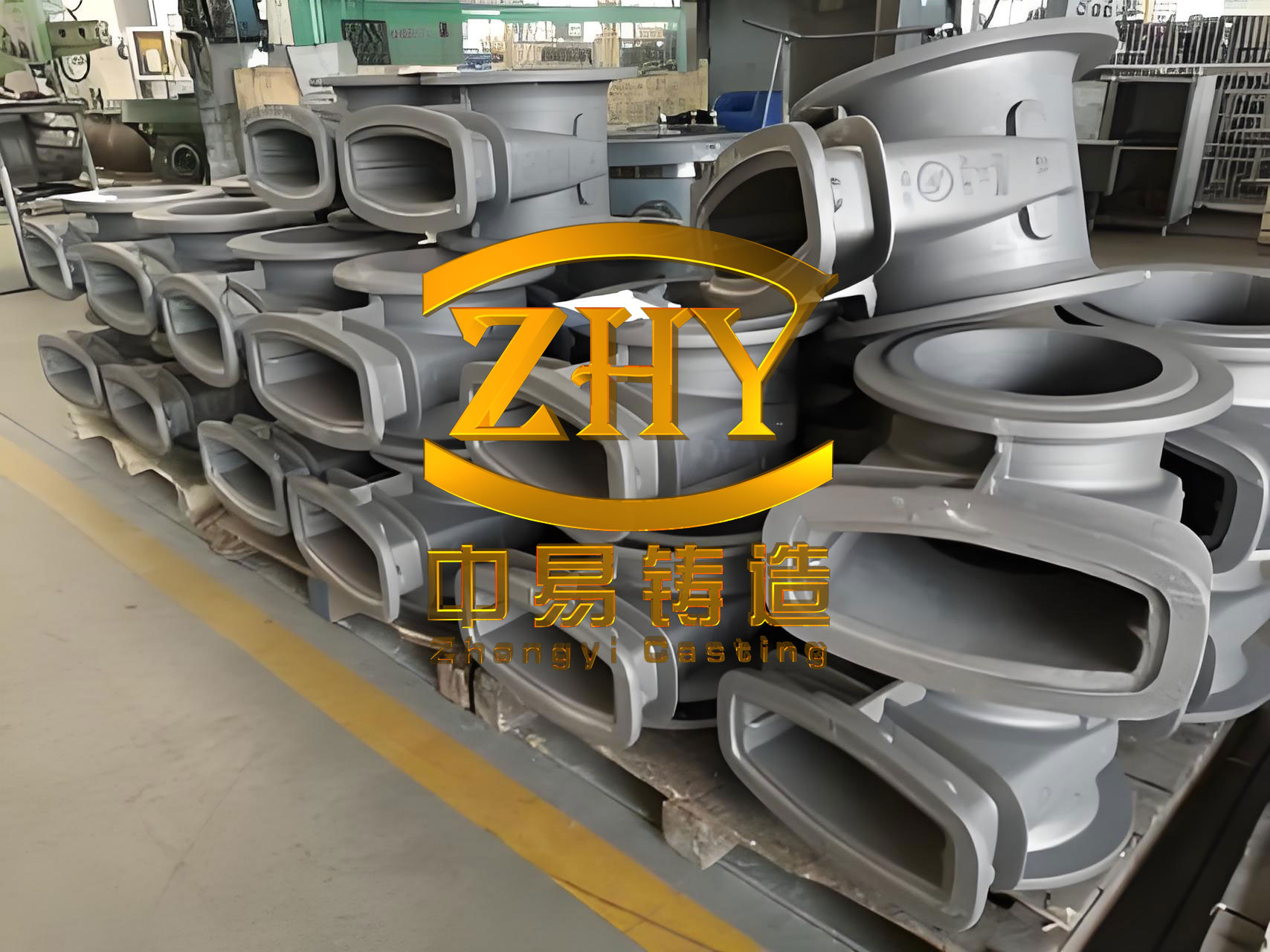
Over many production campaigns, the data consistently shows that this duplex melting approach is exceptionally reliable for grey cast iron. The process capability indices for critical parameters like final carbon content and pouring temperature have shown significant improvement compared to single-furnace melting. Statistical process control charts for the composition of grey cast iron reveal that the combined process keeps key elements within specification limits with a high degree of confidence. For instance, the standard deviation (σ) for carbon content in the final poured grey cast iron was reduced to below 0.05%, a key factor in ensuring consistent mechanical properties across hundreds of thousands of castings.
In conclusion, the practice of duplex melting for producing refrigerator compressor parts from grey cast iron has proven to be a technically sound and economically viable solution. The synergy between the cupola’s efficient melting and the electric furnace’s precise superheating and composition control creates an ideal environment for manufacturing high-integrity grey cast iron castings. The key to success lies in understanding and controlling the dynamic behavior of each furnace unit—particularly the carburization trends in the cupola and the thermal buffering in the electric furnace. By mastering these elements, along with robust inoculation and quality control protocols, a foundry can achieve the high-volume, high-quality production required for modern grey cast iron components. The journey of perfecting this process is continuous, but the foundation provided by duplex melting offers a robust platform for excellence in grey cast iron foundry practice.