
As a researcher focused on precision manufacturing for aerospace applications, I have extensively studied the challenges associated with inner reminders in casting parts, particularly those with complex internal pipelines. These reminders, often referred to as foreign or indigenous objects, pose severe risks in aerospace engines, where zero tolerance is mandatory. In this article, I will delve into the types, causes, and removal difficulties of these reminders in casting parts, and propose a comprehensive, all-flow prevention and control strategy. The goal is to enhance the reliability and safety of casting parts used in critical systems like oil and gas pipelines in engines.
The integration of complex functionalities, such as fuel, air, and hydraulic lines, into single casting parts via investment casting or sand casting processes has increased the vulnerability to inner reminders. These reminders can lead to blockages, wear, and catastrophic failures. My analysis is based on practical experience and theoretical insights, aiming to provide a holistic approach to mitigating these issues in casting parts.
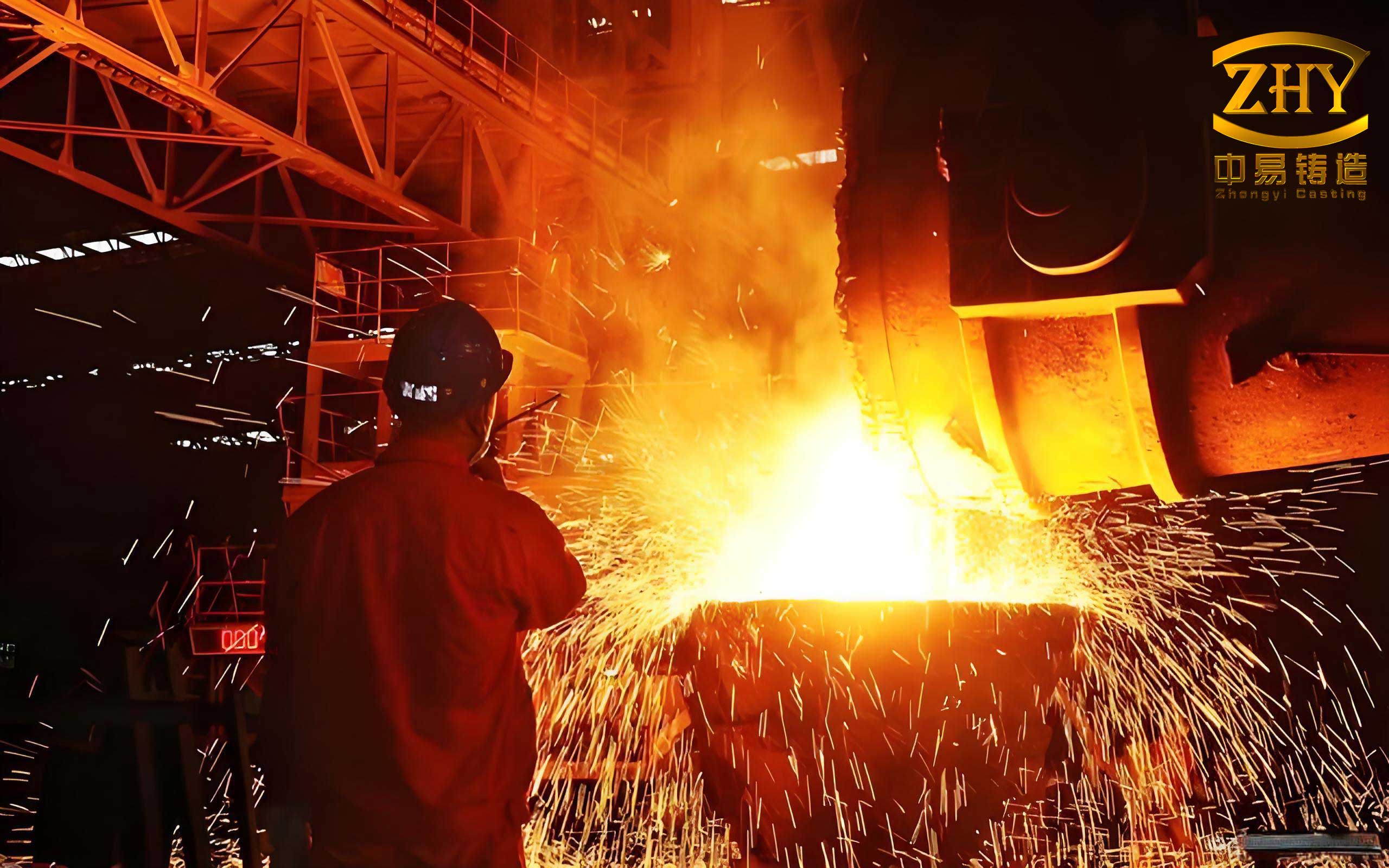
To systematically address inner reminders in casting parts, I first define and categorize them. According to standards, reminders can be endogenous or exogenous, metallic or non-metallic, fixed or mobile. For casting parts with intricate internal geometries, the classification is crucial for targeted interventions. The table below summarizes the primary types of inner reminders in casting parts, based on my observations and industry practices.
| Type of Reminder | Source | Material | Mobility | Formation Process | Removal Difficulty |
|---|---|---|---|---|---|
| Cast Blister | Endogenous | Metallic | Fixed | Pouring | High |
| Flash and Burr | Exogenous | Metallic | Fixed | Pouring | Medium |
| Residual Metal Core | Endogenous | Metallic | Fixed/Mobile | Pouring | High |
| Residual Ceramic Core | Exogenous | Non-Metallic | Fixed | Core Removal | Medium |
| Residual Sand Core | Exogenous | Non-Metallic | Fixed | Core Removal | Medium |
| Residual Sand or Shot | Exogenous | Non-Metallic | Mobile | Blasting/Shot Peening | Medium |
| Machining Debris | Exogenous | Metallic | Mobile | Machining | High |
| Excessive Weld Bead | Endogenous/Exogenous | Metallic | Fixed | Welding | High |
This categorization helps in understanding the diverse nature of reminders in casting parts. Each type stems from specific process interactions, which I will analyze in detail. The complexity of casting parts, especially those with multi-layered walls and narrow pipelines, exacerbates the formation and persistence of these reminders.
The formation of inner reminders in casting parts is a multi-faceted phenomenon. For instance, cast blisters often arise from gas entrapment in cores. During pouring, high-temperature metal interacts with ceramic or sand cores. If the core contains bubbles or moisture, the gas expansion can be modeled using the ideal gas law: $$ P V = n R T $$ where \( P \) is pressure, \( V \) is volume, \( n \) is moles of gas, \( R \) is the gas constant, and \( T \) is temperature. A sudden increase in \( T \) during metal contact can cause \( P \) to rise, leading to core rupture and metal infiltration. This results in metallic blisters on the inner surfaces of casting parts.
Similarly, flash and burr formation in casting parts is linked to core misalignment or fracture. The thermal stress during baking or pouring can cause core cracking, described by the thermal expansion equation: $$ \Delta L = \alpha L \Delta T $$ where \( \Delta L \) is the change in length, \( \alpha \) is the coefficient of thermal expansion, \( L \) is the original length, and \( \Delta T \) is the temperature change. For ceramic cores in investment casting of casting parts, mismatch in \( \alpha \) with the mold material can induce cracks, allowing metal to seep in and form flash.
Residual metal cores in casting parts occur when thin-walled cores with embedded wires (for reinforcement) are improperly manufactured. If the wire is偏心 (eccentric), it may protrude during pouring, becoming embedded in the metal. The probability of this can be expressed as: $$ P_e = f(d, s, t) $$ where \( d \) is core diameter, \( s \) is wire offset, and \( t \) is metal thickness. In casting parts with small-diameter pipelines, this risk is heightened.
Non-metallic reminders, like residual ceramic or sand cores in casting parts, often form in blind holes due to inadequate cleaning access. The cleaning efficiency \( \eta_c \) can be modeled as: $$ \eta_c = \frac{A_a}{A_t} $$ where \( A_a \) is the accessible area and \( A_t \) is the total area. For complex casting parts, \( \eta_c \) may be low, leading to remnants.
Mobile reminders, such as sand particles from blasting, can become fixed through adhesion forces. The adhesion force \( F_a \) in casting parts can be approximated by: $$ F_a = \mu F_n + C $$ where \( \mu \) is the friction coefficient, \( F_n \) is the normal force, and \( C \) is the chemical bonding component from residues like penetrant fluids. During heat treatment of casting parts, \( C \) may increase due to reactions, making removal harder.
Machining debris in casting parts is introduced during cutting or drilling. The debris accumulation rate \( \dot{m} \) can be given by: $$ \dot{m} = k v f $$ where \( k \) is a material constant, \( v \) is cutting speed, and \( f \) is feed rate. Without proper chip control, debris lodges in internal passages of casting parts.
Weld beads in casting parts form during repair or plugging of process holes. The weld pool dynamics can lead to excessive sag, potentially obstructing pipelines. The sag volume \( V_s \) might be estimated as: $$ V_s = \frac{\pi d^2 h}{4} $$ where \( d \) is pipeline diameter and \( h \) is sag height. For small \( d \) in casting parts, even small \( h \) can cause blockages.
Assessing the removal difficulty of reminders in casting parts is essential for prioritization. I propose a difficulty index \( D \) that combines factors like material type, location, and size: $$ D = w_m M + w_l L + w_s S $$ where \( M \) is material factor (e.g., metallic = 1, non-metallic = 0.5), \( L \) is location factor (e.g., blind hole = 1, accessible = 0.2), \( S \) is size factor (e.g., large = 1, small = 0.3), and \( w \) are weights. Based on my analysis, metallic and fixed reminders in casting parts have higher \( D \) values. The table below ranks reminder types by difficulty for casting parts.
| Reminder Type | Material Factor \( M \) | Location Factor \( L \) | Size Factor \( S \) | Difficulty Index \( D \) (Estimated) |
|---|---|---|---|---|
| Cast Blister | 1.0 | 0.8 | 0.7 | 2.5 |
| Flash and Burr | 1.0 | 0.5 | 0.3 | 1.8 |
| Residual Metal Core | 1.0 | 0.9 | 0.6 | 2.5 |
| Residual Ceramic Core | 0.5 | 0.9 | 0.8 | 2.2 |
| Residual Sand Core | 0.5 | 0.9 | 0.8 | 2.2 |
| Residual Sand or Shot | 0.5 | 0.4 | 0.2 | 1.1 |
| Machining Debris | 1.0 | 0.6 | 0.4 | 2.0 |
| Excessive Weld Bead | 1.0 | 0.9 | 0.7 | 2.6 |
This quantitative approach aids in focusing resources on high-risk reminders in casting parts. Generally, metallic reminders like cast blisters and weld beads are most challenging due to their integration with the casting parts matrix.
To effectively prevent and control inner reminders in casting parts, I advocate for an all-flow strategy encompassing design, process optimization, procedural rigor, and management. This holistic view ensures that every stage of production addresses reminder risks. The following sections outline key measures, supported by tables and formulas.
First, in the design phase of casting parts, incorporating adequate process windows and holes is critical. For casting parts with multi-layered walls, as shown in the image, these features facilitate cleaning and inspection. The design should minimize blind cavities. A design efficiency metric \( E_d \) can be defined: $$ E_d = \frac{N_p}{N_c} $$ where \( N_p \) is the number of process holes and \( N_c \) is the number of critical cavities. For optimal casting parts, \( E_d \) should exceed a threshold, say 0.8.
Second, process optimization for casting parts involves core manufacturing. To prevent blisters, core baking must eliminate moisture. The drying rate can be modeled as: $$ \frac{dm}{dt} = -k m $$ where \( m \) is moisture content and \( k \) is a rate constant. Ensuring \( m \to 0 \) before pouring reduces gas generation. For ceramic cores in casting parts, X-ray inspection should detect bubbles, with acceptance criteria based on bubble size distribution: $$ f(b) = \frac{1}{\sigma \sqrt{2\pi}} e^{-\frac{(b – \mu)^2}{2\sigma^2}} $$ where \( b \) is bubble diameter, and \( \mu \) and \( \sigma \) are mean and standard deviation. Rejecting cores with \( b > b_{\text{max}} \) mitigates blister formation in casting parts.
Third, cleaning and inspection procedures for casting parts must be staged. I recommend at least four checkpoints: pre-welding, post-welding, post-machining, and final inspection. Each checkpoint targets specific reminders in casting parts, as summarized below.
| Checkpoint | Target Reminders in Casting Parts | Inspection Method |
|---|---|---|
| Pre-Welding | Cast blisters, flash, residual cores | Visual, borescope |
| Post-Welding | Excessive weld beads | Dimensional checks |
| Post-Machining | Machining debris | Borescope, air blow |
| Final Inspection | Residual sand/shot, mobile reminders | CT scan, borescope |
For casting parts, using advanced techniques like computed tomography (CT) enhances detection. The CT resolution \( R \) should satisfy: $$ R \leq \frac{d_{\text{min}}}{2} $$ where \( d_{\text{min}} \) is the smallest reminder size of concern in casting parts, typically sub-millimeter.
Fourth, cleaning technologies for casting parts need innovation. For fixed metallic reminders, flexible milling tools can be employed. The removal rate \( R_r \) for such tools in casting parts pipelines is: $$ R_r = v_t \cdot A_c $$ where \( v_t \) is tool speed and \( A_c \) is contact area. Developing tools with adaptive \( v_t \) for different pipeline diameters in casting parts improves efficiency. For non-metallic reminders, hydro-blasting or vibration cleaning can be used, with effectiveness \( E_h \) given by: $$ E_h = \frac{F_h}{\tau} $$ where \( F_h \) is hydrodynamic force and \( \tau \) is remnant adhesion strength. Optimizing \( F_h \) through pressure control is key for casting parts.
Fifth, sealing methods during machining of casting parts prevent debris ingress. Options include wax plugs or expandable bolts. The sealing efficiency \( \eta_s \) can be expressed as: $$ \eta_s = 1 – \frac{m_i}{m_t} $$ where \( m_i \) is ingressed debris mass and \( m_t \) is total debris generated. For casting parts, \( \eta_s \) should approach 1 through proper seal selection.
Sixth, institutionalizing reminder control for casting parts via standardized protocols is vital. This includes training, documentation, and continuous improvement. A quality management metric \( Q \) for casting parts production can be: $$ Q = \sum_{i=1}^n w_i C_i $$ where \( C_i \) are compliance scores for procedures targeting reminders, and \( w_i \) are weights based on criticality.
The overall strategy for casting parts is visualized as a cycle: design → process control → cleaning → inspection → feedback. Implementing this all-flow approach reduces reminder incidence in casting parts, enhancing product reliability. My experience confirms that proactive measures at each stage yield significant benefits for complex casting parts.
In conclusion, inner reminders in casting parts with complex pipelines are a critical concern in aerospace applications. Through detailed categorization, cause analysis, and difficulty assessment, I have highlighted the challenges, particularly with metallic and fixed reminders in casting parts. The proposed all-flow prevention and control strategy, integrating design optimizations, process enhancements, rigorous inspections, and management systems, offers a robust framework for mitigating these issues. Future work should focus on advanced cleaning technologies and real-time monitoring for casting parts. By prioritizing reminder control, manufacturers can ensure the integrity and performance of casting parts in demanding environments.
This comprehensive discussion underscores the importance of a systematic approach to reminder management in casting parts. As casting parts become more intricate, continued innovation in prevention and control will be essential for meeting the zero-tolerance standards of industries like aerospace.