
In the pursuit of lightweighting across aerospace, automotive, and industrial sectors, magnesium alloys have emerged as pivotal materials due to their exceptional strength-to-weight ratios. Among these, Mg-Al-based alloys, such as the ZM5 series, are extensively utilized for structural components, particularly shell castings, which often serve as enclosures or housings in mechanical systems. This study focuses on the comprehensive investigation and enhancement of the casting process for a ZM5 alloy gear housing, a representative shell casting, through integrated structural analysis, numerical simulation, and experimental validation. The primary objective is to address typical defects like shrinkage porosity and inclusions, ensuring that the final shell castings meet stringent design specifications for mechanical properties, dimensional accuracy, and internal quality. By leveraging ProCAST software for process simulation and iteratively refining parameters based on actual pouring trials, we developed an optimized methodology that significantly improves the integrity and performance of magnesium alloy shell castings. This work underscores the critical role of simulation-driven design in advancing casting technologies for complex shell structures, offering insights applicable to a broad range of lightweight components.
The gear housing under examination is a quintessential example of shell castings, characterized by its enclosed geometry with varying wall thicknesses. Shell castings, such as this housing, are integral to machinery, providing protection and structural support for internal gears or mechanisms. Their design often involves thin to moderate walls, intricate features like mounting bosses, and reduced-weight cavities, which pose challenges in achieving defect-free castings. For this specific shell casting, the overall dimensions are approximately 160 mm × 100 mm × 80 mm, with wall thicknesses ranging from 15 mm to 25 mm. The geometry includes multiple lightening holes on the bottom surface and several mounting bosses, which are prone to stress concentration and defect formation. A notable feature is a elongated boss on the front face, measuring 20 mm in length and 55 mm in height, identified as a potential hot spot due to its thicker section. This boss, along with other structural elements, necessitates meticulous process design to mitigate defects common in shell castings, such as porosity, shrinkage, and inclusions. The technical requirements mandate a ZM5 alloy composition, T6 heat treatment, and mechanical properties including tensile strength ≥234 MPa, yield strength ≥110 MPa, elongation ≥3%, and hardness ≥66 HB. Dimensional tolerances adhere to GB/T 6414-99 CT11 grade, and internal quality must satisfy Class II standards per GB/T 13820-1992, emphasizing the need for high-integrity shell castings.
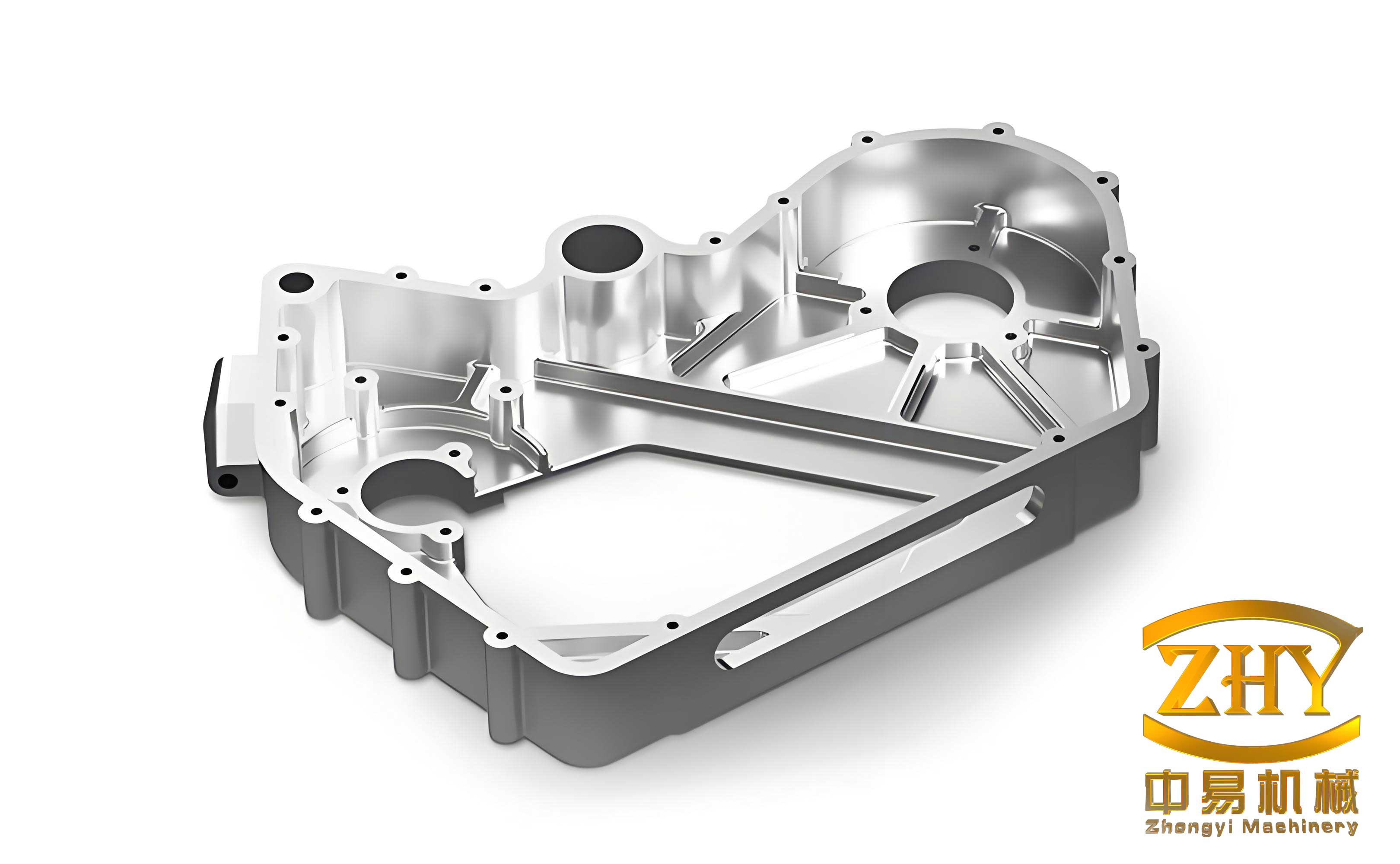
To contextualize the material properties, ZM5 alloy is a Mg-Al-Zn-Mn system with typical composition ranges: 7.5–9.0% Al, 0.2–0.8% Zn, 0.15–0.5% Mn, and balance Mg. Its lightweight nature, with a density around 1.8 g/cm³, makes it ideal for shell castings where weight reduction is critical. The alloy’s solidification behavior is governed by the Mg-Al phase diagram, where the primary α-Mg phase forms, followed by the eutectic β-Mg₁₇Al₁₂ phase at grain boundaries. The mechanical properties are influenced by microstructure, which can be optimized through casting parameters and heat treatment. For shell castings, the thermal gradients during solidification are crucial; improper cooling can lead to defects like microporosity or shrinkage cavities, especially in thicker sections. The governing heat transfer equation during casting is expressed as: $$ \rho C_p \frac{\partial T}{\partial t} = \nabla \cdot (k \nabla T) + L \frac{\partial f_s}{\partial t} $$ where ρ is density, C_p is specific heat, T is temperature, t is time, k is thermal conductivity, L is latent heat, and f_s is solid fraction. This equation highlights the interplay between conduction and latent heat release, critical for predicting solidification patterns in shell castings.
The initial casting process design was based on conventional sand casting techniques, using green sand molds for cost-effectiveness and flexibility. Given the shell casting’s geometry, a two-part mold with cope and drag was employed, with dowel pins for alignment to ensure dimensional accuracy. The pattern included core prints for the lightening holes, but to avoid complexity, the holes were formed directly by the mold rather than separate cores, simplifying production. The casting shrinkage rate was set at 1.3% to account for the alloy’s contraction in sand molds, and machining allowances of 4 mm for the bottom plane and 3 mm for other surfaces were applied to accommodate post-casting processing. The gating system was designed for a two-cavity layout (one mold producing two shell castings) to improve yield. It featured a vertical sprue, a horizontal runner, and two slit gates positioned symmetrically to promote uniform filling. A riser was placed between the gates to enhance feeding for the gate areas. The initial pouring parameters were a temperature of 700°C and a time of 6 seconds, calculated based on the casting weight of 2 kg and the fluidity characteristics of ZM5 alloy. The runner was located in the drag to aid in slag trapping, and a simple filter was initially considered for inclusion control.
| Parameter | Value | Rationale |
|---|---|---|
| Pouring Temperature | 700°C | Balances fluidity and defect minimization for shell castings |
| Pouring Time | 6 s | Based on empirical formulas for magnesium alloy shell castings |
| Number of Gates | 2 slit gates | Ensures symmetric filling of the shell casting cavity |
| Mold Material | Green sand | Cost-effective and suitable for medium-complexity shell castings |
| Shrinkage Allowance | 1.3% | Accounts for contraction in sand molds for shell castings |
Numerical simulation using ProCAST software was conducted to validate the designed process and predict potential defects in the shell castings. The 3D model of the gating system and cavity was meshed with finite elements, and material properties of ZM5 alloy were inputted, including thermal conductivity, specific heat, and latent heat. The simulation accounted for heat transfer between the molten metal and mold, as well as fluid flow during filling. The filling sequence analysis revealed that metal entered through the sprue, flowed into the runner, and then through the gates into the cavity, rising steadily without turbulence. This laminar flow is desirable for shell castings to avoid entrapped gas and oxide formation. The filling time contour plot showed complete mold filling within the designated time, confirming the adequacy of the gating design. However, the solidification simulation indicated a risk zone in the elongated boss area, where cooling was slower due to its higher modulus. The solidification time plot highlighted that this boss was the last to solidify, leading to inadequate feeding and potential shrinkage porosity. The defect prediction module, based on the Niyama criterion, which is expressed as: $$ N_y = \frac{G}{\sqrt{\dot{T}}} $$ where G is temperature gradient and Ṫ is cooling rate, flagged this region for porosity. Values below a threshold (e.g., 1 K¹/²s¹/²mm⁻¹) indicate susceptibility to microporosity, which was observed in the simulation for the boss section. This aligned with typical issues in shell castings where thick sections act as hot spots.
| Simulation Output | Observation | Implication for Shell Castings |
|---|---|---|
| Filling Pattern | Laminar flow, no turbulence | Reduces oxide inclusion risk in shell castings |
| Solidification Sequence | Boss area solidifies last | Highlights hot spot in shell castings |
| Defect Prediction | Shrinkage porosity in boss | Common defect in thick-walled shell castings |
| Temperature Distribution | Gradient from gate to far end | Affects feeding efficiency in shell castings |
Actual pouring trials were performed to corroborate the simulation findings. The molds were prepared using the designed pattern, and ZM5 alloy was melted and poured at 700°C over 6 seconds. The resulting shell castings were inspected after shakeout and cleaning. Two primary defects were identified: first, significant shrinkage porosity in the elongated boss, manifesting as spongy regions with visible cavities; second, a series of small holes with black residues near the gate areas, indicative of slag inclusions. The shrinkage defect confirmed the simulation’s prediction, underscoring the reliability of ProCAST for shell castings. The inclusion defect was attributed to inadequate filtration during pouring, as the initial filter placement was suboptimal, allowing slag particles to enter the cavity. These defects are detrimental to the structural integrity of shell castings, as they can act as stress concentrators and reduce load-bearing capacity. The mechanical performance of such defective shell castings would likely fall below specifications, necessitating process modifications.
Based on the simulation and experimental outcomes, we implemented several optimizations to the casting process for these shell castings. First, the filtration system was upgraded from a simple mesh to a ceramic foam filter with multiple pores, installed within the runner. This filter offers higher inclusion removal efficiency due to its tortuous path, capturing finer slag particles that commonly affect magnesium alloy shell castings. However, it increases flow resistance, which required adjustment of pouring parameters. Second, to address the shrinkage in the boss, localized chills were applied. Specifically, conformal chills made of cast iron were placed against the boss area in the mold cavity to accelerate cooling, thereby promoting directional solidification toward the feeder. Additionally, chills were added at the bottom of the shell casting to ensure bottom-up solidification, a fundamental principle for sound shell castings. Third, the pouring temperature was elevated to 710°C to compensate for the reduced fluidity caused by the ceramic filter, while maintaining the pouring time at 6 seconds to avoid excessive turbulence. These changes aimed to enhance both the internal and external quality of the shell castings.
The optimized process was validated through subsequent pouring trials. The shell castings produced exhibited excellent surface finish with no visible defects like cracks or misruns. Dimensional measurements confirmed conformance to the specified tolerances, with all critical features within the CT11 grade limits. Chemical composition analysis was performed using spectroscopy on samples extracted from the castings, and the results, averaged over multiple points, are summarized in the table below. All elements fall within the required ranges for ZM5 alloy, ensuring the material basis for performance. The consistency in composition is vital for repeatability in producing high-quality shell castings.
| Element | Required Range (wt%) | Measured Average (wt%) | Deviation |
|---|---|---|---|
| Aluminum (Al) | 7.5–9.0 | 7.93 | Within range |
| Zinc (Zn) | 0.2–0.8 | 0.33 | Within range |
| Manganese (Mn) | 0.15–0.5 | 0.28 | Within range |
| Magnesium (Mg) | Balance | Balance | – |
Mechanical properties were evaluated on specimens machined from the shell castings after T6 heat treatment (solution treatment at 415°C for 16 hours, water quenching, and aging at 215°C for 8 hours). Tensile tests were conducted according to standard protocols, and hardness was measured using a Brinell tester. The results, presented in the table below, demonstrate that all properties exceed the minimum requirements, with average tensile strength of 279 MPa, yield strength of 147.7 MPa, elongation of 5.5%, and hardness of 77 HB. These values reflect the effectiveness of the optimized process in producing robust shell castings capable of withstanding operational stresses. The improvement in elongation, in particular, indicates good ductility, which is often compromised by defects in as-cast shell castings.
| Property | Requirement | Sample 1 | Sample 2 | Sample 3 | Average |
|---|---|---|---|---|---|
| Tensile Strength (MPa) | ≥234 | 274 | 292 | 271 | 279 |
| Yield Strength (MPa) | ≥110 | 144 | 154 | 145 | 147.7 |
| Elongation (%) | ≥3 | 5.0 | 6.0 | 5.5 | 5.5 |
| Hardness (HB) | ≥66 | 76 | 73 | 82 | 77 |
Internal quality assessment was performed via X-ray radiography, following non-destructive testing standards for shell castings. The images revealed no major defects such as gas pores, inclusions, or segregation. Only isolated level-1 shrinkage porosity was detected in non-critical areas, which is acceptable for Class II shell castings. This confirms that the use of chills and improved feeding effectively mitigated the shrinkage issues predicted earlier. The absence of inclusions validates the ceramic filter’s efficiency in purifying the molten metal, a crucial aspect for aerospace-grade shell castings where internal cleanliness is paramount. The overall quality metrics affirm that the optimized process yields shell castings meeting all design criteria, highlighting the synergy between simulation and experimentation.
The success of this study hinges on the interplay of various factors inherent to shell castings production. For instance, the thermal modulus of different sections, defined as volume divided by cooling surface area, plays a key role in solidification. For the boss area, the modulus $$ M = \frac{V}{A} $$ was higher, leading to slower cooling. By adding chills, we effectively increased the cooling surface area, reducing the modulus and accelerating solidification. Furthermore, the fluid flow dynamics during filling can be described by the Reynolds number: $$ Re = \frac{\rho v D}{\mu} $$ where v is velocity, D is hydraulic diameter, and μ is viscosity. For shell castings, maintaining Re below 2000 ensures laminar flow, which was achieved through proper gating design. The optimization also considered the effect of pouring temperature on fluidity, often modeled by the empirical relation: $$ L_f = a + b T $$ where L_f is fluidity length, T is temperature, and a, b are constants. Increasing temperature from 700°C to 710°C enhanced fluidity, compensating for filter-induced resistance. These theoretical underpinnings reinforce the practical adjustments made for these shell castings.
In broader context, the findings from this research contribute to the advancing body of knowledge on magnesium alloy shell castings. The integration of ProCAST simulation allows for predictive defect analysis, reducing the need for costly trial-and-error in foundries. For shell castings with complex geometries, such simulations are indispensable in identifying hot spots and optimizing feeding systems. The use of ceramic filters and localized chills represents a scalable approach for improving the quality of shell castings across various industries. Moreover, the mechanical properties achieved demonstrate that ZM5 alloy, when processed correctly, can reliably produce high-performance shell castings for demanding applications. Future work could explore the impact of different alloy modifications, such as rare earth additions, on the microstructure and properties of shell castings, or investigate advanced cooling techniques like conformal cooling channels in molds. Additionally, machine learning algorithms could be coupled with simulation data to further refine process parameters for shell castings, pushing the boundaries of lightweight manufacturing.
In conclusion, this study exemplifies a systematic approach to optimizing the casting process for magnesium alloy shell castings. Through detailed structural analysis, ProCAST numerical simulation, and iterative experimental validation, we identified and rectified defects like shrinkage porosity and inclusions in a ZM5 gear housing. The optimized process, incorporating ceramic filters, localized chills, and adjusted pouring temperature, yielded shell castings with superior chemical composition, mechanical properties, dimensional accuracy, and internal quality, all meeting stringent design standards. The correlation between simulation predictions and actual defects underscores the value of virtual prototyping in foundry practice. As industries continue to prioritize lightweighting, the methodologies developed here can be extended to other shell castings, enhancing their reliability and performance. Ultimately, this work reinforces that with careful process design and validation, magnesium alloy shell castings can achieve excellence, paving the way for their expanded use in critical engineering applications.