
The precise control of casting blank weight holds paramount significance for reducing production costs, enhancing machining efficiency, and ensuring final product quality. In the context of national “Dual Carbon” goals and green manufacturing policies, optimizing material usage in casting production is a critical pathway toward sustainable industry. Historically, research and industrial practice have predominantly focused on controlling final casting quality by optimizing parameters related to the solidification process—such as pouring temperature, mold pressure, and melt composition—or by improving gating system and mold structure design to enhance metal filling. While these approaches are vital for achieving sound castings with minimal internal defects, they often overlook a fundamental, pre-solidification factor: the design-stage determination of the casting blank’s initial volume and mass.
The foundational weight of a casting part is essentially locked in during the pattern and process design phase through the specification of key parameters: machining allowance, draft angle, and process compensation (e.g., feeding pads). Traditional, experience-based methods for setting these parameters present two major bottlenecks. First, there is often a blindness in parameter selection; values are chosen conservatively based on historical practice rather than the specific geometry and requirements of the casting part, leading to systematically overweight blanks and substantial raw material waste. Second, the weight estimation method is lagging. Reliance on 2D drawings and empirical “enlargement factors” is inherently imprecise. A 2D drawing can only specify a nominal allowance value but cannot visualize or calculate the compounded volume addition from the interaction of a draft angle applied over a machining surface. This lack of precise volumetric insight during design exacerbates material redundancy.
Therefore, this study integrates a dual-strategy approach: the systematic optimization of core process parameters guided by standards and casting science, coupled with the precision of modern 3D modeling technology. The methodology involves: 1) Dynamically optimizing machining allowance, draft angle, and process compensation values based on international/national standards and the specific structural characteristics (rigidity, wall thickness, complexity) of the casting part. 2) Employing 3D Computer-Aided Design (CAD) software to construct a parametric model that integrates these parameters, enabling accurate calculation of the final blank volume and mass. To solve the complex problem of calculating the superimposed volume from multiple parameters, a “Allowance-Draft-Compensation Coupled Volume Calculation Model” was developed. This model uses the finished part CAD model as a base, embeds the three parameters as independently adjustable features, and leverages the software’s parametric and geometric kernel to compute the total volume iteratively, providing a digital and precise foundation for weight control.
1. Optimization of Foundry Process Parameters
1.1 Machining Allowance
The machining allowance is the additional material added to casting surfaces that will be machined in subsequent operations. It directly increases the initial volume and weight of the casting blank. An excessively large allowance leads to unnecessary consumption of metal, increased energy for melting, longer machining times, and higher tool wear, thereby elevating overall costs. Standards such as ISO 8062-3 and its Chinese equivalent GB/T 6414-2017 define a series of Machining Allowance Grades (designated from A to K) with corresponding values based on the casting’s nominal size range and the chosen grade.
| Nominal Size Range (mm) | Machining Allowance Grade (RMAG) & Corresponding Value (mm) | ||||
|---|---|---|---|---|---|
| Over | Up to & incl. | Grade F | Grade G | Grade H | Grade J |
| 100 | 160 | 1.5 | 2.2 | 3.0 | 4.0 |
| 160 | 250 | 2.0 | 2.8 | 4.0 | 5.5 |
| 250 | 400 | 2.5 | 3.5 | 5.0 | 7.0 |
| 400 | 630 | 3.0 | 4.0 | 6.0 | 9.0 |
| 630 | 1000 | 3.5 | 5.0 | 7.0 | 10.0 |
A common industrial practice is to conservatively select a higher grade (e.g., H or J) for a given size range. However, the standard does not differentiate based on the structural rigidity of the casting part, which significantly influences distortion during solidification and cooling. Our optimization strategy advocates for a structure-adapted, lower-is-better principle. For a casting part with high structural rigidity and low predicted distortion, a lower grade (e.g., G instead of H) can be confidently selected. The volume and weight savings can be substantial.
Consider a steel casting part (density ~7.2 g/cm³) with a major planar machining face having a projected area (A) of 0.5 m². Its major dimension falls in the 400-630 mm range. If the conventional choice is Grade H (6 mm allowance), switching to Grade G (4 mm) reduces the allowance by 2 mm. The approximate mass saving (Δm) from this single surface is:
$$ \Delta m = \rho \times A \times \Delta RMA = 7200 \, \text{kg/m}^3 \times 0.5 \, \text{m}^2 \times 0.002 \, \text{m} = 7.2 \, \text{kg} $$
For complex casting parts with multiple machined faces, the cumulative saving is significant. The key is to assess the casting part’s geometry: rigid box structures, parts with ample ribbing, or those with symmetric sections can often tolerate a lower allowance grade without compromising machinability.
1.2 Draft Angle
Draft angle is a slight taper applied to pattern surfaces to facilitate its withdrawal from the mold. It is an essential feature without which the casting part could be damaged during mold opening. However, like machining allowance, it adds material. The Chinese standard JB/T 5105-2022 provides guidelines for draft angle values based on pattern material (wood vs. metal/plastic), pattern surface type (external vs. internal), and the height (H) of the vertical wall.
The draft can be applied in different forms: “increasing dimension,” “decreasing dimension,” or “partially increasing/decreasing.” The choice of form is crucial for weight control. For non-machined, non-mating surfaces, applying draft in the “decreasing dimension” direction is preferred as it reduces the wall thickness from the nominal, thereby saving material. This is particularly effective for thicker-walled casting parts (e.g., walls > 16 mm).
| Wall Height H (mm) | Metal/Plastic Pattern | Wood Pattern | |||
|---|---|---|---|---|---|
| Over | Up to & incl. | Draft a (mm) | Angle α (approx.) | Draft a (mm) | Angle α (approx.) |
| — | 10 | 0.4 | 2°20′ | 0.5 | 2°50′ |
| 10 | 40 | 0.8 | 1°10′ | 0.8 | 1°10′ |
| 40 | 100 | 1.0 | 0°35′ | 1.0 | 0°35′ |
| 100 | 160 | 1.2 | 0°25′ | 1.2 | 0°25′ |
| 160 | 250 | 1.6 | 0°22′ | 1.6 | 0°22′ |
| 250 | 400 | 2.4 | 0°20′ | 2.4 | 0°20′ |
A critical interaction exists between draft angle and machining allowance. When a draft is applied to a surface that also has a machining allowance, the volume of metal in the “allowance zone” is not a simple prism but a truncated pyramidal shape. The weight impact of this coupling is difficult to estimate manually but is trivial for 3D CAD software to compute precisely.
Our optimization strategy for draft involves:
1. Form Selection: Use “decrease dimension” draft on non-functional walls.
2. Value Selection: For thick-walled, rigid casting parts, use the lower limit of the draft range for the given height H. Their inherent strength reduces the risk of damage during mold opening with a smaller angle. For thin-walled or delicate casting parts, use the upper limit to ensure safe ejection.
3. Pattern Material: For high-volume production using precise metal or plastic patterns, a draft angle 0°5′ to 0°10′ smaller than that for wood patterns can often be used, leading to direct weight savings of several kilograms per casting part.
Adopting this structured approach can reduce the “draft-induced overweight” by 3-5%.
1.3 Process Compensation (Feeding Pads/Risers)
Process compensation refers to the deliberate addition of extra metal volume, typically in the form of feeding pads (or non-functional bosses) and risers, to promote directional solidification and feed shrinkage porosity in heavy sections (hot spots) of the casting part. Ineffective or excessive compensation is a major source of weight overrun. As noted in prior research, oversized feeding can lead to over 20% more metal in the riser-affected zone than is thermodynamically necessary.
The challenge is to add just enough metal to ensure soundness without waste. Our optimization strategy is:
1. Targeted Application: Use solidification simulation software (CAE) to accurately identify the location and size of hot spots, rather than relying on experience-based “rules of thumb.”
2. Coupled Design with Allowance: The volume of a feeding pad often includes a machined surface. Therefore, its dimensions must be optimized considering the superimposed effect of both the required compensation volume and the machining allowance on that surface. A traditionally designed pad might have a 5 mm compensation height on an 80 mm thick section that already has a 6 mm machining allowance, leading to an total addition of 11 mm. 3D modeling allows for the real-time calculation of this coupled volume, enabling designers to minimize the pad’s footprint and height while still fulfilling its feeding function.
The required compensation volume (V_comp) can be related to the shrinkage volume (V_shrink) of the hot spot and the feeding efficiency (η_feeder):
$$ V_{\text{comp}} \geq \frac{V_{\text{shrink}}}{\eta_{\text{feeder}}} $$
3D modeling helps minimize V_comp by allowing precise shaping of the feeder-pad junction and accurate assessment of the thermal gradient.
2. The Role of 3D Modeling in Precise Weight Calculation
Accurate weight prediction for the casting blank is fundamental to cost control. The traditional method involves calculating the theoretical weight of the finished part from 2D drawings and then multiplying it by an empirical “enlargement factor” (e.g., 1.05 to 1.15) to account for allowances, draft, and compensation. This factor is subjective, often overly conservative, and cannot account for the complex geometric interactions between the parameters, leading to systematically inflated weight estimates.
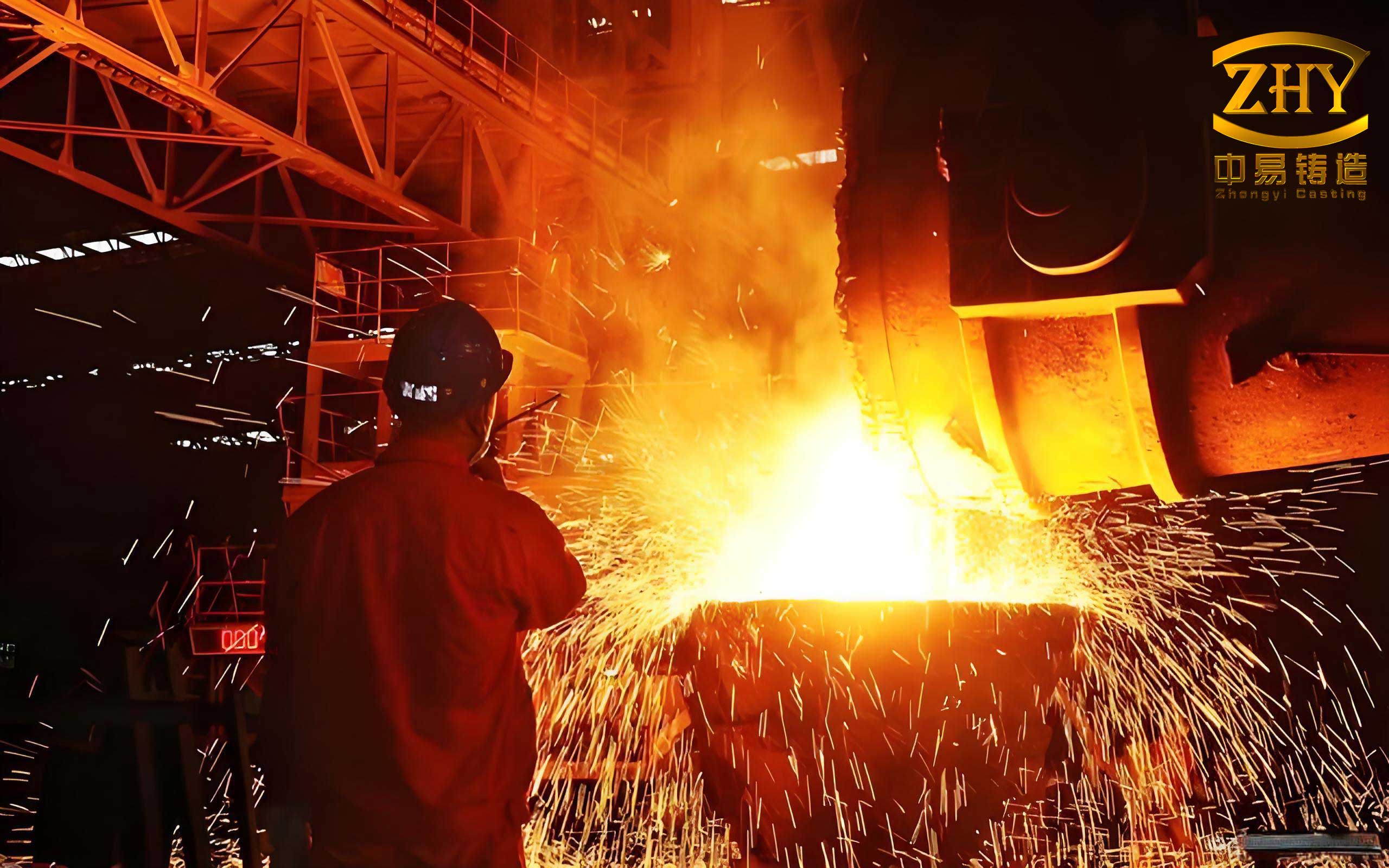
The adoption of 3D CAD software transforms this process. The designer creates a digital model of the finished casting part. Then, using the software’s feature-based modeling tools, the machining allowances are added as offset surfaces, draft angles are applied as taper features, and process compensation volumes are modeled as extrusions. The software’s mass properties tool then calculates the exact volume and, given the material density, the mass of the fully featured casting blank model. This process eliminates guesswork and manual calculation errors.
$$ m_{\text{blank}} = \rho \cdot V_{\text{3D model}} = \rho \cdot \left( V_{\text{part}} + V_{\text{allowance}} + V_{\text{draft\_interaction}} + V_{\text{compensation}} \right) $$
Where \( V_{\text{3D model}} \) is the precise volume computed by the CAD kernel, encapsulating all geometric complexities.
To quantify the benefit, a comparative study was conducted on 15 different casting parts of varying complexity and size. The blank weight for each was calculated using both the traditional empirical factor method and the 3D CAD method. The results are summarized below:
| Casting Part ID | Traditional Method Weight (kg) | 3D CAD Method Weight (kg) | Weight Reduction (kg) | Weight Reduction Rate (%) |
|---|---|---|---|---|
| 1 | 1133 | 1055 | 78 | 6.86 |
| 2 | 2070 | 1984 | 86 | 4.15 |
| 3 | 3704 | 3550 | 154 | 4.16 |
| 4 | 797 | 800 | -3 | -0.38 |
| 5 | 2100 | 2041 | 59 | 2.80 |
| 6 | 528 | 427 | 101 | 19.05 |
| 7 | 710 | 711 | -1 | -0.14 |
| 8 | 1469 | 1300 | 169 | 11.49 |
| 9 | 1744 | 1518 | 226 | 12.95 |
| 10 | 420 | 349 | 71 | 16.90 |
| 11 | 592 | 548 | 44 | 7.46 |
| 12 | 1035 | 986 | 49 | 4.70 |
| 13 | 1091 | 1070 | 21 | 1.89 |
| 14 | 1894 | 1756 | 138 | 7.30 |
| 15 | 1242 | 1093 | 149 | 11.98 |
| Average | ~92 kg | 7.2% | ||
The data clearly demonstrates the effectiveness of the 3D CAD method. The average weight reduction across the sample was 7.2%. Notably, for complex parts like Part ID 6 (a complex shell structure with curved surfaces), the reduction was as high as 19.05%, highlighting 3D modeling’s superior capability in handling geometries where traditional estimation fails. Equally important, for simple, thick-walled parts (ID 4 & 7), the 3D method yielded weights slightly higher than the traditional method, proving its objectivity—it adds only what is geometrically necessary, avoiding the risk of under-estimation which could compromise casting soundness or machinability.
3. Conclusion
Precise control of casting blank weight is a critical lever for enhancing the cost-effectiveness, efficiency, and sustainability of foundry operations. This research demonstrates that moving beyond traditional empirical approaches to a systematic, digital methodology yields substantial benefits. By optimizing the key design-stage parameters—machining allowance, draft angle, and process compensation—based on casting part geometry and standards, significant material savings can be achieved at the source. Crucially, the integration of 3D CAD modeling provides the essential tool to realize this optimization, enabling the exact calculation of the compounded volumetric effects of these parameters that are virtually impossible to assess accurately in 2D.
The findings can be summarized as:
1. Machining allowance should be selected using a “structure-adapted” principle, opting for lower allowance grades (e.g., per GB/T 6414 Grade G over H) for rigid casting parts to directly reduce initial mass.
2. Draft angle application should be strategic, favoring “decrease dimension” forms for non-critical walls and selecting values from standards (JB/T 5105) based on wall height and rigidity, reducing draft-induced overweight by 3-5%.
3. Process compensation must be designed in tandem with machining allowances, with its size minimized through insights from solidification simulation and precise volumetric checks via 3D modeling.
4. 3D modeling is the enabling technology for precise weight control, replacing inaccurate empirical factors with exact geometric calculations. The presented case study showed an average weight reduction of 7.2%, with savings exceeding 19% for complex geometries.
This integrated approach of parameter optimization guided by 3D digital design offers a practical and powerful pathway for foundries to reduce raw material consumption, lower energy usage, and improve the overall precision and economy of casting production for every single casting part they manufacture.