
As someone deeply involved in the evolution of manufacturing technologies, I have witnessed a significant paradigm shift where traditional industries converge with digital innovation. One of the most compelling intersections is the application of 3D printing, or Additive Manufacturing (AM), to the ancient art of foundry work, specifically for producing sand casting parts. The ability to fabricate complex sand molds directly from a digital file is not merely an incremental improvement; it represents a fundamental rethinking of how we approach the production of metal components, from prototyping to low-volume series production.
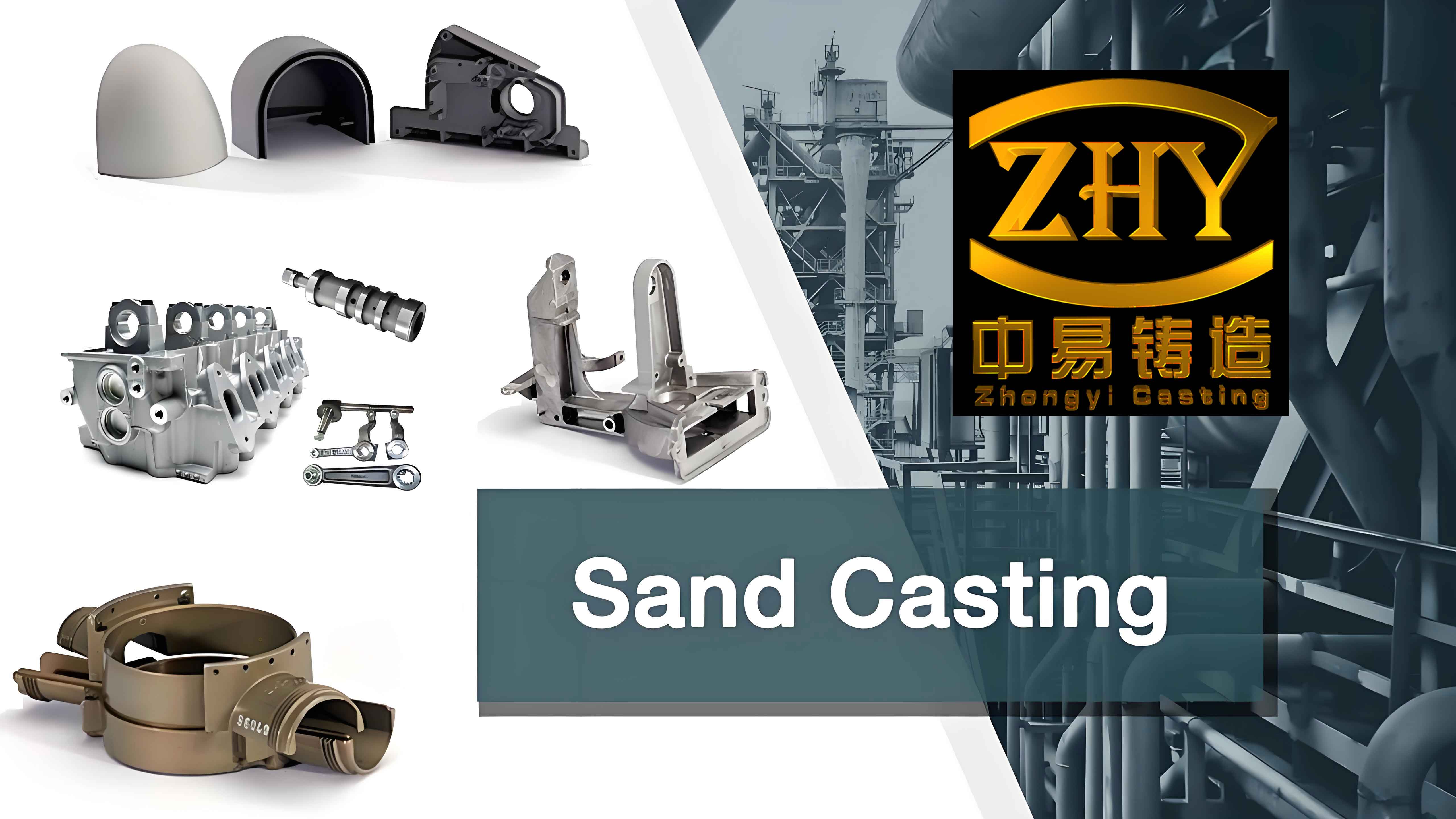
For centuries, sand casting has been the cornerstone of metal forming. The process involves creating a disposable mold from compacted sand and then pouring molten metal into its cavity. Upon solidification, the mold is broken away to reveal the final metal part. The ubiquity of this method is undeniable; a vast majority of metal castings, essential for industries like automotive, aerospace, and heavy machinery, are produced as sand casting parts. However, the traditional route to creating these molds relies heavily on a pattern—a positive model of the final part, typically machined from wood, metal, or plastic. This pattern-based approach is fraught with challenges. It is time-consuming, costly, and imposes severe design limitations. Complex internal geometries, undercuts, or conformal cooling channels are often impossible or prohibitively expensive to achieve with conventional pattern making. This bottleneck stifles innovation and makes small-batch production economically unviable.
The advent of Additive Manufacturing offers a direct solution: bypassing the pattern entirely. This “patternless” approach involves using AM machines to build the sand mold layer by layer directly from a 3D CAD model. This capability decouples geometric complexity from manufacturing cost. Suddenly, producing a mold for a highly intricate engine cylinder head or a topology-optimized structural bracket becomes as straightforward as printing one for a simple block. The lead time for prototype sand casting parts can shrink from weeks to days, dramatically accelerating product development cycles. For legacy industries under pressure to innovate faster and customize products, this integration is not just beneficial—it is becoming essential.
Currently, two dominant AM technologies have proven commercially viable for direct sand mold production: Selective Laser Sintering (SLS) and Binder Jetting, the latter often historically referred to in the context of mold printing as Three-Dimensional Printing (3DP). While both are powder-bed fusion processes, their underlying mechanisms, performance characteristics, and economic models differ significantly. The choice between them dictates the trade-off between precision, speed, and cost for the desired sand casting parts.
Technical Principles and Comparative Analysis
1. Selective Laser Sintering (SLS) for Sand Molds:
This process utilizes a high-power laser as its energy source. The machine spreads a thin layer of sand powder, typically coated with a heat-activated phenolic or furan resin (often called “pre-coated” sand). A galvanometer scanner then directs a focused laser beam across the powder bed, tracing the cross-section of the mold. The laser’s thermal energy locally sinters the resin binder, fusing the sand grains together. The build platform lowers, a new layer of powder is recoated, and the process repeats until the complete mold, including intricate cores, is formed. After a cooldown period, the loose, unfused powder is removed, revealing the solid “green” mold, which is then often post-cured in an oven to achieve final strength.
The core of SLS technology lies in precise thermal management. The entire build chamber is pre-heated to a temperature just below the binder’s melting point to minimize thermal distortion and curl. The laser provides the additional, localized energy to trigger sintering. The key parameters governing this process can be expressed by an energy density model:
$$ E_d = \frac{P}{v \cdot h \cdot s} $$
where \( E_d \) is the applied energy density (\(J/mm^2\)), \( P \) is laser power (W), \( v \) is scan speed (mm/s), \( h \) is hatch spacing (mm), and \( s \) is layer thickness (mm). Optimal \( E_d \) ensures complete binder fusion without excessive thermal stress.
2. Binder Jetting (3DP) for Sand Molds:
This process operates on a principle akin to inkjet printing. A layer of dry, uncoated sand (like silica or zircon) is spread across the build platform. A multi-channel printhead then moves over the powder bed, selectively depositing liquid binder droplets—usually a furan or phenolic resin—onto the areas corresponding to the mold’s cross-section. The binder reacts with a catalyst (either mixed in the powder or in a second jetting step) or simply wicks between sand grains and cures, providing bonding. The platform lowers, and the cycle repeats. Once printing is complete, the mold is fully saturated and cured, often using a gaseous catalyst or thermal post-processing to achieve handling strength for pouring.
The physics here revolves around fluid dynamics and reaction kinetics. The penetration and spreading of the binder droplet are critical for achieving good layer-to-layer bonding and surface finish. A simplified model for the final bond strength (\(\sigma_b\)) can relate to process variables:
$$ \sigma_b \propto C_b \cdot \frac{V_{drop}}{A_{spread}} \cdot f(t_{cure}, T) $$
where \( C_b \) is binder concentration, \( V_{drop} \) is droplet volume, \( A_{spread} \) is the area over which it spreads, and \( f(t_{cure}, T) \) is a function of cure time and temperature.
Comparative Analysis:
The fundamental difference—thermal sintering versus chemical bonding—manifests in distinct performance profiles, making each technology suitable for different segments of sand casting parts production. The table below provides a detailed comparison:
| Parameter | Selective Laser Sintering (SLS) | Binder Jetting (3DP) |
|---|---|---|
| Binding Mechanism | Thermal fusion of pre-coated resin via laser. | Chemical bonding via jetted liquid binder. |
| Print Resolution / Accuracy | High. Laser spot size ~100-200 µm enables fine features and good surface finish. Minimal binder migration. | Moderate to Good. Determined by droplet size (80-120 µm) and powder granularity. Some binder migration can blur edges. |
| Build Speed | Slower. Serial process (point-by-point laser scanning). Speed limited by laser power and scan velocity. | Very Fast. Parallel process (area-wise deposition via multi-nozzle arrays). Linear speed scales with printhead width. |
| Material & Post-Processing | Uses proprietary pre-coated sands. Requires controlled pre-heat (~60-80°C) and lengthy cooldown cycles. Post-curing often necessary. | Uses cheaper, uncoated foundry sands. Minimal thermal management during print. Requires dedicated post-curing (gas/heat). |
| Mold Strength & Casting Quality | High “green” strength. Produces molds with good dimensional stability and low gas generation, suitable for high-integrity ferrous and non-ferrous castings. | Lower initial “green” strength, but final cured strength is sufficient for most alloys. Binder chemistry can affect casting surface finish. |
| Operational Complexity & Cost | High capital cost (laser, scanner). Requires inert gas (N2) atmosphere. Higher energy consumption. Less daily maintenance. | Lower capital cost. Printheads require regular cleaning/maintenance to prevent clogging. Lower energy use during printing. |
| Ideal Application Scope | High-precision, complex prototype molds and cores. Low-volume production of critical, high-value sand casting parts where accuracy is paramount. | Rapid prototyping and short-run production. Excellent for large-volume build chambers to batch produce many molds or very large single molds. |
From this analysis, a clear strategic picture emerges. For fabricating a single, highly intricate prototype core for a new turbocharger housing—where every cooling fin detail is critical—the SLS process is superior. Its point-wise laser control offers the fidelity needed. Conversely, for a foundry needing to produce 50 sets of molds for a pump body as part of a bridge tooling solution before hard tooling is ready, Binder Jetting is unequivocally more productive and economical. The batch capability in a single build job is a decisive advantage for small-lot sand casting parts.
Application Strategies and the Emergence of Hybrid Manufacturing
The practical application of these technologies extends beyond a simple replacement of wooden patterns. It enables a design-for-manufacturing revolution. Engineers can now design optimized sand casting parts with features previously deemed “un-castable.” This includes:
- Consolidated Assemblies: Combining multiple parts into a single casting, reducing weight, assembly time, and potential leak paths.
- Conformal Cooling Channels: Embedding winding cooling passages within mold walls that follow the part contour, drastically reducing solidification time and improving casting quality.
- Topology-Optimized Structures: Creating organic, lightweight shapes that meet structural requirements with minimal material, which can be directly translated into a mold geometry.
However, a nuanced challenge persists: the as-printed surface finish and dimensional accuracy of a sand mold, while good, may not always meet the final requirement for every critical interface. This is where an advanced concept—Hybrid Additive-Subtractive Manufacturing—comes into play. Rather than viewing AM and CNC machining as competitors, we can integrate them synergistically.
The strategy involves using the 3D printer to build the “near-net-shape” sand mold, incorporating all complex internal geometries and contours. Subsequently, a CNC machining head (mounted on the same gantry or on a separate station) performs precise milling operations on specific mold features. For instance, it can machine the parting line surfaces to ensure a perfect seal, create precise locating pin holes, or finish critical core print areas to guarantee accurate core placement. This hybrid approach can be modeled as a cost-optimization function:
$$ C_{total} = C_{AM}(V) + C_{CNC}(A_f) + C_{mat} $$
Minimize: \( C_{total} \)
Subject to: \( T_{cycle} \leq T_{max} \), \( \text{Tolerance}_{final} \leq \text{Req.} \)
Where \( C_{AM} \) is the additive cost (a function of mold volume \( V \)), \( C_{CNC} \) is the subtractive cost (a function of finish-machined area \( A_f \)), and \( C_{mat} \) is material cost. The goal is to find the optimal division of labor between AM and CNC to meet tolerance (\( \text{Tolerance}_{final} \)) and lead-time (\( T_{cycle} \)) requirements at the lowest total cost (\( C_{total} \)). This hybrid paradigm leverages the shape complexity freedom of AM while guaranteeing the precision and surface integrity of machining, resulting in superior final sand casting parts.
Future Trajectories and Concluding Perspective
The evolution of AM for sand casting is far from static. Current research and development are pushing boundaries in several key areas:
- Material Science: Developing new sand-binder systems for both SLS and Binder Jetting that offer higher strength, better collapsibility (for easier shakeout), and lower gas evolution to minimize casting defects.
- Process Monitoring & AI: Integrating in-situ sensors (thermal cameras, optical coherence tomography) to monitor the printing process in real-time. Machine learning algorithms can predict defects and automatically adjust parameters like laser power or binder saturation, pushing the quality and repeatability of printed molds closer to Six Sigma levels.
- Scale and Integration: The trend towards larger build volumes continues, enabling the direct production of molds for massive sand casting parts like ship propellers or wind turbine hubs. Furthermore, tighter integration of the print-cast-clean workflow into fully automated, digital foundry cells is the logical endpoint.
In my assessment, the fusion of 3D printing with sand casting is a quintessential example of digital technology revitalizing a foundational industry. It democratizes access to complex casting, allowing small and medium enterprises to compete with large foundries on innovation and agility. The choice between SLS and Binder Jetting is not about which technology is universally better, but about strategically matching the technology’s strengths—be it the pinpoint accuracy of a laser or the remarkable speed of an inkjet array—to the specific economic and geometric requirements of the target sand casting parts. As these technologies mature, hybrid strategies will become standard, and the very design rules for castings will be rewritten. The future of foundry lies not in abandoning sand, but in digitizing it, layer by meticulously crafted layer.