
In the high-volume production of complex, thin-walled castings like engine cylinder blocks, the core assembly and setting jig is not merely a tool; it is a critical linchpin ensuring dimensional fidelity and production rhythm. My extensive observation and practical involvement in the design and application of these jigs for sand casting parts reveal a landscape where functionality often overshadows elegance, and conventional designs persist despite presenting clear opportunities for optimization. This discourse consolidates years of exploration into a structured philosophy for optimizing these essential pieces of tooling, focusing on structural selection, ergonomics, mechanical design, and an often-overlooked aspect: aesthetic and functional harmony.
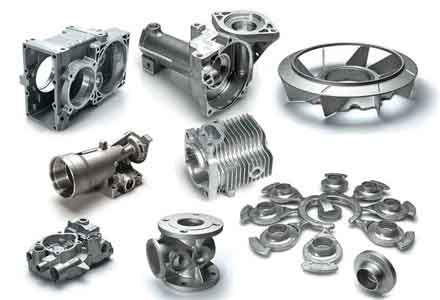
The complexity inherent in producing high-integrity sand casting parts such as cylinder blocks cannot be overstated. The jig must precisely locate and hold an assembly of multiple cores—forming internal water jackets, oil galleries, and cylinder bores—before transferring this delicate package into the mold cavity without misalignment. Any error introduced here manifests as a casting defect, scrap, or compromised performance in the final component. Therefore, the jig’s design directly impacts quality, cost, and production rate in the sand casting process.
1. The Foundational Choice: Single-Tier vs. Multi-Tier Jig Structure
The primary classification of jigs for sand casting parts assembly lies in their balance and support structure. The two prevalent archetypes are the multi-tier (often two or three layers) and the single-tier structure. A comparative analysis, informed by hands-on application, highlights a decisive advantage for the optimized single-tier design.
1.1 The Multi-Tier Structure: An Illusion of Robustness
Multi-tier jigs employ a stacked frame system, typically with an upper and lower frame connected by guide pillars and bushings. The perceived benefit is enhanced stability during the vertical descent of the jig and core package from the assembly station into the mold. The lower frame, which directly interfaces with the core assembly, is often made from lightweight aluminum alloys to mitigate overall mass.
However, this structure embodies significant drawbacks:
- Excessive Complexity and Cost: The design and fabrication of multiple interlocking frames, precise guiding systems, and associated hardware escalate engineering effort and manufacturing cost exponentially compared to simpler alternatives.
- Increased Mass and Energy Consumption: Even with lightweight materials, the inherent complexity adds bulk. This translates to higher inertial forces, increased energy consumption for any automated handling, and greater operator fatigue in manual or semi-automated settings.
- Limited Accessibility and Maintenance: The nested frames can obstruct access to clamping mechanisms and core locators, complicating setup, maintenance, and core cleaning.
1.2 The Optimized Single-Tier Structure: Elegance in Simplicity
The single-tier structure, in contrast, features a monolithic, open-frame body. Its superiority becomes evident when paired with a key kinematic element: symmetrically placed balance (or equalizer) bars. These bars, typically three or four in number, are pivotally connected to the main jig body and to the movable core-gripping plates. Their function is governed by a simple principle of parallel linkage, ensuring the gripping plates descend absolutely vertically and in unison, regardless of where the lifting force is applied.
The governing principle for the force distribution on the balance bars can be expressed to ensure even loading. If we consider a jig lifted from a central point, for ‘n’ balance bars, the ideal force $$F_{bar}$$ on each bar should approach:
$$F_{bar} = \frac{W_{jig} + W_{cores}}{n}$$
where \(W_{jig}\) is the jig’s weight and \(W_{cores}\) is the weight of the core assembly. The linkage geometry ensures this load is distributed, preventing binding and guaranteeing a perfectly level descent.
The advantages are compelling:
- Reduced Mass and Cost: Eliminating extra frames directly cuts weight and material/ machining costs. A well-designed single-tier steel frame can be lighter than a multi-tier aluminum counterpart.
- Superior Accessibility: The open structure provides unobstructed access for core loading, cleaning, and maintenance of all internal components.
- Inherent Stability: With the correct implementation of balance bars, the stability during descent matches or exceeds that of multi-tier designs. This is a critical insight often missed by proponents of the more complex multi-tier approach.
The following table summarizes the decisive comparison:
| Feature | Multi-Tier Structure | Optimized Single-Tier Structure |
|---|---|---|
| Structural Complexity | High (multiple frames, guides) | Low (monolithic frame) |
| Manufacturing Cost | Very High | Moderate to Low |
| Jig Weight | High (even with Al alloys) | Lower (efficient steel design) |
| Operational Stability | Good (by design principle) | Excellent (with balance bars) |
| Accessibility & Maintenance | Poor | Excellent |
| Adaptability for similar sand casting parts | Low (fixed geometry) | High (easier to modify) |
2. Optimizing the Jig Body: Where Engineering Meets Aesthetics
The jig body is the backbone. Its design should transcend mere functionality, embracing principles that enhance durability, usability, and visual coherence. For tooling that represents a significant capital investment and is central to daily operations, its form should communicate precision and care.
2.1 The Pursuit of Functional Elegance: Surface Finish and Structure
Traditionally, jig bodies were cast with external reinforcing ribs, leaving a rough, “as-cast” finish on all visible surfaces—a testament to a “brute force” design philosophy. The optimized approach inverts this: adopt an “internal ribbing, external finish” strategy. All exterior surfaces visible to the operator are machined to a smooth finish. This not only conveys quality and precision but also facilitates cleaning, reduces areas for sand accumulation, and improves safety by eliminating sharp edges. The required rigidity is achieved through a strategic network of internal ribs within a hollow box-section frame.
2.2 The Golden Ratio (Φ) as a Design Guideline
Harmonious proportions are not accidental. Intentionally applying the Golden Ratio (Φ ≈ 1.618) to key dimensions creates a subconscious perception of balance and correctness. This principle can guide:
- Frame Proportions: The overall length (L) and width (W) of the jig body can relate as \(W \approx L / \Phi\).
- Component Placement: The longitudinal positions of the balance bars or major clamps can be located at divisions of the length defined by Φ.
- Access Opening Proportions: The size and spacing of lightening windows in the frame sides can have their height and width related by Φ.
While not a rigid rule, using Φ as a guideline prevents awkward, disproportionate dimensions, resulting in a tool that looks and feels professionally conceived. This attention to detail elevates foundry tooling from purely utilitarian to professionally crafted equipment.
2.3 Rationalizing Weight and Stiffness: The Wall Thickness Equation
A common overcompensation for stiffness is the specification of excessively thick wall sections, often 25-35 mm in cast bodies. This adds dead weight, increases casting difficulties and cost, and wastes material. Structural analysis and practical experience show that for jig bodies handling typical sand casting parts core assemblies, a wall thickness (t) of 12-15 mm is entirely sufficient when combined with a rational internal rib layout.
The primary stiffness (resistance to bending) of a plate section is proportional to the cube of its thickness. However, adding a reinforcing rib is far more efficient. The moment of inertia (I) for a rectangular section is:
$$I = \frac{b t^3}{12}$$
where \(b\) is width. Doubling thickness increases weight linearly but stiffness by a factor of 8 (\(2^3\)). Adding a strategically placed rib, however, can increase I dramatically with a minimal weight addition. The goal is to maximize the ratio of stiffness to mass. An optimized ribbed design with t=14 mm will outperform a crude solid design with t=30 mm in this metric, leading to a lighter, more agile jig for the sand casting line.
3. Clamping Mechanism: Precision, Power, and Adaptability
The mechanism that grips the core assembly is the jig’s “hand.” Its reliability and precision are non-negotiable. Mechanisms fall into two main categories based on the gripping plate’s motion: Rotary and Linear Translation.
3.1 Rotary Clamping Mechanisms
Powered almost exclusively by pneumatic cylinders, these mechanisms use linkages to convert the cylinder’s linear motion into a rotating arc of the clamping fingers or plates. Configurations vary from multiple small cylinders (one per side) to a single large central cylinder driving all clamps via a complex linkage.
Advantages: Suited for high-speed, fully automated lines due to fast actuation and easy integration into programmable sequences.
Disadvantages:
- Poor Adaptability: The clamping arc describes a fixed path. The jig is therefore dedicated to a single core package geometry, offering no flexibility for similar but differently sized sand casting parts.
- Complexity: Linkage design is critical to avoid over-constraint or binding. Tolerance stack-ups can affect precision.
- Point-Loading: Often results in concentrated stress on the core, requiring careful placement on robust core sections.
3.2 Linear Translation Clamping Mechanisms
This design moves clamping plates in a straight line, perpendicular to the core package faces. It can be powered by pneumatics (for automation) or manually via hand wheels and lead screws.
Advantages:
- Superior Adaptability: The linear travel can often accommodate a range of core package sizes by simply adjusting end stops or limit switches. This is invaluable for jobbing foundries or families of similar sand casting parts.
- Even, Controllable Pressure: Applies a more uniform clamping force across the core face, reducing the risk of core damage.
- Design Simplicity: Linear guides and cylinders or screw drives are simpler to design, manufacture, and maintain than precise rotary linkages.
- Manual Option: The manual version, using screw jacks, provides excellent control, independence from air supply, and is perfectly suited for lower-volume production or maintenance of critical sand casting parts.
The required clamping force \(F_c\) can be estimated by considering the weight of the core package and a safety factor (k) for acceleration/deceleration during transfer:
$$F_c = k \cdot W_{cores} \cdot \mu^{-1}$$
where \(\mu\) is the coefficient of friction between the clamp plate and the core. A typical safety factor k ranges from 2 to 4.
The following table helps in selecting the appropriate mechanism:
| Criterion | Pneumatic Rotary | Pneumatic Linear | Manual Linear |
|---|---|---|---|
| Cycle Speed | Very High | High | Moderate to Low |
| Adaptability/Flexibility | Very Low | High | Very High |
| Operational Complexity | High | Moderate | Low |
| Initial Cost | High | Moderate | Low |
| Running Cost | Moderate (Air) | Moderate (Air) | None |
| Ideal Production Context | Dedicated, high-volume automated line for a single part. | High/mixed-volume automated line for similar parts. | Low-volume, jobbing, or prototype work for sand casting parts. |
4. Core Positioning Strategy: The Philosophy of Constraint
While the clamps provide the holding force, the positioning system defines the core package’s location within the jig, and ultimately, in the mold. The common but flawed practice is to “over-constrain” the assembly by placing rigid locators on all four lateral sides. This can lead to stress, binding, and difficulty in loading the cores if any slight dimensional variation exists in the core shapes.
The optimized philosophy is 3-2-1 Locating Principle, adapted for core jigs. For a core package, the critical degrees of freedom to restrain are:
- Vertical (Z-axis) Position: This is non-negotiable. Fixed, machined pads must support the core package from underneath, defining its height relative to the jig’s lifting points. This ensures the cores are at the correct elevation to enter the mold cavity cleanly. Without this, operators must “tap down” the assembly, introducing uncertainty and potential for misalignment in the final sand casting parts.
- In-Plane (X & Y) Location: Rather than rigidly clamping on all sides, the optimal method is to use the clamping force itself for final location. The jig should have:
- Fixed Locators (Pins/Pads) on one long side and one short side: These positively locate the core package against two perpendicular datum faces.
- Floating or Spring-Loaded Locators on the opposite sides: These allow for minor core size variations and thermal expansion, preventing stress buildup. The main clamping cylinders then actuate from these “floating” sides, pushing the core package firmly against the fixed datums.
This strategy ensures repeatable, stress-free positioning. The core package is kinematically constrained, not forcibly wedged. The position of the core’s center of gravity relative to the jig’s lift points should also be checked to minimize tipping moments, ensuring stability for the delicate sand casting cores during handling.
5. The Designer’s Mindset: Uniting the Technical and the Artistic
Designing tooling for sand casting parts, especially critical jigs, demands a dual perspective. The designer must be a meticulous engineer, understanding forces, tolerances, and process requirements. Simultaneously, they must possess the sensibility of an industrial artist or architect, where proportion, finish, and user interaction are paramount.
A successful design is one that operators find intuitive, reliable, and even “pleasing” to use—a tool that respects their role in making quality sand casting parts. It involves challenging inherited norms: questioning why a jig has always been made heavy, multi-tiered, or with complex linkages. It embodies the ethos of continuous improvement, where today’s design actively seeks to surpass yesterday’s solution in elegance, efficiency, and cost-effectiveness. This mindset transforms a mundane piece of factory equipment into a catalyst for quality, productivity, and pride in the craft of producing complex sand casting parts.
6. Conclusion: Principles for Optimal Jig Design
The optimization of core assembly and setting jigs is a systematic process that touches every aspect of the tool. The convergence of these principles results in equipment that is not just fit for purpose, but excels in its role. To summarize the key tenets for designing jigs for critical sand casting parts like cylinder blocks:
- Prioritize the Single-Tier Structure with integrated balance bars for optimal stability, weight, and accessibility.
- Design the Jig Body Intelligently: Use internal ribbing with finished external surfaces, rationalize wall thickness (12-15mm), and employ proportional guidelines like the Golden Ratio for harmonious design.
- Select the Clamping Mechanism Based on Need: Favor linear translation mechanisms (pneumatic or manual) for their adaptability, simplicity, and even force application, unless absolutely constrained by a dedicated, ultra-high-speed automated line.
- Implement a Kinematic (3-2-1) Positioning Strategy: Use fixed datums and floating/clamping opposite sides to locate the core package accurately and without stress, with absolute emphasis on defining the vertical height.
- Embrace Holistic Design: Strive for a solution that is simultaneously technically robust, economically sound, ergonomically friendly, and aesthetically coherent.
By adhering to this integrated philosophy, the design and manufacture of core jigs move from a routine engineering task to a strategic activity that significantly enhances the reliability, quality, and efficiency of producing complex sand casting parts. The optimized jig becomes a silent, reliable partner on the foundry floor, ensuring that the intricate geometry of cores translates flawlessly into the final, high-integrity casting.