
In my extensive experience with the lost foam casting process, I have observed that while this method offers significant advantages such as reduced machining allowances, high dimensional accuracy, and environmental benefits, the quality of iron castings can be profoundly affected by raw materials and process factors. The lost foam casting process involves the use of a foam pattern that vaporizes upon contact with molten metal, and the subsequent interactions between the decomposed gases, the sand mold, and the metal dictate the final microstructure. This article systematically explores how variations in raw materials like foam patterns and base sand, along with key process parameters such as vacuum pressure, pouring temperature, and cooling conditions, influence the graphite morphology and matrix structure in gray iron, ductile iron, and compacted graphite iron castings. Through detailed analysis, I aim to provide insights and practical recommendations to mitigate adverse effects, ensuring high-quality production in the lost foam casting process.
The lost foam casting process, often referred to as evaporative pattern casting, is a precision forming technique where a foam pattern is embedded in unbonded sand and then replaced by molten metal. The process begins with the creation of a foam model, typically made from expandable polystyrene (EPS) or copolymer materials like EPMMA. During pouring, the foam undergoes thermal decomposition, generating gases and residual carbon that interact with the molten iron. This interaction, combined with the thermal properties of the sand and the applied vacuum, creates a unique set of conditions that can either promote or hinder desirable microstructural features. In my investigations, I have found that controlling these factors is critical for achieving consistent mechanical properties and minimizing defects such as carbides, irregular graphite forms, and pearlite deficiencies.
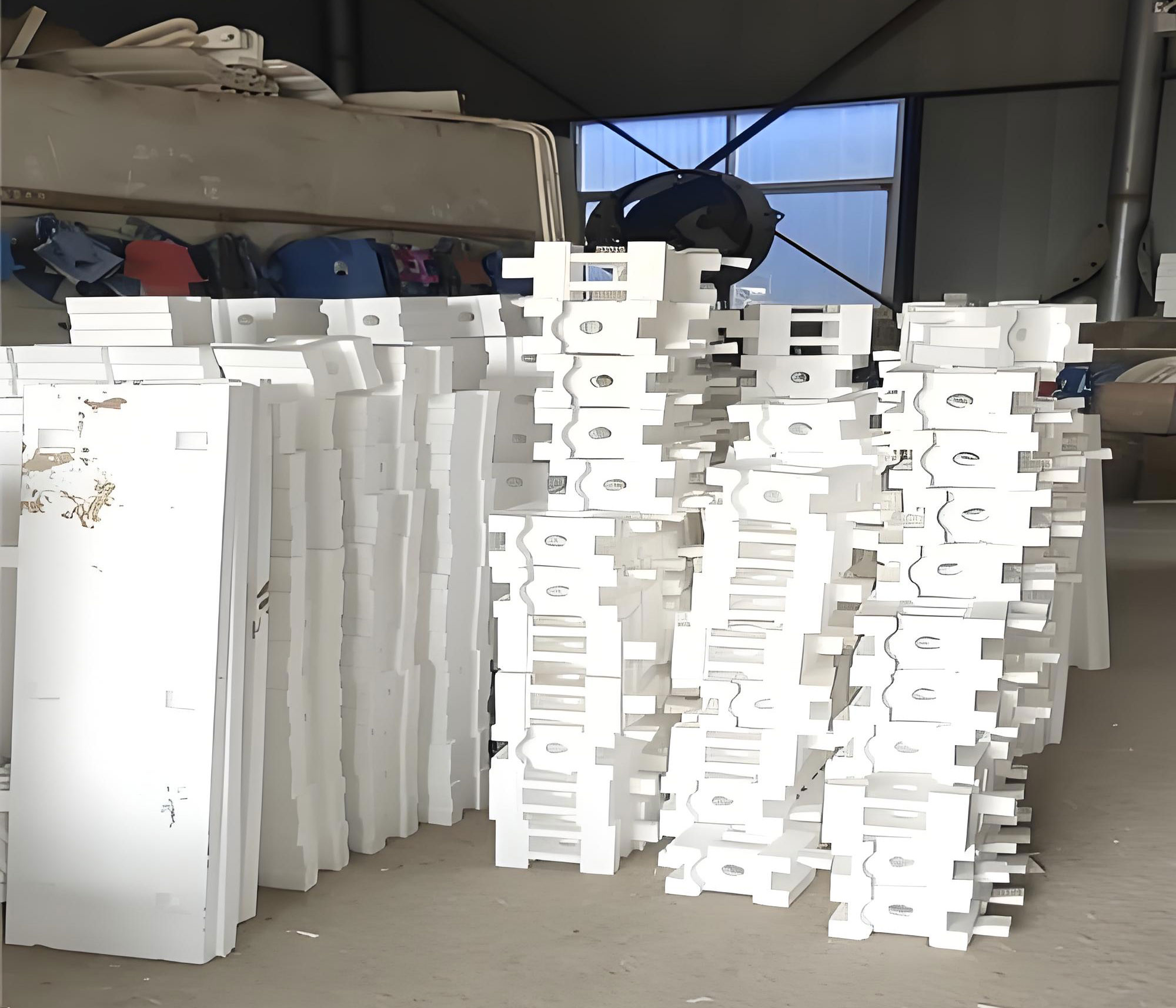
The decomposition of foam patterns is a fundamental aspect of the lost foam casting process that directly impacts metal chemistry and solidification behavior. For EPS, the primary reaction can be represented as:
$$ \text{C}_6\text{H}_5\cdot\text{C}_2\text{H}_3 \rightarrow 9\text{C} + 4\text{H}_2 \uparrow $$
This indicates that each mole of EPS produces 9 moles of carbon and 4 moles of hydrogen gas. Similarly, for EPMMA copolymer, the reaction is:
$$ \text{C}_5\text{H}_8\text{O}_2 \rightarrow 3\text{C} + 2\text{CO} \uparrow + 4\text{H}_2 \uparrow $$
These reactions introduce free carbon and hydrogen into the mold cavity, which can lead to phenomena such as carbon pickup and hydrogen dissolution in the iron melt. In the lost foam casting process, the amount of carbon added can be estimated using the formula:
$$ \Delta C = \frac{m_{\text{foam}} \times 9 \times M_C}{V_{\text{metal}} \times \rho} $$
where \(\Delta C\) is the increase in carbon content (wt%), \(m_{\text{foam}}\) is the mass of foam decomposed, \(M_C\) is the atomic weight of carbon, \(V_{\text{metal}}\) is the volume of molten metal, and \(\rho\) is the density of iron. This carbon enrichment is particularly problematic in high-carbon-equivalent irons, as it raises the risk of graphite flotation and irregular graphite growth. Moreover, hydrogen gas can dissolve in the molten iron, especially under reduced pressure, leading to defects like “inverse chill” or carbide formation in thin sections. The solubility of hydrogen in iron, \(S_{\text{H}}\), as a function of temperature \(T\) (in Kelvin) and partial pressure \(P_{\text{H}_2}\) (in atm) can be approximated by Sieverts’ law:
$$ S_{\text{H}} = k \sqrt{P_{\text{H}_2}} \exp\left(-\frac{\Delta H}{RT}\right) $$
where \(k\) is a constant, \(\Delta H\) is the heat of dissolution, and \(R\) is the gas constant. In the lost foam casting process, the vacuum level controls \(P_{\text{H}_2}\), thereby influencing hydrogen pickup and subsequent microstructure.
The base sand used in the lost foam casting process also plays a crucial role in heat extraction and cooling rates. Silica sand, commonly employed due to its low cost, has relatively poor thermal conductivity, which can lead to prolonged solidification times in certain sections of the casting. The cooling rate \(\dot{T}\) in a sand mold can be modeled using Fourier’s law of heat conduction:
$$ \dot{T} = \frac{k_s}{\rho_m C_p} \nabla^2 T $$
where \(k_s\) is the thermal conductivity of the sand, \(\rho_m\) is the density of the metal, \(C_p\) is its specific heat, and \(\nabla^2 T\) is the temperature gradient. In practice, the overheating of sand after multiple pours in the lost foam casting process reduces its cooling capacity, exacerbating microstructural inhomogeneities. Alternative sands like zirconia or ceramic beads offer higher thermal conductivity, but their cost may be prohibitive for large-scale applications.
Effects on Gray Iron Castings in the Lost Foam Casting Process
In gray iron production via the lost foam casting process, the formation of graphite flakes is sensitive to both chemical composition and cooling conditions. Ideally, type A graphite with random orientation is desired for optimal mechanical properties. However, my observations indicate that thin-walled castings (less than 5 kg per piece) often exhibit type D or E undercooled graphite, especially when vacuum pressure is maintained for extended periods. This occurs because the negative pressure and associated gas evolution increase the undercooling tendency of the iron melt. The undercooling degree \(\Delta T\) can be expressed as:
$$ \Delta T = T_{\text{liquidus}} – T_{\text{nucleation}} $$
where \(T_{\text{liquidus}}\) is the liquidus temperature of the iron and \(T_{\text{nucleation}}\) is the actual temperature at which graphite nucleation begins. In the lost foam casting process, factors like high pouring temperature (often above 1550°C) and hydrogen dissolution lower \(T_{\text{nucleation}}\), raising \(\Delta T\) and promoting undercooled graphite forms. To counteract this, I recommend reducing pouring temperatures where possible, employing effective inoculants such as ferrosilicon with strontium or barium, and optimizing vacuum parameters. The following table summarizes the relationship between process variables and graphite morphology in gray iron produced by the lost foam casting process:
| Process Factor | Typical Range | Effect on Graphite Morphology | Recommended Adjustment |
|---|---|---|---|
| Pouring Temperature | 1550–1610°C | Promotes undercooling; increases risk of D/E graphite | Lower to 1500–1550°C if feasible |
| Vacuum Pressure | 0.04–0.06 MPa | Prolonged holding leads to higher undercooling | Reduce holding time for thin sections |
| Foam Type (EPS) | EPS or copolymer | EPS adds carbon, affecting graphite size and distribution | Use copolymer for better control |
| Inoculation Practice | Late stream inoculation | Improves graphite nucleation, favors type A | Increase inoculant amount or use potent alloys |
Another critical issue in the lost foam casting process is the occurrence of carbides, often termed “inverse chill,” in thin sections of gray iron castings. This defect manifests as a white, hard layer rich in cementite (Fe3C) at the edges of the casting, contrary to the expected chill at the center. My analysis attributes this to hydrogen absorption from foam decomposition, combined with high superheat temperatures that degrade the metallurgical quality of the melt. The formation of cementite can be described by the reaction:
$$ 3\text{Fe} + \text{C} \rightarrow \text{Fe}_3\text{C} $$
with the driving force being the undercooling and presence of hydrogen, which stabilizes the carbide phase. In the lost foam casting process, improving coating permeability and maintaining consistent vacuum during and after pouring help evacuate hydrogen quickly, reducing carbide risk. Additionally, enhancing inoculation and using carbon-rich additives like silicon carbide can improve graphite nucleation, counteracting the chill tendency.
Pearlite content uniformity is also a concern in gray iron castings made via the lost foam casting process. I have measured variations of up to 28% in pearlite percentage between different locations of the same casting, even with similar wall thicknesses. This inconsistency stems from localized overheating due to uneven sand cooling and non-uniform gas evacuation. The pearlite fraction \(f_P\) can be related to cooling rate \(\dot{T}\) and alloy content (e.g., copper, tin) through empirical equations like:
$$ f_P = 1 – \exp\left(-k_P \cdot [\text{Cu}] \cdot \dot{T}^{-1/2}\right) $$
where \(k_P\) is a constant and [Cu] is the copper concentration. In practice, ensuring even sand compaction, optimizing gating systems to avoid hot spots, and adding pearlite-stabilizing elements can mitigate these variations. The table below illustrates typical microstructure variations in gray iron castings from the lost foam casting process:
| Casting ID | Wall Thickness (mm) | Graphite Type | Pearlite (%) | Carbides (%) |
|---|---|---|---|---|
| G-1 (thin) | 7.5 | A + D/E | 70–98 | 0–10 |
| G-2 (thick) | 16.0 | A | 98 | 0 |
| G-3 (medium) | 8.0 | A | 80–98 | 0–1 |
Effects on Ductile Iron Castings in the Lost Foam Casting Process
Ductile iron, or nodular iron, is particularly sensitive to disruptions in the lost foam casting process due to its reliance on precise spheroidization of graphite. My comparative studies between lost foam casting and traditional sand casting methods (e.g., resin sand or green sand) reveal that lost foam castings often exhibit lower spheroidization grades, typically averaging 1–2 levels worse. For instance, while resin sand castings consistently achieve grade 2 graphite (according to ISO 945 standards), lost foam counterparts frequently show grades 3 or 4, with increased proportions of irregular, exploded, or vermicular graphite. This degradation is primarily caused by carbon pickup from foam decomposition and hydrogen interference, which impede the growth of spherical graphite nodules.
The spheroidization process in ductile iron involves the addition of magnesium or cerium to transform graphite from flake to spheroidal form. However, in the lost foam casting process, the additional carbon from EPS or copolymer can raise the carbon equivalent (CE) beyond optimal levels, leading to graphite flotation and distortion. The carbon equivalent is calculated as:
$$ \text{CE} = \%\text{C} + \frac{1}{3}\%\text{Si} $$
When CE exceeds 4.3, the risk of graphite floating increases significantly. Moreover, the high pouring temperatures required in the lost foam casting process (often above 1600°C) to compensate for foam decomposition heat loss can cause magnesium fade and reduce inoculation effectiveness. The fading of magnesium over time \(t\) can be modeled as:
$$ [\text{Mg}]_t = [\text{Mg}]_0 \exp(-k_{\text{fade}} t) $$
where \([\text{Mg}]_0\) is the initial magnesium content and \(k_{\text{fade}}\) is a rate constant dependent on temperature and slag conditions. To combat these issues, I advocate for using copolymer patterns instead of pure EPS, as they generate less carbon, and implementing robust inoculation practices with long-lasting inoculants containing bismuth or rare earth elements.
The morphology of graphite nodules in ductile iron from the lost foam casting process can be quantitatively assessed using shape factors such as circularity \(C\), defined as:
$$ C = \frac{4\pi A}{P^2} $$
where \(A\) is the area and \(P\) is the perimeter of the graphite particle. Perfect spheres have \(C = 1\), while distorted shapes yield lower values. My measurements indicate that lost foam castings often have average circularities below 0.7, compared to 0.8–0.9 in traditional sand castings. This distortion is exacerbated by slow cooling in overheated sand, which allows graphite to grow in irregular directions. Switching to high-conductivity sands like chromite or olivine can accelerate cooling and improve nodularity. The following table compares key parameters for ductile iron produced by different methods, highlighting the challenges unique to the lost foam casting process:
| Parameter | Lost Foam Casting Process | Resin Sand Casting | Recommended Improvement for Lost Foam |
|---|---|---|---|
| Typical Pouring Temp. | 1600–1650°C | 1450–1500°C | Reduce to 1550–1600°C with better foam |
| Graphite Nodularity Grade | 3–4 (ISO 945) | 1–2 | Use premium spheroidizing agents |
| Carbon Pickup (ΔC%) | 0.1–0.3 | Negligible | Employ low-carbon foam materials |
| Cooling Rate in Mold | Slow (sand overheating) | Moderate | Use chilled sands or active cooling |
Furthermore, controlling vacuum stability is paramount in the lost foam casting process for ductile iron. A drop in vacuum pressure after pouring prolongs contact between hydrogen and the solidifying metal, increasing the likelihood of pinholes and degenerate graphite. I recommend using vacuum pumps with sufficient capacity to maintain a steady pressure of 0.05–0.06 MPa throughout solidification. Additionally, coating formulations with high gas permeability can facilitate faster removal of decomposition products, minimizing their interaction with the iron melt.
Effects on Compacted Graphite Iron Castings in the Lost Foam Casting Process
Compacted graphite iron (CGI), or vermicular graphite iron, occupies an intermediate position between gray and ductile iron, offering a blend of thermal conductivity and mechanical strength. Interestingly, the lost foam casting process tends to favor the formation of vermicular graphite due to the prolonged liquid phase resulting from sand overheating. The slower cooling rates allow graphite to grow in a compacted, worm-like form rather than as fully spheroidal nodules. However, my experiments indicate that in thick-section CGI castings (e.g., exhaust manifolds over 20 mm wall thickness), there is a risk of graphite degradation toward flake forms if process conditions are not carefully controlled.
The transition between graphite morphologies in CGI can be described using the compactness ratio \(R_c\), defined as the ratio of the actual graphite perimeter to that of an equivalent circle. Vermicular graphite typically has \(R_c\) values between 1.5 and 3, whereas spheroidal graphite approaches 1 and flake graphite exceeds 3. In the lost foam casting process, factors such as high carbon equivalent and insufficient inoculant potency can shift \(R_c\) toward higher values, indicating flake formation. The effect of cooling rate \(\dot{T}\) on \(R_c\) can be approximated by:
$$ R_c = a + b \cdot \exp(-c \cdot \dot{T}) $$
where \(a\), \(b\), and \(c\) are material constants. Since the lost foam casting process inherently involves slower cooling in many cases, it generally supports lower \(R_c\) (more compacted forms), but excessive carbon pickup from foam can destabilize this balance.
My comparative trials between lost foam and sodium silicate sand casting for CGI exhaust pipes showed that lost foam castings had higher vermicularity (around 80% vs. 70%) but lower hardness and pearlite content in thick sections. This is attributed to the slower solidification in the lost foam casting process, which reduces undercooling and promotes ferrite formation. The hardness \(H\) of CGI can be correlated with pearlite fraction \(f_P\) and graphite shape via:
$$ H = H_0 + \alpha f_P + \beta (R_c – 1) $$
where \(H_0\), \(\alpha\), and \(\beta\) are coefficients. To achieve consistent properties in CGI via the lost foam casting process, I suggest optimizing alloy additions (e.g., copper, tin) to stabilize pearlite and controlling foam patterns to limit carbon influx. The table below presents data from my study on CGI castings, underscoring the influence of the lost foam casting process on microstructure and hardness:
| Casting Method | Wall Thickness (mm) | Vermicularity (%) | Pearlite (%) | Hardness (HB) |
|---|---|---|---|---|
| Lost Foam Casting | 8 (thin) | 70 | 50 | 174–176 |
| Sodium Silicate Sand | 8 (thin) | 70 | 50 | 183–179 |
| Lost Foam Casting | 16 (thick) | 80 | 50 | 197–207 |
| Sodium Silicate Sand | 16 (thick) | 70 | 60 (with 10% carbides) | 223–212 |
Overall, the lost foam casting process can be advantageous for CGI production if managed correctly, but vigilance is required to prevent graphite degeneration in heavy sections. Enhancing coating permeability and employing efficient vacuum systems are key to maintaining favorable solidification conditions.
General Analysis of Raw Materials and Process Control in the Lost Foam Casting Process
Beyond specific iron grades, the interplay between raw materials and process parameters in the lost foam casting process warrants a holistic approach. Foam quality, sand type, coating properties, and operational variables collectively determine microstructural outcomes. Based on my research, I have developed a framework for optimizing these factors to minimize defects and enhance consistency in iron castings.
First, foam pattern material selection is critical. While EPS is economical, its high carbon yield (9C per mole) makes it less suitable for high-carbon irons like ductile iron. Copolymer patterns (e.g., EPMMA) generate less carbon and more CO, which may be less detrimental. The carbon yield \(Y_C\) can be calculated as:
$$ Y_C = \frac{\text{Moles of C per mole foam}}{\text{Molar mass of foam}} \times 100\% $$
For EPS, \(Y_C \approx 92\%\), whereas for EPMMA, it is lower. In the lost foam casting process, using copolymer for ductile iron and CGI can reduce carbon pickup and associated graphite abnormalities.
Second, sand properties significantly affect cooling rates. Silica sand, though widely used, has a thermal conductivity \(k_s\) of about 0.5–1.0 W/m·K, which diminishes as temperature rises. Alternative sands like zirconia (\(k_s \approx 2–3\) W/m·K) or even reclaimed sand with controlled fines can improve heat extraction. The choice of sand grain size also influences permeability and gas escape; finer sands may trap gases, while coarser sands enhance venting but may cause metal penetration. A balance is struck by using AFS grain fineness numbers between 50 and 70 for most iron castings in the lost foam casting process.
Third, coating formulation is essential for controlling gas transmission and metal-surface interactions. Coatings with high permeability (measured in Darcy units) allow decomposition gases to exit rapidly, reducing hydrogen pickup. The permeability \(K\) can be estimated using the Kozeny-Carman equation:
$$ K = \frac{\phi^3}{c (1-\phi)^2 S^2} $$
where \(\phi\) is porosity, \(c\) is a constant, and \(S\) is specific surface area. In practice, coatings with \(K > 2\) Darcy are preferred for the lost foam casting process to facilitate gas flow. Additionally, coating thickness should be optimized—too thin leads to metal penetration, too thick impedes heat transfer.
Fourth, process parameters such as pouring temperature, vacuum pressure, and holding time must be tightly regulated. I have derived empirical relationships to guide these settings. For instance, the optimal pouring temperature \(T_{\text{pour}}\) for gray iron in the lost foam casting process can be expressed as:
$$ T_{\text{pour}} = T_{\text{liquidus}} + \Delta T_{\text{superheat}} + \Delta T_{\text{foam}} $$
where \(\Delta T_{\text{superheat}}\) is the typical superheat (50–100°C) and \(\Delta T_{\text{foam}}\) accounts for heat absorbed by foam decomposition (approximately 100–150°C). Thus, for a gray iron with liquidus at 1150°C, \(T_{\text{pour}}\) might be 1400–1500°C, lower than often practiced. Vacuum pressure \(P_v\) should be maintained in the range 0.04–0.06 MPa, with holding time \(t_h\) scaled to casting weight \(W\) (in kg) as:
$$ t_h = k_h \cdot W^{1/3} $$
where \(k_h\) is an empirical constant around 2–3 minutes per kg1/3. This prevents excessive undercooling in thin sections while ensuring complete foam removal.
The table below synthesizes key recommendations for raw materials and process factors in the lost foam casting process, based on my findings:
| Factor | Ideal Specification | Impact on Microstructure | Control Measures |
|---|---|---|---|
| Foam Pattern | Copolymer (EPMMA) for ductile iron; EPS acceptable for gray iron if CE low | Minimizes carbon pickup, reduces graphite distortion | Select foam based on iron grade; ensure density uniformity |
| Base Sand | High-purity silica or zirconia sand with AFS 55–65 | Improves cooling uniformity, reduces sand overheating | Monitor sand temperature; use cooling systems if needed |
| Coating | Permeability >2 Darcy, thickness 0.2–0.5 mm | Facilitates gas evacuation, lowers hydrogen dissolution | Apply by dipping or spraying; dry thoroughly |
| Pouring Temperature | 1500–1550°C for gray iron; 1550–1600°C for ductile iron | Reduces undercooling and carbide formation | Use pyrometry; adjust based on pattern complexity |
| Vacuum Pressure | 0.05 MPa steady throughout solidification | Prevents gas entrapment, stabilizes graphite growth | Employ reliable vacuum pumps; avoid post-pour drops |
| Inoculation | Late stream with potent inoculants (e.g., FeSiSr) | Enhances graphite nucleation, refines matrix | Automate inoculation for consistency |
Implementing these measures in the lost foam casting process can significantly reduce microstructural inhomogeneities and defect rates. For example, in a production trial with ductile iron brake components, adjusting foam to copolymer, lowering pouring temperature by 50°C, and strengthening inoculation improved graphite nodularity from grade 4 to grade 2, while hardness variation decreased by 15%.
Conclusion
Through detailed investigation, I have demonstrated that the lost foam casting process imposes unique challenges on the microstructure of iron castings, influenced predominantly by raw material choices and process parameter settings. For gray iron, control of vacuum and pouring temperature is essential to avoid undercooled graphite and carbide formation in thin walls. In ductile iron, the process exacerbates graphite distortion due to carbon pickup and hydrogen effects, necessitating careful selection of foam patterns and enhanced spheroidization practices. Compacted graphite iron benefits from the slower cooling inherent to the lost foam casting process but requires vigilance against flake graphite formation in thick sections.
The overarching strategy to mitigate these issues involves selecting high-quality materials—such as low-carbon foams, high-permeability coatings, and thermally efficient sands—while rigorously managing process variables like vacuum stability and pouring temperature. Strengthening inoculation and improving metallurgical quality through pre-treatment additives like silicon carbide are also effective. By integrating these approaches, foundries can harness the full potential of the lost foam casting process for producing iron castings with consistent, desirable microstructures and mechanical properties. Future work should focus on real-time monitoring and adaptive control systems to further optimize the lost foam casting process for diverse iron alloys.