
As someone deeply involved in the foundry industry for years, I have witnessed firsthand the evolving challenges and opportunities in sand casting. Sand casting products form the backbone of numerous industries, from automotive to aerospace, but traditional methods often struggle with modern demands. In this article, I will explore how 3D printing technology is revolutionizing sand casting, offering solutions to long-standing issues and opening new horizons for innovation. Through personal insights and technical analysis, I aim to demonstrate why this integration is not just a trend but a necessary evolution for producing high-quality sand casting products efficiently and sustainably.
Sand casting, a process where molten metal is poured into a sand mold to create parts, has been a cornerstone of manufacturing for centuries. However, as global markets shift towards customization and rapid prototyping, traditional sand casting methods face significant hurdles. In my experience, the production of sand casting products often involves labor-intensive steps like pattern making, molding, and core assembly, which are time-consuming and costly for small batches. Moreover, environmental regulations and workforce challenges have pressured foundries to innovate. 3D printing, or additive manufacturing, emerges as a game-changer by enabling direct printing of sand molds and cores from digital designs, bypassing traditional tooling. This shift not only accelerates production but also enhances design flexibility, making it ideal for complex sand casting products that require precision and agility.
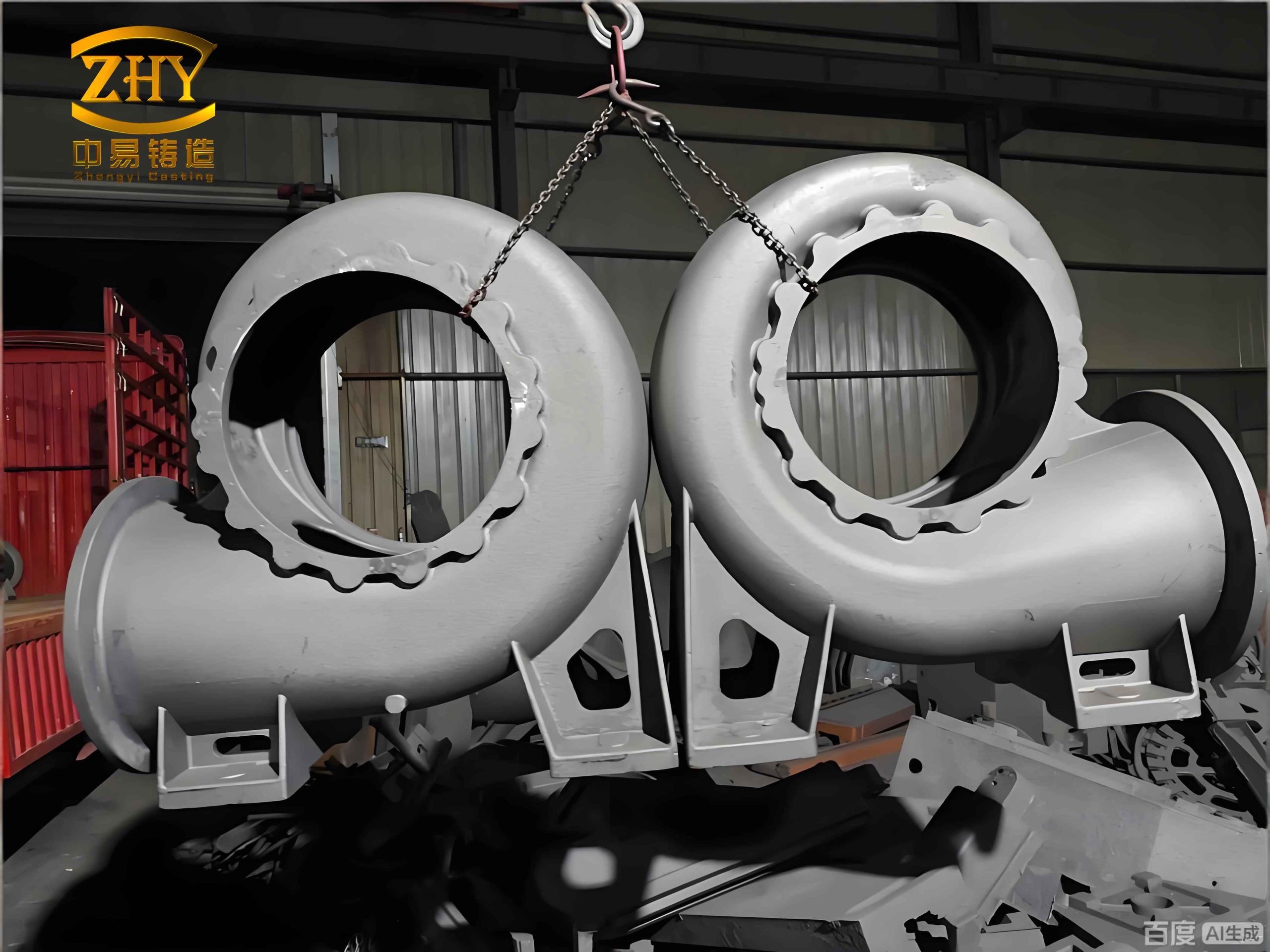
To understand the urgency of adopting 3D printing, let’s delve into the core problems plaguing sand casting. First, the industry’s self-development is hindered by outdated practices. Labor shortages are rampant because younger workers seek cleaner, tech-driven environments—traditional foundries often involve dusty, hazardous conditions. Second, product structures are increasingly customized; clients demand unique sand casting products in small quantities, rendering mass-production molds inefficient. Third, stringent environmental policies mandate reduced emissions and waste, pushing foundries to seek greener alternatives. The table below summarizes these challenges and their impact on sand casting products production:
| Challenge | Description | Impact on Sand Casting Products |
|---|---|---|
| Labor Intensive Processes | Manual molding and core-making lead to high physical strain and poor work conditions. | Increased costs and delays in producing sand casting products; difficulty attracting skilled workers. |
| Customization Demands | Market trends favor bespoke, low-volume orders over standardized batches. | High模具 costs for small runs make sand casting products economically unviable; slow response times. |
| Environmental Regulations | Policies require reduced pollution from sand disposal and binder emissions. | Compliance costs rise; traditional methods generate waste, affecting sustainability of sand casting products. |
In response, 3D printing offers a compelling alternative. From my perspective, the advantages are multifaceted. The technology uses a binder-jetting process to build sand molds layer by layer from CAD models, eliminating the need for physical patterns. This reduces lead times from weeks to days, crucial for rapid iteration of sand casting products. Additionally, it improves precision; since there’s no mold removal, designs can include intricate geometries like thin walls and internal channels that were previously impossible. To quantify this, consider the efficiency gain: if traditional sand casting requires a fixed time \( T_t \) for pattern making and a variable time \( T_v \) for molding, 3D printing reduces this to a direct print time \( T_p \), often following a linear relation based on volume. For instance, the total time savings \( S \) can be expressed as:
$$ S = T_t + T_v – T_p $$
where \( T_p = k \cdot V \), with \( k \) as a printing constant and \( V \) as the mold volume. This formula highlights how 3D printing streamlines production for sand casting products, especially in prototyping phases.
Furthermore, 3D printing enhances environmental sustainability. Traditional sand casting generates waste sand and chemical binders, but 3D printing uses controlled amounts of materials, often with recyclable sand. In my work, I’ve observed a reduction in waste by up to 70% for certain sand casting products, aligning with circular economy principles. The table below contrasts key parameters between traditional and 3D-printed sand casting:
| Parameter | Traditional Sand Casting | 3D-Printed Sand Casting |
|---|---|---|
| Lead Time | 4-8 weeks for mold making | 2-5 days for direct printing |
| Cost for Small Batches | High due to模具 expenses | Lower, as模具 are digital |
| Design Complexity | Limited by draft angles and core assembly | Unlimited; enables complex sand casting products with internal features |
| Environmental Impact | High waste and emissions | Reduced waste, enclosed process |
| Labor Dependency | Requires skilled pattern makers | Automated, reducing manual intervention |
Now, let’s explore specific applications where 3D printing excels for sand casting products. In the automotive sector, components like steering gears and engine blocks demand high precision and quick turnaround. For example, a steering gear housing—a complex sand casting product—typically requires investment casting with multiple steps. With 3D printing, we can directly print the sand mold, slashing the production cycle from months to weeks. This agility is vital for testing new designs, as digital files allow instant modifications without physical tooling. Similarly, engine parts with lightweight structures benefit from 3D printing’s ability to create optimized cores that improve cooling and reduce weight, enhancing performance of sand casting products.
Another notable case is electric motor housings, which feature numerous散热片. Traditionally, each fin required a separate module, leading to assembly errors and breakage. 3D printing consolidates these into a single mold, ensuring dimensional accuracy and durability. From my involvement in such projects, the quality improvement is stark: defect rates for sand casting products like motor housings drop by over 50% when using printed molds. To illustrate the economic impact, consider a cost model for producing sand casting products. The total cost \( C \) can be broken down as:
$$ C = C_m + C_l + C_e $$
where \( C_m \) is material cost, \( C_l \) is labor cost, and \( C_e \) is environmental compliance cost. For traditional methods, \( C_m \) and \( C_l \) are high due to模具 and manual work; for 3D printing, \( C_m \) may be similar, but \( C_l \) decreases significantly, and \( C_e \) reduces via waste minimization. Over a production run of \( n \) units, the savings per unit \( \Delta C \) for sand casting products becomes:
$$ \Delta C = \frac{(C_{traditional} – C_{3D})}{n} $$
This formula underscores why 3D printing is cost-effective for low-volume, high-complexity sand casting products.
Looking ahead, the integration of 3D printing with sand casting promises even greater advancements. In my view, emerging technologies like AI-driven design optimization and hybrid manufacturing will further enhance the production of sand casting products. For instance, generative algorithms can create lattice structures within molds to improve thermal management, a boon for industries like energy and transportation. Additionally, as material science progresses, printable sand composites with enhanced properties will enable stronger, more durable sand casting products. The table below projects future trends in this convergence:
| Trend | Description | Potential Impact on Sand Casting Products |
|---|---|---|
| AI Integration | Use of machine learning to predict defects and optimize mold designs. | Higher quality sand casting products with reduced trial-and-error; faster innovation cycles. |
| Hybrid Processes | Combining 3D printing with traditional techniques for large-scale parts. | Scalability for diverse sand casting products, from small gears to industrial machinery. |
| Sustainable Materials | Development of eco-friendly binders and recyclable sands. | Greener production of sand casting products, meeting stringent environmental standards. |
| Digital Twins | Virtual replicas of molds for real-time monitoring and adjustment. | Improved precision and consistency in sand casting products manufacturing. |
In conclusion, as someone passionate about modernizing foundries, I firmly believe that 3D printing is not just an accessory but a core technology for the future of sand casting. It addresses critical pain points—from labor challenges to environmental woes—while unlocking new possibilities for customized, high-performance sand casting products. By embracing this digital shift, foundries can reduce costs, accelerate time-to-market, and contribute to a sustainable industrial ecosystem. The journey from traditional patterns to digital molds marks a paradigm shift, and I am confident that widespread adoption will redefine how we conceive and produce sand casting products for generations to come. Through continued innovation and collaboration, we can ensure that sand casting remains a vital, dynamic part of global manufacturing.