
In my work I examined how the wetting behavior of a refractory coating toward liquefied polystyrene controls casting defects in lost foam casting. The central problem I addressed is simple to state but difficult to solve in production: if the polystyrene pattern decomposes entirely inside the mold cavity and leaves as gas, then carbon-rich residues and carbon black are generated where the metal is trying to fill. Those residues become casting defects such as surface carbon, scab, cold shut, slag inclusion, and carburization. I proposed that a coating layer with high wettability toward the liquid products of polystyrene can remove most of the pattern decomposition products in liquid form before they fully gasify. This reduces the amount of carbon that remains in the cavity and therefore reduces casting defects. I tested this idea through coating formulation, wettability measurements, permeability measurements, fluidity tests, carbon analysis of steel samples, and full-scale pouring trials on cast iron, heat-resistant steel, and ductile iron. The results consistently showed that coating wettability is not a secondary property; it is a primary control variable for casting defects in lost foam casting.
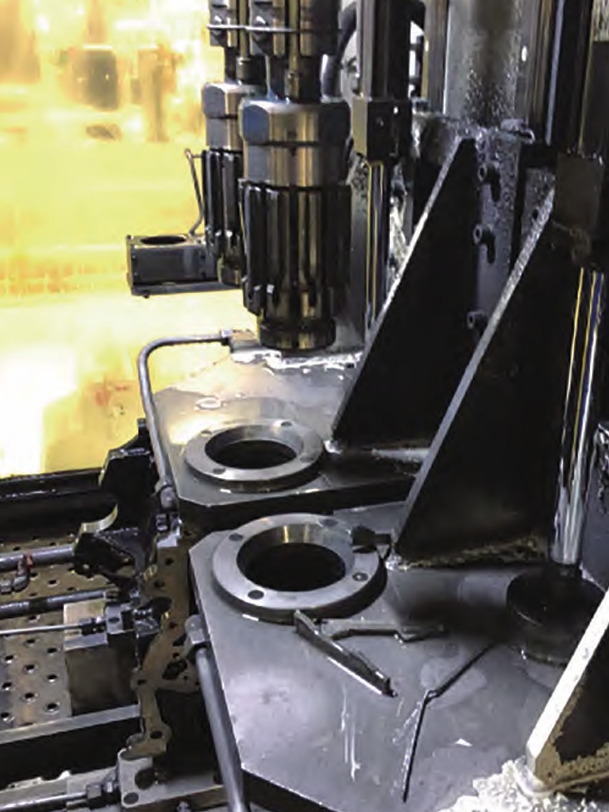
I begin with the process itself because the origin of casting defects in lost foam casting is tied to the sequence of pattern replacement. A polystyrene foam pattern is assembled, coated with a refractory layer, dried, placed in a flask, backed with unbonded dry sand, vibrated, and then poured under vacuum. When liquid metal enters, the foam is heated, softened, liquefied, gasified, and cracked into smaller molecules. The metal does not simply displace a solid; it displaces a reacting polymer. The reaction products include gas, liquid, and solid carbonaceous matter. If those products cannot leave through the coating, they interfere with flow and react with the metal. That interference is the root of many casting defects.
I use the term coating wettability to describe the ability of liquefied polystyrene to wet and penetrate the coating layer. The concept is closely related to classical wetting, but the liquid is not water or oil; it is a hot, viscous, partially decomposed polystyrene melt or tar-like liquid. The solid is a porous refractory coating made of aggregate particles, binders, suspension agents, and additives. The gas phase is the vaporized polystyrene and vacuum atmosphere. The system is therefore a three-phase capillary system. The driving force for liquid removal is capillary pressure, assisted by vacuum and metallostatic pressure. If the contact angle is below \(90^\circ\), capillary pressure pulls the liquid into the coating pores. If the contact angle is above \(90^\circ\), capillary pressure resists penetration. In lost foam casting, that difference determines whether the liquid pattern residue leaves the cavity or remains to form carbonaceous casting defects.
The governing wetting relation I used is the Young equation:
$$
\gamma_{sv} – \gamma_{sl} = \gamma_{lv}\cos\theta
$$
Here \(\gamma_{sv}\) is the solid-vapor surface energy of the coating, \(\gamma_{sl}\) is the solid-liquid interfacial energy, \(\gamma_{lv}\) is the surface tension of the liquefied polystyrene, and \(\theta\) is the contact angle. A small \(\theta\) means strong wetting. For a capillary pore of radius \(r\), the capillary pressure is:
$$
\Delta P_c = -\frac{2\gamma_{lv}\cos\theta}{r}
$$
When \(\theta < 90^\circ\), \(\cos\theta > 0\), so \(\Delta P_c < 0\), meaning the pressure difference drives liquid into the pore. When \(\theta > 90^\circ\), the liquid is pushed out. The rate of capillary penetration can be approximated by the Washburn relation:
$$
L^2 = \frac{\gamma_{lv} r \cos\theta}{2\mu}t
$$
where \(L\) is penetration depth, \(\mu\) is liquid viscosity, and \(t\) is time. In lost foam casting, time is short, the vacuum is finite, and the metal solidifies quickly. Therefore, the coating must wet the liquid polystyrene rapidly. A coating that wets well can remove a large fraction of the pattern as liquid. A coating that wets poorly leaves the liquid to decompose inside the cavity. That decomposition produces carbon black and hydrogen, and those products are directly associated with casting defects.
To compare conventional sand casting with lost foam casting, I summarized the main process differences in Table 1. The comparison shows why coating behavior is more critical in lost foam casting than in conventional sand casting. In conventional sand casting, the mold is already a cavity. In lost foam casting, the mold cavity is created dynamically by the disappearing pattern itself. The coating is the only engineered barrier that controls how the pattern disappears.
| Process feature | Conventional sand casting | Lost foam casting |
|---|---|---|
| Mold cavity formation | Pattern is withdrawn before pouring | Pattern is displaced and decomposed during pouring |
| Binder in sand | Clay, resin, or other binders | Dry unbonded sand |
| Core requirement | Separate cores often required | Complex internal cavities obtained from foam assembly |
| Coating function | Mostly refractoriness and surface finish | Refractoriness, permeability, pattern removal, and defect control |
| Main carbon-related risk | Lower, except from binder decomposition | High, because polystyrene decomposition produces carbon |
| Dimensional accuracy | Good but limited by parting lines | High, with reduced flash and draft |
| Cleaning labor | High | Lower |
| Sensitivity to coating | Moderate | Very high |
Casting defects in lost foam casting can be classified by where they appear and by the chemical route that produces them. I focus here on carbon-related casting defects because they dominated my experiments. The most common are surface carbon, scab, internal carburization, volume carburization, and slag-like inclusions. Table 2 lists these casting defects and the mechanisms I observed or inferred. The key distinction is whether carbon is formed near the metal-coating interface, inside the moving gas gap, or within the metal itself.
| Casting defect | Typical location | Main formation route | Effect of poor coating wettability |
|---|---|---|---|
| Surface carbon | Outer skin of iron or steel casting | Carbon black deposits on metal surface and diffuses inward | Liquid residue remains and cracks to carbon black |
| Scab | Surface and subsurface layers | Liquid polystyrene spreads, contracts, and forms glassy films | Liquid residue cannot drain through coating pores |
| Volume carburization | Through-thickness carbon increase | Carbon dissolves and diffuses during filling and solidification | Longer contact time and higher carbon activity in gap |
| Internal carburization | Inner sections of steel castings | Carbon-rich gas and liquid enter the flow front | High gas pressure and unstable flow incorporate carbon |
| Cold shut | Thin sections and flow fronts | Heat loss and gas back-pressure stop metal flow | Liquid vaporization consumes heat and raises gap pressure |
| Slag inclusion | Inside ductile iron and steel | Unvaporized polymer or oxide-rich residue trapped in metal | Liquid residue is not removed before metal arrives |
| Gas porosity | Subsurface and internal | Gas evolved faster than coating can vent | Poor permeability and wetting cause gas accumulation |
I found that carbon formation from polystyrene follows two principal routes. In the first route, early heating releases small molecules rich in hydrogen. Because the hydrogen-to-carbon ratio in these volatiles is higher than that of the original polymer, carbon is left behind. In the second route, deeper cracking at higher temperature breaks carbon-hydrogen bonds and produces carbon black and hydrogen. The simplified global reaction for styrene can be written as:
$$
\mathrm{C_8H_8} \rightarrow 8\mathrm{C} + 4\mathrm{H_2}
$$
For polystyrene repeat units, the same idea applies:
$$
[\mathrm{C_8H_8}]_n \rightarrow 8n\mathrm{C} + 4n\mathrm{H_2}
$$
If all decomposition occurs inside the cavity, the carbon product remains where the metal is flowing. Some carbon may be trapped in the coating pores, some may be carried away by vacuum, and some may dissolve in the metal. The fraction that dissolves or remains at the interface influences casting defects. In my experiments, coatings with poor wetting produced dark, carbon-rich surfaces and heavy scab. Coatings with good wetting produced lighter surfaces and much less carbon residue. This observation led me to define the coating wettability hypothesis more precisely: the faster the liquid polystyrene is drawn into the coating, the less time it has to crack into carbon black inside the mold cavity.
My experimental design used an orthogonal array with six factors and five levels. The factors were refractory aggregate size, organic binder A, organic binder B, bentonite content, plant-derived composite additive content, and silica sol content. I selected these factors because each can change either the pore structure or the surface chemistry of the coating. The levels are summarized in Table 3. The basis for all percentages was the total refractory aggregate mass. I prepared twenty-five coatings, measured their permeability, measured the contact angle against liquefied polystyrene, and then evaluated metal filling using a spiral fluidity pattern.
| Factor | Level 1 | Level 2 | Level 3 | Level 4 | Level 5 |
|---|---|---|---|---|---|
| A: Aggregate size | Coarse | Medium-coarse | Medium | Medium-fine | Fine |
| B: Organic binder A | 1.0% | 1.5% | 2.0% | 2.5% | 3.0% |
| C: Organic binder B | 0.2% | 0.4% | 0.6% | 0.8% | 1.0% |
| D: Bentonite | 1.0% | 2.0% | 3.0% | 4.0% | 5.0% |
| E: Plant-derived additive | 0.5% | 1.0% | 1.5% | 2.0% | 2.5% |
| F: Silica sol | 0.5% | 1.0% | 1.5% | 2.0% | 2.5% |
The refractory aggregate I favored was magnesium olivine, with high-alumina bauxite as an alternative. Magnesium olivine has good thermal conductivity, gradual thermal expansion, high refractoriness, and good resistance to metal oxide attack. It also avoids free silica dust and provides a stable coating at pouring temperature. High-alumina bauxite provides high refractoriness and good strength. I chose aggregate sizes coarser than those used in many conventional sand casting coatings because coating permeability and liquid removal depend strongly on pore size. However, very coarse aggregate reduces suspension stability and green strength. Therefore I searched for a window in which the coating remains stable but still has open pores.
The binder system was deliberately hybrid. I used organic binders to provide green strength, flexibility, and burn-out porosity, and inorganic binders to provide high-temperature strength and erosion resistance. The organic binders included polyvinyl alcohol and a plant-derived organic binder. Polyvinyl alcohol improves flow, leveling, and green strength, but it has a low-energy surface and can reduce wetting at high addition levels. The plant-derived binder leaves a carbonaceous residue that can improve high-temperature behavior and may assist wetting of liquid polystyrene. The inorganic binders included bentonite, kaolin, and silica sol. Bentonite acts as both binder and suspension agent. Kaolin improves high-temperature strength. Silica sol improves green and fired strength and helps resist metal washing. The challenge is that each binder changes both pore structure and surface energy, so the net effect on wettability is not monotonic.
For suspension, I used a combination of bentonite and sodium carboxymethyl cellulose. This combination produces a stronger three-dimensional network than either alone. Fine bentonite particles attach to the long carboxymethyl cellulose chains, which reduces settling and improves suspension stability. The coating does not separate during dipping or brushing. The addition level must be controlled because carboxymethyl cellulose lowers surface tension and creates a low-energy surface that can reduce wetting by liquid polystyrene. At low levels, it improves uniformity and therefore helps penetration. At high levels, it can dominate the surface chemistry and worsen wetting. This trade-off appeared clearly in my range analysis.
I used water as the carrier because it is non-toxic, inexpensive, and compatible with the dry sand process. A small amount of non-ionic surfactant was added to reduce the surface tension of the aqueous coating and improve coverage on the hydrophobic polystyrene pattern. Without surfactant, the water-based coating tends to dewet from the pattern and produce bare spots. Those bare spots become local regions of uncontrolled pattern decomposition and therefore local sources of casting defects. The surfactant improved coating uniformity and reduced defects caused by incomplete coating coverage.
I measured coating permeability using a sealed holder with a water-glass sand backing. The coating thickness was adjusted by a threaded assembly. The pressure required for a fixed gas flow was recorded. A higher pressure indicated lower permeability. I calculated permeability using a Darcy-type relation:
$$
K = \frac{Q \mu L}{A \Delta P}
$$
where \(K\) is permeability, \(Q\) is volumetric flow rate, \(\mu\) is gas viscosity, \(L\) is coating thickness, \(A\) is exposed area, and \(\Delta P\) is pressure drop. In the comparative tests, the backing sand was kept constant, so the measured pressure difference served as a practical index of coating permeability.
I measured wettability by placing a polystyrene sphere on a coating surface, heating it in a resistance furnace, cooling the assembly, and photographing the solidified liquid droplet. The contact angle was measured from the projected image. A smaller angle means better wetting. I repeated the measurement on opposite sides and used the average. Because the liquid is viscous and partially reactive, the contact angle is an apparent contact angle, not an equilibrium thermodynamic value. Even so, it is a useful engineering index. The relationship between contact angle and expected casting defects is summarized in Table 4.
| Contact angle \(\theta\) | Wetting state | Capillary behavior | Expected effect on casting defects |
|---|---|---|---|
| \(\theta < 30^\circ\) | Strong wetting | Strong spontaneous penetration | Low carbon residue, low scab, low carburization |
| \(30^\circ \le \theta < 60^\circ\) | Good wetting | Penetration under vacuum | Moderate reduction of carbon-related casting defects |
| \(60^\circ \le \theta < 90^\circ\) | Marginal wetting | Weak capillary driving force | Local carbon black and occasional scab |
| \(90^\circ \le \theta < 120^\circ\) | Poor wetting | Capillary resistance | Severe surface carbon and cold shut risk |
| \(\theta \ge 120^\circ\) | Non-wetting | Liquid retention in cavity | Heavy casting defects including scab and carburization |
The spiral fluidity test gave me a direct view of how coating properties affect filling. I poured pure aluminum at controlled superheat under a fixed vacuum. I measured the spiral flow length and the gas gap length at the flow front. A long spiral indicated good filling. A short spiral indicated high resistance, rapid heat loss, or excessive gas pressure. The gas gap is the region between the advancing metal front and the receding foam. If the coating removes liquid polystyrene efficiently, the gas gap remains short and the pressure is low. If the coating retains liquid, the gas gap becomes long, the pressure rises, and the metal front decelerates. The front may even develop a rounded, receded shape instead of a smooth convex profile. These differences are associated with casting defects such as cold shut and incomplete filling.
Table 5 presents representative results from the orthogonal tests. The exact values depend on aggregate and additive levels, but the trends were consistent. Coating 5 and coating 21 gave the best combination of low contact angle, low permeability pressure, and long flow length. Coating 9 and coating 17 gave poor wetting and shorter flow. I use these representative rows to show how the three responses move together, but not perfectly.
| Coating code | Permeability pressure index | Contact angle \(\theta\) (degrees) | Spiral flow length (mm) | Gas gap length (mm) |
|---|---|---|---|---|
| C1 | 112 | 78 | 420 | 18 |
| C5 | 64 | 42 | 610 | 9 |
| C9 | 138 | 96 | 350 | 24 |
| C13 | 82 | 55 | 540 | 12 |
| C17 | 120 | 88 | 390 | 21 |
| C21 | 58 | 38 | 650 | 8 |
| C25 | 70 | 48 | 580 | 11 |
I used range analysis to rank the factors. For each factor and level, I calculated the average response. The range is:
$$
R_j = \max_i(\bar{y}_{ij}) – \min_i(\bar{y}_{ij})
$$
where \(\bar{y}_{ij}\) is the average response for factor \(j\) at level \(i\). A larger \(R_j\) means a stronger effect on the measured property. Table 6 shows the range ranking for permeability, wettability, and fluidity. Aggregate size had the strongest effect on permeability and a strong effect on wettability. The plant-derived additive and silica sol strongly affected wettability. Bentonite had a mixed effect because it increases porosity at low levels but also changes surface chemistry. Organic binder A showed a nonlinear effect: small additions improved wetting, but larger additions reduced wetting.
| Response | Factor ranking from strongest to weakest |
|---|---|
| Permeability | Aggregate size > plant-derived additive > silica sol > bentonite > organic binder A > organic binder B |
| Wettability | Plant-derived additive > aggregate size > organic binder A > silica sol > bentonite > organic binder B |
| Fluidity | Aggregate size > wettability-related additives > bentonite > organic binder B > silica sol |
I also performed analysis of variance to estimate significance. The total sum of squares was:
$$
SS_T = \sum_{i=1}^{n}(y_i-\bar{y})^2
$$
The sum of squares for a factor was:
$$
SS_j = \sum_{i=1}^{k} n_i(\bar{y}_{ij}-\bar{y})^2
$$
The mean square was:
$$
MS_j = \frac{SS_j}{df_j}
$$
The variance ratio was:
$$
F_j = \frac{MS_j}{MS_e}
$$
where \(MS_e\) is the error mean square. Table 7 summarizes the significance levels I obtained. The plant-derived additive and aggregate size were the most significant factors for wettability. Aggregate size was the most significant factor for permeability. For fluidity, aggregate size and wettability-related factors were significant. The error analysis showed that the permeability and fluidity experiments had low variability, while the wettability measurement had higher variability because of the dynamic heating and partial decomposition of polystyrene.
| Response | Highly significant factors | Significant factors | Less significant factors |
|---|---|---|---|
| Permeability | Aggregate size | Plant-derived additive, silica sol | Bentonite, organic binders |
| Wettability | Plant-derived additive, aggregate size | Organic binder A, silica sol | Bentonite, organic binder B |
| Fluidity | Aggregate size | Plant-derived additive, organic binder A | Silica sol, bentonite |
The error estimate for a response was the square root of the error mean square:
$$
s_e = \sqrt{MS_e}
$$
The coefficient of variation was:
$$
CV = \frac{s_e}{\bar{y}} \times 100\%
$$
For permeability I found a low coefficient of variation, so I judged the permeability results reliable. For wettability the coefficient of variation was higher, so I treated the contact angle as an approximate ranking tool rather than a precise thermodynamic constant. For fluidity the results were reliable enough to distinguish good and poor coatings. The consistency between the permeability, wettability, and fluidity trends supported my central hypothesis: coating wettability toward liquid polystyrene is a controlling factor for casting defects.
To test carbon transfer directly, I poured steel test blocks using four coatings with different wettability and permeability. The test block was a rectangular prism. I used both top pouring and bottom pouring. I sampled the upper, middle, and lower regions, and at each region I measured carbon at depths below the surface. The original steel carbon content was controlled. Table 8 gives representative carbon results. The most important observation is that the coating with the best wettability produced the lowest carbon increase at every depth and in every position. The coating with poor wettability produced the highest carbon increase, especially near the surface and in the lower part under top pouring. The carbon increase was always higher near the surface than in the interior, which confirms that carbon enters from the pattern-coating-metal interface.
| Coating wetting quality | Pouring mode | Position | Carbon at 1 mm depth (%) | Carbon at 3 mm depth (%) | Carbon at 6 mm depth (%) |
|---|---|---|---|---|---|
| Good | Bottom | Top | 0.42 | 0.36 | 0.31 |
| Good | Bottom | Middle | 0.40 | 0.35 | 0.30 |
| Good | Bottom | Bottom | 0.44 | 0.37 | 0.32 |
| Poor | Bottom | Top | 0.88 | 0.66 | 0.48 |
| Poor | Bottom | Middle | 0.79 | 0.61 | 0.45 |
| Poor | Bottom | Bottom | 0.73 | 0.58 | 0.43 |
| Good | Top | Top | 0.45 | 0.38 | 0.32 |
| Good | Top | Middle | 0.43 | 0.37 | 0.31 |
| Good | Top | Bottom | 0.47 | 0.39 | 0.33 |
| Poor | Top | Top | 0.92 | 0.70 | 0.51 |
| Poor | Top | Middle | 0.84 | 0.65 | 0.47 |
| Poor | Top | Bottom | 0.96 | 0.73 | 0.54 |
I then moved to production-scale comparison trials. The first trial was a high-chrome wear-resistant cast iron plate with a square shape and symmetric holes. The original iron carbon content was controlled. The coating supplied by the foundry had acceptable permeability but poor wettability. The coating I formulated had both good permeability and good wettability. With the foundry coating, the casting surface was black and covered with carbonaceous material. The coating and surrounding sand were black. The casting contained an internal shrinkage seam and was rejected. With my coating, the surface color was close to the coating color, the internal shrinkage seam was absent, and the casting met the quality requirement.
| Coating | Wettability | Permeability | Surface quality | Internal quality | Carbon at point 1 (%) | Carbon at point 2 (%) | Carbon at point 3 (%) |
|---|---|---|---|---|---|---|---|
| Foundry coating | Poor | Good | Heavy carbon black | Shrinkage seam | 3.52 | 3.78 | 4.05 |
| My coating | Good | Good | Clean and uniform | Sound | 2.94 | 2.97 | 3.01 |
The second production trial was a heat-resistant steel cylinder. This casting required uniform carbon and no carburization. With the poor-wetting coating, the interface was filled with black carbon, the surface was rough, and the coating layer was ruptured by high internal gas pressure. This produced mold collapse. With the good-wetting coating, the surface was smooth, the coating color was largely unchanged, and the surface showed an oxidation color similar to that obtained in conventional sand casting. Carbon analysis showed that the poor-wetting coating produced high and uneven carbon, while the good-wetting coating kept carbon within the acceptable range.
| Coating | Wettability | Permeability | Carbon at top (%) | Carbon at middle (%) | Carbon at bottom (%) | Casting defects observed |
|---|---|---|---|---|---|---|
| Foundry coating | Poor | Good | 0.78 | 0.69 | 0.61 | Surface carburization, rough surface |
| My coating | Good | Good | 0.42 | 0.39 | 0.38 | No significant casting defects |
The third production trial was a ductile iron casting. With the poor-wetting foundry coating, the surface had severe carbon black and scab, and the interior contained slag and cold shut. The casting was rejected. With my coating, the surface was clean, the interior was sound, and no significant carbon-related casting defects were found. This trial was important because ductile iron is sensitive to both carbon pickup and flow interruption. The good-wetting coating reduced gas pressure and heat loss, which improved filling and reduced slag entrapment.
| Coating | Wettability | Permeability | Surface result | Internal result | Overall quality |
|---|---|---|---|---|---|
| Foundry coating | Poor | Moderate | Severe carbon black and scab | Slag inclusion and cold shut | Rejected |
| My coating | Good | Good | Clean, close to coating color | Sound | Accepted |
The mechanism behind these results can be explained by the sequence at the flow front. When the metal contacts the foam, a thin liquid layer forms first. If the coating wets that liquid, capillary action and vacuum pull the liquid into the coating pores. The liquid then either remains in the pores or evaporates outside the cavity. If the coating does not wet the liquid, the liquid stays at the interface. It spreads, thickens, and decomposes. The decomposition produces gas and carbon. The gas increases pressure in the gap, which slows the metal front. The carbon deposits on the metal and coating surfaces. Some carbon diffuses into the metal, causing carburization. The longer the metal remains in contact with this carbon-rich atmosphere, the greater the casting defects.
The aggregate size influences both permeability and wettability. Larger aggregate particles create larger pores between them. According to the capillary pressure relation, larger pores lower the capillary pressure for a given contact angle. However, larger pores also provide less resistance to viscous flow and allow liquid to enter more easily under vacuum. Therefore, increasing aggregate size generally improves liquid removal. But very large aggregate reduces coating suspension, green strength, and surface smoothness. I found that a medium-coarse aggregate gave the best balance. Fine aggregate produced a dense coating with small pores. Even if the surface chemistry was favorable, the small pores and low permeability limited liquid removal, and casting defects increased.
The binder effect is more complex. Polyvinyl alcohol decomposes at relatively low temperature and leaves little residue. As its addition increases, the dried coating becomes more porous, which should improve wetting and permeability. However, polyvinyl alcohol also creates a low-energy surface. If the critical surface tension of the binder is lower than the surface tension of liquid polystyrene, the liquid cannot wet the binder-rich regions. At low addition, the porosity benefit dominates, so wettability improves. At high addition, the surface chemistry penalty dominates, so wettability worsens. This explains the non-monotonic trend I observed. The plant-derived additive behaves differently. It decomposes over a range of temperatures, leaves a carbonaceous residue, and provides a surface that liquid polystyrene can wet. It also creates additional pores after burn-out. Therefore, increasing this additive improved wettability significantly until an optimum level was reached.
Bentonite and carboxymethyl cellulose act as suspension agents and binders. Bentonite forms a house-of-cards structure in water and improves suspension. When heated, it loses water, shrinks, and creates porosity. At low to moderate levels, this can improve liquid penetration. But bentonite also has a high-energy surface that becomes covered by oriented polar molecules, which can reduce wetting by nonpolar polystyrene liquid. Carboxymethyl cellulose is a water-soluble polymer with low surface energy. It lowers the surface tension of the coating and can make the coating surface less wettable by liquid polystyrene. However, when combined with bentonite, it forms a strong network that prevents segregation and keeps the coating uniform. A uniform coating has consistent pore structure, which helps liquid removal. Therefore, the effect of carboxymethyl cellulose is also non-monotonic: low levels improve uniformity, high levels worsen surface wetting. The optimum I found was a moderate level, balanced against the plant-derived additive and aggregate size.
Silica sol improves high-temperature strength and erosion resistance. It also affects the pore structure after firing. At low levels, it strengthens the coating without closing pores. At high levels, it can fill pores and reduce permeability. In my tests, silica sol had a secondary but significant effect on wettability. The best coatings contained enough silica sol to resist metal washing but not so much that it sealed the pores. This balance is essential because a coating that is strong but impermeable will cause casting defects, while a coating that is permeable but weak will erode and cause sand inclusions and surface defects. The plant-derived additive helped maintain permeability because its burn-out created additional pores that compensated for the pore-filling effect of silica sol.
The flow front observations were especially instructive. In poor-wetting coatings, the gas gap was long and the metal front was blunt and irregular. The gas pressure in the gap was high enough to resist filling. The metal lost heat to the foam, the coating, and the sand. As a result, the flow stopped early. In good-wetting coatings, the gas gap was short. The liquid polystyrene was pulled into the coating, so less heat was consumed by vaporization inside the cavity. The pressure in the gap remained low. The metal front stayed convex and advanced farther. In some tests, the front even developed a slightly protruding shape because the vacuum at the front helped draw the remaining liquid metal forward. This behavior explains why good wettability reduces casting defects such as cold shut, misrun, and surface carbon.
I also examined coating cross sections before and after pouring. Before pouring, the coating was relatively dense and layered, with aggregate particles bonded together. After pouring, the coating contained numerous pores and voids. Low-melting components had decomposed or vaporized. The coating had a looser, layered structure. In good-wetting coatings, I observed glassy or foam-like polystyrene residues inside the coating pores. This indicated that liquid polystyrene had penetrated the coating and solidified or reacted there. In poor-wetting coatings, the carbon black was concentrated at the metal-coating interface and on the coating surface rather than inside the pores. This microstructural evidence supports the wetting hypothesis directly. If the liquid enters the pores, it is removed from the metal interface. If it does not enter, it remains at the interface and becomes a source of casting defects.
The practical implications for coating design are clear. A coating for lost foam casting should not be optimized for permeability alone. It must also wet the liquid decomposition products of the pattern. The coating should have an open pore structure with pores large enough to allow capillary and vacuum-driven flow. It should contain additives that lower the contact angle against liquid polystyrene without destroying green strength. It should avoid excessive low-energy binders that repel the liquid. It should maintain enough high-temperature strength to resist metal erosion. The formulation I developed met these requirements. It used magnesium olivine as the main aggregate, a medium-coarse aggregate size, a hybrid binder system, a plant-derived wetting additive, a balanced bentonite-carboxymethyl cellulose suspension system, silica sol for high-temperature strength, and a small amount of non-ionic surfactant for pattern coverage.
Based on my experiments, I propose the following design rules. First, aggregate size should be selected to maximize permeability while preserving suspension and surface finish. Second, the wetting additive should be added at the level that gives the lowest contact angle, not simply the highest porosity. Third, organic binder content should be kept moderate because excess low-energy polymer reduces wetting. Fourth, the suspension system should be optimized for uniformity because segregation creates local variations in wettability and permeability. Fifth, the coating should be tested not only by permeability but also by contact angle and fluidity. A coating that passes only the permeability test may still produce severe casting defects. A coating that passes both permeability and wettability tests is much more likely to perform well in production.
My carbon analysis of steel castings showed that the greatest carbon increase occurred near the surface. This gradient indicates that carbon enters from the interface and diffuses inward. The gradient was steeper for poor-wetting coatings. That means the carbon activity at the interface was higher and the contact time was longer. For good-wetting coatings, the carbon increase was lower and more uniform. This is consistent with faster removal of the liquid pattern and lower gas pressure. In top pouring, the lower part often showed the highest carbon because the flow front passed through a longer path and the decomposition products accumulated downstream. In bottom pouring, the upper part often showed the highest carbon because the decomposition products rose with the gas flow. These patterns are useful for diagnosing coating performance in production.
The high-chrome wear-resistant iron trial demonstrated that good wettability can eliminate both surface and internal casting defects. The poor-wetting coating produced a shrinkage seam even though the alloy and pouring temperature were the same. This suggests that the gas pressure and heat loss caused by retained liquid polystyrene altered solidification. The good-wetting coating reduced the gas pressure and maintained metal temperature, which allowed proper feeding. The heat-resistant steel trial showed the same principle for carburization. The ductile iron trial showed it for scab, cold shut, and slag inclusion. Across three different alloys, the same coating property controlled the outcome. That is strong evidence that wettability is a general control variable for casting defects in lost foam casting.
I also noted an important interaction between wettability and permeability. In most cases, a coating with good wettability also had good permeability. This is because both properties depend on open pores and favorable surface chemistry. However, the correlation is not perfect. Some coatings had good permeability but poor wettability. Those coatings still produced casting defects because gas could escape but liquid could not penetrate. This distinction is critical. Permeability controls gas transport. Wettability controls liquid transport. In lost foam casting, both gas and liquid must be removed. A coating that only vents gas will still leave carbon-rich liquid at the interface. That liquid will eventually crack into carbon and cause casting defects. Therefore, coating evaluation must include both properties.
The vacuum level also interacts with wettability. A higher vacuum can pull liquid into the coating even if the contact angle is above \(90^\circ\), because the applied pressure difference can overcome capillary resistance. However, excessive vacuum can cause sand compaction, mold collapse, or metal penetration. The goal is not to use vacuum to compensate for poor wetting. The goal is to design a coating that wets well so that a moderate vacuum is sufficient. In my tests, the best results were obtained with a moderate vacuum and a good-wetting coating. The poor-wetting coating required a higher vacuum to achieve similar filling, and even then the casting defects remained. This shows that vacuum is not a substitute for coating wettability.
The surfactant addition also matters. The surfactant improves coating coverage on the hydrophobic foam, which reduces bare spots. Bare spots are local regions where the foam contacts the metal with no coating barrier. At those spots, decomposition is uncontrolled and carbon defects form. A uniform coating ensures that the entire pattern surface is protected and that the wetting behavior is consistent. However, excessive surfactant can introduce foam or bubbles in the coating, which reduce green strength and create pinholes. I used a small amount and controlled the mixing procedure to avoid excess air entrainment. The coating was mixed by direct stirring, allowed to rest, and stirred again to reach the desired viscosity. This simple procedure gave reproducible results because the suspension system was stable.
For quality control in production, I recommend measuring at least four properties: coating density, coating thickness, permeability, and contact angle. Density and thickness control the amount of coating on the pattern. Permeability controls gas venting. Contact angle controls liquid removal. A simple contact angle test can be performed by placing a polystyrene sphere on a dried coating coupon and heating it under conditions similar to pouring. The resulting angle can be compared with a reference chart. If the angle is above \(90^\circ\), the coating is likely to produce casting defects. If the angle is below \(60^\circ\), the coating is likely to perform well. The permeability test can be performed with a backed coating sample. Together, these tests provide a practical quality gate before production.
The carbon defect mechanism can be summarized in a simple sequence. First, the foam heats and liquefies. Second, the liquid either enters the coating or remains in the cavity. Third, if it remains, it decomposes into gas and solid carbon. Fourth, the gas increases pressure and reduces filling. Fifth, the solid carbon deposits on the metal and diffuses into the surface. Sixth, the result is surface carbon, scab, or carburization. The critical branch point is the second step. Coating wettability determines which path is taken. This is why I regard wettability as a primary design parameter for lost foam coatings. It is not enough to make a refractory coating that withstands heat. The coating must also manage the phase transformation of the pattern.
My orthogonal experiments also showed that the best coating is not the one with the highest permeability or the lowest contact angle alone. It is the one with the best balance. For example, a very coarse aggregate gives high permeability but poor suspension and rough surface. A very high plant-derived additive gives good wetting but may reduce green strength. A very high silica sol gives good high-temperature strength but reduces permeability. A very high bentonite gives good suspension but increases surface energy and may reduce wetting. The optimum formulation is a compromise. In my work, the best coatings had medium-coarse aggregate, moderate organic binder, moderate plant-derived additive, balanced bentonite and carboxymethyl cellulose, and sufficient silica sol for strength.
The production trials confirmed that the optimized coating reduced casting defects across different alloys. In high-chrome wear-resistant iron, it eliminated the shrinkage seam. In heat-resistant steel, it kept carbon within specification and prevented mold collapse. In ductile iron, it eliminated surface carbon, scab, slag inclusion, and cold shut. These results are not just incremental improvements. They show that a coating designed for liquid polystyrene wetting can change the defect population from unacceptable to acceptable. That has direct economic value because it reduces scrap, rework, and cleaning labor. It also expands the range of alloys and geometries that can be produced reliably by lost foam casting.
Looking forward, I see several directions for further work. One is to develop a standardized contact angle test that accounts for the non-Newtonian and reactive nature of polystyrene liquid. Another is to model the coupled flow of gas, liquid, and metal through the coating using multiphase computational fluid dynamics. A third is to explore alternative pattern materials that produce less carbon or liquefy at lower temperature. A fourth is to optimize the coating for aluminum alloys, where pouring temperature is lower and heat loss is more critical. In all these directions, the principle remains the same: control the phase in which the pattern leaves the cavity. Liquid removal is preferable to gasification because it avoids carbon formation. Wettability is the key to liquid removal.
In conclusion, my study demonstrates that the wettability of a lost foam coating toward liquefied polystyrene has a decisive influence on casting defects. A coating that wets well allows the liquid pattern decomposition products to enter the coating pores and leave the cavity before they crack into carbon. This reduces carbon black, scab, surface carbon, volume carburization, internal carburization, cold shut, slag inclusion, and gas porosity. A coating that wets poorly retains the liquid at the metal interface, where it decomposes and produces carbon-rich casting defects. Permeability is necessary but not sufficient. The best coating must combine open pore structure, high permeability, favorable surface chemistry, adequate high-temperature strength, and uniform suspension. The formulation I developed based on magnesium olivine, medium-coarse aggregate, hybrid binders, plant-derived wetting additive, balanced suspension agents, silica sol, and surfactant achieved this combination. It reduced casting defects in steel, high-chrome iron, and ductile iron production trials. The broader conclusion is that lost foam casting should be understood as a reactive displacement process, and the coating should be designed to manage the liquid phase of that reaction, not merely to act as a refractory barrier.