
In the realm of sand castings, particularly for aluminum alloy thin-wall sand castings, achieving optimal mold filling and surface quality remains a persistent challenge. The interaction between molten metal and the sand mold surface critically influences the fluidity and final integrity of the sand castings. Over the years, various coating techniques have been explored to modify this interface, with acetylene soot coatings and hexachloroethane coatings being prominent candidates. This article presents a comprehensive, first-person investigation into the efficacy, processability, and economic viability of these two coatings for aluminum alloy thin-wall sand castings. Through systematic experimentation and analysis, we aim to determine the most suitable coating to enhance the fillability of such sand castings, thereby improving production outcomes for complex, thin-walled geometries in sand casting processes.
The fundamental issue in producing aluminum alloy thin-wall sand castings lies in the rapid heat extraction from the molten metal by the sand mold, which can lead to premature solidification and incomplete filling. This is especially critical for large, thin-section sand castings where the surface-area-to-volume ratio is high. Coatings applied to the sand mold surface can alter the heat transfer conditions, potentially retarding cooling and improving metal flow. From prior work, acetylene soot coatings have shown promise in magnesium alloy sand castings for large thin-wall components, but their systematic application to aluminum alloy sand castings required further validation. Meanwhile, literature often highlights hexachloroethane as a highly effective agent for improving fillability in sand castings. Thus, this study was undertaken to directly compare these coatings under controlled conditions, focusing on their impact on the fillability of aluminum alloy sand castings.
Our experimental approach was designed to quantitatively assess the fillability improvement offered by each coating. The primary test involved casting standardized fluidity specimens in sand molds. For consistency, each mold cavity contained either four wedge-shaped specimens (as illustrated in Figure A) or two flat plate specimens (Figure B), all oriented horizontally within a single sand mold. The molding sand was a conventional mixture used for aluminum alloy sand castings, with properties tailored to ensure reproducibility. The pouring process was carefully controlled: molten metal was first raised to a predetermined height in a pouring basin, and then a stopper was removed to initiate filling, ensuring consistent initial conditions for each pour. The alloy used throughout the experiments was a standard casting aluminum alloy, typical for thin-wall sand castings.
The preparation and application methods for the coatings were refined based on preliminary trials. For the hexachloroethane coating, a solution was prepared using gasoline as the solvent. At room temperature (around 20°C), the solubility of hexachloroethane in gasoline is approximately 10%. To enhance efficiency and reduce solvent consumption, we preheated the solvent to 30–40°C, increasing solubility to 15–20%. The solution was stirred until complete dissolution, then applied via spraying. The spray nozzle diameter proved crucial; a diameter less than 2 mm led to cooling and crystallization of hexachloroethane within the nozzle, causing clogging and uneven application. We determined that a nozzle inner diameter of no less than 2 mm was necessary for consistent spray coating. After spraying, the molds were allowed to dry naturally.
For the acetylene soot coating, the process involved direct fuming or smoking the mold surface with acetylene combustion products. This method is inherently simpler: acetylene gas is burned in a controlled manner, and the resulting soot is deposited onto the sand mold surface. The number of fuming passes was varied to assess the effect of coating thickness. This coating requires no complex preparation or solvents, making it a straightforward, low-cost option for sand castings.
To quantify fillability, we measured the “formed area” of the cast specimens—essentially the extent to which the molten metal filled the thin sections before solidifying. This metric serves as a direct indicator of how effectively the coating retards heat loss at the mold-metal interface. The formed area was determined for uncoated molds (baseline), molds coated with hexachloroethane (via spraying or powder sprinkling), and molds coated with acetylene soot (via fuming). Multiple trials were conducted at different pouring temperatures to establish temperature-dependent effects.
The results revealed significant differences between the coatings. At a pouring temperature of 700°C, the acetylene soot coating increased the formed area of the specimens by 2 to 3 times compared to the uncoated baseline. In contrast, the hexachloroethane coating, when applied as a sprayed solution, improved the formed area by about 50%. However, an alternative method of sprinkling hexachloroethane powder directly onto the mold surface showed better performance for flat horizontal surfaces; applying 0.2 grams per 10 cm² of mold surface increased the formed area by approximately 80%. The superiority of acetylene soot in enhancing fillability is attributed to its insulating properties and the way it modifies the thermal boundary layer during metal flow in sand castings.
We can model the heat transfer at the mold-metal interface to understand this effect. The rate of heat extraction $Q$ from the molten metal to the sand mold can be expressed as:
$$ Q = h \cdot A \cdot (T_m – T_s) $$
where $h$ is the heat transfer coefficient at the interface, $A$ is the contact area, $T_m$ is the metal temperature, and $T_s$ is the effective mold surface temperature. A coating effectively reduces $h$ by introducing a thermal resistance layer. For acetylene soot, which is primarily carbon, the low thermal conductivity and the porous structure create a significant barrier. The modified heat transfer coefficient $h_c$ with coating can be approximated as:
$$ \frac{1}{h_c} = \frac{1}{h} + \frac{t}{k_c} $$
where $t$ is the coating thickness and $k_c$ is the thermal conductivity of the coating. For acetylene soot, $k_c$ is very low (on the order of 0.1 W/m·K), leading to a substantial reduction in $h_c$. This allows the metal to remain fluid longer, extending the flow distance in thin sections of sand castings.
For hexachloroethane, the mechanism is different. Upon contact with hot metal, hexachloroethane sublimates, releasing chlorine compounds that may react to form a protective gas layer. This endothermic reaction absorbs heat locally, reducing the initial heat flux. The heat absorbed $Q_{abs}$ by the sublimation and reaction can be estimated as:
$$ Q_{abs} = m \cdot \Delta H_{sub} + m \cdot \Delta H_{rxn} $$
where $m$ is the mass of hexachloroethane per unit area, $\Delta H_{sub}$ is the enthalpy of sublimation, and $\Delta H_{rxn}$ is the enthalpy of any subsequent reaction. While this provides a temporary cooling buffer, its effect is less persistent than the insulating layer of acetylene soot, especially for longer flow paths in sand castings.
The economic and process aspects were also evaluated in detail. The following table summarizes the key comparative factors:
| Parameter | Acetylene Soot Coating | Hexachloroethane Coating (Sprayed Solution) | Hexachloroethane Coating (Powder Sprinkling) |
|---|---|---|---|
| Material Cost per Mold (approx.) | $0.50 (acetylene gas) | $2.00 (hexachloroethane + solvent) | $1.50 (hexachloroethane powder) |
| Preparation Time | Negligible (direct fuming) | 15-20 minutes (dissolving, preheating) | 5 minutes (measuring powder) |
| Application Time for Standard Mold | 2-3 minutes per fuming pass | 5-10 minutes (spraying + drying) | 2-3 minutes (sprinkling) |
| Required Equipment | Acetylene torch, ventilation | Spray gun, compressor, heating setup | Simple sieve or shaker |
| Environmental & Safety Considerations | Smoke generation, requires ventilation; low toxicity | Solvent fumes, hexachloroethane decomposition products (chlorine); moderate hazard | Dust generation, inhalation risk; moderate hazard |
| Coating Durability During Handling | Moderate (can rub off if mishandled) | Good (adheres after drying) | Fair (powder may dislodge) | Improvement in Formed Area at 700°C (vs. uncoated) | 200-300% | ~50% | ~80% (for horizontal surfaces) |
From the table, it is evident that acetylene soot offers a superior balance of performance and cost-effectiveness for general thin-wall sand castings. The fuming process is quick, requires minimal preparation, and the material cost is low. Importantly, our tests showed no adverse effects on the internal quality of the sand castings, such as porosity or inclusions, when using acetylene soot. The coating did not introduce any detectable defects in radiographic or ultrasonic inspections of trial castings. Furthermore, the production environment, while requiring basic ventilation for smoke, is manageable and does not involve hazardous chemicals to the same degree as hexachloroethane.
An additional benefit of both coatings is the potential to lower pouring temperatures while maintaining fillability. For acetylene soot, the pouring temperature can be reduced by approximately 30-40°C, and for hexachloroethane powder sprinkling, by about 20-30°C, compared to uncoated molds for achieving similar formed areas. Lower pouring temperatures are advantageous for sand castings as they reduce thermal stress, minimize gas absorption, and improve grain structure, ultimately enhancing the mechanical properties of aluminum alloy sand castings. This relationship can be expressed by modifying a fluidity length model. The fluidity length $L_f$ in a sand casting channel is often related to pouring temperature $T_p$ and mold interface heat transfer:
$$ L_f \propto \frac{(T_p – T_{solidus})}{\sqrt{h \cdot \rho \cdot c \cdot k}} $$
where $T_{solidus}$ is the solidus temperature, $\rho$ is metal density, $c$ is specific heat, and $k$ is thermal conductivity of the metal. By reducing $h$ via coating, $L_f$ increases for a given $T_p$, or conversely, a lower $T_p$ can be used to achieve the same $L_f$. This principle is crucial for optimizing the casting parameters for thin-wall sand castings.
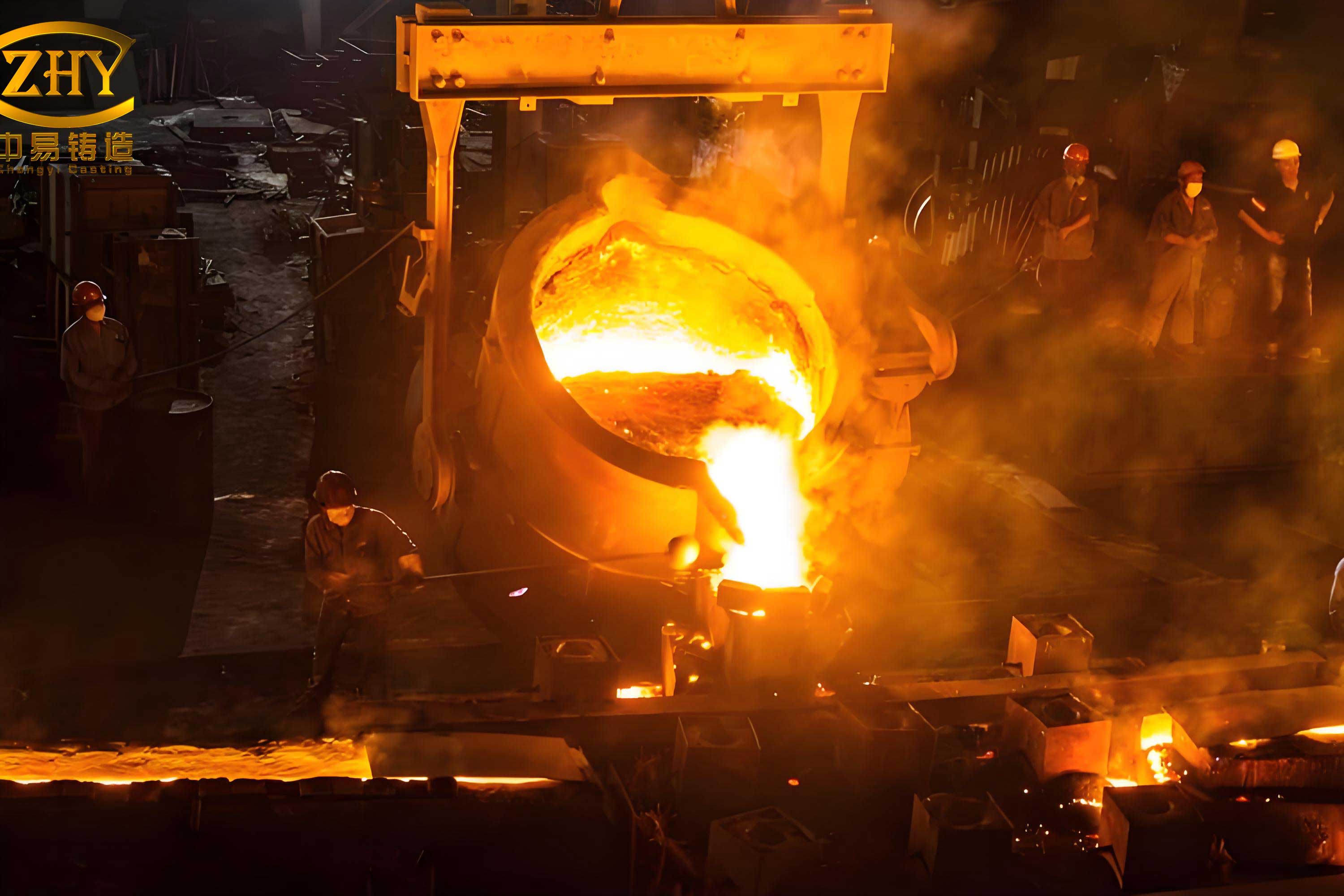
The image above illustrates typical sand casting parts, highlighting the complexity and thin sections that can benefit from effective mold coatings. In our production trials for aluminum alloy thin-wall sand castings, such as valve bodies with wall thicknesses around 5 mm, the use of acetylene soot coating consistently yielded complete fills and high surface quality. The coating’s insulating effect was particularly noticeable in large flat areas and long, narrow channels common in sand castings.
Regarding process robustness, we examined the influence of coating thickness for acetylene soot. Through multiple fuming passes (1, 2, 3, and 4 passes), we found that the improvement in formed area saturated after 2-3 passes. Additional passes provided diminishing returns, likely because the soot layer reached an optimal thickness beyond which further insulation was negligible or the layer became prone to flaking. For most applications in sand castings, 2-3 fuming passes are recommended. The coating thickness $t_{soot}$ can be roughly correlated with the number of passes $n$ and fuming time per pass $\tau$:
$$ t_{soot} \approx \alpha \cdot n \cdot \tau $$
where $\alpha$ is a deposition rate constant dependent on acetylene flow and distance. In our setup, $\alpha$ was about 0.01 mm/min per pass, resulting in a total thickness of 0.02-0.03 mm after 2-3 passes, sufficient for effective insulation in sand castings.
For hexachloroethane, the spraying method posed challenges such as nozzle clogging and solvent evaporation losses. The powder sprinkling method, while effective for horizontal surfaces, is less suitable for vertical or complex mold geometries in sand castings, as the powder may not adhere uniformly. Moreover, hexachloroethane decomposition can release chlorine, which, although in small quantities, necessitates adequate fume extraction to protect workers and equipment. In contrast, acetylene soot is chemically inert and poses no such chemical hazard, though particulate matter should be controlled.
To further analyze the economic impact, consider a production scenario for 1000 thin-wall sand castings. Using acetylene soot, the total coating cost would be around $500, with minimal added labor. For hexachloroethane spraying, the cost rises to about $2000, plus additional time for solution preparation and drying. Over a large volume, the savings with acetylene soot become substantial, making it an attractive option for foundries specializing in aluminum alloy sand castings.
In terms of fillability enhancement, the data can be summarized with the following empirical relationships derived from our experiments. For acetylene soot-coated sand molds, the formed area $A_f$ relative to the uncoated area $A_0$ at a pouring temperature $T$ (in °C) fits:
$$ \frac{A_f}{A_0} = 1 + \beta_{soot} \cdot (T – 680) $$
where $\beta_{soot}$ is an improvement factor approximately 0.03 per °C for 2-pass fuming. For hexachloroethane powder sprinkling on horizontal surfaces, the relationship is:
$$ \frac{A_f}{A_0} = 1 + \beta_{hex} \cdot (T – 680) $$
with $\beta_{hex} \approx 0.015$ per °C. These linear approximations hold in the range of 680–720°C, common for aluminum alloy sand castings. Clearly, acetylene soot provides a steeper improvement with temperature, meaning it is more effective at leveraging higher pouring temperatures or allowing greater temperature reductions.
Another aspect explored was the interaction between coating and mold sand properties. The baseline sand had a green compressive strength of 0.05–0.06 MPa and permeability around 100. Additives like bentonite were used to improve strength and surface finish. The coatings did not adversely affect these properties; in fact, the acetylene soot layer seemed to slightly reduce mold erosion during pouring, possibly by cushioning the metal impact. This is beneficial for maintaining dimensional accuracy in sand castings.
In conclusion, based on our extensive experimentation and analysis, acetylene soot coating emerges as the most effective and practical choice for enhancing the fillability of aluminum alloy thin-wall sand castings. Its superior thermal insulation performance, coupled with low cost and simple application, makes it highly suitable for widespread adoption in foundries. While hexachloroethane, particularly in powder form, offers a viable alternative for specific geometries, its higher cost, more complex handling, and moderate performance limit its overall advantage. The ability to lower pouring temperatures with these coatings further contributes to improved casting quality, reducing defects and enhancing the mechanical properties of the final sand castings. Therefore, for producers of aluminum alloy thin-wall sand castings seeking a reliable, economical solution to filling challenges, acetylene soot coating is strongly recommended. Future work could explore hybrid approaches or nano-enhanced coatings, but for current industrial practice in sand castings, acetylene soot stands out as a proven and efficient technology.