
In the realm of manufacturing, sand casting remains a pivotal process for producing complex metal components, particularly for automotive applications. Among these, engine cylinder blocks stand out as quintessential examples of intricate thin-walled cast iron parts, demanding precision and reliability in their production. As a researcher and designer deeply involved in foundry technology, I have focused on optimizing the crucial tooling—core setting fixtures—which play a critical role in ensuring the quality and efficiency of sand casting parts. This article delves into my exploration of universal design principles for such fixtures, emphasizing the integration of aesthetics, performance theory, and the golden ratio to enhance versatility and functionality. The goal is to provide insights that can be applied broadly to improve the design of fixtures for various sand casting parts, ultimately reducing costs and accelerating development cycles.
The complexity of sand casting parts, especially those with thin walls and intricate geometries, necessitates specialized equipment. Core setting fixtures are essential for accurately positioning sand cores within molds, a step that directly impacts the dimensional accuracy and structural integrity of the final castings. In my experience, many foundries employ fixtures with suboptimal designs, leading to inefficiencies and increased expenses. Through my work, I have developed a universal fixture design that accommodates multiple variants of six-cylinder engine blocks, leveraging optimization techniques to address these challenges. This design not only serves as a case study for cylinder blocks but also offers a template for other sand casting parts, highlighting the importance of adaptability in modern manufacturing.
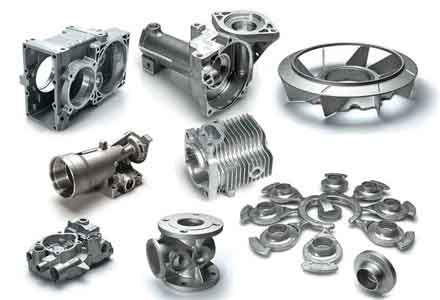
To begin, let me outline the foundational design philosophies that guided this optimization. Aesthetics, often overlooked in industrial tooling, can significantly influence usability and maintenance. By applying principles of visual harmony and simplicity, fixtures become more intuitive to operate and easier to inspect. Performance theory, on the other hand, focuses on maximizing efficiency and reliability through structural integrity and ergonomic considerations. This involves analyzing stress distributions, weight balance, and operational workflows to ensure that the fixture performs consistently under production conditions. Lastly, the golden ratio—a mathematical proportion found in nature and art—provides a framework for achieving balanced and proportional designs. The golden ratio, denoted by $$ \phi $$, is defined as: $$ \phi = \frac{1 + \sqrt{5}}{2} \approx 1.618 $$. In fixture design, this ratio can be applied to dimensions such as the height-to-width ratios of frames or the spacing of components, promoting stability and visual appeal. For sand casting parts, these principles collectively contribute to fixtures that are not only functional but also durable and cost-effective.
The pursuit of universal fixtures for sand casting parts requires specific conditions to be met. Below, I summarize these conditions in tables to clarify the prerequisites for successful implementation.
| Condition | Description | Implication for Sand Casting Parts |
|---|---|---|
| Similar External Dimensions | The sand casting parts must have comparable overall sizes, such as length, width, and height. | Enables the use of a common fixture frame without major modifications. |
| Medium to Small Batch Production | Production volumes should be moderate, avoiding mass-scale runs that might require dedicated tooling. | Justifies the investment in versatile fixtures for multiple part types. |
| Proximity in Manufacturing Line | Parts should be produced on the same foundry line or within the same facility. | Facilitates shared resources and reduces setup times. |
| Condition | Description | Role in Sand Casting Parts Production |
|---|---|---|
| Compatible Flask Design | Sand flasks should have identical or similar internal dimensions, along with matching locating pin specifications. | Ensures proper alignment and seating of the fixture during core setting. |
| Standardized Lifting Mechanisms | Core clamping plates and hook blocks must be interchangeable across different part designs. | Allows for quick adaptation to various sand casting parts without redesigning lifting components. |
| Forward-Looking Engineering | Designs should anticipate future part variants, incorporating adjustable or modular elements. | Extends the fixture’s lifespan and relevance for evolving sand casting parts. |
In my work, I selected a double-layer structure for the core setting fixture, which consists of a base frame and a floating frame. This configuration offers stability and flexibility, crucial for handling the delicate sand cores used in sand casting parts. The base frame interfaces with the sand flask, featuring locating pins that match the flask’s pin holes, while the floating frame houses the core clamping assemblies and lifting mechanisms. This separation allows for smooth vertical movement during core placement, reducing the risk of damage to the sand casting parts. To quantify the benefits, consider the following formula for the stability factor $$ S $$ of a double-layer fixture: $$ S = \frac{F_b \cdot L}{W_f \cdot H} $$, where $$ F_b $$ is the base frame stiffness, $$ L $$ is the lever arm length, $$ W_f $$ is the floating frame weight, and $$ H $$ is the height of the guide columns. By optimizing these parameters, we can achieve a balance that minimizes deflection and ensures precise core positioning for sand casting parts.
Now, let’s delve into the optimization of individual components. The base frame serves as the foundation, and its design prioritizes practicality, simplicity, and aesthetics. For universal application across multiple sand casting parts, the internal dimensions of the base frame should align with the maximum possible flask size. This proactive approach accommodates larger future variants without requiring redesign. In terms of materials, I recommend using mild steel for its balance of strength and machinability, with a thickness calculated based on expected loads. The load capacity $$ C $$ can be expressed as: $$ C = \sigma \cdot A \cdot \phi $$, where $$ \sigma $$ is the allowable stress of the material, $$ A $$ is the cross-sectional area, and $$ \phi $$ is the golden ratio applied as a safety factor. This integration of mathematical principles ensures that the base frame is both robust and visually proportional, enhancing its suitability for diverse sand casting parts.
The floating frame, constructed from quenched and tempered 45 steel plates, provides the necessary rigidity for supporting core assemblies. A key optimization here is the unification of fasteners—all screws are standardized to M8 size. This simplification reduces inventory complexity, accelerates assembly, and eases maintenance, which is particularly beneficial in foundries producing a variety of sand casting parts. The table below illustrates the advantages of this standardization.
| Aspect | Before Standardization | After Standardization (M8 Only) |
|---|---|---|
| Number of Screw Types | 5 (e.g., M6, M8, M10) | 1 (M8) |
| Assembly Time | High due to multiple tools and parts | Reduced by approximately 30% |
| Maintenance Effort | Complex, requiring varied replacements | Simplified, with easy stock management |
| Cost Impact | Higher inventory and handling costs | Lower overall costs for sand casting parts production |
Furthermore, the height of the floating frame, denoted as $$ h $$, is designed with a margin to accommodate taller sand casting parts. This is calculated using the golden ratio to ensure proportional expansion: $$ h_{new} = h_{base} \cdot \phi $$, where $$ h_{base} $$ is the height for the smallest part. This approach future-proofs the fixture, allowing it to adapt to new sand casting parts with minimal adjustments.
Moving to the core clamping plates and hook blocks, these components directly interact with the sand cores and must be precisely engineered. The optimization here involves structural simplicity and compatibility with multiple core designs. For instance, the clamping plates are designed with symmetrical cutouts that align with the core geometries, reducing weight while maintaining strength. The hook blocks, used for lifting cores, incorporate ergonomic handles and adjustable positions to suit different sand casting parts. The force distribution during clamping can be analyzed using the formula: $$ F_c = \frac{P \cdot A_p}{\mu} $$, where $$ F_c $$ is the clamping force, $$ P $$ is the pneumatic pressure from actuating cylinders, $$ A_p $$ is the piston area, and $$ \mu $$ is the friction coefficient between the clamp and core. By optimizing these parameters, we ensure secure core handling without damaging the fragile sand surfaces, a critical aspect for high-quality sand casting parts.
To illustrate the versatility of this design, consider the application to various sand casting parts beyond cylinder blocks. The same principles can be extended to fixtures for manifolds, pump housings, or other complex components. The universal design reduces lead times for new part introductions, as only minor modifications are needed. For example, the table below compares the development timeline for dedicated versus universal fixtures.
| Development Phase | Dedicated Fixture (Per Part) | Universal Fixture (Multiple Parts) |
|---|---|---|
| Design Time | 4-6 weeks per part | 6-8 weeks initially, then 1-2 weeks for adaptations |
| Manufacturing Cost | High due to custom components | Lower amortized cost over multiple sand casting parts |
| Tooling Inventory | Multiple fixtures required | Single fixture with modular attachments |
| Adaptability to New Parts | Limited, often requiring new designs | High, with quick adjustments for new sand casting parts |
The economic benefits are substantial, particularly for foundries engaged in medium-volume production of sand casting parts. By investing in universal fixtures, companies can achieve faster ROI and enhanced flexibility. Moreover, the aesthetic and ergonomic improvements contribute to a safer and more efficient workplace, reducing operator fatigue and error rates. In my observations, fixtures designed with these principles have demonstrated improved longevity and reduced downtime, directly impacting the productivity of sand casting parts manufacturing.
In conclusion, the optimization of core setting fixtures through aesthetics, performance theory, and the golden ratio offers a robust framework for enhancing the universality and efficiency of sand casting processes. This approach not only addresses the specific needs of complex sand casting parts like cylinder blocks but also provides a scalable solution for a wide range of applications. As foundries continue to evolve towards more agile and cost-effective production, embracing such design philosophies will be key to staying competitive. The lessons learned from this work underscore the importance of proactive engineering and interdisciplinary thinking in advancing the art and science of sand casting parts production. By prioritizing versatility and optimization, we can create tooling that not only meets today’s demands but also adapts to tomorrow’s challenges, ensuring consistent quality and innovation in the realm of sand casting parts.