
In my extensive experience with foundry processes, achieving superior surface finish on sand casting parts remains one of the most persistent and technically demanding challenges. Defects such as burn-on, scabbing, veining, and inclusions not only mar the appearance but significantly increase the cost of post-casting operations like fettling and machining. The root cause of these issues lies in the complex thermo-physical and chemical interactions at the interface between the molten metal and the mold or core surface during pouring and solidification. Understanding and controlling this interface is paramount for producing high-integrity sand casting parts.
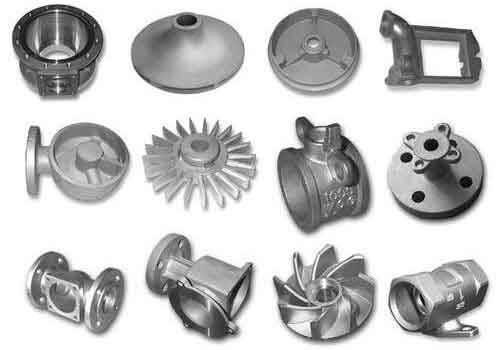
The surface quality of sand casting parts is directly dictated by the condition of the mold cavity wall. Any instability, penetration, or reaction at this boundary is faithfully reproduced on the cast component. Therefore, my analysis focuses on the mechanisms of defect formation and the scientific principles behind effective prevention strategies, with particular emphasis on the most common and troublesome defect: burn-on or metal penetration, often simply called “sand burning.”
Classification and Origins of Surface Defects in Sand Casting
The surface defects encountered in sand casting parts can be systematically categorized based on their primary formation mechanism. A comprehensive understanding requires examining the interplay of mold properties, metal characteristics, and process parameters.
| Defect Category | Primary Manifestation | Key Contributing Factors | Underlying Mechanism |
|---|---|---|---|
| Penetration/Burn-on | A layer of sand grains fused to the casting surface by metal and oxides. | High metal temperature, large sand grain size, low mold refractoriness. | Physical infiltration of metal into mold pores followed by chemical bonding via silicate formation. |
| Scabbing & Veining | Rough, scarred areas or fin-like projections on the casting surface. | Rapid heating, high thermal expansion of silica sand, low hot strength of mold surface. | Cracking of the mold surface layer due to thermal stress, followed by metal penetration into the cracks. |
| Gas-Related Defects (Pinholes, Blows) | Small cavities or smooth blowholes at or near the surface. | High moisture or volatile content in mold/core, inadequate venting, high pouring temperature. | Gas generation at the metal-mold interface exceeding the permeability for escape, leading to bubble entrapment. |
| Erosion & Wash | Localized surface roughness or unwanted contours. | High velocity metal stream, weak mold surface, sharp corners in gating. | Mechanical wearing away of the mold surface by the flowing molten metal. |
The Oxidation Theory of Burn-On Formation
My investigation into burn-on for sand casting parts supports the modern “oxidation theory,” which provides a more complete explanation than older “vitrification” concepts. The process is not merely physical penetration but a sequence of chemical reactions. When molten steel, for instance, contacts the silica (SiO₂) mold, the iron oxidizes:
$$ \text{Fe (l)} + \frac{1}{2}\text{O}_2 \text{(from mold atmosphere)} \rightarrow \text{FeO (l or s)} $$
This iron oxide (FeO, wüstite) is highly reactive and acts as a flux. It interacts with the silica sand and any clay or alkali impurities present in the molding sand to form low-melting-point ferrous silicate slags:
$$ 2\text{FeO} + \text{SiO}_2 \rightarrow \text{Fe}_2\text{SiO}_4 \text{(Fayalite)} $$
The formation temperature of fayalite is approximately 1170°C, which is far below the pouring temperature of steel (often >1500°C). This liquid slag phase readily wets and penetrates between the sand grains, cementing them together and also bonding chemically to the oxide layer on the casting itself.
The critical factor determining whether the burn-on layer is “easily removable” or “tenacious” is the nature and thickness of the oxide layer at the casting-sand interface. If a continuous, critically thick layer of oxide (approximately >100 µm) develops, internal stresses upon cooling can cause the overlying sand/slag layer to spall off relatively easily. The adhesion in this case is primarily through the oxide layer. If the oxide layer is thin or discontinuous, the liquid slag forms direct bonds with the metal, and the sand layer becomes integrally and firmly attached to the sand casting parts surface. This relationship can be conceptualized by a simple adhesion strength model:
$$ S_a = S_{\text{mech}} + S_{\text{chem}} $$
where $S_a$ is the total adhesion strength, $S_{\text{mech}}$ is the mechanical interlocking component (from metal penetration), and $S_{\text{chem}}$ is the chemical bonding component (from oxide/silicate formation). For easily removable burn-on, $S_{\text{chem}}$ through the oxide layer is dominant but self-limiting due to stress buildup. For tenacious burn-on, both $S_{\text{mech}}$ and $S_{\text{chem}}$ are high and synergistic.
Mathematical Modeling of Interface Phenomena
To quantitatively approach the prevention of defects in sand casting parts, one can model key interface processes. The growth of the oxide layer can be described by a parabolic rate law, common for diffusion-controlled high-temperature oxidation:
$$ x^2 = k_p \cdot t $$
where $x$ is the oxide layer thickness, $k_p$ is the parabolic rate constant (dependent on temperature and alloy composition), and $t$ is the time at temperature. A thicker oxide layer, as per the theory, promotes easier removal if it reaches a critical value $x_c$.
The depth of metal penetration into the mold, a precursor to mechanical bonding, can be approximated by considering the mold as a capillary system. The pressure driving penetration is the metallostatic pressure, countered by the capillary pressure and the resistance due to viscosity. A simplified form for penetration depth $L$ over time $t$ is derived from the Washburn equation:
$$ L = \sqrt{\frac{\gamma r \cos\theta}{2\eta} \cdot t} $$
where $\gamma$ is the surface tension of the metal, $r$ is the average pore radius of the mold surface, $\theta$ is the contact angle between metal and sand, and $\eta$ is the metal viscosity. This shows that reducing pore size $r$ (through finer sand, coatings, or high compaction) is directly effective in minimizing penetration in sand casting parts.
The thermal stress $\sigma_{th}$ leading to scabbing in silica sand molds can be estimated from the differential expansion between the hot surface layer and the cooler bulk sand:
$$ \sigma_{th} \approx \frac{E \alpha \Delta T}{1 – \nu} $$
where $E$ is the Young’s modulus of the sand, $\alpha$ is the coefficient of thermal expansion (notably high for silica at the α-β quartz inversion at 573°C), $\Delta T$ is the temperature gradient, and $\nu$ is Poisson’s ratio. When $\sigma_{th}$ exceeds the hot strength of the sand bond, cracking occurs.
Integrated Prevention Strategies for High-Quality Surfaces
Based on the mechanisms, producing flawless sand casting parts requires a multi-faceted strategy targeting the mold-metal interface. The overarching goals are: 1) Seal surface porosity, 2) Minimize chemical interaction, 3) Maximize mold surface thermal stability, and 4) Ensure efficient gas evacuation.
1. Mold and Core Sand Design
The foundation lies in selecting appropriate base sands and binders. High-purity silica sands, zircon, or chromite sands offer higher refractoriness. The binder system must provide sufficient hot strength to resist erosion and scabbing. Chemically bonded sands (e.g., furan, phenolic urethane, silicate) often provide better surface finish than green sand for complex cores because of their superior stability and lower gas generation when properly formulated.
2. The Critical Role of Anti-Burn-On Coatings
Applying a refractory coating is the most direct and effective method for isolating the metal from the mold in sand casting parts. A coating must fulfill multiple requirements:
- Barrier Function: Contain fine, refractory fillers (zircon, graphite, olivine) to physically block mold porosity.
- Chemical Inertness: Be non-reactive with molten metal and oxides (e.g., graphite reduces FeO).
- Adhesion & Stability: Remain firmly bonded to the mold under thermal shock.
- Controlled Permeability: Allow gases to escape without disrupting the coating layer.
The performance of a coating is governed by its composition: the refractory filler, the carrier (water, alcohol, solvent), the binder system (for green and dry strength), and special additives (suspension agents, wetting agents, biocides).
| Coating Component | Primary Function | Common Examples | Key Property |
|---|---|---|---|
| Refractory Filler | Provide high-temperature barrier | Zircon (ZrSiO₄), Graphite (C), Chromite (FeCr₂O₄), Alumina (Al₂O₃) | Refractoriness, Thermal Conductivity, Inertness |
| Binder System | Adhere filler particles to themselves and to mold | Clay, Sodium Silicate, PVA, Furan Resins, Inorganic Phosphates | Room Temp. & Hot Strength, Burn-Out Character |
| Suspension Agent | Prevent settling of filler in carrier | Sodium Bentonite, CMC, Xanthan Gum, Attapulgite Clay | Thixotropy, Yield Strength |
| Carrier Liquid | Medium for application | Water, Isopropanol, Ethanol | Evaporation Rate, Viscosity, Safety |
3. Optimizing Coating Rheology and Application
The quality of the applied coating film is critical. The coating must be a stable suspension with tailored rheology. Its viscosity and yield strength determine its “application behavior” – the ability to form a uniform, defect-free layer of adequate thickness without runs or sags. I characterize this using a rheological model like the Herschel-Bulkley model:
$$ \tau = \tau_0 + K \cdot \dot{\gamma}^n $$
where $\tau$ is shear stress, $\tau_0$ is the yield stress (critical for preventing sag), $K$ is the consistency index, $\dot{\gamma}$ is shear rate, and $n$ is the flow index. A good coating for dipping or brushing has a sufficient $\tau_0$ and is shear-thinning ($n < 1$), meaning it flows easily under brush shear but holds its shape once applied. The optimal penetration depth $P_{opt}$ of coating into the mold should be approximately 1.5 times the average sand grain diameter $d_{avg}$ to ensure strong anchoring without wasting material:
$$ P_{opt} \approx 1.5 \cdot d_{avg} $$
This is achieved by controlling viscosity and carrier surface tension.
4. Binder Thermal Stability: The Limiting Factor
A coating’s effectiveness during the casting of heavy-section sand casting parts hinges on the thermal stability of its binder. The binder must maintain adhesion between the coating and the sand mold as the temperature rises. Many organic binders (e.g., starches, some resins) decompose or lose strength at relatively low temperatures (300-600°C), leading to coating spallation before the metal even solidifies. Therefore, the choice of binder is stratified by the thermal demands of the casting:
- For thin-section castings: Organic binders (PVA, acrylics) may suffice.
- For medium-section castings: High-temperature organic resins (modified phenolics, furans) or hybrid organic-inorganic systems are required.
- For heavy-section or high-temperature alloy castings: Inorganic binders are essential. These include:
- Phosphate-based binders: Form strong ceramic bonds at high temperatures.
- Soluble silicates: Though they can suffer from poor humidity resistance.
- Colloidal silica/alumina: Offer excellent refractoriness and stability.
The adhesion strength $\sigma_{adh}(T)$ as a function of temperature is a key performance metric for a coating system. For a successful casting process, this strength must remain above a critical threshold, often around 0.15 MPa, throughout the contact time with molten metal.
5. Material-Specific Strategies
For Iron Castings: The use of carbonaceous materials is highly effective. Additives like seacoal in green sand, or carbon/graphite-based coatings, play a dual role. They create a reducing atmosphere at the interface, and more importantly, the “lustrous carbon” formed during pyrolysis interacts with and reduces iron oxide (FeO), preventing the formation of low-melting fayalite slag:
$$ \text{C} + \text{FeO} \rightarrow \text{Fe} + \text{CO} $$
This fundamentally breaks the chemical bonding pathway for tenacious burn-on in sand casting parts.
For Steel Castings: The oxidation tendency is much higher. Here, the strategy often shifts from complete prevention of oxidation to managing its consequence. The goal is to ensure the formation of a continuous, critically thick oxide layer that promotes easy removal. This is achieved by using highly refractory, inert coatings (zircon, chromite) that do not excessively flux the oxide, allowing it to build up. Furthermore, coatings for steel often incorporate ingredients like iron oxide or frit (pre-formed glass) to deliberately promote the early formation of a controlled, easy-to-peel slag layer.
Advanced Coating Formulation Insights
My work on coating development highlights the importance of polymeric stabilizers. To achieve perfect suspension stability and application properties, high-molecular-weight additives like cellulose ethers (CMC, HEC) or polyvinyl alcohol (PVA) are used in small quantities (0.2-0.5%). These polymers act via steric hindrance and increase the medium’s viscosity at low shear rates, preventing settling. The effectiveness of a stabilizer depends on its functional groups’ ability to hydrogen-bond with the refractory particles and the carrier.
For self-drying alcohol-based coatings, polyvinyl butyral (PVB) is a common binder/stabilizer. However, its thermoplastic nature (softening around 60-70°C) limits hot adhesion. Formulating with a secondary, thermosetting binder like a furan resin or a silicone resin (e.g., polyethylsiloxane) creates a composite binder system. The thermoset polymer forms a network that maintains integrity after the PVB softens, extending the coating’s effective temperature range well above 800°C. The adhesion enhancement can be modeled as a function of the secondary binder concentration $C_{sec}$:
$$ \sigma_{adh}^{max}(T) \propto \sigma_{PVB}(T) + \beta \cdot C_{sec} \cdot f(T) $$
where $\sigma_{PVB}(T)$ is the decaying adhesion from PVB, $\beta$ is an efficiency factor, and $f(T)$ is the curing/temperature function of the secondary binder.
In conclusion, the pursuit of impeccable surfaces on sand casting parts is a multidisciplinary endeavor integrating materials science, fluid dynamics, and high-temperature chemistry. It moves beyond empiricism to a principle-based approach: control the porosity, manage the oxidation, and ensure the thermal and mechanical stability of the interface layer. Whether through advanced mold aggregate selection, sophisticated coating rheology control, or the deployment of high-stability inorganic binder systems, each measure is a targeted intervention in the complex sequence of events that determines the final quality of the cast component. The economic and technical imperative for such control only grows as the demands on the performance and precision of sand casting parts continue to increase.