
Ductile iron casting, also known as nodular cast iron casting, is a remarkable family of cast materials whose matrix is based on iron, carbon, and silicon. In the production of ductile iron casting, the carbon precipitates in the form of spheroidal graphite after a nodularizing treatment is applied to the molten iron. This unique microstructure endows ductile iron casting with an excellent combination of strength and ductility, making it widely used in automotive, marine, metallurgical, chemical, and many other industrial sectors. With the increasing demand for lightweight components, the overall performance requirements for ductile iron casting, especially the simultaneous improvement of strength and toughness, have become much more stringent.
Lost foam casting is an advanced casting process in which a foam pattern is first formed, then coated with a refractory coating, and embedded in dry sand with vibration. During pouring, a negative pressure is applied to the mold, and the high-temperature liquid metal vaporizes the foam pattern and occupies its space, thereby forming the casting. Lost foam casting offers several advantages, including high dimensional accuracy of castings, a smooth surface finish, and reduced environmental pollution. Since the beginning of the 21st century, lost foam casting technology has developed rapidly. However, systematic studies on the melting process for high-grade ductile iron casting under lost foam conditions are still relatively limited. Therefore, the present project was initiated based on the actual production conditions of our foundry, aiming to produce as-cast pearlitic ductile iron casting with a tensile strength exceeding 700 MPa and an elongation exceeding 10% by means of multiple inoculation and Cu-Sb composite strengthening.
1. Experimental Scheme
1.1 Chemical Composition Control
In ductile iron casting, the chemical composition is the most fundamental factor that governs the solidification behaviour, the graphite morphology, the matrix structure, and consequently the final mechanical properties. A rational design of the composition must take into account both the castability of the melt and the strengthening requirements of the component. In this study, the target grades of QT700-10 were established according to the Chinese national standard, and the compositional ranges were carefully selected based on the characteristics of the lost foam process.
1.1.1 Carbon and Silicon
Carbon has a very strong influence on the casting properties and the spheroidization effect of ductile iron casting. A higher carbon content increases the number of graphite nodules precipitated, promotes a smaller nodule diameter, and improves the sphericity of the graphite. In addition, a higher carbon equivalent reduces the tendency for shrinkage porosity and shrinkage cavities, thus leading to a denser casting. However, if the carbon content is excessively high, the beneficial effect on reducing shrinkage is no longer obvious, whereas severe graphite flotation can occur, which deteriorates both the mechanical properties and the surface quality of ductile iron casting. Therefore, in this experiment the carbon content was controlled in the range of 3.7% to 3.9% for the base iron, although as will be shown later, the final carbon content after treatment was somewhat lower due to the dilution and oxidation losses during the nodularizing treatment.
Silicon is a graphitizing element. During the eutectoid transformation, an increase in silicon content favours the formation of ferrite, which lowers the strength and hardness but increases the elongation. For a high-grade ductile iron casting such as QT700-10, a relatively high elongation is required, so the silicon content should not be too low. On the other hand, too much silicon would cause excessive ferrite formation and reduce the tensile strength below the target value. Consequently, the silicon content in the final iron was controlled between 2.4% and 2.6%. The carbon equivalent \(CE\) is a very useful parameter for estimating the solidification behaviour of ductile iron casting. It can be calculated using the following formula:
$$CE = w(C) + \frac{w(Si) + w(P)}{3}$$
Using the nominal values of 3.8% C, 2.5% Si, and 0.03% P, the carbon equivalent of the final iron is about 4.64%, which is close to the eutectic composition. This helps to achieve excellent fluidity and graphite nucleation in ductile iron casting under lost foam conditions.
1.1.2 Phosphorus and Sulfur
Phosphorus and sulfur are both harmful elements in ductile iron casting. Phosphorus enters the melt mainly through the charge materials. It does not directly affect spheroidization, but it has a strong tendency to segregate during solidification. The segregated phosphorus forms a complex phosphide eutectic at the grain boundaries, which appears as an irregular and brittle phase and increases the embrittlement of ductile iron casting. Therefore, the phosphorus content must be strictly limited. For the present high strength and high toughness application, the phosphorus content was controlled below 0.05%.
Sulfur is a strong anti-graphitizing element in ductile iron casting. Excessive sulfur will neutralize the nodularizing elements such as magnesium and rare earths, causing poor spheroidization. Moreover, sulfur can form inclusions that impair the soundness of the casting. In order to achieve a stable and fully spheroidized graphite structure, the sulfur content in the base iron was controlled below 0.02%. In the actual heats, the sulfur levels ranged from 0.010% to 0.015%, which was satisfactory for a successful nodularizing treatment.
1.1.3 Manganese
Manganese is an important alloying element in ductile iron casting because it refines and stabilizes pearlite. In the production of pearlitic ductile iron casting, manganese can be intentionally used to promote pearlite formation and suppress the formation of ferrite. However, manganese has a pronounced tendency to segregate at grain boundaries during solidification, which may promote the formation of carbides. Even in pearlitic ductile iron casting, the manganese content should generally not exceed 0.6%. In the lost foam casting process, the mold is made of dry sand, and the cooling rate is relatively low compared with conventional green sand molds. Table 1 lists the average cooling rates of iron castings in different molds.
| Sample diameter (mm) | Average cooling rate (°C/min) in green sand mold | Average cooling rate (°C/min) in dry sand mold | Average cooling rate (°C/min) in preheated sand mold (200–400 °C) |
|---|---|---|---|
| 30 | 20.5 | 12.0 | 9.1 |
| 300 | 1.7 | 1.2 | 0.5 |
It can be seen from Table 1 that in dry sand molds, the cooling rate is markedly slower than in green sand molds for the same sample diameter. A slow cooling rate tends to promote ferrite formation during the eutectoid transformation, which reduces the pearlite content and the strength of ductile iron casting. Therefore, if the manganese content is too low, the desired pearlite fraction cannot be achieved. In conventional casting processes, the manganese content is generally kept in the range of 0.2% to 0.4%, but for lost foam ductile iron casting, the manganese content was raised to 0.5%–0.6% to compensate for the slow cooling and to promote the formation of pearlite.
1.1.4 Copper
Copper is a very important alloying element in ductile iron casting. During the eutectic solidification, copper promotes graphitization and thus helps to reduce or eliminate the formation of free carbides. During the eutectoid transformation, copper strongly promotes the formation of pearlite, reducing or completely suppressing the formation of ferrite. For pearlitic matrix ductile iron casting, as the copper content increases, the strength and hardness both increase, while the elongation does not change significantly. The typical addition of copper in pearlitic ductile iron casting ranges from 0.3% to 1.2%. In this study, the copper content was set at 0.4%–0.6%. This moderate level of copper, together with the manganese addition, was intended to ensure a predominantly pearlitic matrix without sacrificing the required ductility.
1.1.5 Antimony
Antimony is a powerful pearlite-promoting element in ductile iron casting. When the antimony mass fraction is between 0.002% and 0.01%, it can increase the number of graphite nodules and improve the sphericity of the graphite. At the same time, antimony suppresses the formation of ferrite and thus raises the strength and hardness of ductile iron casting. The addition of antimony is often used in combination with copper to achieve a synergistic strengthening effect. In this experiment, the antimony content was controlled at 0.006%–0.01%. A very small amount of antimony is sufficient to refine the graphite and stabilize the pearlite matrix, but exceeding the recommended range may lead to segregation and the formation of intercellular carbides. Thus, careful control of the antimony addition is necessary.
Based on the above considerations, the target chemical composition of QT700-10 ductile iron casting in this experiment is summarized in Table 2.
| Element | C | Si | Mn | P | S | Cu | Sb | Mg |
|---|---|---|---|---|---|---|---|---|
| Base iron | 3.7–3.9 | 1.3–1.5 | 0.5–0.6 | ≤0.05 | ≤0.02 | 0.4–0.6 | 0.006–0.01 | – |
| Final iron | – | 2.4–2.6 | 0.5–0.6 | ≤0.05 | ≤0.02 | 0.4–0.6 | 0.006–0.01 | 0.03–0.06 |
1.2 Charge Materials and Melting Process
The charge materials used in this investigation consisted of 70% steel scrap and 30% foundry returns. The steel scrap was a low-phosphorus, low-sulfur, and low-titanium carbon steel, which was selected in order to keep the base iron as clean as possible. The foundry returns were shot-blasted before being charged to avoid bringing surface impurities into the melt. The melting was performed in a 1.5-ton medium-frequency induction furnace. Since the lost foam casting process requires the molten metal to vaporize the foam pattern during pouring, the pouring temperature must be 30–50 °C higher than that used in other casting processes. In this experiment, the melting temperature reached 1520 °C before the furnace was turned off, and the slag was then removed and a sample was sent for chemical analysis. After the composition was verified to be within the target range, the melt was tapped at a temperature of 1500–1510 °C.
A direct tundish-cover nodularizing treatment was employed using a FeSiMg6RE1 nodularizer with a grain size of 5–25 mm. The addition amount was 1.1%–1.3% of the melt weight. A silicon-calcium-barium inoculant with a grain size of 3–8 mm was used as a ladle inoculant, with an addition amount of 0.7%–1%. The inoculant was placed on top of the nodularizer in the treatment ladle and covered with a covering agent. The nodularizing reaction time was controlled between 35 and 50 s, which ensures that the magnesium fade is limited and that the nodularizer is uniformly dissolved. A teapot-type pouring ladle was used to pour the castings at a pouring temperature of 1420–1440 °C.
To avoid the unreliable test results caused by insufficient nodularization of the iron near the pouring nozzle, the test castings and Y-shaped attached test blocks were poured simultaneously in the second box of each heat. The Y-shaped test blocks had a gauge section size of 20 mm × 55 mm × 140 mm. A Ba-I inoculant was used for stream inoculation during pouring, with an addition amount of 0.1%–0.15%. This multiple inoculation approach, involving both ladle inoculation and stream inoculation, was adopted to enhance the nucleation of graphite in ductile iron casting and to ensure a homogeneous microstructure throughout the casting.
2. Test Results and Analysis
2.1 Chemical Composition
The chemical compositions of the test blocks from three heats are listed in Table 3. It should be noted that the antimony addition was too small to be accurately detected by the routine spectrometer, and therefore the antimony content is not listed in the table. Nevertheless, the amount of antimony added to the melt was carefully controlled within the target range of 0.006%–0.01%.
| Heat | C | Si | Mn | P | S | Cu | Mg |
|---|---|---|---|---|---|---|---|
| 1 | 3.42 | 2.52 | 0.50 | 0.024 | 0.010 | 0.45 | 0.038 |
| 2 | 3.62 | 2.43 | 0.60 | 0.026 | 0.015 | 0.46 | 0.035 |
| 3 | 3.54 | 2.48 | 0.52 | 0.029 | 0.013 | 0.49 | 0.036 |
As shown in Table 3, the final carbon content in the test blocks (3.42%–3.62%) was slightly lower than the target range for the base iron (3.7%–3.9%). This is normal in ductile iron casting because the nodularizing treatment and the addition of inoculants can cause a certain degree of carbon loss, and the carbon analysis from the cast test blocks may reflect the final composition after the graphitization. The silicon contents were within the desired range of 2.4%–2.6%, while the manganese contents varied from 0.50% to 0.60% as intended. The phosphorus and sulfur levels were all below the specified limits, which is essential for obtaining a sound and ductile ductile iron casting. The residual magnesium contents in the range of 0.035%–0.038% indicate that the nodularizing treatment was effective and that the magnesium recovery was consistent among the heats.
2.2 Microstructure
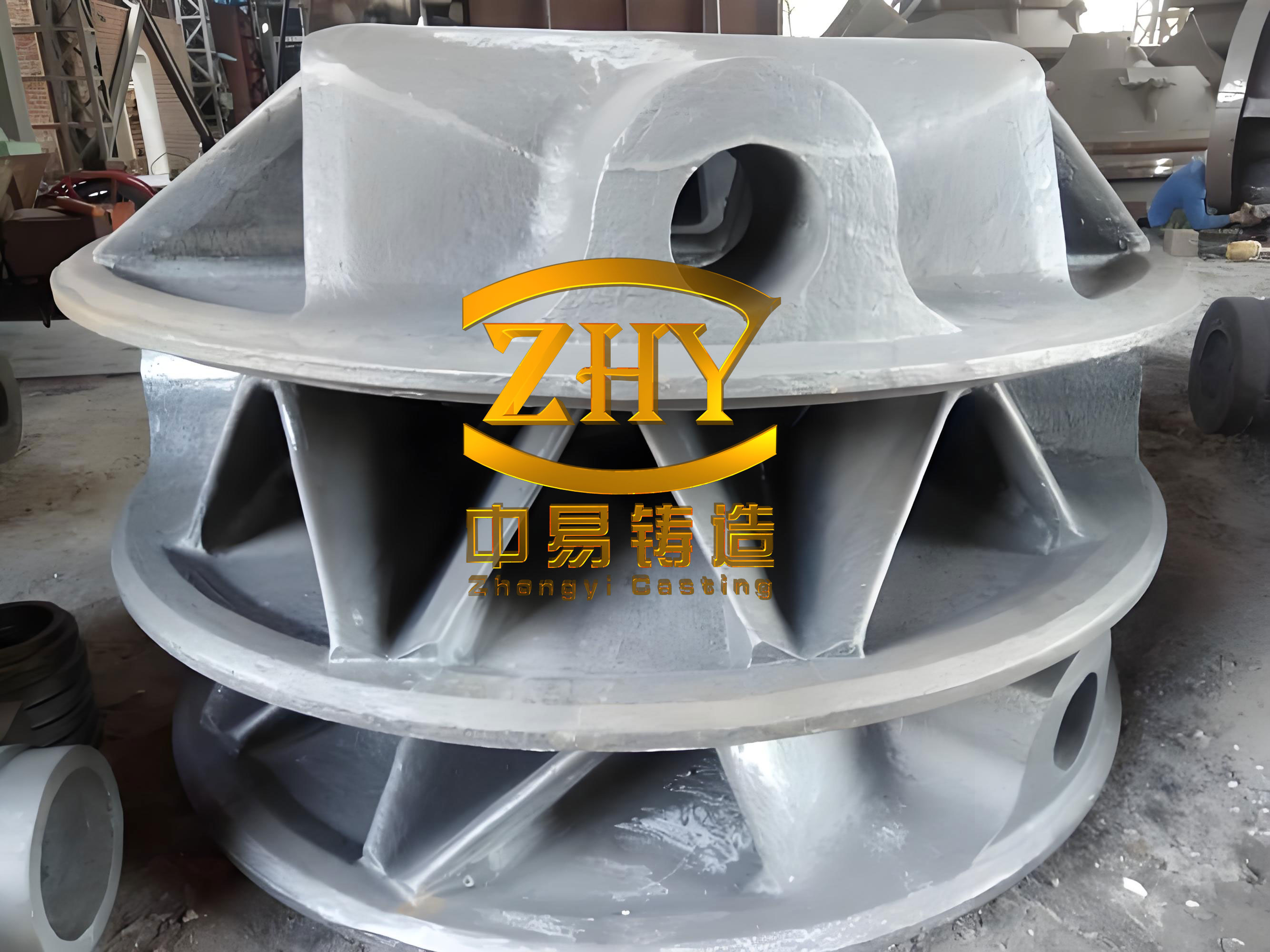
The typical microstructure of the QT700-10 ductile iron casting produced in this work is shown below. The image represents the general appearance of a high-quality ductile iron casting, and the metallographic observations were performed on the Y-shaped test blocks taken from the same castings.
Metallographic examination revealed that the graphite nodules were numerous, fine, and uniformly distributed in all tested samples. The nodule count was high because of the multiple inoculation practice and the slow cooling rate inherent in the lost foam process. The slow cooling allows sufficient time for carbon to diffuse and for the graphite to precipitate in a spherical form. The spheroidization level of the graphite was rated as grade 2 for all three heats, which indicates a very good nodularity. The graphite size was rated as grade 6, which corresponds to a fine nodule size and is beneficial for both strength and ductility.
The matrix structure of the ductile iron casting was predominantly pearlitic, with a pearlite volume fraction of approximately 75%–80%. The presence of a small amount of ferrite around the graphite nodules was observed, which is typical for a high-strength pearlitic ductile iron casting. The pearlite was fine and well distributed, confirming that the combined addition of manganese, copper, and antimony was effective in promoting pearlite formation even under the slow cooling conditions of the lost foam process.
2.3 Mechanical Properties
The mechanical properties of the test blocks are summarized in Table 4. All three heats exceeded the target requirements: the tensile strength was above 700 MPa, and the elongation was above 10%. The hardness values were in the range of 246–257 HBW, which is consistent with a pearlitic matrix ductile iron casting.
| Heat | Spheroidization grade | Graphite size grade | Pearlite volume fraction (%) | Hardness (HBW) | Tensile strength (MPa) | Elongation (%) |
|---|---|---|---|---|---|---|
| 1 | 2 | 6 | 75 | 253 | 749 | 10.7 |
| 2 | 2 | 6 | 80 | 257 | 774 | 10.2 |
| 3 | 2 | 6 | 75 | 246 | 734 | 10.8 |
Examining the data in Table 4 more closely, a consistent relationship between hardness and tensile strength can be observed. For ductile iron casting, the ratio of tensile strength to Brinell hardness is often used as a quality indicator. In the present work, the ratio \(R_m / HBW\) ranges from approximately 2.85 to 3.01, which is a typical range for as-cast pearlitic ductile iron casting. The results confirm that the ductile iron casting produced by the lost foam process meets the expected strength-to-weight performance required for high integrity automotive components.
2.4 Discussion
2.4.1 Effect of Chemical Composition on the Microstructure of Ductile Iron Casting
The results demonstrate that a carefully controlled chemical composition is essential for obtaining the desired microstructure in ductile iron casting. The carbon equivalent, \(CE\), is a convenient parameter to relate the composition to the solidification behaviour. Using the measured compositions given in Table 3, we can calculate the \(CE\) for each heat. For example, for heat 1, the \(CE\) is:
$$CE_1 = 3.42 + \frac{2.52 + 0.024}{3} = 3.42 + 0.848 = 4.268\%$$
For heat 2, the \(CE\) is:
$$CE_2 = 3.62 + \frac{2.43 + 0.026}{3} = 3.62 + 0.819 = 4.439\%$$
For heat 3, the \(CE\) is:
$$CE_3 = 3.54 + \frac{2.48 + 0.029}{3} = 3.54 + 0.836 = 4.376\%$$
These \(CE\) values are all slightly hypereutectic, which is favourable for good graphite nucleation and spheroidization. The slightly higher \(CE\) of heat 2 may have contributed to the higher tensile strength and hardness, as more graphite nodules provide a larger surface area for the pearlitic matrix to act upon, thus increasing the strength of ductile iron casting.
Manganese is known to stabilize pearlite in ductile iron casting. However, excessive manganese can segregate and cause carbides. In the present work, the manganese content of 0.50%–0.60% was found to be sufficient to achieve a pearlite fraction of 75%–80% without producing any visible carbides in the microstructure. This is consistent with the slow cooling rate of the lost foam process, which generally requires a higher manganese content than conventional casting processes to achieve the same pearlite level.
Copper is a particularly valuable alloying element for ductile iron casting because it is a strong pearlite promoter and does not cause any significant embrittlement. The combined addition of copper and antimony produced a synergistic effect: copper helps to refine the pearlite and improve its uniformity, while antimony increases the nodule count and improves the graphite morphology. The result is a ductile iron casting with an optimal balance between strength and ductility.
2.4.2 The Role of Multiple Inoculation in Ductile Iron Casting
Inoculation is one of the most important steps in the production of high-quality ductile iron casting. The purpose of inoculation is to provide effective nucleation sites for graphite, which increases the nodule count and reduces the tendency for chill formation. In this study, a double inoculation method was adopted: a ladle inoculation with a silicon-calcium-barium alloy and a stream inoculation during pouring with a Ba-I alloy. This approach is sometimes called multiple inoculation because it introduces fresh inoculant particles into the melt at different stages, thereby enhancing the nucleation potential of the molten ductile iron casting.
The effect of multiple inoculation was clearly visible in the final microstructure. The graphite nodules were fine and numerous, which is beneficial for both strength and ductility. A high nodule count reduces the effective diffusion distance for carbon, promotes a more uniform matrix structure, and decreases the possibility of localized ferrite formation. In addition, multiple inoculation compensates for the fading of inoculants that normally occurs over time in ductile iron casting.
2.4.3 Influence of Cooling Rate on Lost Foam Ductile Iron Casting
One of the key differences between lost foam casting and conventional sand casting is the cooling rate. The dry sand mold with negative pressure provides a lower thermal conductivity and a slower cooling rate compared with a green sand mold. This can be seen in Table 1, where the average cooling rate in a dry sand mold is only about 60% of that in a green sand mold for a 30 mm sample diameter. A slower cooling rate has both advantages and disadvantages for ductile iron casting.
On the positive side, a slow cooling rate allows more time for the graphite to grow spheroidally and for the carbon to diffuse, which usually leads to a higher nodule count and a better graphite shape. On the negative side, a slow cooling rate promotes the formation of ferrite during the eutectoid transformation, which reduces the strength and hardness of the ductile iron casting. To overcome this disadvantage, the manganese content was increased and copper and antimony were added to promote pearlite formation. The results show that, with the optimized composition, the lost foam ductile iron casting achieved a pearlite content of 75%–80% and a tensile strength above 734 MPa, which is excellent for the lost foam process.
2.4.4 Strengthening Mechanisms in Cu-Sb Alloyed Ductile Iron Casting
Copper and antimony act through different mechanisms to strengthen ductile iron casting. Copper is an austenite stabilizing element that increases the hardenability of the iron and promotes the formation of fine pearlite. It also tends to reduce the carbon activity in austenite, which retards the formation of ferrite. Antimony, on the other hand, is a powerful surface-active element that segregates at the graphite/matrix interface. This segregation changes the growth mode of graphite and increases the nodule count, resulting in a more homogeneous distribution of graphite. When both elements are used together, the matrix becomes more uniform and the tensile strength is increased without compromising the elongation.
From a microstructural point of view, the strength of ductile iron casting can be approximated by a composite rule that takes into account the pearlite fraction and the ferrite fraction. If we denote the pearlite volume fraction as \(f_p\) and assume that the tensile strength of the pearlite phase is \(R_{m,p}\) and that of ferrite is \(R_{m,f}\), then the overall tensile strength of the matrix can be expressed as:
$$R_m \approx f_p \cdot R_{m,p} + (1 – f_p) \cdot R_{m,f}$$
Although the exact values depend on the alloy content, a pearlite volume fraction of 75%–80% is usually required to achieve a tensile strength above 700 MPa in ductile iron casting. The observed pearlite fractions in Table 4 are consistent with this requirement, and the small differences in strength between heats can be attributed to the slight differences in pearlite content and nodule count.
Another important aspect is the relationship between hardness and tensile strength. For ductile iron casting, a common empirical approximate relationship is:
$$R_m \approx 3.2 \cdot HBW – 75$$
Using this equation, the predicted strengths for the hardness values in Table 4 would be about 735 MPa for heat 1, 747 MPa for heat 2, and 712 MPa for heat 3. These values are reasonably close to the measured strengths, though the precise numbers vary because the equation is only an approximation. The observed strength-to-hardness ratios indicate that the ductile iron casting has a high degree of soundness and a low amount of internal defects.
2.4.5 Process Stability and Reproducibility
One of the practical objectives of this work was to demonstrate that ductile iron casting with QT700-10 grade can be reproducibly produced by the lost foam process. The three heats in this study showed very consistent graphite ratings, matrix fractions, and mechanical properties. The slight variations in tensile strength (734–774 MPa) and elongation (10.2%–10.8%) are within the normal scatter of ductile iron casting and are acceptable for production. The stability can be attributed to the strict control of charge materials, the rigorous melting and nodularizing parameters, and the use of multiple inoculation.
During production, special attention was paid to the pouring temperature and the nodularizing reaction time. A pouring temperature that is too low can cause cold shut or insufficient feeding, while a temperature that is too high can lead to severe oxidation and melt quality degradation. The selected range of 1420–1440 °C was found to be suitable for lost foam ductile iron casting because it provides enough fluidity to completely fill the foam pattern without causing excessive gas-related defects. The nodularizing reaction time of 35–50 s ensured that the magnesium alloy dissolved completely and that the spheroidization efficiency remained stable.
The use of a teapot ladle also helped in maintaining a consistent melt quality because it prevented slag from entering the mold cavity during pouring. Since the quality of the surface and the subsurface of ductile iron casting is critical for high-performance applications, this is an important advantage. The Y-shaped attached test blocks, poured simultaneously with the second box, ensured that the measured properties were representative of the actual casting rather than of the very first or last iron poured from the ladle.
3. Conclusion
In this paper, the production of QT700-10 grade ductile iron casting by the lost foam process was systematically investigated. The following conclusions can be drawn from the experimental results and analysis.
First, the slow cooling rate of the lost foam process, which is inherent to the dry sand mold, can significantly affect the matrix structure of ductile iron casting. Compared with conventional green sand molding, the pearlite content tends to be lower under the same chemical composition. Therefore, it is necessary to increase the manganese content to 0.5%–0.6% in order to promote pearlite formation and to compensate for the slower cooling rate.
Second, the combination of copper (0.4%–0.6%) and antimony (0.006%–0.01%) was successful in further stabilizing the pearlite and refining the graphite structure of ductile iron casting. The synergistic effect of copper and antimony allowed the tensile strength to exceed 700 MPa while maintaining an elongation above 10%, which meets the requirements of the QT700-10 specification.
Third, multiple inoculation, consisting of a ladle inoculation with a silicon-calcium-barium alloy and a stream inoculation with a Ba-I alloy, was essential for achieving a high nodule count and a uniform distribution of fine graphite. The resulting spheroidization grade of 2 and graphite size grade of 6 are excellent for ductile iron casting.
Fourth, the mechanical properties of the lost foam ductile iron casting produced in this work were very consistent among the three heats. The tensile strength ranged from 734 to 774 MPa, the elongation ranged from 10.2% to 10.8%, and the hardness ranged from 246 to 257 HBW. These results confirm that the lost foam process is capable of producing high-strength and high-ductility ductile iron casting when the composition and melting process are properly optimized.
Finally, the present work demonstrates that by carefully controlling the chemical composition, applying multiple inoculation, and utilizing Cu-Sb composite strengthening, it is feasible to produce as-cast pearlitic ductile iron casting with a tensile strength above 700 MPa and an elongation above 10% using the lost foam process. This provides a valuable reference for the industrial production of high-performance ductile iron casting components that require both high strength and good ductility.