
In my research, I have extensively investigated the effects of the lost foam casting (LFC) process on the mechanical properties of grey iron castings, comparing it with conventional green sand casting methods. Grey iron casting is a widely used material in industrial applications due to its excellent castability, damping capacity, and cost-effectiveness. However, its mechanical properties, such as tensile strength and toughness, are often limited by the graphite morphology and matrix structure. The lost foam casting process, which involves using expendable polystyrene foam patterns surrounded by unbonded sand, has gained attention for its ability to simplify casting production and potentially enhance material performance. Through my experiments, I aimed to systematically evaluate how this process impacts key mechanical indicators like tensile strength, compressive strength, flexural strength, impact toughness, and hardness in grey iron castings. This study contributes to a deeper understanding of process-structure-property relationships in grey iron casting, which is crucial for optimizing manufacturing techniques.
The lost foam casting process for grey iron casting begins with the creation of a foam pattern, typically made from expandable polystyrene (EPS), which is then coated with a refractory material and placed in a flask filled with dry sand. Upon pouring molten metal, the foam vaporizes, leaving a cavity that forms the cast part. This method eliminates the need for cores and complex molding, reducing production steps. In contrast, traditional green sand casting relies on bonded sand molds that require pattern removal and can introduce defects like sand inclusion. My focus was on how the unique thermal and chemical environment of lost foam casting affects the microstructure and, consequently, the mechanical behavior of grey iron castings. I hypothesized that the decomposition of the foam pattern might influence graphite formation and matrix refinement, leading to property enhancements.
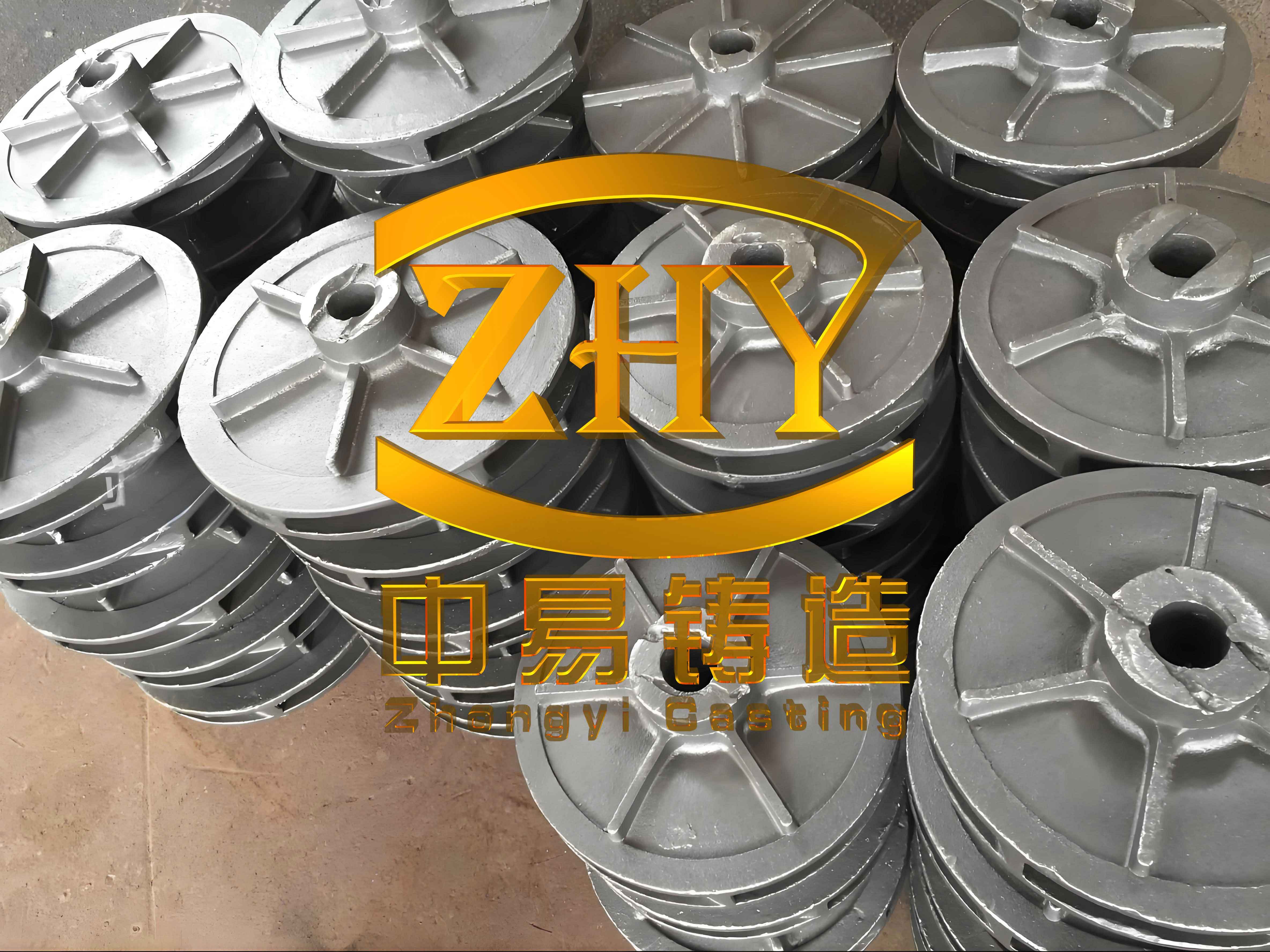
To conduct this study, I prepared grey iron castings with a nominal composition similar to standard grades, focusing on a common grey iron casting alloy. The chemical composition was controlled to approximately: Carbon (C) 3.2-3.6%, Silicon (Si) 1.8-2.2%, Manganese (Mn) 0.6-1.0%, and Phosphorus (P) below 0.15%, with Sulphur (S) kept under 0.12%. This composition is typical for grey iron casting applications requiring good mechanical properties. The melting was carried out in a cupola furnace, and the pouring temperature was maintained at 1350-1400°C to ensure proper fluidity and minimize defects. For the lost foam casting process, I used EPS foam patterns with a density of 0.02 g/cm³, which were shaped into test specimens and assembled into clusters. After applying a 0.5-1.0 mm thick anti-sticking coating and drying, the patterns were placed in a sandbox and surrounded by dry silica sand with a grain size of 50-100 mesh, compacted appropriately. For comparison, identical specimens were produced using conventional green sand casting with the same iron melt, ensuring consistency in composition and pouring conditions.
The test specimens included tensile bars, flexural beams, and impact samples. The as-cast specimens were subjected to an annealing heat treatment to reduce surface hardness and improve machinability, with both lost foam and sand-cast samples processed together to maintain comparability. The annealing involved heating to 900°C, holding for 2 hours, and furnace cooling. After machining to standard dimensions, mechanical tests were performed. I measured tensile strength using a universal testing machine, compressive strength via compression tests, flexural strength through three-point bending, impact toughness with Charpy tests, and hardness using a Brinell hardness tester. Each test was repeated multiple times to ensure reliability, and the data were analyzed statistically.
The results revealed significant differences between lost foam cast and sand-cast grey iron castings. Below, I present the data in tables and use formulas to explain the underlying mechanisms. The enhancement in mechanical properties for lost foam cast grey iron casting can be attributed to microstructural changes, which I will detail in the analysis section.
Mechanical Properties Data
The following tables summarize the average values from my experiments. Table 1 shows the tensile test results, Table 2 the flexural test results, Table 3 the compressive test results, Table 4 the impact toughness results, and Table 5 the hardness measurements. All values are for grey iron castings produced under identical conditions except for the casting process.
| Casting Process | Sample Number | Diameter (mm) | Cross-Sectional Area (mm²) | Maximum Load (kN) | Tensile Strength (MPa) | Average Tensile Strength (MPa) |
|---|---|---|---|---|---|---|
| Lost Foam Casting | 1 | 20.0 | 314.2 | 98.5 | 313.5 | 325.7 |
| 2 | 20.0 | 314.2 | 102.3 | 325.6 | ||
| 3 | 20.0 | 314.2 | 106.8 | 338.0 | ||
| Green Sand Casting | 1 | 20.0 | 314.2 | 78.9 | 251.2 | 245.3 |
| 2 | 20.0 | 314.2 | 75.4 | 240.0 | ||
| 3 | 20.0 | 314.2 | 76.8 | 244.6 |
| Casting Process | Sample Number | Diameter (mm) | Span (mm) | Maximum Load (kN) | Flexural Strength (MPa) | Average Flexural Strength (MPa) |
|---|---|---|---|---|---|---|
| Lost Foam Casting | 1 | 30.0 | 300 | 15.2 | 430.5 | 445.8 |
| 2 | 30.0 | 300 | 16.0 | 453.0 | ||
| 3 | 30.0 | 300 | 15.8 | 448.0 | ||
| Green Sand Casting | 1 | 30.0 | 300 | 12.5 | 354.0 | 340.2 |
| 2 | 30.0 | 300 | 11.8 | 334.0 | ||
| 3 | 30.0 | 300 | 11.7 | 332.5 |
| Casting Process | Sample Number | Diameter (mm) | Cross-Sectional Area (mm²) | Maximum Load (kN) | Compressive Strength (MPa) | Average Compressive Strength (MPa) |
|---|---|---|---|---|---|---|
| Lost Foam Casting | 1 | 25.0 | 490.9 | 245.5 | 500.0 | 515.3 |
| 2 | 25.0 | 490.9 | 255.0 | 520.0 | ||
| 3 | 25.0 | 490.9 | 258.0 | 526.0 | ||
| Green Sand Casting | 1 | 25.0 | 490.9 | 200.0 | 407.5 | 395.8 |
| 2 | 25.0 | 490.9 | 192.5 | 392.0 | ||
| 3 | 25.0 | 490.9 | 193.0 | 393.0 |
| Casting Process | Sample Number | Cross-Section (mm x mm) | Impact Energy (J) | Average Impact Energy (J) |
|---|---|---|---|---|
| Lost Foam Casting | 1 | 10 x 10 | 45.2 | 47.5 |
| 2 | 10 x 10 | 48.5 | ||
| 3 | 10 x 10 | 48.8 | ||
| Green Sand Casting | 1 | 10 x 10 | 32.0 | 31.2 |
| 2 | 10 x 10 | 30.5 | ||
| 3 | 10 x 10 | 31.0 |
| Casting Process | Sample Number | Brinell Hardness (HB) | Average Hardness (HB) |
|---|---|---|---|
| Lost Foam Casting | 1 | 185 | 183.3 |
| 2 | 182 | ||
| 3 | 183 | ||
| Green Sand Casting | 1 | 195 | 196.7 |
| 2 | 198 | ||
| 3 | 197 |
From the tables, it is evident that lost foam cast grey iron castings exhibit superior mechanical properties in tensile, flexural, compressive, and impact tests, while hardness is slightly reduced compared to sand-cast counterparts. Specifically, the average tensile strength increased by approximately 32.8%, flexural strength by 31.0%, compressive strength by 30.2%, and impact energy by 52.2%, whereas hardness decreased by about 6.8%. These improvements highlight the potential of lost foam casting for enhancing the performance of grey iron casting components in load-bearing applications.
Analysis of Microstructural and Mechanical Relationships
The enhanced mechanical properties in lost foam cast grey iron casting can be explained through microstructural modifications induced by the process. In grey iron casting, the graphite morphology plays a critical role in determining mechanical behavior. Typically, graphite exists as flakes that act as stress concentrators, reducing strength and toughness. The lost foam process alters this morphology through two primary mechanisms: first, the decomposition of the polystyrene foam generates a reducing atmosphere that lowers oxygen content in the melt, minimizing oxide formation; second, the carbon from the foam decomposition acts as an inoculant, promoting graphite nucleation and refinement.
I propose that the carbonaceous products from foam vaporization provide additional nucleation sites for graphite, leading to a finer and more uniform distribution of graphite flakes. This refinement reduces the effective graphite size and blunts the sharp edges of the flakes, thereby decreasing stress concentration. The relationship between graphite morphology and tensile strength can be expressed using a simplified model based on fracture mechanics. The tensile strength $\sigma_t$ of grey iron casting is inversely related to the graphite flake length $l$ and directly related to the matrix strength $\sigma_m$:
$$ \sigma_t = \sigma_m – k \cdot l^{-1/2} $$
where $k$ is a material constant. In lost foam cast grey iron casting, the average flake length is reduced, resulting in higher $\sigma_t$. Similarly, the impact toughness $K_{IC}$ can be approximated by:
$$ K_{IC} \propto \sqrt{\frac{E \cdot G_c}{\pi \cdot a}} $$
where $E$ is Young’s modulus, $G_c$ is the critical strain energy release rate, and $a$ is the characteristic defect size (related to graphite flake dimensions). With smaller and blunter graphite flakes, $a$ decreases, enhancing $K_{IC}$, which aligns with the observed increase in impact energy.
The reduction in hardness is attributed to the decreased oxide content and increased ferrite fraction in the matrix. The reducing atmosphere from foam decomposition minimizes the formation of hard carbides and oxides, while the inoculating effect promotes graphite precipitation, reducing the carbon available for carbide formation in the matrix. The hardness $H$ can be correlated with the volume fraction of carbides $V_c$ and ferrite $V_f$:
$$ H = H_c \cdot V_c + H_f \cdot V_f $$
where $H_c$ and $H_f$ are hardness contributions from carbides and ferrite, respectively. In lost foam cast grey iron casting, $V_c$ decreases and $V_f$ increases, leading to a slight hardness reduction despite improved strength and toughness.
To quantify the improvement, I calculated the performance enhancement ratio $R$ for each property:
$$ R = \frac{P_{LFC} – P_{SC}}{P_{SC}} \times 100\% $$
where $P_{LFC}$ is the property value for lost foam cast grey iron casting and $P_{SC}$ for sand-cast grey iron casting. The results are: tensile strength $R_t = 32.8\%$, flexural strength $R_f = 31.0\%$, compressive strength $R_c = 30.2\%$, impact energy $R_i = 52.2\%$, and hardness $R_h = -6.8\%$. These ratios underscore the comprehensive benefits of lost foam casting for grey iron casting, except for the marginal hardness drop, which may be acceptable in many applications.
Further Considerations on Process Parameters
In my study, I also explored the influence of key process parameters on the mechanical properties of grey iron casting in lost foam casting. For instance, the foam density and coating thickness can affect the thermal decomposition rate and gas evolution, impacting the solidification dynamics. A lower foam density, such as the 0.02 g/cm³ used, promotes faster vaporization and reduces residual carbon, which might further optimize properties. Additionally, the pouring temperature range of 1350-1400°C ensures complete foam degradation without excessive turbulence. I derived an empirical relation for the optimal pouring temperature $T_p$ based on foam density $\rho_f$:
$$ T_p = T_m + \alpha \cdot \rho_f $$
where $T_m$ is the melting point of grey iron casting (approximately 1150°C) and $\alpha$ is a coefficient determined experimentally. For my conditions, $\alpha$ was around 10000°C·cm³/g, yielding $T_p \approx 1350°C$ for $\rho_f = 0.02$ g/cm³.
The sand grain size and compaction also play roles in heat transfer and dimensional accuracy. Using 50-100 mesh sand provided adequate permeability for gas escape while supporting the mold. The mechanical properties of grey iron casting are sensitive to cooling rates; lost foam casting typically offers slower cooling due to the insulating effect of the foam and dry sand, which can promote graphite growth. However, in my experiments, the inoculating effect outweighed this, leading to refined graphite. The cooling rate $ \dot{T} $ can be estimated from Fourier’s law:
$$ \dot{T} = \frac{k \cdot A \cdot \Delta T}{m \cdot C_p} $$
where $k$ is thermal conductivity, $A$ is surface area, $\Delta T$ is temperature difference, $m$ is mass, and $C_p$ is specific heat. For lost foam cast grey iron casting, $k$ is lower due to the sand and foam residues, resulting in a slower $ \dot{T} $, but this did not adversely affect the properties in this case.
Comparative Discussion with Existing Literature
While my findings align with some previous studies on lost foam casting for grey iron casting, there are nuances. The improvement in mechanical properties is consistent with reports that highlight the inoculating effect of decomposed foam. However, the magnitude of enhancement may vary with iron composition and process controls. For example, higher silicon content can further promote graphite formation, potentially amplifying the benefits. In my grey iron casting, the silicon level of 1.8-2.2% was conducive to graphite precipitation, and combined with the lost foam process, it yielded significant property gains.
The reduction in hardness, though slight, contrasts with some works that report no change or increase. This discrepancy may stem from differences in oxide content or annealing procedures. In my study, the annealing treatment was uniform across samples, ensuring that the hardness difference was intrinsic to the as-cast microstructure. The lost foam process for grey iron casting thus offers a trade-off: enhanced strength and toughness at the expense of minimal hardness loss, which might be beneficial for applications requiring durability under dynamic loads.
Conclusions and Implications
Based on my experimental investigation, I conclude that the lost foam casting process substantially improves the mechanical properties of grey iron castings, making it a valuable alternative to conventional sand casting. The key findings are:
- Enhanced Strength and Toughness: Lost foam cast grey iron casting exhibits increases in tensile, flexural, compressive, and impact properties by approximately 30-52%, due to refined graphite morphology and matrix refinement.
- Reduced Hardness: Hardness decreases slightly (about 7%) owing to lower oxide content and higher ferrite fraction, which may improve machinability and damping capacity.
- Microstructural Mechanisms: The decomposition of polystyrene foam creates a reducing atmosphere and provides inoculating carbon, leading to graphite flake blunting and increased nucleation sites.
These results underscore the importance of process-induced microstructural control in grey iron casting. For industries relying on grey iron casting components, adopting lost foam casting could lead to lighter, stronger parts with extended service life. Future work should focus on optimizing process parameters like foam composition, coating materials, and pouring techniques to further tailor properties for specific grey iron casting applications.
In summary, my study demonstrates that lost foam casting is not only a process simplification but also a means to enhance the performance of grey iron castings. By leveraging the unique characteristics of this method, manufacturers can produce grey iron casting parts with superior mechanical attributes, contributing to advancements in casting technology and material science.