
The evolution towards agile and responsive manufacturing systems underscores the critical need for rapid product design and realization. To address this, the integration of Rapid Prototyping (RP) technologies with traditional manufacturing processes has emerged as a powerful solution. Specifically, the fusion of Stereolithography (SLA) with conventional sand casting, forming what is known as rapid sand casting, offers a compelling path for swiftly obtaining functional metal prototypes and low-volume production parts. This approach is particularly advantageous for new product development, such as automotive engine components, where design iterations are frequent and time-to-market is paramount. The core challenge, however, lies in the swift and accurate design of the casting mold assembly. This process must not only adhere to fundamental foundry principles but also accommodate the unique material characteristics of SLA-built patterns. Existing commercial casting CAD systems often fall short, as they are typically based on 2D platforms, are application-specific, or lack the necessary databases tailored for the distinct requirements of SLA prototypes. Consequently, I have developed an integrated CAD/CAE system specifically designed to streamline the process design for rapid sand casting of parts using SLA patterns.
The technical foundation of this system rests on the distinct differences between SLA resin patterns and traditional wood or metal patterns. These differences necessitate a recalibration of standard casting process parameters. An SLA pattern, built from photopolymer resin, exhibits a higher surface roughness, greater brittleness, and limited thermal stability compared to its conventional counterparts. These properties directly influence two critical design parameters: draft angle and linear shrinkage.
First, the increased surface friction between the resin pattern and the sand mold, coupled with the pattern’s brittleness, requires a significant increase in draft angles to ensure successful pattern withdrawal without damage. Based on empirical development, the draft angles for SLA patterns are notably larger than those specified for wooden patterns. The relationship is summarized in the table below.
| Pattern Height (mm) | Draft Angle for Wood Pattern | Draft Angle for SLA Resin Pattern |
|---|---|---|
| ≤ 10 | 4° 00′ | 6.00° |
| >10 – 40 | 2° 05′ | 3.33° |
| >40 – 100 | 0° 55′ | 1.33° |
| >100 – 160 | 0° 40′ | 1.08° |
| >160 – 250 | 0° 35′ | 0.92° |
| >250 – 400 | 0° 35′ | 0.92° |
| >400 – 630 | 0° 30′ | 0.83° |
Second, the polymerization process of the photopolymer resin during SLA building involves an inherent volumetric shrinkage. For the DSM Somos 14120 resin used, this shrinkage is approximately 0.08%. This pattern shrinkage must be accounted for when applying the alloy’s linear shrinkage allowance to the final casting dimensions. Therefore, the effective shrinkage applied to the CAD model of the sand casting part is a composite value. The revised linear shrinkage rates for common alloys used in this rapid sand casting process are as follows.
| Casting Alloy | Free Contraction (%) | Impeded Contraction (%) |
|---|---|---|
| Aluminum Alloy Castings | 2.0 – 3.0 | 2.3 – 3.3 |
| Medium/Small Gray Iron Castings | 1.8 – 3.0 | 1.9 – 3.3 |
| Large Gray Iron Castings | 1.7 – 2.9 | 1.8 – 3.0 |
The integrated system is architected to automate the casting process design for sand casting parts while incorporating these revised parameters. The system is built upon the Pro/ENGINEER (Pro/E) 4.0 platform, utilizing its Pro/Toolkit API for secondary development and Microsoft Visual C++ 2005 for creating the user interface. The overall framework consists of two synergistic subsystems: a dedicated CAD subsystem for process design and a CAE subsystem for simulation-based validation.
The CAD subsystem is the core design engine, comprising three principal modules focused on the most critical aspects of foundry tooling design for sand casting parts.
- Casting CAD Model Design Module: This module transforms a base part model into a casting model by automatically adding standard manufacturing allowances (machining allowance, shrinkage, draft, etc.). It features a custom database where standard parameters from foundry handbooks are stored alongside the revised SLA-specific values for draft and shrinkage. The module intelligently applies these parameters, enabling the rapid generation of an accurate casting model suitable for SLA pattern production.
- Gating System Design Module: Tailored for both aluminum and gray iron alloys, this module automates the design of sprue, runner, and ingate systems. It contains an analysis engine that calculates key parameters like pouring time and choke area based on the casting weight and selected gating ratio (e.g., pressurized vs. unpressurized systems). The calculation for the choke area (A_c) often follows a form derived from Bernoulli’s theorem:
$$A_c = \frac{W}{\rho \cdot t \cdot \mu \cdot \sqrt{2 \cdot g \cdot H_p}}$$
where \(W\) is the casting weight, \(\rho\) is the metal density, \(t\) is the pouring time, \(\mu\) is the discharge coefficient, \(g\) is gravity, and \(H_p\) is the effective metallostatic head. Based on the results, a parametric modeling routine generates the 3D geometry of the gating system components, which are then assembled to the casting model. - Feeding (Riser) System Design Module: This module designs risers to prevent shrinkage defects in the final sand casting part. Its analytical core calculates the required riser modulus using the Chvorinov’s rule-based method. For a simple cylindrical riser, the modulus \(M_r\) is given by:
$$M_r = \frac{V_r}{A_r}$$
where \(V_r\) is the riser volume and \(A_r\) is its cooling surface area. The module ensures \(M_r > k \cdot M_c\), where \(M_c\) is the casting modulus and \(k\) is an efficiency factor (typically >1.2). It then selects and parametrically generates a standard riser shape (e.g., cylindrical, exothermic) with the calculated dimensions and places it appropriately on the casting.
The CAE subsystem employs ProCAST software for numerical simulation of the filling, solidification, and cooling processes. The link between the CAD and CAE worlds is established through the IGES file format. The finalized 3D assembly from the CAD subsystem (casting + gating + feeding systems) is exported as an IGES file. This file is imported into ProCAST’s pre-processing environment for meshing, material assignment, and boundary condition setup. Subsequent simulation predicts potential defects like misruns, shrinkage porosity, or hot tears, allowing the designer to validate and iteratively refine the initial CAD-based design before any physical pattern is built.
The development of this integrated system leveraged several key software engineering techniques. The interface was created using Microsoft Foundation Classes (MFC), connected to Pro/E via a dynamic-link library (DLL) mode implementation of Pro/Toolkit. A central Microsoft Access database, accessed through ActiveX Data Objects (ADO) technology, stores all material properties, standard allowances, and SLA-specific parameters. The system’s automation is powered by parametric modeling and dimension-driven design. By controlling feature dimensions programmatically through their Pro/Toolkit ID codes, the system can dynamically regenerate models based on user inputs or database queries. This allows for the creation of User-Defined Features (UDF) for standard gating and riser elements, which can be instantiated and positioned with specific parameters during the design process.
The practical application of this system is best illustrated through an example, such as the design of a gray iron (HT200) engine main bearing cap—a classic sand casting part. The process begins within the CAD subsystem. The base part geometry is loaded, and the appropriate molding position and parting line are defined. The material is selected as HT200. The casting model design module is then executed, applying the standard machining allowances, the revised linear shrinkage (e.g., 1.9% for impeded contraction), and the enhanced draft angles from the database specific to the SLA process. The system also identifies and flags non-cored holes below the specified minimum castable size.
Following this, the gating system module is invoked. For this iron casting, a suitable gating ratio (like 1:1.5:2) is selected. The module calculates the total pouring time, determines the choke area, and sizes all subsequent gating elements accordingly. It then generates the 3D sprue, runner basin, and ingates, assembling them to the casting model. Subsequently, the feeding system module analyzes the thermal geometry of the bearing cap. It calculates the modulus of critical sections and designs a suitable riser with a sufficient modulus to ensure directional solidification towards the riser. The final output of the CAD stage is a complete 3D virtual model of the entire mold assembly ready for SLA pattern fabrication.
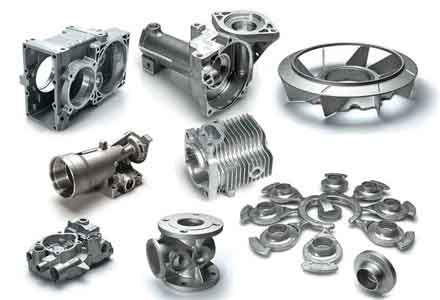
This virtual model is exported as an IGES file and imported into the CAE subsystem (ProCAST). After meshing and setting the appropriate process parameters for green sand molding and HT200 iron, a coupled filling and solidification analysis is performed. The simulation results, such as temperature fields and solidification sequences, are visualized. A critical output is the prediction of shrinkage porosity, often displayed as an isolated liquid region or a low-density zone at the end of solidification. For the bearing cap, the simulation might reveal a potential shrink spot at a junction, prompting a redesign—perhaps by repositioning the riser, adding a chill, or slightly modifying the local geometry. This CAE feedback loop is integral to the system, ensuring the robustness of the design for the sand casting part before committing to the time and cost of SLA pattern production and foundry trials.
In conclusion, the development and implementation of this integrated CAD/CAE system specifically for rapid sand casting using SLA prototypes address a significant gap in existing tooling. By formally recognizing and incorporating the unique property differences of SLA patterns into the core process parameter database, the system enables accurate first-pass design. The automation of routine but complex calculations for gating and feeding, combined with parametric modeling, dramatically reduces the time and expertise required for process engineering. Furthermore, the seamless bridge to powerful CAE validation allows for virtual prototyping and optimization, mitigating the risk of defects in the final castings. The application of this system to components like engine bearing caps, aluminum intake manifolds, and cylinder heads has demonstrated its efficacy in accelerating the development cycle for new sand casting parts, making it a valuable asset in modern agile manufacturing environments that leverage additive manufacturing for rapid tooling and prototyping.