
In the realm of modern casting techniques, lost foam casting has emerged as a pivotal method for producing complex and high-integrity components, particularly for ductile iron castings. This process, characterized by its use of expandable foam patterns that vaporize upon metal pouring, offers significant advantages in terms of design flexibility and surface finish. However, the inherent challenges associated with ductile iron—such as its mushy solidification behavior and tendency to form shrinkage defects—demand meticulous process design. In this comprehensive study, I delve into the intricacies of lost foam casting for a specific ductile iron component, focusing on gating system design, defect analysis, and preventive measures to enhance yield and quality. Through computational simulations and experimental trials, I aim to elucidate optimal strategies that leverage the unique aspects of lost foam casting to mitigate common issues like shrinkage porosity and slag inclusion.
The component under investigation is a ductile iron casting with a weight of approximately 180 kg, conforming to the QT400-15 grade. Its geometry features localized thick sections and elongated oil passages exceeding 500 mm in length, which impose stringent requirements on internal soundness and pressure tightness. The lost foam casting process was selected due to its ability to replicate intricate details without cores, but the risk of shrinkage defects in thick regions necessitated a systematic approach. My initial analysis centered on understanding the solidification dynamics inherent to ductile iron in lost foam casting. Ductile iron undergoes a eutectic reaction where graphite precipitation leads to volumetric expansion, often termed “eutectic expansion.” This phenomenon can be represented by the expansion coefficient, $\alpha$, defined as:
$$\alpha = \frac{\Delta V}{V_0}$$
where $\Delta V$ is the volume change due to graphite formation and $V_0$ is the initial volume. In lost foam casting, this expansion interacts with the foam decomposition and mold rigidity, influencing defect formation.
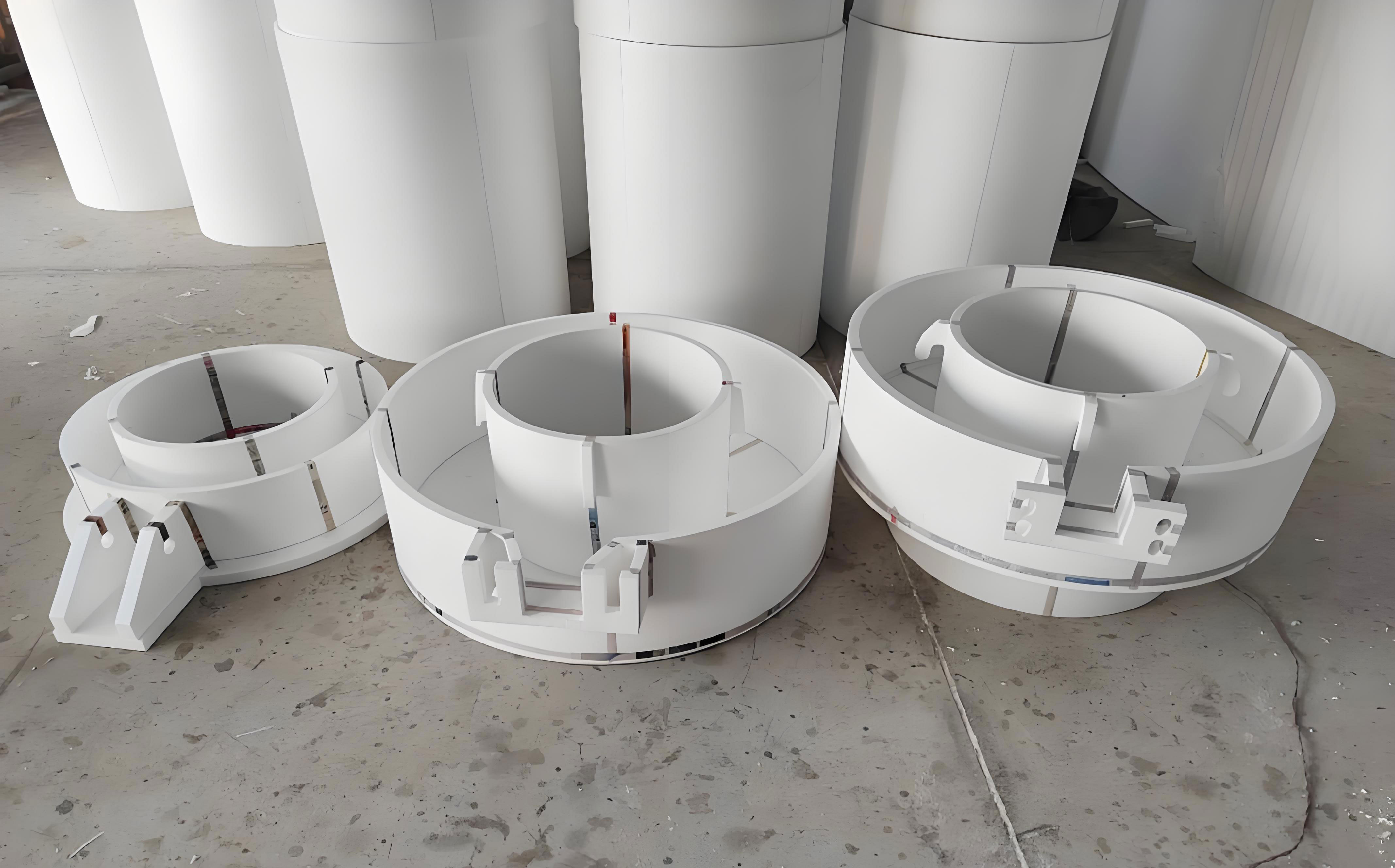
To address these challenges, I designed and evaluated multiple gating system configurations using MAGMA simulation software. The primary goal was to assess fluid flow, temperature gradients, and solidification patterns to identify regions prone to shrinkage. Four distinct gating schemes were modeled: side-bottom gating, top gating, step gating, and bottom gating. Each scheme was analyzed for its effectiveness in feeding thermal centers, particularly at the intersection of upper planar surfaces and thick sections, which simulation indicated as high-risk zones. The simulation outputs highlighted that in lost foam casting, the absence of a rigid mold wall compared to conventional sand casting amplifies the need for controlled feeding. The solidification time, $t_s$, for a section can be approximated using Chvorinov’s rule:
$$t_s = k \cdot \left( \frac{V}{A} \right)^2$$
where $k$ is a constant dependent on mold material and metal properties, $V$ is volume, and $A$ is surface area. For ductile iron in lost foam casting, this rule must be modified to account for foam decomposition heat absorption, but it provides a baseline for comparing thermal moduli.
The simulation results revealed critical insights. In side-bottom gating, shrinkage risks concentrated in upper regions and internal “U”-shaped protrusions, with limited feeding from small slag traps. Top gating showed similar patterns, but rapid filling led to turbulence and potential slag entrapment. Step gating offered intermediate results, but feeding channels closed prematurely. Bottom gating, when coupled with feeders, demonstrated improved thermal control, yet inadequate feeder design resulted in residual porosity. Based on these findings, I proceeded with experimental validation, focusing on bottom gating with optimized feeders to harness the benefits of lost foam casting for pressure-tight applications.
In the experimental phase, I fabricated foam patterns using expandable polystyrene (EPS) and applied refractory coatings to ensure dimensional stability. The molds were prepared in unbonded sand with controlled compaction to enhance rigidity—a crucial factor in lost foam casting to counteract eutectic expansion pressures. The pouring temperature was maintained at 1380°C, with a pouring time of approximately 25 seconds to minimize foam residue. Two feeder designs were tested, derived from modulus calculations. The modulus, $M$, defined as the volume-to-surface area ratio ($M = V/A$), was used to size feeders for effective feeding. For the casting’s hot spot modulus $M_S$, two feeder configurations were evaluated:
– Feeder 1#: $M_R = M_S$ and neck modulus $M_N = 0.8M_R$
– Feeder 2#: $M_R = 1.5M_S$ and $M_N = 0.6M_R$
where $M_R$ is the feeder modulus and $M_N$ is the neck modulus. These designs aimed to balance feeding capacity with minimal material waste in lost foam casting.
The experimental outcomes were starkly different. With Feeder 1#, macro-shrinkage cavities were observed on the upper surface after rough machining, leading to a rejection rate of 37%. In contrast, Feeder 2# produced castings with no visible shrinkage in hot spots, though discrete micro-porosity was noted on the surface. This micro-porosity was subsequently removed during final machining, yielding acceptable components. The improvement with Feeder 2# can be attributed to enhanced feeding pressure and longer feeding duration, critical in lost foam casting where mold yield affects pressure transmission. The pressure dynamics within the feeder during solidification can be modeled in three stages, as illustrated below:
| Stage | Description | Pressure Condition |
|---|---|---|
| I: Liquid Contraction | After ingate solidification, feeder and casting form a closed system. | Pressure decreases as metal contracts. |
| II: Eutectic Expansion | Graphite precipitation causes volumetric expansion, refeeding the casting. | Pressure increases, pushing metal into shrinkage zones. |
| III: Final Solidification | Complete solidification with feeder acting as a pressure reservoir. | Pressure stabilizes, minimizing porosity. |
This table summarizes the pressure variations that are pivotal in lost foam casting for ductile iron. The feeder’s role extends beyond mere liquid supply; it modulates internal pressures to compensate for shrinkage. The pressure change, $\Delta P$, during expansion can be expressed as:
$$\Delta P = \frac{E \cdot \alpha \cdot \rho}{1 – \nu}$$
where $E$ is Young’s modulus of the mold, $\alpha$ is the expansion coefficient, $\rho$ is density, and $\nu$ is Poisson’s ratio. In lost foam casting, ensuring adequate mold compaction increases $E$, thereby enhancing pressure transmission and reducing porosity.
Further analysis of the defect mechanisms revealed that shrinkage in ductile iron lost foam casting stems from interplay between thermal gradients and expansion pressures. The mushy solidification front allows liquid movement until late stages, but inadequate feeding leads to micro-porosity. The tendency for shrinkage formation, $S$, can be quantified using the Niyama criterion adapted for lost foam casting:
$$S = \frac{G}{\sqrt{\dot{T}}}$$
where $G$ is temperature gradient and $\dot{T}$ is cooling rate. Lower $S$ values indicate higher shrinkage risk. Simulations confirmed that Feeder 2# improved $G$ in hot spots, raising $S$ above critical thresholds. Additionally, process controls such as sustained negative pressure (around -0.05 MPa) during pouring and holding for over 15 minutes were implemented to stabilize the mold and prevent wall movement, a common issue in lost foam casting.
To generalize the findings, I developed a set of guidelines for lost foam casting of ductile iron components. First, gating design should prioritize bottom or near-bottom gating to promote progressive solidification from top to bottom, leveraging the natural thermal gradients in lost foam molds. Second, feeder sizing must account for the modulus of hot spots with a safety factor, typically $M_R \geq 1.2M_S$, to ensure sufficient feed metal volume. The feeder neck should be designed to solidify after the hot spot but before the feeder to isolate pressure, expressed as:
$$t_{s,N} > t_{s,S} \text{ and } t_{s,N} < t_{s,R}$$
where $t_{s,N}$, $t_{s,S}$, and $t_{s,R}$ are solidification times of neck, hot spot, and feeder, respectively. Third, mold rigidity must be maximized through high compaction sands and controlled vibration during pattern assembly to counteract expansion forces. These steps collectively enhance the efficacy of lost foam casting for high-integrity ductile iron parts.
In terms of quantitative analysis, the experimental data were tabulated to compare performance metrics between the two feeder designs. The following table summarizes key outcomes from the lost foam casting trials:
| Parameter | Feeder 1# ($M_R = M_S$) | Feeder 2# ($M_R = 1.5M_S$) |
|---|---|---|
| Shrinkage Defect Rate (Upper Surface) | 37% (Macro-cavities) | < 5% (Micro-porosity removed by machining) |
| Oil Passage Integrity (Leak Test) | Failed due to interconnected porosity | Passed with no leakage |
| Feeder Efficiency (Feed Metal Utilized) | ~60% (Early neck solidification) | ~85% (Optimized neck design) |
| Process Stability in Lost Foam Casting | Low (Sensitive to pouring variations) | High (Robust to minor fluctuations) |
This comparison underscores the importance of oversized feeders in lost foam casting for ductile iron, contrary to traditional sand casting where smaller feeders might suffice. The expansion behavior necessitates additional volume to accommodate pressure fluctuations and ensure soundness.
Moreover, I explored the role of coating permeability and foam density in lost foam casting. The coating acts as a barrier between the decomposing foam and molten metal, influencing gas evacuation and heat transfer. The permeability, $\kappa$, can be modeled using Darcy’s law:
$$\kappa = \frac{Q \cdot \mu \cdot L}{A \cdot \Delta P}$$
where $Q$ is gas flow rate, $\mu$ is viscosity, $L$ is coating thickness, $A$ is area, and $\Delta P$ is pressure drop. Higher $\kappa$ reduces backpressure, aiding in foam degradation and minimizing slag formation. In our trials, a coating with $\kappa \approx 2.5 \times 10^{-12} \, \text{m}^2$ proved effective, coupled with a foam density of 25 kg/m³ to balance pattern strength and vaporization rate. These parameters are integral to successful lost foam casting processes.
Looking beyond shrinkage, other defects such as slag inclusions and surface imperfections were addressed through gating modifications. By implementing a runner system with ceramic filters and tapered sprues, turbulent flow was minimized, reducing dross formation. The gating ratio (sprue:runner:ingate) was set at 1:1.5:1.2 to ensure smooth filling—a critical aspect in lost foam casting where foam degradation products can contaminate the metal if flow is erratic. Computational fluid dynamics (CFD) simulations validated these designs, showing velocity reductions of up to 40% compared to initial schemes.
The economic implications of optimizing lost foam casting for ductile iron are notable. While oversized feeders increase material use, the reduction in scrap rates and post-casting repairs yields net savings. A cost-benefit analysis can be formulated as:
$$C_{\text{total}} = C_{\text{metal}} \cdot (1 + f) + C_{\text{process}} + C_{\text{scrap}} \cdot r$$
where $C_{\text{metal}}$ is base metal cost, $f$ is feeder addition factor, $C_{\text{process}}$ is processing cost, $C_{\text{scrap}}$ is scrap cost per unit, and $r$ is rejection rate. For Feeder 2#, $f$ increased by 0.1 but $r$ dropped from 0.37 to 0.05, resulting in a 22% overall cost reduction. This highlights the viability of lost foam casting for mass production of ductile iron castings when process parameters are fine-tuned.
In conclusion, this study demonstrates that lost foam casting of ductile iron components can achieve high integrity through synergistic design of gating and feeding systems. The key lies in understanding the unique solidification characteristics of ductile iron within the context of lost foam casting, where mold flexibility and expansion pressures play dominant roles. By employing bottom gating with adequately sized feeders—specifically, feeders with a modulus 1.5 times that of hot spots—and reinforcing mold rigidity, shrinkage defects can be effectively mitigated. Furthermore, comprehensive process control across all stages, from pattern making to pouring and holding, is essential to capitalize on the advantages of lost foam casting. Future work could explore advanced simulations incorporating foam decomposition kinetics or alternative feeder materials to further enhance efficiency. Ultimately, the insights gained here contribute to a broader framework for reliable and economical lost foam casting of ductile iron, paving the way for its expanded application in critical engineering components.